
🚨 LIVE: UN Finally Cancels Islamic Republic - USS Gerald R. Ford Deployed - Reza Pahlavi In Munich
YouTube · eKCXwc1Tx0I
Quick Read
Summary
Takeaways
- ❖The USS Gerald R. Ford supercarrier has been deployed from Venezuela towards Iran, expected to arrive in about 10-12 days, signaling potential military action.
- ❖Israel's cabinet, including Netanyahu, IDF, and Mossad heads, held urgent security meetings and released a target list including Iran's Supreme Leader Ali Khamenei.
- ❖The United Nations' Human Rights Council disinvited Iran's foreign minister from its opening session following global pressure and 100,000 signatures.
- ❖The Islamic Republic is preparing for a 'second wave of uprising' by positioning snipers on rooftops in major cities like Tehran, using civilians as human shields.
- ❖Global leaders like Marco Rubio and Frederick Mur are now openly stating that the world has entered a new phase of 'open conflicts and wars,' moving away from diplomacy-focused narratives.
- ❖The US military is significantly increasing its presence in the Middle East, deploying more troops, heavy equipment, and showcasing its naval and air power as a clear message to Iran.
Insights
1Imminent Military Escalation and US/Israeli Preparedness
The host asserts that a significant military escalation against the Islamic Republic is imminent, possibly within two weeks. Evidence includes the deployment of the USS Gerald R. Ford supercarrier towards Iran, Israel's public release of a target list for Iranian leadership (including Ali Khamenei), and high-level security meetings in Israel. The US military is also observed to be continuously deploying heavy equipment and personnel to the Middle East, signaling readiness for 'swift and decisive action.'
USS Gerald R. Ford deployed (, ); Israel's target list for Ali Khamenei and IRGC leadership (, ); Netanyahu's high-level security meeting (); US military C5s delivering cargo to the region (); US Navy showcasing military exercises ().
2Internal Instability and Regime Paranoia in Iran
The Islamic Republic is reportedly experiencing 'new craziness' levels of paranoia, fearing an imminent second wave of popular uprisings. In response, the regime is positioning snipers on rooftops of police stations and government buildings in cities like Tehran, indicating a strategy to suppress protests from elevated, hidden positions and avoid direct street confrontations where they 'keep getting captured by angry Iranians.' The host also notes air defense drills in residential areas of Isfahan, suggesting the regime plans to use civilians as human shields.
Islamic Republic believes 'second wave of uprising is imminent' (); Air defense systems activated drill in Isfahan (); IRGC preparing to hide amongst civilians (); Snipers positioned on rooftops of police stations in Tehran (, ).
3Shifting Global Narrative Towards Open Conflict
The host observes a significant shift in the global narrative, where world leaders are now openly acknowledging an era of 'open conflicts and wars,' moving away from previous diplomacy-centric rhetoric. Marco Rubio and Frederick Mur are cited as examples, stating that 'the old world is gone' and 'we have entered a new phase of open conflicts and wars.' The host attributes this change in discourse to the assertive foreign policy under President Trump, forcing allies to speak more directly about military realities.
Marco Rubio stating 'the old world is gone' (); Frederick Mur stating 'we have entered a new phase of open conflicts and wars' (); Host's commentary on Trump's influence forcing leaders to 'speak differently' ().
4International Pressure and 'Cancellation' of the Islamic Republic
The United Nations Human Rights Council 'cancelled' the Islamic Republic's foreign minister from attending and speaking at its opening session, following a petition with 100,000 signatures demanding his disinvitation and calls for his arrest for 'crimes against humanity.' The host frames this as a significant victory resulting from 'massive pressure from all around the world' and a rare effective use of the UN by the US government to pressure Iran on human rights issues.
UN 'cancelled' Islamic Republic from Human Rights Council (, ); Foreign minister removed from speaking at UNHRC (); 100,000 signatures demanding disinvite (); US mission statement condemning Iran's behavior ().
Bottom Line
The host dismisses common assumptions that religious holidays (like Ramadan) or international events (like the Olympics) would deter military action against Iran, stating that 'Ramadan does not stop wars or conflicts' and 'they will attack if they have to.'
This suggests that the perceived 'red lines' or diplomatic considerations often discussed in mainstream media are irrelevant to the actual decision-making process for military intervention, implying a more pragmatic and aggressive approach by the involved powers.
Analysts and policymakers should disregard traditional calendar-based assumptions when forecasting military actions in this context and focus solely on strategic and tactical readiness.
The host claims 'mysterious earthquakes' are occurring around key Iranian nuclear facilities, military bases, and ports, suggesting covert testing or attacks are already underway.
This implies that a 'shadow war' or pre-emptive actions might be happening beneath the surface of overt military buildups, potentially accelerating the timeline for a full-scale conflict or indicating a different type of engagement.
Monitor seismic activity in strategic Iranian locations for anomalies that could signal unconventional military or intelligence operations, providing early indicators of escalating conflict.
Lessons
- Monitor the Strait of Hormuz and surrounding waters for increased naval activity, particularly the USS Gerald R. Ford's movements, as a key indicator of escalating military readiness.
- Track statements from US and Israeli officials regarding Iran's leadership and military sites, as public declarations of targets often precede military action.
- Observe internal dissent and protest movements within Iran, as the regime's defensive preparations against its own population could signal critical weakness or an impending internal collapse concurrent with external pressure.
Notable Moments
The host plays a video of an Iranian musician, Jabber, performing a 'sad revolutionary song' on the Tehran metro, highlighting the widespread depression and longing for change among the Iranian populace.
This moment provides a raw, emotional insight into the internal state of Iran, demonstrating that despite regime suppression, the spirit of resistance and desire for freedom persists, forming a crucial internal dimension to the geopolitical conflict.
Quotes
"The old world is gone. Frankly, the the world I grew up in and we live in a new era of geopolitics and it's going to require all of us to sort of reexamine what that looks like and what our role is going to be."
"Four years ago, we have entered a new phase of open conflicts and wars."
"Ramadan does not stop anything. Ramadan does not stop wars or conflicts. Just shut the f up. I'm sick and tired of people talking about Ramadan thinking they know anything about Islam."
Q&A
Recent Questions
Related Episodes

Patrick Henningsen: Hezbollah JUST Fired Back at Israel - Iran Vows to “Crush” All Attacks
"Patrick Henningsen argues that the US and Israel initiated an illegal war against Iran, driven by Trump's incompetence and Israeli influence, leading to an inevitable escalation with severe global economic repercussions."
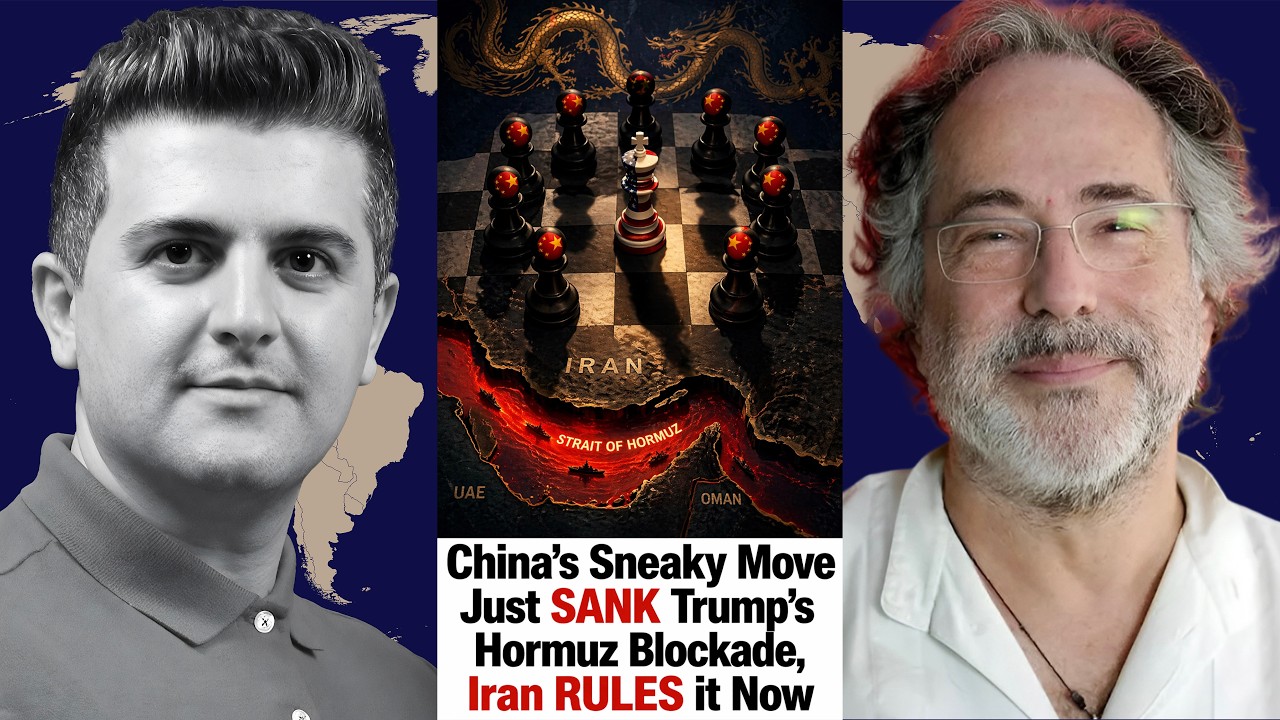
Pepe Escobar: “Total Failure”: Trump’s Blockade Just Backfired Disastrously
"Pepe Escobar argues that the US blockade against Iran, spearheaded by Donald Trump, has utterly failed and backfired, accelerating global economic chaos and challenging US geopolitical dominance."

Col. Jacques Baud: What a US Ground Invasion of Iran Would REALLY Look Like
"Colonel Jacques Baud dissects the strategic futility of a US ground invasion of Iran, arguing that current troop levels are insufficient and such an action would backfire, exposing US allies and potentially leading to Iran's nuclearization."

Alex Krainer: US STRIKES Iran – Iran RETALIATES Against Kuwait, Bahrain & Jordan!
"Amidst escalating US-Iran conflict and Iranian retaliation against regional US allies, this episode argues that US foreign policy is deeply controlled by an 'Anglo-Zionist conspiracy' led by the Rothschild banking dynasty, prioritizing Israeli interests over American ones."