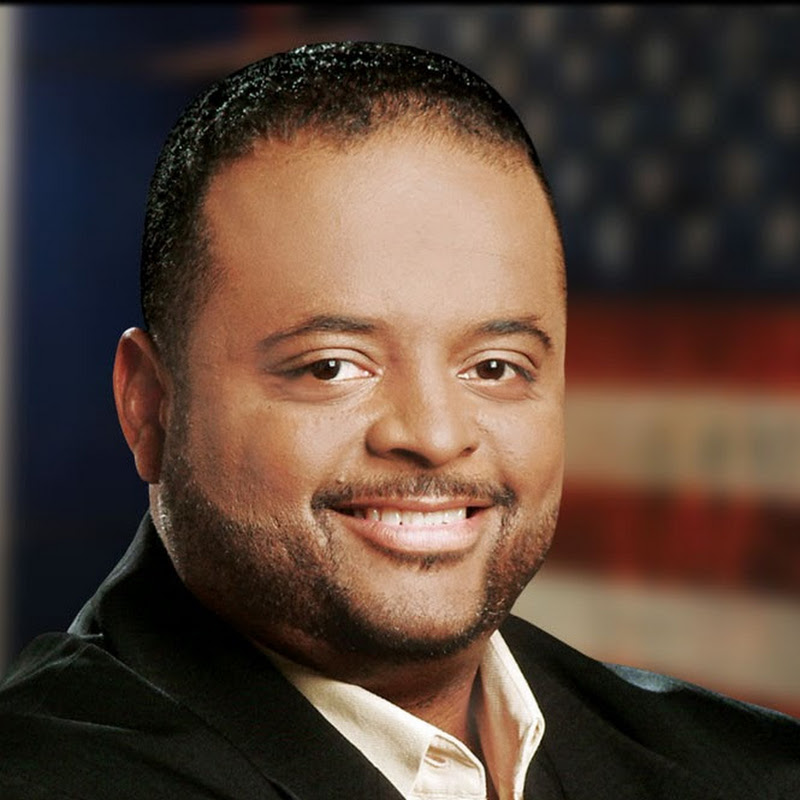
Roland gives Juneteenth speech in Memphis
YouTube · eKXAUpSk_IA
Quick Read
Summary
Takeaways
- ❖Roland Martin criticizes Memphis leaders for a lack of accountability, particularly regarding the Tyree Nichols case and the city's refusal of DOJ police oversight.
- ❖He argues that criticism of poor service or political decisions should be met with self-reflection, not defensiveness, citing his own experiences with Memphis airport officials and local politicians.
- ❖Martin highlights Baltimore Mayor Brandon Scott's success in reducing crime by shifting resources from policing to addressing root causes like poverty, demonstrating that crime is fundamentally an economic issue.
- ❖He asserts that 'defund the police' was always about reallocating excessive police budgets to community services, not eliminating law enforcement.
- ❖Martin challenges the notion of 'identity politics' by arguing that all politics inherently involves segmenting the electorate into identity groups for strategic campaigning.
- ❖He criticizes white politicians for not challenging white communities on voting against their economic interests, citing examples of low-income white voters supporting policies that harm them.
- ❖Martin contends that a 'Jim Crow 2.0' agenda is systematically attacking Black political power, economic opportunities, civil rights groups, and access to education and employment through legislative and judicial actions.
- ❖He calls for a massive mobilization and organization effort, emphasizing that the South is not inherently right-wing but rather 'not organized,' leading to low Black voter turnout in critical elections.
- ❖Martin urges the audience to commit to being change agents, doing the hard work to improve their communities, and ensuring their names are remembered for their contributions in 30 years, rather than just those from 1968.
- ❖He reinterprets Dr. King's sanitation workers' strike as an economic fight and highlights King's blueprint for economic withdrawal and supporting Black businesses.
Insights
1Lack of Accountability Hinders Progress in Memphis
Memphis leaders, including the mayor and airport commission, are criticized for reacting defensively to criticism rather than addressing systemic issues. Martin cites the mayor's refusal to appear on his show after criticism regarding the Tyree Nichols case and the city's rejection of Department of Justice oversight for the police department. This defensiveness prevents fixing problems and fostering genuine improvement.
The mayor still refuses to come on my show... He's upset because... the city refused to participate in the Department of Justice's... oversight of the police department. And I was critical of it.
2Crime is an Economic Problem, Not Just a Police Problem
Drawing on the example of Baltimore Mayor Brandon Scott, Martin argues that reducing crime effectively involves confronting its root causes, primarily economic. Baltimore achieved a significant drop in its murder rate by reallocating resources from policing to social services and poverty alleviation, even with a reduced police force. This aligns with the 'defund the police' concept of shifting funds to community investment.
The model to reduce crime is confronting the things that cause crime... show me a neighborhood with a credit score of 700 or higher and I will show you a neighborhood that does not have a crime problem. It's tied directly to economics.
3All Politics is Identity Politics
Martin challenges the criticism of 'identity politics,' arguing that all political campaigning inherently involves segmenting the electorate into various identity groups (gender, race, religion, socioeconomic status) to craft targeted messages and agendas. He confronted Senator Bernie Sanders and Elizabeth Warren on this, urging them to address 'broke white people' about voting against their own economic interests.
Every time you criticize identity politics I want you to understand you're criticizing black people... when all politics is identity politics. It is. Ask any politician in this room... They are parsing the electorate into identity groups.
4Systematic Defunding and Attack on Black America ('Jim Crow 2.0')
Martin asserts that a massive, systematic effort is underway to defund Black America, attacking Black political and economic power, civil rights groups, and access to education and employment. This includes Supreme Court rulings on affirmative action, challenges to race-based scholarships and internships, and FCC efforts to scrutinize corporate DEI programs, leading to significant funding cuts for marginalized groups and job losses for Black men and women.
You are seeing right now in real time the direct and systematic attack on black political power, black economic power, they're attacking civil rights groups, they're attacking access to universities... You are seeing every single thing, the entire infrastructure that has sustained African Americans over the last 60 years under a massive direct attack as we stand.
5Memphis's Economic Stagnation Despite Political Power
Despite having a high concentration of African Americans and a history of Black mayors and council members (second only to Atlanta in the South), Memphis has not seen corresponding economic prosperity for its Black population. Martin questions why Memphis is excluded from discussions of the 'New South' and challenges leaders to identify major Black-owned businesses and their revenue, highlighting a disconnect between political power and economic uplift.
How can you have a high concentration of African-Americans in this city, and you do not see the corresponding economic aspects? ... Can you name me the five largest black-owned businesses in Memphis and what is their annual revenue? And folk could not answer the question.
Bottom Line
The struggles of marginalized urban Black communities are increasingly mirrored in rural white communities facing similar corporate and political abuses (e.g., data centers, pollution, economic hardship).
This convergence of grievances creates an unprecedented opportunity for cross-racial coalitions, potentially uniting diverse groups against common economic and political adversaries, challenging traditional identity-based political divides.
Organizers should actively seek to bridge the gap between urban and rural, Black and white communities by highlighting shared economic and environmental injustices, fostering a broader, more powerful movement for systemic change.
The 'defund Black America' agenda is not just political or social, but a deliberate, systematic dismantling of the entire infrastructure (legal, economic, educational) that has supported Black progress over the past 60 years.
This requires a comprehensive, multi-faceted response that goes beyond single-issue advocacy, demanding a coordinated defense across legal, economic, political, and educational fronts.
Advocacy groups and community leaders must develop integrated strategies that connect seemingly disparate attacks (e.g., affirmative action, DEI cuts, voting rights) to a larger, unifying narrative of systemic oppression, mobilizing a broader base for resistance.
Key Concepts
Accountability as a Catalyst for Change
The principle that progress and problem-solving are impossible without leaders and institutions being held directly responsible for their actions and outcomes, rather than deflecting criticism or living in denial. This applies to customer service, political decisions, and community economic development.
Economic Basis of Social Issues
The model posits that many social problems, including crime and lack of community development, are fundamentally rooted in economic disparities. Addressing poverty, lack of opportunity, and wealth inequality is more effective than solely focusing on punitive measures or superficial solutions.
Jim Crow 2.0
A conceptual framework suggesting that contemporary legislative, judicial, and corporate actions constitute a systematic, coordinated effort to dismantle Black political power, economic progress, and civil rights gains achieved over the last 60 years, mirroring the systemic oppression of the original Jim Crow era.
Nehemiah's Wall (Biblical Playbook for Community Building)
An analogy drawn from the biblical story of Nehemiah, used to outline a process for community rebuilding and resistance: acknowledge the problem, visualize a solution, mobilize the people, ignore the 'haters,' defend against attacks while continuing to build, and ensure that those who contribute are recognized for their work.
Lessons
- Demand accountability from elected officials and community leaders by asking for specific, measurable achievements in economic development and community well-being over the past year.
- Actively participate in political mobilization efforts, including voter registration and training, recognizing that political power is essential to driving economic and social change.
- Support and invest in Black-owned businesses and advocate for policies that expand contracts and opportunities for them, directly challenging corporations and political systems that fail to reinvest in Black communities.
The Nehemiah Playbook for Community Rebuilding and Resistance
**Survey the Destruction:** Honestly assess the problems and destruction within your community (e.g., economic disparities, lack of protection).
**Visualize the Solution:** Develop a clear vision for repairing and protecting your community (e.g., economic opportunities, healthcare, safety).
**Mobilize the People:** Inspire and unite community members, ensuring broad participation beyond just 'generals' or leaders, fostering a collective commitment to rebuild.
**Ignore the Haters, Keep Building:** Disregard criticism and opposition from those who do not want to see the community thrive, maintaining focus on the work.
**Defend While Building:** Be prepared to defend against active attacks and sabotage from adversaries, holding a 'weapon in one hand and building with the other,' without ceasing construction.
**Ensure Recognition:** Document and celebrate the contributions of every individual involved in the rebuilding process, ensuring their names are remembered for their efforts in future generations.
Quotes
"If you do good, I'm going to talk about you. If you do bad, I'm going to talk about you. At the end of the day, I'm going to talk about you."
"You never fix a problem if you want to live in denial about what is going on."
"The hardest thing for a lot of people to deal with is accountability."
"Show me a neighborhood with a credit score of 700 or higher and I will show you a neighborhood that does not have a crime problem. It's tied directly to economics."
"Nobody tries this hard to keep you from voting if it doesn't mean anything."
"Every time you criticize identity politics I want you to understand you're criticizing black people... when all politics is identity politics."
"How can there be a discussion of the new South and you not mention Memphis? Because it comes to money."
"You are seeing right now in real time the direct and systematic attack on black political power, black economic power..."
"You are literally sitting in the midst of Jim Crow 2.0."
"The sanitation worker strike was an economic fight. That was a healthcare fight."
"King in that sermon says... black people collectively are the poorest in the world. He said yet when we when they said individually we're poor, but collectively represent one of the largest economies in the world."
"What the work that you put in today will determine whether folk call your name 30 years from now."
Q&A
Recent Questions
Related Episodes

LIVE! Love Forward Together Mass People’s Assembly & Moral March Mobilization In Raleigh, NC
"Thousands marched across North Carolina in the 'This Is Our Selma' movement, led by Reverend William Barber, to combat gerrymandering, voter suppression, and advocate for a proactive, love-driven vision of social and economic justice."
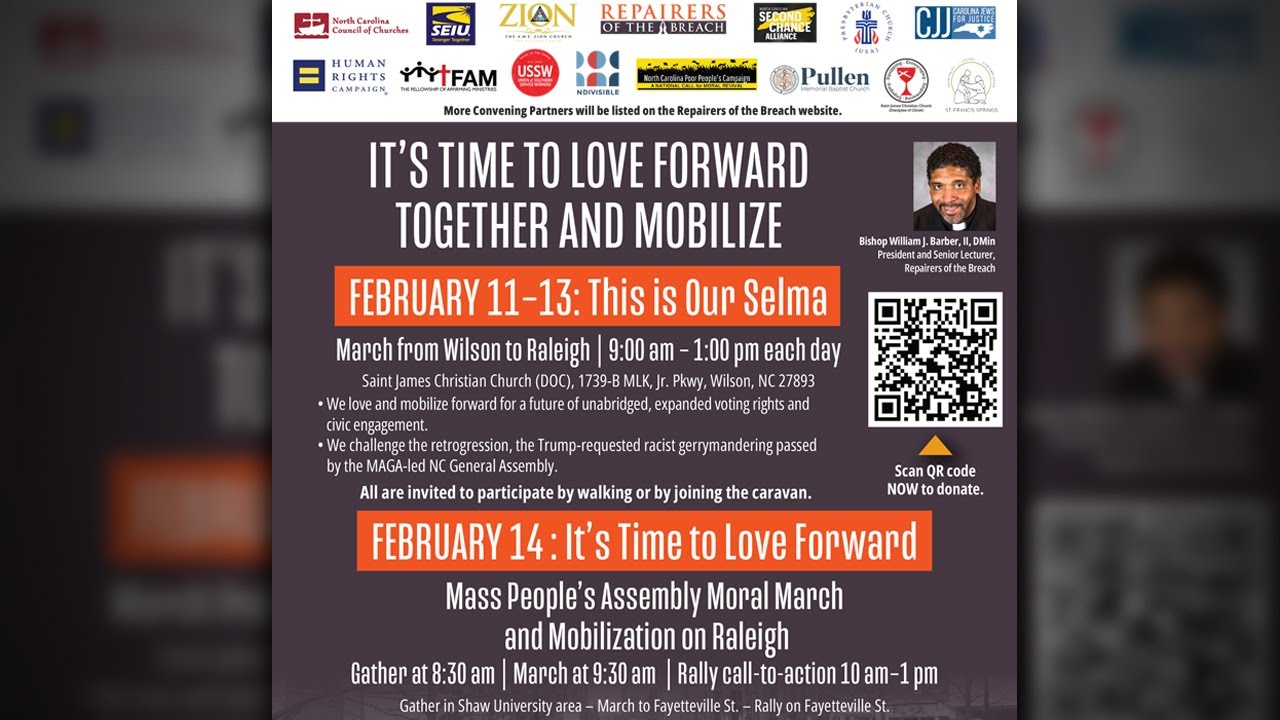
Love Forward Together Mass People’s Assembly & Moral March Mobilization | Day 2
"This episode documents Day 2 of the 'Love Forward Together' march in rural North Carolina, a mobilization against voter disenfranchisement and redistricting, emphasizing community unity and persistent activism."

The Immortal Jim Crow. 'Goon Squad' Defamation Suit. Google Race Discrimination Case. #TheBreakdown
"This episode exposes the enduring grip of systemic racism through a Mississippi defamation suit, Google's racial discrimination settlement, and a deep dive into how Jim Crow's legacy still shapes Black America today."
Roland speaks at Columbus Educ. Assoc. MLK Dinner
"Roland Martin challenges the audience at an MLK dinner to move beyond passive celebration and engage in active, sustained political and economic struggle, emphasizing that 'rest time is over' for those seeking real societal change."