The Past, Present and Future of Shipping in the United States | National Maritime Day 2026
YouTube · esTCf_aW4ac
Quick Read
Summary
Takeaways
- ❖National Maritime Day commemorates the SS Savannah's pioneering steam voyage, marking a historical high point for US maritime innovation.
- ❖The US Merchant Marine has plummeted from global dominance post-WWII to a marginal player in international shipping and shipbuilding.
- ❖China commands over 70% of global shipbuilding orders, while the US holds a 'fraction of a percent.'
- ❖The total US-flagged oceangoing fleet (over 1000 gross tons) stands at a mere 190 vessels, with many operating under military subsidy programs.
- ❖Jones Act vessels face challenges like limited US shipyard access, often requiring drydocking in Korea or Hong Kong.
- ❖The Ready Reserve Force, crucial for military surge capacity, is severely aged and has demonstrated poor activation rates.
- ❖The historical bifurcation of US commercial and naval shipping policies is identified as a root cause of the industry's decline.
- ❖Technological advancements like autonomous shipping, shipyard automation, and modular nuclear reactors offer a path for US maritime resurgence.
- ❖Effective leadership is currently lacking to drive a necessary 'maritime renaissance' in the United States.
Insights
1Dramatic Decline of US Merchant Marine
At the end of World War II, the US Merchant Marine was the world's largest, moving 63% of global goods. Today, the US ranks 18th in terms of registered shipping value and 23rd in tonnage, with only 190 total US-flagged oceangoing vessels over 1,000 gross tons.
Post-WWII, US moved 63% of world's goods. Today, US is 18th in registration value, 23rd in tonnage, and has 190 total US flag vessels (Marad Dec 2025 report).
2China's Dominance in Global Shipbuilding
China has achieved overwhelming dominance in the global shipbuilding market, controlling 70.9% of market share in 2025. This contrasts sharply with the US, which holds only a 'fraction of a percent,' highlighting a critical strategic vulnerability.
China in 2025 has 70.9% of global shipbuilding market share. South Korea 16.6%, Japan 8.9%, Europe 0.9%, and the US a fraction of a percent.
3Aging and Inefficient Ready Reserve Force
The Ready Reserve Force (RRF), intended for rapid military activation, consists of approximately 43 ships with an average age of 45 years. A 2019 'turbo activation' test failed miserably, achieving only a 40% activation rate against a target of 85%, indicating severe readiness issues.
RRF ships average about 45 years old. A 2019 'turbo activation' test failed miserably, with about a 40% activation rate when it should be banging at about 85%.
4Impact of Bifurcated Shipping Policy and Shipyard Access Issues
The US policy of bifurcating commercial and naval shipping, unlike other major maritime nations, has severely hampered its commercial industrial base. This results in Jones Act vessels, such as tankers, being forced to use foreign shipyards in places like Korea and Hong Kong for drydocking because US military needs dominate domestic shipyard capacity.
US has bifurcated its commercial and naval shipping, causing problems. Jones Act tankers are sitting in Korea and Hong Kong for drydocking because US military largely dominates US shipyards.
5Potential for Technological Maritime Resurgence
Despite the current challenges, the US retains an industrial base and economic power, with technology offering a path to revitalization. Innovations such as autonomous shipping, automated shipyards, and modular nuclear reactors could position the US at the forefront of a new maritime era, provided there is strong leadership and strategic investment.
The US still has an industrial base, is wealthy, and a large importer/exporter. Technology is key: autonomous shipping, autonomy in shipyards, modular nuclear reactors in ships. This takes leadership.
Key Concepts
Bifurcation of Commercial and Naval Shipping
The US historically separated its commercial and naval shipbuilding and operational policies, unlike major competitors. This split led to a lack of complementary support and investment, ultimately weakening the commercial maritime industrial base and creating a national security vulnerability by isolating naval capabilities from a broader, robust shipping ecosystem.
Strategic Backstop
The concept that a strong commercial merchant marine serves as an essential 'backstop' for national defense, providing trained crews, maintenance infrastructure, and surge capacity for military sealift. Without this commercial foundation, the military's ability to sustain operations and project power is severely hampered, as evidenced by issues like crew shortages and aging reserve fleets.
Lessons
- Prioritize strategic investment in US commercial shipbuilding and repair facilities to reduce reliance on foreign shipyards and enhance national security.
- Develop a unified national maritime strategy that integrates commercial and naval shipping policies, fostering a complementary industrial base rather than a bifurcated one.
- Invest in advanced maritime technologies, including autonomous vessels, shipyard automation, and alternative propulsion systems (e.g., modular nuclear reactors), to regain a competitive edge and drive innovation.
Revitalizing the US Maritime Industry
Establish clear, unified leadership for a US maritime renaissance, akin to historical figures who spearheaded major shipbuilding programs.
Implement policy reforms that support the domestic commercial fleet, such as the Jones Act, while addressing infrastructure and crewing challenges.
Modernize the Ready Reserve Force by phasing out aging vessels and investing in new, efficient ships, alongside robust training programs for merchant mariners.
Quotes
"China right now in 2025 has 70.9% of the market share of global ship building. That's right. They control over 70% of global ship building."
"The United States has bifurcated its commercial and naval shipping and it's caused big problems."
"Back in 2019, there was a test of the ready reserve force, what was called a turbo activation, and it failed miserably, about a 40% activation rate when it should be banging at about 85%."
"Technology is the key. When the Savannah set sail and sailed across the Atlantic under steam power for the first time, it was technology that marked the arrival of the US commercial merchant marine. And I think technology once again can do it."
Q&A
Recent Questions
Related Episodes
PBS News Hour full episode, June 16, 2026
"This episode unpacks the murky U.S.-Iran nuclear deal, the politicization of the Justice Department, rising cancer rates in Iowa, the unprecedented shutdown of powerful AI models, and a new institute reframing the enduring impact of slavery."
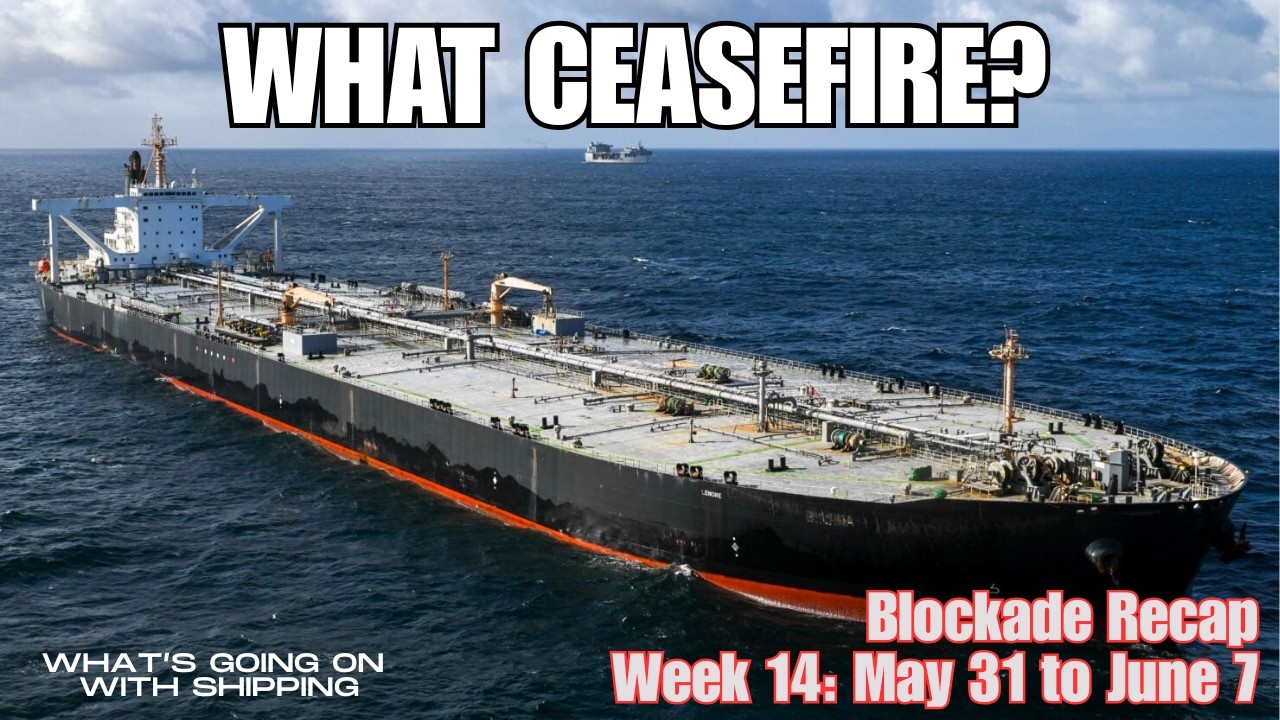
The Global Shipping Crisis: 14 Weeks of the Persian Gulf Blockade
"The ongoing 14-week blockade in the Persian Gulf has severely disrupted global shipping, causing massive spikes in freight rates, collapsing Iranian oil exports, and creating a precarious global energy supply chain."

The Fat Electrician Vs Tactically Acquired | Unsubscribe Podcast 267
"This episode features military content creators discussing current geopolitical hotspots, advanced weaponry, and the surprising psychological warfare tactics of modern conflict, alongside their personal journeys building online communities."

Reckoning With Trump’s Iran Defeat. Plus: The Meaning of Memorial Day (w/ Michael Wood)
"A combat veteran and former Marine officer critically assesses the Trump administration's handling of the Iran conflict as a strategic defeat and expresses deep concern over the politicization of the U.S. military, linking these issues to the solemn meaning of Memorial Day."