BREAKING: Iran’s LAST Card: Hormuz; Trump Moves In; Hezbollah Money Hit | TBN Israel
YouTube · ey9jYwozvXU
Quick Read
Summary
Takeaways
- ❖The Strait of Hormuz, through which 20% of global oil passes, is Iran's 'last card' for economic leverage.
- ❖The US is forming an international coalition to militarily escort oil tankers through the Strait of Hormuz, a move not seen since WWII convoys.
- ❖Israel and the US have destroyed over 2,200 Iranian targets, including 70% of missile launchers and 85% of air defense systems.
- ❖Iran's missile production has ceased entirely, not just slowed down.
- ❖The US has deployed the Leonitis high-power electromagnetic (HPM) weapon to fry drone electronics, a 'game-changer' for countering drone swarms.
- ❖Operation Treasure Chest in Lebanon destroyed 24 Hezbollah-linked banks, three cash warehouses, and eliminated a key financial branch head.
- ❖Iran is experiencing severe digital blackouts, ATM system failures, and increasing desertions within its Revolutionary Guards and police.
- ❖The A10 'Warthog' attack aircraft has been deployed to hunt mobile ground targets and wear down enemy forces beneath the cloud line.
- ❖Trump claims Iran uses AI to spread fake news, compensating for military weakness with narrative warfare.
- ❖The Lebanese President is taking extreme steps against Hezbollah, including legal moves and arrests, signaling a shift in internal Lebanese politics.
Insights
1Strait of Hormuz: Iran's Last Leverage
The Strait of Hormuz, a vital chokepoint for 20% of the world's oil supply, is identified as Iran's final strategic card. Despite severe military setbacks, Iran seeks to impose a 'selective closure' or threaten shipping to raise oil prices and create global economic pressure, aiming to deter Western intervention and ensure the survival of its regime.
The hosts state, 'The struggle over the straight of Homus is becoming the central arena of confrontation between Iran and the United States' (). Mati Shosani elaborates on 20% of crude oil and liquid natural gas passing through, and Iran's threat to shipping (, ).
2US-Israeli Campaign Decimates Iranian Military Capabilities
The combined US and Israeli military operations have systematically dismantled Iran's defense infrastructure. Within 17 days, over 2,200 targets were struck, including 70% of missile launchers and 85% of air defense capabilities. Iran's missile production has dropped to zero, indicating a severe, irreversible blow to its ability to rebuild.
The host reports, 'More than 2,200 targets belonging to the regime's security apparatus have been struck across Iran... Missile production in Iran has dropped to zero... 70% of the missile launchers have been put out of use... Around 85% of the regime's air defensive capabilities have been destroyed or disrupted' (, , , ).
3Leonitis HPM System: A Game-Changer Against Drones
The US Marines have deployed the Leonitis, a high-power electromagnetic (HPM) weapon, in the region. This system can burn out the electronic components of dozens of drones in a single shot, offering a cost-effective counter to Iran's cheap drone swarms without using expensive kinetic interceptors. This represents a 'next-gen' electronic warfare capability.
Mati Shosani introduces 'a new weapon system called Leonitis that's been deployed... a substantial electronic warfare system... to knock out drones from the air' (). The host later confirms, 'The Leonitis system, a high power electromagnetic HPM weapon, has been deployed... to take down dozens of drones in a single shot' (, ).
4Operation Treasure Chest Cripples Hezbollah's Finances
In Lebanon, the IDF executed 'Operation Treasure Chest,' a targeted economic offensive against Hezbollah. This operation destroyed 24 banks associated with the Elcar de Hassan Association, three large cash warehouses, and two management centers. Additionally, the head of Hezbollah's financial branch in the Lebanon corps of the Quds forces was eliminated, severely disrupting their funding pipeline and operational capacity.
The host details, 'The IDF is completing operation treasure chest. The Israeli air force is destroying dozens of banks that were used to finance in the heart of Lebanon' (). Later, '24 banks of the Elcar de Hassan Association were destroyed. Three cash warehouses... The head of the financial branch in Lebanon core of the coup's forces was eliminated' (, ).
5Internal Erosion and Digital Blackout in Iran
Beyond military strikes, Iran is experiencing significant internal destabilization. A severe digital blackout is affecting ATM systems, data centers, and civilian services. Reports indicate expanding desertions within the Revolutionary Guards and police, with officers avoiding orders and abandoning posts. This internal erosion, coupled with communication disruptions, is damaging the regime's ability to control and make decisions.
The host reports, 'The digital blackout in Iran is worsening tonight with reports of ATM systems that are failing, data center shutdowns' (). Later, 'desertions... are being recorded in larger numbers. In the police ranks, there are low and mid-level officers while not rushing to carry out orders' (, ).
Bottom Line
The deployment of the A10 'Warthog' aircraft signals a shift towards sustained, low-altitude ground target suppression, indicating a long-term strategy to wear down rather than just bomb Iranian forces.
This suggests the US anticipates a prolonged campaign against mobile and concealed targets, requiring persistent air presence and direct engagement, moving beyond initial 'shock and awe' strikes.
Defense contractors specializing in durable, low-cost, high-loiter-time ground attack platforms or advanced sensor systems for identifying camouflaged mobile targets could see increased demand or strategic relevance.
The Lebanese President's public stance against Hezbollah, including legal actions and arrests, marks a significant internal political shift, potentially weakening Hezbollah's domestic legitimacy and operational freedom.
This internal pressure, combined with IDF economic strikes, could accelerate Hezbollah's decline, creating a more stable environment in Lebanon and reducing Iran's regional influence.
International diplomatic efforts could capitalize on this internal shift to support Lebanese state institutions and further isolate Hezbollah, potentially leading to new regional security arrangements.
Iran's use of AI for spreading fake news to compensate for military weakness indicates a growing reliance on information warfare as a primary defense mechanism.
This highlights the increasing importance of robust counter-disinformation strategies alongside conventional military operations, as narrative control becomes a critical battlefront.
Development of advanced AI-driven tools for real-time fake news detection, source attribution, and counter-narrative dissemination could become a high-priority area for national security and public information agencies.
Key Concepts
Chokepoint Strategy
Iran's attempt to leverage control over the Strait of Hormuz, a narrow and critical maritime passage for global oil and gas, to exert economic and geopolitical pressure on the international community. This strategy aims to disrupt global trade and raise energy prices as a form of asymmetric warfare.
Systematic Disassembly
The US and Israeli military strategy of targeting not just individual assets but the entire chain of Iran's power, from command and control to production facilities, financial networks, and leadership. This approach aims for a complete collapse rather than just reducing immediate threats.
Asymmetric Warfare Counter
The deployment of advanced electronic warfare systems (like Leonitis) and sustained ground-attack aircraft (A10) to counter Iran's reliance on cheap drones, small vessels, and proxy groups, which are designed to inflict disproportionate damage or disruption without direct conventional confrontation.
Lessons
- Monitor global oil prices and supply chain stability closely, as the conflict over the Strait of Hormuz will continue to introduce volatility.
- Assess the implications of advanced electronic warfare systems like Leonitis on existing defense strategies, particularly regarding drone threats and electronic countermeasures.
- Evaluate the long-term impact of economic warfare tactics, such as 'Operation Treasure Chest,' on non-state actors and their financing networks.
Notable Moments
Trump's announcement of an international policing force to guarantee safe passage through the Strait of Hormuz, likened to WWII convoys.
This signifies an unprecedented level of military commitment to securing global trade routes against Iranian threats, escalating the conflict's scope and international involvement.
The hosts hearing missile intercepts overhead during the live broadcast, emphasizing the immediate and ongoing nature of the conflict.
This personalizes the conflict, underscoring the constant threat faced by civilians in Israel and the real-time nature of the 'Epic Fury War' (Lion's Roar).
Quotes
"We will establish an international policing force to guarantee safe passage to the Straits of Hom."
"As far as I'm concerned, we have basically already defeated Iran."
"If you overnight cut 20% of the natural gas, 20% of the crude oil in the world, what do you think happens to the price of oil around the world? Well, I'll tell you what happens. It's gone up 40% since this war started."
"Missile production in Iran has dropped to zero, not slowed down, not a partial decline, zero."
"Here you create an energy pulse that burns out electronic components within milliseconds. The system has already demonstrated the ability to take down dozens of drones in a single shot."
Q&A
Recent Questions
Related Episodes

Patrick Henningsen: Hezbollah JUST Fired Back at Israel - Iran Vows to “Crush” All Attacks
"Patrick Henningsen argues that the US and Israel initiated an illegal war against Iran, driven by Trump's incompetence and Israeli influence, leading to an inevitable escalation with severe global economic repercussions."
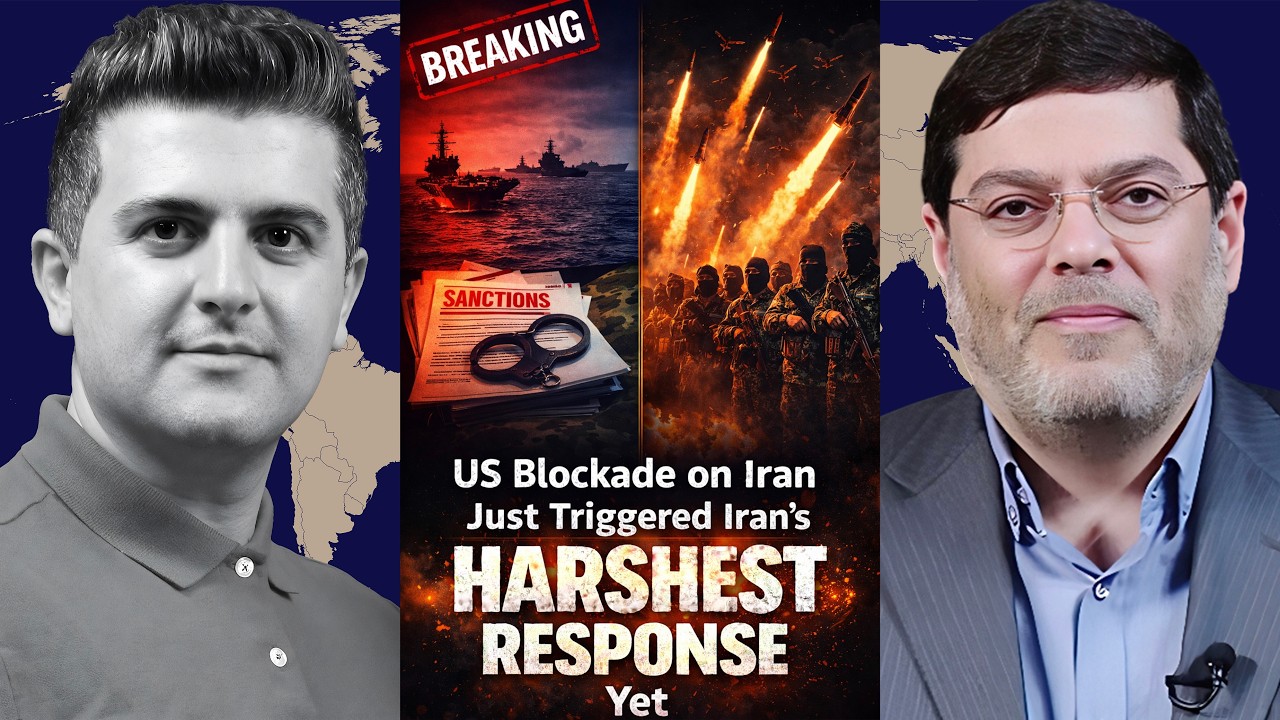
Seyed M. Marandi: US Blockade on Iran Just Triggered Iran’s HARSHEST Response Yet
"An Iranian professor details how US demands and an imposed blockade triggered Iran's harshest response, exposing American strategic missteps and the vulnerability of Gulf Arab states."

Bibi DEMANDS Ground Troops As Marines Rushed to Iran
"Benjamin Netanyahu is pushing for US ground troops in Iran, framing air strikes as insufficient, while the US rushes Marines to the region and struggles to secure the Strait of Hormuz against surprisingly capable Iranian defenses."
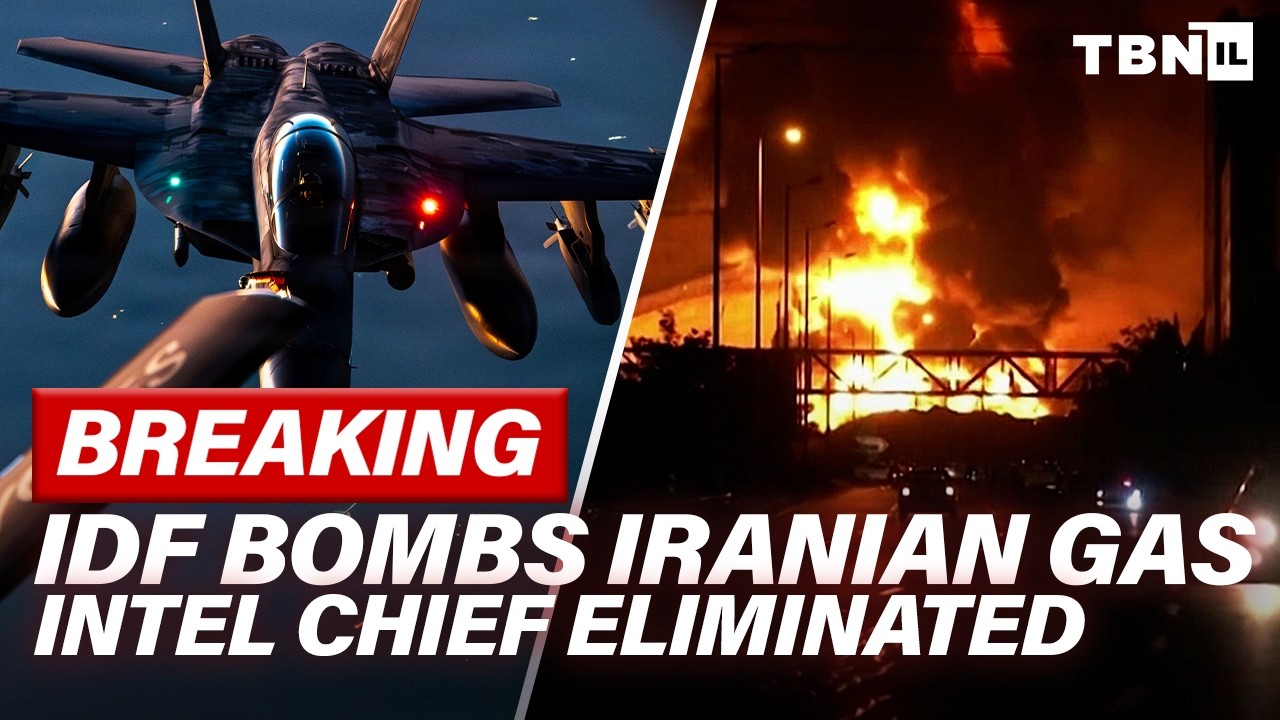
BREAKING: Israel BOMBS Major Iran Gas Site; Top Mullah ELIMINATED; Iran Vows VENGEACE | TBN Israel
"Israel and the United States have escalated their 'Roaring Lion War' against Iran, striking its largest gas facilities, eliminating key intelligence and military figures, and disrupting missile production, while Iran threatens a broader energy war in the Gulf."