
FBI Investigating Mysterious Internet Blackout the Night Nancy Guthrie Vanished
YouTube · f7xMwKBMMrc
Quick Read
Summary
Takeaways
- ❖The Nancy Guthrie case is active, with an FBI and sheriff's task force, despite being 34 days old.
- ❖FBI agents are asking neighbors about a Wi-Fi/internet outage around 1:02 AM on February 1st, the time of Nancy's disappearance.
- ❖Digital forensics expert Jake Green explains Wi-Fi jammers are easily bought and used, but typically only disrupt local networks, not entire neighborhoods.
- ❖The timeline discrepancy (camera disconnected at 1:47 AM, person appeared at 2:12 AM) could be explained by the suspect testing a jammer, leaving, and returning.
- ❖Jammers are unlikely to affect Bluetooth connections, meaning Nancy's pacemaker disconnecting from her Apple device at 2:28 AM likely indicates physical separation.
- ❖Recovering digital evidence like doorbell camera footage can be challenging due to packet loss and short data retention periods by service providers.
- ❖The object in the suspect's pocket could be a Wi-Fi jammer antenna or a walkie-talkie, but pixelation prevents definitive identification.
- ❖The host speculates that the ongoing Tucson Gem Show makes a simple robbery motive less likely, as other targets would be richer.
- ❖Sheriff Nano's statement about few search warrants suggests a lack of probable cause for many leads.
- ❖To protect home networks, use hardwired devices, upgrade to 5 GHz Wi-Fi, enable WP3 protection, and keep operating systems updated.
Insights
1FBI Investigates Localized Internet Outage Coinciding with Disappearance
FBI agents are specifically asking Nancy Guthrie's immediate neighbors about a Wi-Fi and internet outage that occurred around 1:02 AM on February 1st, the exact time she went missing. This suggests a targeted disruption rather than a coincidental system failure.
Multiple neighbors reported an outage at that specific time, and reporters like Brian Enton confirmed the FBI's focus on this detail. One neighbor's Ring camera history was mysteriously unavailable for that night.
2Wi-Fi Jammers are Accessible but Limited in Scope
Digital forensics expert Jake Green clarifies that Wi-Fi disruption devices (often mislabeled as 'jammers') are readily available for purchase online and are relatively low-tech to operate. However, they are designed to disrupt specific networks within a close range (20-30 meters) and are temporary, not capable of blacking out an entire neighborhood.
Green states, 'You can buy one' on Amazon, and 'it's something that we could do in an afternoon.' He adds, 'It's not going to knock out the entire neighborhood block. It's going to isolate the network that it's trying to disrupt and you've got to be fairly close.'
3Discrepancy in Camera Timeline Explained by Jammer Testing
The sheriff's timeline indicated Nancy's Nest cam was 'disconnected' at 1:47 AM, but a person 'appeared' on camera at 2:12 AM. Jake Green proposes this could mean the suspect initially tested a Wi-Fi jammer at 1:47 AM, causing the disconnection, then left. When the jammer was removed, the connection resumed. The suspect then returned at 2:12 AM, possibly with the jammer off or ineffective, and was captured on camera before physically disabling it.
Green suggests, 'they wanted to make sure their Wi-Fi deauthentication device was ready to go. So they rode by, checked it from the street... and then came back a little bit later and hoped it was still working and it wasn't.'
4Digital Evidence Recovery is Fragmented and Time-Sensitive
Recovering data from cloud services like Google or internet service providers (ISPs) can yield only 'bits and pieces' due to packet loss during disruptions and the short retention periods for detailed logs. ISPs primarily keep billing records, not granular connectivity data for extended periods.
Green explains, 'when we're carving back from that, we have the potential to only get bits and pieces and we may not have every single bit and piece to have a completely playable video.' He adds that ISP logs showing 'connectivity issues' may only be kept for 'a matter of days.'
Bottom Line
The suspect's clumsy attempts to disable the camera, despite potentially using a Wi-Fi jammer, suggest a lack of technical sophistication or experience.
This indicates the perpetrator might not be a 'high-level government spy' but rather someone less skilled, potentially 'put up to do this,' which could aid in profiling and identification.
Investigators should focus on individuals with some technical knowledge but who also exhibit amateurish behavior under pressure, potentially revealing a broader network of less experienced criminals.
The presence of the world's largest gem show in Tucson during the disappearance makes a simple robbery motive for Nancy Guthrie's home less plausible.
If the motive was valuables, a perpetrator would likely target the numerous, richer venues of the gem show rather than a single residence, shifting the focus to other potential motives like personal vendetta or targeted kidnapping.
Investigators should prioritize leads related to Nancy Guthrie's personal life, relationships, or specific reasons for targeting her, rather than generic robbery scenarios.
Key Concepts
Digital Hygiene
The practice of regularly updating operating systems, using modern Wi-Fi bands (e.g., 5 GHz), and enabling strong security protocols (e.g., WP3) to protect against digital attacks and disruptions. Neglecting digital hygiene leaves devices vulnerable.
Packet Loss
When data transmitted over a network is lost or fails to reach its destination. In digital forensics, packet loss can result in incomplete or fragmented video and audio recordings, making full data recovery difficult.
Lessons
- Upgrade home Wi-Fi devices to 5 GHz bands and enable WP3 protection to enhance security against common Wi-Fi disruption attacks.
- Keep all smart home devices, cell phones, and computers updated with the latest operating systems to patch vulnerabilities.
- Consider hardwiring security cameras and systems to ensure continuous operation even during Wi-Fi outages or jamming attempts.
- If you recognize the suspect from the provided images or descriptions, contact the FBI immediately, as a $1 million reward is offered.
Notable Moments
Ashleigh Banfield's emotional direct appeal to current or former girlfriends/acquaintances of the suspect.
This highly personal and direct plea, offering a $1 million reward, aims to leverage intimate knowledge of the suspect's appearance and habits, recognizing that such cases are often solved by those closest to the perpetrator.
Quotes
"A cold case is when you've exhausted all the leads and then you pack up all the evidence and you put it on a shelf and you say, 'Gee, I hope we get back to that one day and let's move on to other stuff.' This is not that."
"These Wi-Fi connections can be disrupted especially on older devices... these Wi-Fi disruptions can occur because of what's called a deauthentication attack."
"It's not going to knock out the entire neighborhood block. It's going to isolate the network that it's trying to disrupt and you've got to be fairly close."
"So, if you look at how easy they are to set up, just it has a little display on it. You can flip through, select the channels you want to try to block and intercept. They are something that is very common nowadays. It's and they've been around for years."
"Airplane mode typically doesn't turn off Wi-Fi and it typically doesn't turn off Bluetooth connection. So, you're still broadcasting and receiving."
"You recognize him. You know it's him, right? You recognize the body shape, the bend, the way he walks, the maneuver, the clothes, probably the clothes, the ski mask. You might have seen that, too. That backpack, you really recognize that."
Q&A
Recent Questions
Related Episodes
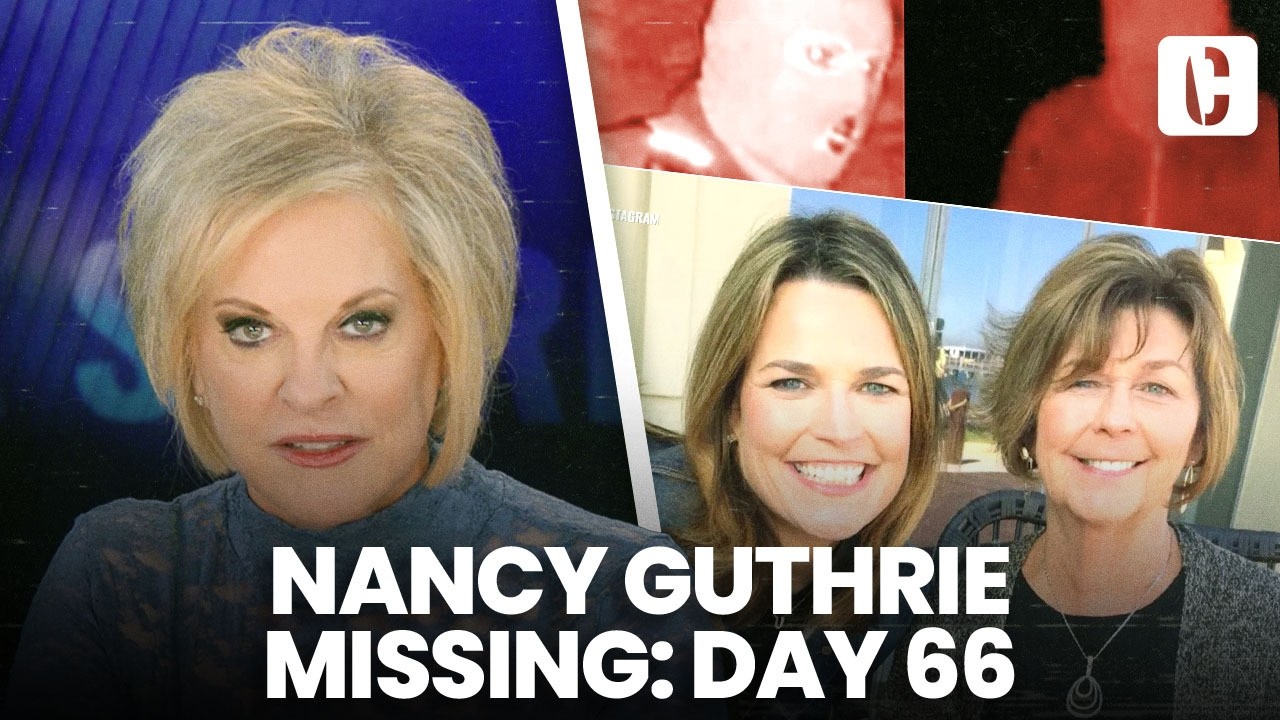
SAVANNAH GUTHRIE'S MOM MISSING: DAY 66
"On day 66 of Nancy Guthrie's disappearance, investigators grapple with two distinct sets of Bitcoin ransom notes, digital tracing challenges, and potential physical evidence like shoe coverings, as new, dubious claims emerge from a 'hyena' seeking payment for information."

Nancy Guthrie Mystery: Kidnapped to Mexico? The Truth About Eerie Google Searches
"Federal authorities are now engaging with Mexican officials in the Nancy Guthrie kidnapping case, contradicting earlier statements from the local sheriff, while new investigative leads emerge from a gun holster purchase and Google search data is clarified."

Widow Realizes Cops Know She Poisoned Her Husband
"A seemingly routine burglary unexpectedly unravels a year-old murder, exposing a mother-daughter poisoning plot and a chilling pattern of suspicious deaths."

Hell On Wheels: Mackenzie Shirilla's Double Murder Crash
"A seemingly accidental car crash that killed two young men in Strongsville, Ohio, was meticulously uncovered by investigators to be a deliberate act of double murder by the 17-year-old driver, Mackenzie Shirilla, amidst a tumultuous relationship and a shocking lack of remorse."