
Amb. Chas Freeman: Israel’s STRATEGY in TATTERS - Trump TAKES OVER
YouTube · fFoKpqMTpq8
Quick Read
Summary
Takeaways
- ❖A 'make-believe ceasefire' in Lebanon, brokered by Pakistan and China, is a temporary lull, not a definitive peace, with real negotiations pending.
- ❖The US, desperate for an end to the war, authorized the release of $7 billion in frozen Iranian assets in Qatar, demonstrating goodwill previously lacking.
- ❖Israel's invasion of Lebanon failed due to Hezbollah's effective defense and heavy Israeli casualties, including significant tank losses.
- ❖Iran has secured relief from oil sanctions, doubling its revenue and increasing production by 40%.
- ❖The Strait of Hormuz is now effectively controlled by Iran and Oman, with tolls charged in cryptocurrency or Chinese yuan, undermining the petrodollar.
- ❖US envoys Steve Witkov and Jared Kushner are widely distrusted and seen as incompetent, leading to indirect talks mediated by Pakistan.
- ❖The Trump administration's diplomacy is characterized by 'caudillismo' (personal rule by cronies), lacking professional staff, clear objectives, or war termination strategies.
- ❖Israel's actions, particularly its disregard for international law and civilian life, have led it to 'forfeit the right to exist' in global opinion, according to Ambassador Freeman.
- ❖European nations, including Britain, are re-evaluating their dependence on the US and seeking independent defense and foreign policies.
- ❖A new regional defense pact is emerging between Pakistan, Saudi Arabia, Egypt, and Turkey, aiming to reduce reliance on Western weaponry.
Insights
1Iran's Strategic Gains and Regional Dominance
Ambassador Freeman argues that Iran has emerged from the conflict in a significantly stronger position. It has gained effective control over the Strait of Hormuz, a vital global shipping lane, and is now charging tolls in non-dollar currencies. Iran also secured relief from oil sanctions, doubling its revenue and increasing production. Its missile force remains intact, and it has demonstrated the ability to withstand significant damage, akin to North Vietnam against US bombing. This has solidified Iran's influence in the region and forced other nations to accommodate it diplomatically.
Iran controls the Strait of Hormuz (, ), oil revenue doubled, 40% production increase (, ), missile force preserved (), tolls charged in cryptocurrency or Chinese yen (, ).
2Israel's Military and Diplomatic Failures
Israel's military operations in Lebanon are described as a failure, incurring heavy casualties (e.g., 100 Merkava tanks destroyed, 400 dead/wounded) and demonstrating weakness in infantry operations against serious opposition like Hezbollah. Diplomatically, Israel's plan to annex Southern Lebanon failed, and its actions have led to widespread international condemnation, with Ambassador Freeman stating Israel has 'forfeited the right to exist' in global opinion due to its 'evil and barbarous fashion' and disregard for international law.
Hezbollah put up a very good fight, heavy Israeli casualties (), many Merkava tanks destroyed (), Israel's plan to annex southern Lebanon will not work (), Israel has 'forfeited the right to exist' (), violated Nuremberg rules ().
3Decline of US Diplomatic Credibility and the Petrodollar
The Trump administration's diplomatic efforts are heavily criticized for being amateurish, incompetent, and deceitful, particularly regarding envoys like Steve Witkov and Jared Kushner, who are distrusted by all parties. This has led to a reliance on indirect talks mediated by other nations. More broadly, the conflict has accelerated the decline of the petrodollar, with Iran accepting alternative currencies for oil payments and tolls, creating 'real trouble' for the global financial structure and the dollar's role as a reserve currency.
Witkov and Kushner 'completely discredited themselves as envoys' (), 'nobody trusts them' (), petrodollar 'in real trouble' (), Iran asking for payment in cryptocurrency or Chinese yen ().
4Emergence of Middle Powers and Regional Autonomy
The conflict underscores the rise of middle-ranking powers that can withstand and challenge superpowers. Nations like Iran, and potentially Brazil, are demonstrating agency in a 'multinodal' world order. This is leading to a re-evaluation of alliances and the development of independent defense capabilities. A significant example is the emerging Saudi-Pakistani defense pact, potentially expanding to include Egypt and Turkey, aimed at reducing dependence on US and European weaponry and fostering a West Asian military-industrial complex.
Iran has shown middle-ranking powers can stand off superpowers (), Ukraine stood up to Russia (), Brazil could become assertive (), Saudi-Pakistani defense pact with Egypt and Turkey () to develop independent military-industrial capacity ().
Bottom Line
The shift away from the petrodollar is accelerating, with Iran demanding payment for Strait of Hormuz tolls and oil exports in cryptocurrency or Chinese yuan.
This directly challenges the US dollar's global dominance and could lead to significant reordering of international finance and trade, impacting inflation and potentially triggering a global recession.
Investors and businesses should explore hedging strategies against dollar depreciation and consider increasing exposure to alternative currencies and payment systems, as well as markets in nations actively de-dollarizing.
The conflict has catalyzed the formation of an independent West Asian military-industrial complex, involving Pakistan, Saudi Arabia, Egypt, and Turkey, to reduce reliance on Western arms.
This signals a long-term decline in Western (especially US) influence over regional security and arms markets, potentially creating new geopolitical alignments and defense industry competitors.
Defense contractors and technology companies from non-Western nations (e.g., China, Russia, Brazil) may find new markets and partnerships in this emerging bloc, while Western firms face reduced market access and influence.
Spain has reopened its embassy in Tehran, breaking European unity on Iran sanctions and signaling a potential shift in European foreign policy.
This could be the 'first of many' European nations seeking independent engagement with Iran, further isolating the US and Israel and complicating efforts to maintain a unified front against Tehran.
Businesses in Europe and Iran could explore new trade and investment opportunities as diplomatic ties normalize, potentially bypassing US sanctions and fostering new economic corridors.
Opportunities
Develop and market secure, compliant cryptocurrency payment solutions for international trade, particularly in regions seeking to de-dollarize.
As nations like Iran increasingly demand payment in non-dollar currencies or cryptocurrencies for critical resources like oil and transit fees, there's a growing market for robust, secure, and internationally compliant crypto payment platforms that can facilitate these transactions, especially for countries under sanctions or seeking financial autonomy.
Invest in and develop renewable energy infrastructure and electric vehicle technologies for global markets, especially in China.
The current geopolitical instability and skyrocketing oil and gas prices are driving a massive global shift towards renewable energy and electric vehicles. China is positioned as a 'huge winner' in this transition, having gained a significant market for wind, solar, nuclear energy, and EVs. Businesses can capitalize on this by investing in Chinese renewable energy firms, EV manufacturers, or developing complementary technologies and services.
Establish or partner with defense manufacturing capabilities in emerging regional powers (e.g., Pakistan, Egypt, Turkey).
With the formation of a potential West Asian military-industrial complex and a desire to reduce dependence on US/European weaponry, there's an opportunity to develop local defense production. This could involve technology transfer, joint ventures, or direct investment in countries like Egypt (heavy industry), Pakistan (manpower, Chinese tech), and Turkey (high-tech industrial economy building its own fighter jet).
Key Concepts
Multinodal Order
A geopolitical framework where there is no single hegemon or bipolar power structure. Instead, countries have variegated relationships in a network, allowing middle-ranking powers to assert agency, withstand superpowers, and pursue independent foreign policies based on geography, fortitude, and clear strategy.
Caudillismo
A term describing a political system characterized by a strong, charismatic leader (caudillo) who governs through personal loyalty and cronyism rather than established institutions, often leading to a collapse of constitutional government and orderly policy processes. Ambassador Freeman applies this to the Trump administration.
Lessons
- Re-evaluate geopolitical risk models to account for the increased assertiveness of middle powers and the potential for regional conflicts to have global economic repercussions, particularly in energy and finance.
- Diversify currency holdings and payment strategies, considering alternatives to the US dollar for international transactions, as the petrodollar's dominance faces significant challenges.
- Monitor the formation and strengthening of new regional alliances and defense pacts, as these will reshape global security landscapes and create new market opportunities or competitive pressures for defense industries.
- Assess the long-term implications of declining US diplomatic credibility and the rise of 'multinodal' international relations on existing trade agreements, security guarantees, and investment climates.
Quotes
"Nobody has won this war. But two loser, two countries have lost and their leaders have lost. Donald Trump and the United States have lost this war. Netanyahu and Israel have lost this war."
"If you ask people now is Israel should Israel continue to exist? I think almost everyone in the world would say no. It has behaved in such an evil and barbarous fashion... that it has forfeited the right to exist."
"The petro dollar which has been the mainspring of the global economy and the chief source of strength for the dollar as a medium of trade transaction settlement and reserve currency is in real trouble."
"You don't start a war without setting objectives that are feasible. There were no clear objectives in this war."
Q&A
Recent Questions
Related Episodes
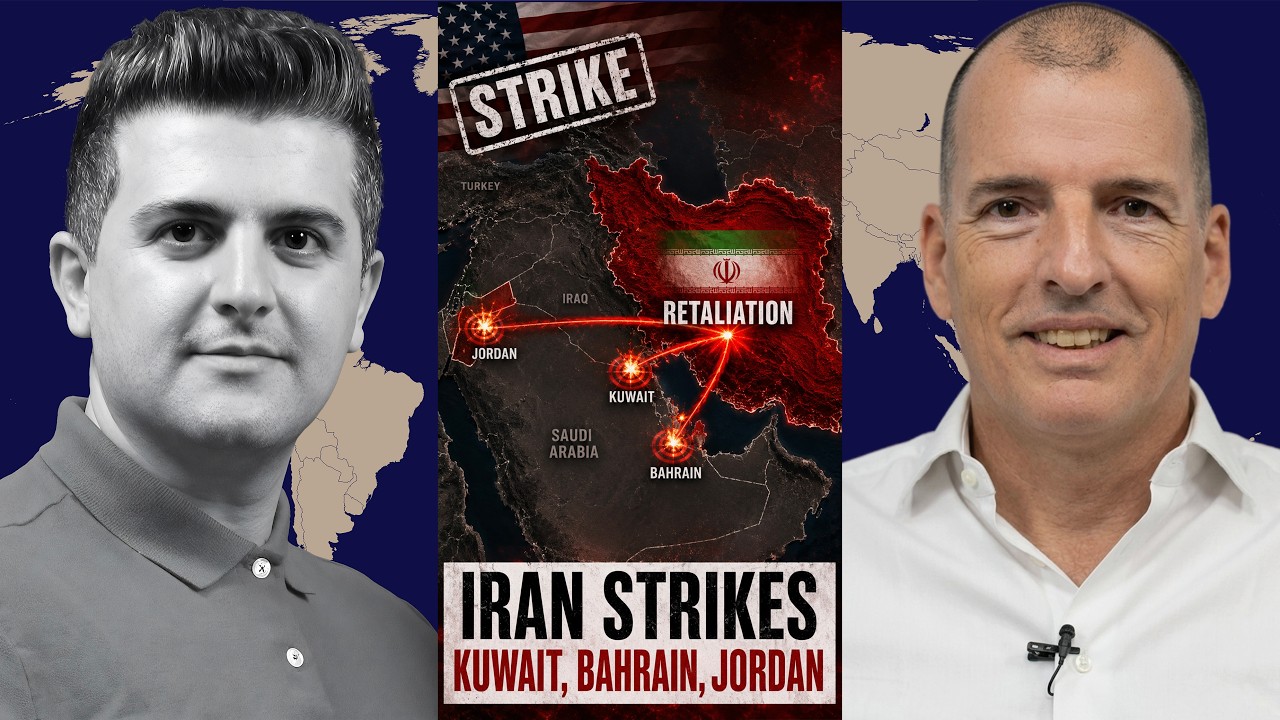
Alex Krainer: US STRIKES Iran – Iran RETALIATES Against Kuwait, Bahrain & Jordan!
"Amidst escalating US-Iran conflict and Iranian retaliation against regional US allies, this episode argues that US foreign policy is deeply controlled by an 'Anglo-Zionist conspiracy' led by the Rothschild banking dynasty, prioritizing Israeli interests over American ones."

Patrick Henningsen: Hezbollah JUST Fired Back at Israel - Iran Vows to “Crush” All Attacks
"Patrick Henningsen argues that the US and Israel initiated an illegal war against Iran, driven by Trump's incompetence and Israeli influence, leading to an inevitable escalation with severe global economic repercussions."
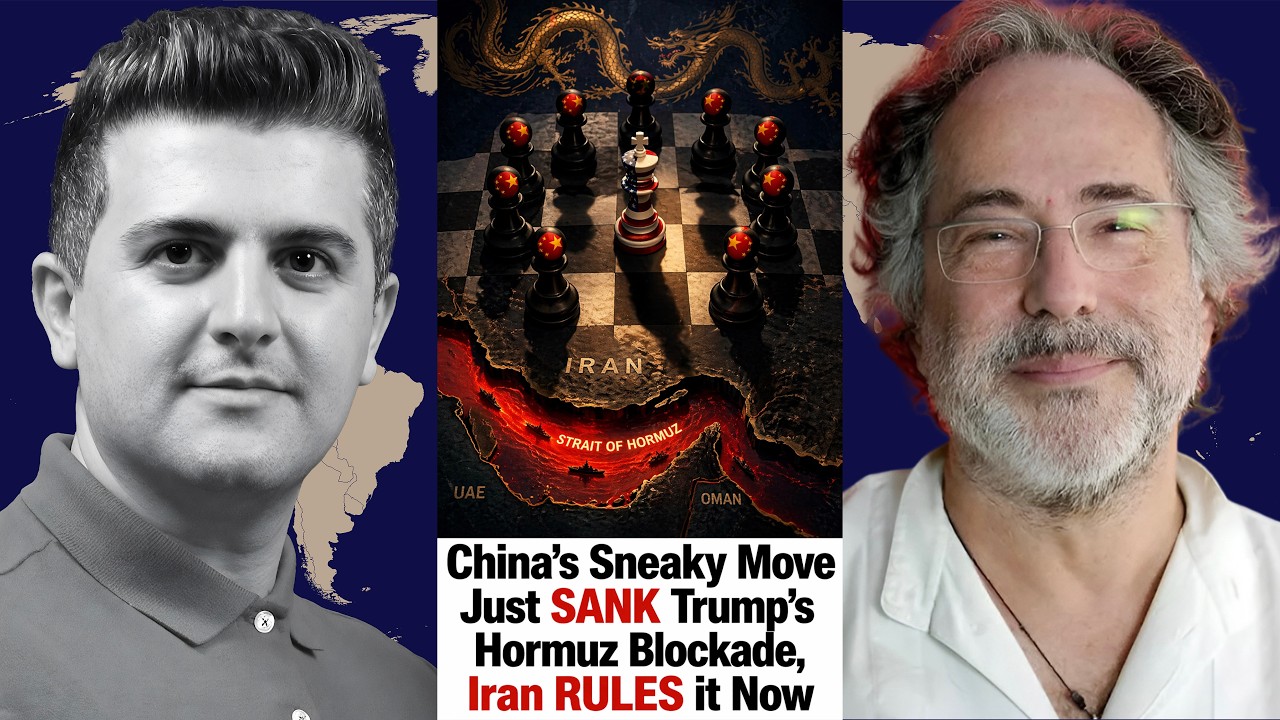
Pepe Escobar: “Total Failure”: Trump’s Blockade Just Backfired Disastrously
"Pepe Escobar argues that the US blockade against Iran, spearheaded by Donald Trump, has utterly failed and backfired, accelerating global economic chaos and challenging US geopolitical dominance."

LIVE: Trump HIDES FROM PUBLIC as US SOLDIER KILLED!!! 6/2/2026
"The host exposes alleged government cover-ups regarding military casualties, Trump's unexplained public absence, and questionable political appointments, arguing these reflect a 'regime of loser babies' and a failing foreign policy."