BREAKING: U.S. DELAYS Iran Strike; Tehran Mocks Washington; IDF Jets Ready | TBN Israel
YouTube · fIsCnuZ9eQY
Quick Read
Summary
Takeaways
- ❖The US President cancelled a planned strike on Iran at the request of Qatar, Saudi Arabia, and the UAE.
- ❖Iran interprets the US delay as a sign of American cowardice, with officials publicly mocking the decision.
- ❖Despite diplomatic talks, Iran is establishing new mechanisms to control and levy fees on shipping through the Strait of Hormuz.
- ❖Israel believes a third round of fighting with Iran is inevitable and is actively preparing for escalation.
- ❖The US maintains a strict naval blockade on Iranian ports, redirecting 85 commercial vessels to enforce compliance.
- ❖Security ties between Israel and the UAE are deepening, including joint purchase and development of air defense and counter-drone systems.
- ❖The host argues that the US is prepared for a substantial military attack on Iran, aiming to force capitulation or weaken the regime.
Bottom Line
Iran's strategy of establishing a mechanism to manage the Strait of Hormuz and collect fees is a sophisticated attempt to turn an international passage into a controlled area, providing it with economic breathing room and leverage.
This move, if successful, could give Iran significant economic power and control over global energy flows, impacting energy prices and maritime insurance worldwide, even without a direct closure of the strait.
For global shipping and energy companies, understanding and adapting to potential new fee structures or permission requirements for passage through the Strait of Hormuz becomes critical for operational continuity and risk management.
The strengthening security ties between Israel and the UAE, including joint weapon system purchases, are a direct response to the shared Iranian threat, moving beyond diplomatic partnership to tangible military cooperation.
This alliance signals a significant shift in regional power dynamics, creating a more unified front against Iran and potentially altering the balance of power in the Middle East.
Defense contractors specializing in air defense and counter-drone systems may find increased demand and opportunities for collaboration with this emerging security bloc.
Lessons
- Monitor official statements from the US, Iran, and Gulf States closely for any shifts in diplomatic positions or military readiness.
- Assess potential impacts on global energy markets and maritime insurance rates due to continued tensions and Iran's actions in the Strait of Hormuz.
- Observe the evolving security cooperation between Israel and Gulf States, as it indicates a new regional alignment against Iranian influence.
Quotes
"I intended to attack Iran tomorrow, this was said yesterday, and cancelled it. Yes, that is what the president of the United States officially announced this morning. Is this deception or a projection of weakness? Depends who you ask."
"Based on my respect for the leaders mentioned above, I instructed the Secretary of War, Pete Hacksith, the chairman of the Joint Chiefs of Staff, General Daniel Kaine, and the United States military, we will not carry out the planned attack on Iran tomorrow."
"The iron fist of our strong armed forces and the great Iranian nation will force them to admit defeat and surrender."
"Israel on the other hand does not hold the largest force in numbers but it holds a different advantage. Intelligence, speed of decision-making, operational experience and the ability to strike a strike precisely at the heart of Iranian systems. Israel is not the aircraft carrier of the campaign. It's the sharp-edged knife and Iran knows this."
Q&A
Recent Questions
Related Episodes

Patrick Henningsen: Hezbollah JUST Fired Back at Israel - Iran Vows to “Crush” All Attacks
"Patrick Henningsen argues that the US and Israel initiated an illegal war against Iran, driven by Trump's incompetence and Israeli influence, leading to an inevitable escalation with severe global economic repercussions."
BREAKING: Protests ERUPT In Iran Over IRGC Surrendering To Trump - Infighting Clashes In Tehran
"Iran is experiencing severe internal infighting and protests as hardline IRGC elements clash with government figures over a perceived 'surrender' to the US, while mainstream Western media misrepresents the situation."

Alex Krainer: US STRIKES Iran – Iran RETALIATES Against Kuwait, Bahrain & Jordan!
"Amidst escalating US-Iran conflict and Iranian retaliation against regional US allies, this episode argues that US foreign policy is deeply controlled by an 'Anglo-Zionist conspiracy' led by the Rothschild banking dynasty, prioritizing Israeli interests over American ones."
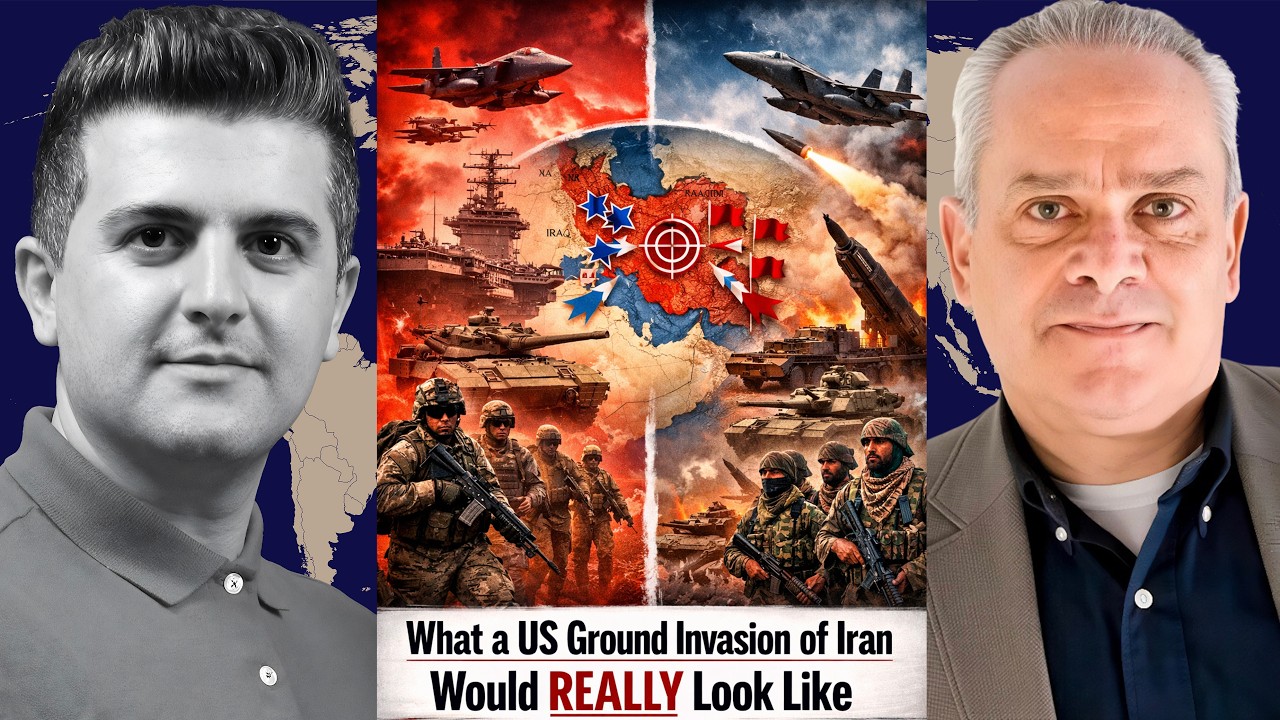
Col. Jacques Baud: What a US Ground Invasion of Iran Would REALLY Look Like
"Colonel Jacques Baud dissects the strategic futility of a US ground invasion of Iran, arguing that current troop levels are insufficient and such an action would backfire, exposing US allies and potentially leading to Iran's nuclearization."