BREAKING: Iran HANDS Over Uranium? Israel Fears Deal; Hezbollah Tunnel Destroyed | TBN Israel
YouTube · fOAbn9wigM0
Quick Read
Summary
Takeaways
- ❖Iran's Supreme Leader is in an unknown, bunker-like location, causing significant delays and disunity in negotiation responses.
- ❖Multiple factions within Iran (IRGC, Ayatollahs, government) speak with conflicting voices, indicating potential regime instability.
- ❖The Trump administration's negotiation strategy is distinct, combining military and financial pressure with diplomatic efforts, unlike previous administrations.
- ❖Trump is pushing for an expansion of the Abraham Accords, urging more Arab and Muslim countries to normalize relations with Israel as part of a post-Iran war regional alignment.
- ❖Hezbollah continues to pose an active threat to Israel's northern communities, utilizing advanced, difficult-to-jam FPV suicide drones.
- ❖Iran is conducting sophisticated cyber espionage campaigns, 'Screening Serpents,' targeting the US, Israel, and UAE, viewing cyber warfare as an integral part of its conflict strategy.
- ❖Oil prices are falling due to market optimism about the Strait of Hormuz reopening, but full restoration of shipping routes will take months even if an agreement is reached.
- ❖Israel demands any final agreement with Iran must *remove* the nuclear threat, not just freeze or postpone it, including dismantling enrichment facilities and removing enriched material.
Insights
1Iran's Internal Leadership Crisis Impedes Negotiations
Iran's Supreme Leader is reportedly hiding in an underground bunker, communicating only through a complex network of messengers. This isolation and the resulting delays mean messages are often outdated by the time they reach him, and his directives are slow to be disseminated. Furthermore, various Iranian factions, including the IRGC, Ayatollahs, and government officials, are not unified, leading to conflicting public statements and a lack of a single negotiating voice. This internal chaos significantly slows progress on any potential agreement.
The Supreme Leader is hiding in an unknown location with almost no direct contact, access via complex messenger network []. Iranian officials can't speak in one voice, sending dozens of people to negotiations []. Conflicting statements from different factions (IRGC, President, Supreme Leader representatives) [].
2Trump's Demand for Broader Abraham Accords Expansion
President Trump is leveraging the conflict with Iran to push for an expansion of the Abraham Accords. He has reportedly told Arab and Muslim leaders that if an agreement is reached to end the war with Iran, he expects their countries to join the Accords and sign peace treaties with Israel. This strategy aims to create a broader regional alliance against Iran and stabilize the Middle East, reflecting a 'carry your weight' policy similar to his approach with NATO.
Trump told Arab and Muslim leaders that if an agreement is reached with Iran, he wants their countries to join the Abraham Accords and sign peace agreements with Israel []. Trump gives Gulf States the message, 'You too need to stand up and fight for what is important to your country' [].
3Hezbollah's Evolving Threat with FPV Drones
Hezbollah continues to pose a significant and evolving threat to Israel's northern border, even amidst ceasefire discussions. The group is deploying advanced FPV (First Person View) suicide drones, which are connected by thin, almost invisible fiber optic cables. This makes them extremely difficult to jam with electronic warfare systems or detect by radar when flying low. These small, cheap, and precise drones have caused casualties among IDF soldiers, highlighting a new dimension of proxy warfare that complicates any regional ceasefire.
Sergeant Neorai Lizer was killed by a Hezbollah explosive drone in southern Lebanon []. The new threat is FPV drones operated through fiber optics, difficult to jam, radar struggles to identify them [].
4Iran's Sophisticated Cyber Espionage Campaign
An advanced Iranian cyber espionage campaign, linked to a group known as 'Screening Serpents' (UNC1549/Smoke Sandstorm), has been exposed. This group attacked targets in the United States, Israel, and the United Arab Emirates using sophisticated techniques like 'app domain manager hijacking.' This method exploits the startup phase of .NET applications to bypass defense mechanisms, allowing malware to collect information, open backdoors, and monitor sensitive systems. This demonstrates Iran's view of cyber warfare as an integral, quiet tool in its broader military and political campaign.
Advanced espionage campaign exposed by 'Screening Serpents' (UNC1549, Smoke Sandstorm) associated with Iran []. Group attacked targets in US, Israel, UAE []. Used 'app domain manager hijacking' to bypass defense mechanisms and deploy malware [].
Bottom Line
The entire current diplomatic push for an agreement with Iran might be a massive smokescreen orchestrated by Israel, the United States, and the United Arab Emirates.
This suggests that the public negotiations are a diversion to lull the Iranian Revolutionary Guards into a false sense of security, preparing for a surprise military strike to eliminate them.
For intelligence analysts, this implies a need to look beyond overt diplomatic signals and scrutinize military movements and covert operations for signs of an impending, coordinated attack rather than a genuine peace process.
Iran has strategically 'worn down its strongest card' (control over the Strait of Hormuz) due to global bypass efforts, regardless of any agreement.
The construction of bypass oil pipelines by the Emiratis, Canada's increased exports to Asia, and shipping companies building alternative routes mean Iran's leverage over global oil traffic is significantly diminished. This weakens Iran's economic and geopolitical bargaining position.
For global energy markets and shipping industries, this development reduces reliance on the Strait of Hormuz, potentially leading to more stable supply chains and less vulnerability to Iranian threats in the long term, even if the Strait remains partially closed.
Key Concepts
The 'Carry Your Weight' Doctrine
This model describes the Trump administration's foreign policy approach, demanding that allies (like NATO members and Gulf States) actively contribute to their own defense and regional stability, rather than solely relying on US military and financial support. It's a shift from previous administrations, linking US assistance to reciprocal action and alliance in shared objectives, such as confronting Iran or stabilizing global trade routes.
The Bunker Mentality (Iranian Leadership)
This model illustrates how the physical isolation and fear of elimination experienced by Iran's Supreme Leader, combined with a complex, messenger-based communication network, severely impedes the regime's ability to make timely and unified decisions during a crisis. This internal dysfunction creates delays, conflicting statements, and a slow response time in critical international negotiations, making Iran appear chaotic and unreliable to external parties.
Lessons
- Stay informed by following multiple sources on the evolving Middle East situation, as official statements may not reflect the full complexity or true intentions of involved parties.
- Recognize that geopolitical stability is often a temporary state, and agreements can be fragile, requiring continuous monitoring of underlying military and economic pressures.
- Support initiatives that strengthen regional alliances and promote self-reliance among allies, as advocated by the 'carry your weight' doctrine, to counter hostile actors effectively.
Notable Moments
Discussion of Iran's Supreme Leader hiding in a bunker, causing significant communication and decision-making delays within the Iranian system.
This internal disarray is presented as a major factor hindering negotiations and potentially signaling the regime's instability, impacting the reliability and speed of any diplomatic process.
The hosts question whether the current diplomatic efforts are a genuine attempt at peace or a 'massive smokescreen' for a surprise military operation.
This highlights the deep suspicion and high stakes involved, suggesting that public narratives might be masking covert strategic objectives, keeping all parties on edge.
Detailed explanation of Hezbollah's use of fiber-optic FPV drones, their operational advantages, and the challenges they pose to Israeli defenses.
This reveals a critical, emerging military threat that is difficult to counter, demonstrating how proxy groups are adopting advanced, low-cost technologies to bypass traditional defenses and inflict casualties.
Quotes
"The era in which a terrorist organization held an entire nation hostage is coming to an end."
"A terrorist entity does not know how to do anything other than terrorism."
"The question is not only whether a paper will be signed. The question is whether that paper truly changes the balance of power or only gives the revolutionary guards precious weeks to breathe, organize and regain control."
Q&A
Recent Questions
Related Episodes

Iran Deal Skepticism. Whoopi Vs Vance. Potomac Park Invasion. Racist Hurls Slurs At Black Boy.
"This episode dissects multiple instances of alleged anti-Black policies and racial injustice, from the Trump administration's legal challenges to reparations and the Iran deal, to police brutality and the erasure of Black history."

PBS News Hour full episode, June 12, 2026
"The U.S. and Iran inch closer to a contentious peace deal amidst conflicting terms, while President Trump hosts a UFC cage fight on the White House lawn, and Gaza's children struggle for education in war-torn conditions."

Patrick Henningsen: Hezbollah JUST Fired Back at Israel - Iran Vows to “Crush” All Attacks
"Patrick Henningsen argues that the US and Israel initiated an illegal war against Iran, driven by Trump's incompetence and Israeli influence, leading to an inevitable escalation with severe global economic repercussions."
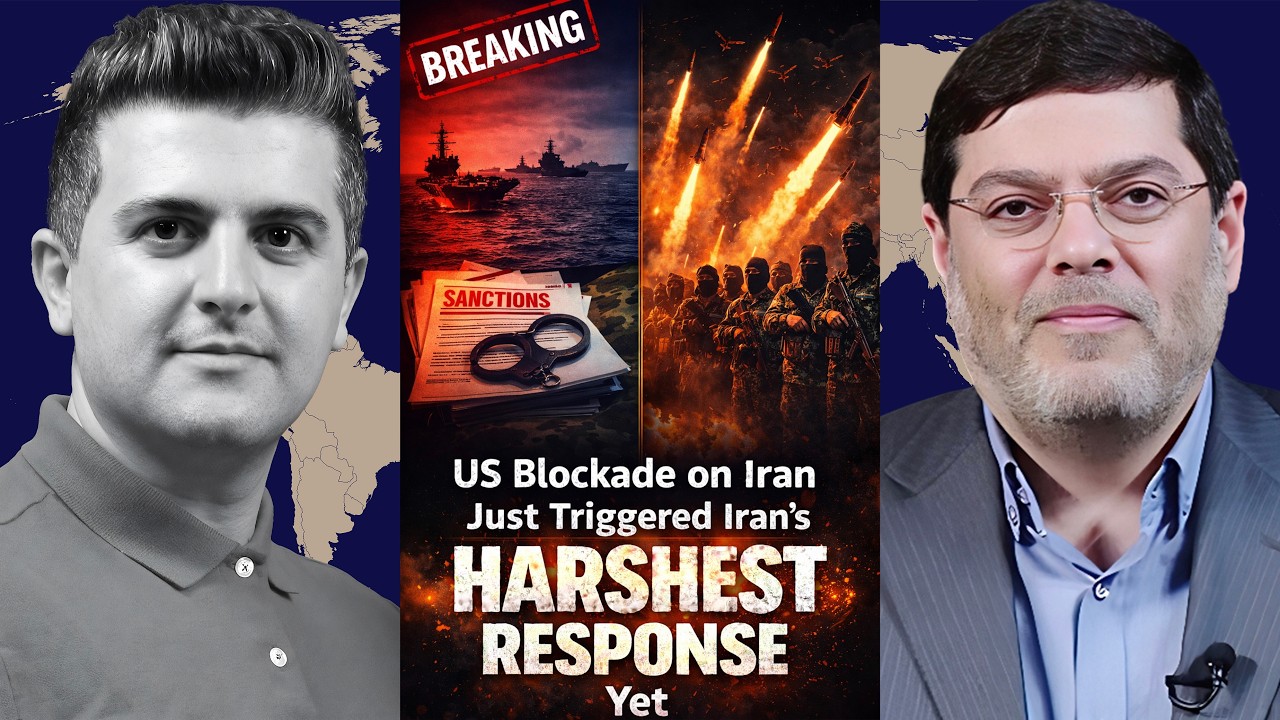
Seyed M. Marandi: US Blockade on Iran Just Triggered Iran’s HARSHEST Response Yet
"An Iranian professor details how US demands and an imposed blockade triggered Iran's harshest response, exposing American strategic missteps and the vulnerability of Gulf Arab states."