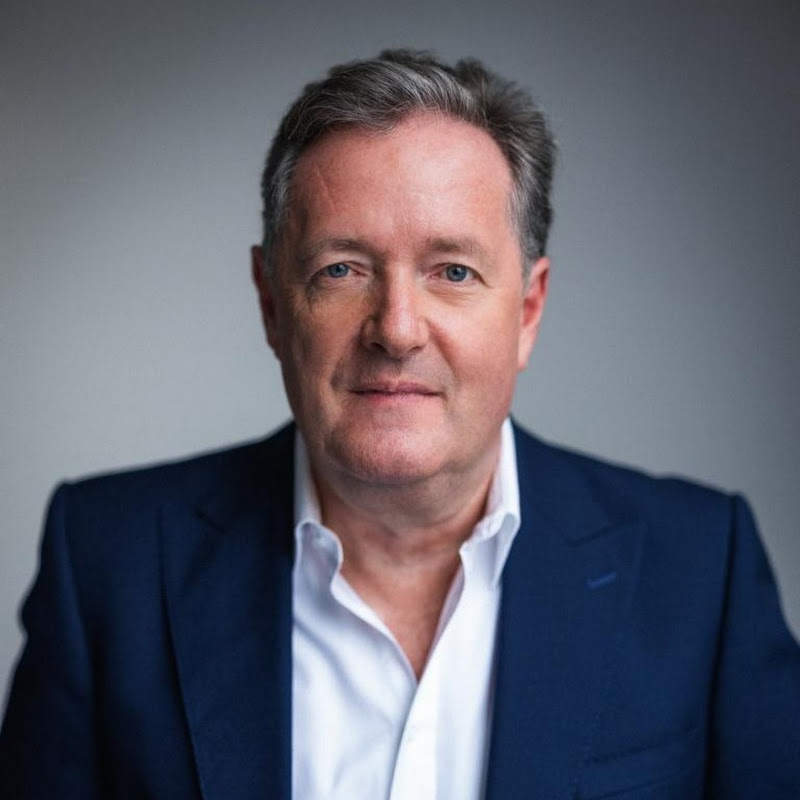
'A Regime Change War With NO PLAN!' Is Attack on Iran Really 'America First'?
YouTube · gMGSaAfl4gg
Quick Read
Summary
Takeaways
- ❖Donald Trump's military actions in Iran contradict his campaign promises of avoiding new foreign wars and prioritizing domestic issues.
- ❖Critics argue the administration lacks a clear, coherent plan for the Iran operation, raising fears of a 'forever war' and significant casualties.
- ❖Supporters defend the strikes as a necessary national security measure against a major state sponsor of terrorism and a threat to US interests and allies like Israel.
- ❖The political consequences for Trump are substantial; failure to achieve a swift, decisive victory could lead to a 'shellacking' in the midterms and damage his legacy.
- ❖The 'Venezuela model' of quick, targeted strikes without prolonged ground troop deployment is cited by some as a potential template, but others highlight key differences and increased risks in Iran.
- ❖The Strait of Hormuz, a critical oil chokepoint, is central to the economic implications, with China being the largest recipient of oil passing through it.
Insights
1Trump's Iran Policy Contradicts 'America First' Campaign Promises
Multiple panelists, including the host Piers Morgan and guest Tim Miller, highlight that Trump campaigned explicitly on an anti-war platform, promising to end 'foolish, stupid days of never-ending wars' and keep the US out of World War III. His current military actions in Iran are viewed as a direct betrayal of these promises, alienating a significant portion of his base and swing voters who supported his 'pro-peace ticket.'
Trump's past statements: 'I was the first president in decades who didn't start a war.' () J.D. Vance's past articulation that 'a war with Iran would be expensive and against his country's interests.' () Marjorie Taylor Greene's criticism: 'We said no more foreign wars. No more regime change... Trump, Vance, basically the entire admin campaigned on it and promised to put America first.' ()
2Lack of Coherent Plan and High Stakes for Trump's Presidency
Critics across the panel, including Tim Miller, Dave Smith, and Jojo Carducci, express deep concern over the apparent lack of a coherent strategy or 'endgame' for the Iran operation. They argue that if the strikes do not result in a swift, overwhelming success—such as a quick regime change without prolonged conflict—it could 'destroy Donald Trump's presidency' and lead to a 'shellacking' in the midterms, making him a lame-duck president.
Tim Miller: 'The idea here is that this is a moment where the Iranian people have an opportunity to grab their own freedom... that requires troops on the ground.' () Dave Smith: 'If this isn't an overwhelming success in that very unlikely scenario that you laid out, I think this destroys Donald Trump's presidency.' () Jojo Carducci: 'There is no end game. There was no clear objective. I'm still waiting for him to explain this to anybody coherently.' ()
3Defense of Strikes as National Security Imperative Against Terror Sponsor
Ben Ferguson defends Trump's actions, framing them as a necessary national security decision rather than a political one. He argues that Iran is a significant threat, a 'sponsor of terror' that funds groups like Hezbollah and Hamas, and is actively pursuing nuclear weapons. The strikes are presented as a means to neutralize this threat and protect American and Israeli interests, with the aim of avoiding a 'forever war' by focusing on targeted operations.
Ben Ferguson: 'Iran is doing and what they're clearly trying to do... not only with Israel, but also with the United States of America, you just cannot allow them to get even anywhere close to having a nuclear weapon.' () 'They've killed more American troops in my lifetime than any other country.' () 'This is not going to be sending troops into Iran.' ()
4The 'Venezuela Model' vs. Iran's Reality
The concept of a 'Venezuela-style' operation—a quick, targeted strike to remove leadership without a prolonged ground presence—is discussed as a potential model for Iran. However, critics like Tim Miller and Jojo Carducci highlight key differences, such as immediate American casualties in Iran and the lack of a clear successor, making a simple 'take out the leader and leave' approach far more complex and dangerous in a country of 93 million with a large, committed regime military.
Ben Ferguson: 'If there's a situation where you have to go in and take someone out in the way that we did in Venezuela... we're not invading Venezuela. We're not staying in Venezuela.' () Tim Miller: 'This is very different from Venezuela for a couple reasons. Number one, four people have already died. That didn't happen in Venezuela. Number two, we had a clear successor... All of them are dead.' ()
Bottom Line
The Strait of Hormuz, a critical global oil chokepoint, sees 78% of its oil traffic destined for Asia, primarily China, and only 10% for the US and Europe. Iran's potential closure of the strait would disproportionately harm its traditional ally, China, and its own oil exports.
This dynamic suggests that Iran closing the Strait of Hormuz is economically illogical for both Iran and China, limiting Iran's leverage in this specific area and potentially driving a wedge between Iran and its most significant oil importer. It implies military action is the more likely retaliatory path for Iran.
Understanding this trade flow could inform diplomatic strategies, potentially leveraging China's economic interests to de-escalate tensions or influence Iran's actions regarding the Strait.
The conservative right in America is deeply divided on the Iran strikes, with prominent figures like Tucker Carlson and Marjorie Taylor Greene vehemently opposing the actions, calling them 'evil' and 'disgusting,' and a betrayal of the 'America First' platform.
This internal division within Trump's base indicates a significant shift in conservative foreign policy views, moving away from traditional hawkishness. It suggests that anti-interventionist sentiment is now a powerful force even among Republicans, posing a unique political challenge for Trump.
Political strategists could exploit this ideological rift to appeal to 'war-weary' conservative voters, potentially forming new political coalitions or challenging established party lines on foreign policy.
Quotes
"Our interest, I think, very much is in not going to war with Iran. It would be huge distraction of resources. It would be massively expensive to our country."
"This is not going to be sending troops into Iran."
"The IDF is the worst terrorist organization in the region. Let's get real. The United States of America is arguably the worst terrorist organization in the world, if you want to look over the last 25 years how many innocent civilians we've slaughtered."
"Donald Trump already announced this was a regime change war with no plan. Absolutely no plan."
"Our service members deserve better than a commander-in-chief who does not have a plan. They deserve better than a five-time draft dodger."
"No president in the modern era has ordered more military strikes against as many different countries as Donald Trump."
"If this isn't an overwhelming success in that very unlikely scenario that you laid out, I think this destroys Donald Trump's presidency."
Q&A
Recent Questions
Related Episodes

🚨 LEFTISTS ARE F*CKING SEETHING 😂😂😂
"The host aggressively celebrates perceived 'wins' for the right-wing, from global conflicts and domestic politics to cultural shifts, framing them as a 'humiliation' for the 'leftist world order' and a testament to Donald Trump's influence."

Iran Update: Israel’s Newest Bombing Campaign, the Oncoming War With China and How to Avoid It
"Colonel Wilerson reveals how the US and Israel are actively bombing China's strategic infrastructure in Iran, escalating a covert economic war that Beijing intends to win without direct military conflict by dismantling the dollar's global dominance."

Patrick Henningsen: Hezbollah JUST Fired Back at Israel - Iran Vows to “Crush” All Attacks
"Patrick Henningsen argues that the US and Israel initiated an illegal war against Iran, driven by Trump's incompetence and Israeli influence, leading to an inevitable escalation with severe global economic repercussions."

🚨 TOTAL F*CKING CHECKMATE 😂😂😂
"The host argues that Trump's 'ceasefire' with Iran was a calculated '5D chess' move to orchestrate a global energy market reshuffle, while simultaneously lambasting 'woke' domestic policies and the 'freefall' of anti-Trump conservative figures."