BREAKING: Iran Threatens Heavy Missiles; IDF Hits 3 Fronts; Gulf Water at Risk | TBN Israel
YouTube · gfRkMfH7SHE
Quick Read
Summary
Takeaways
- ❖Iran threatens to target seawater desalination facilities in the Persian Gulf, which supply 70-90% of drinking water to Gulf states.
- ❖Iran's Revolutionary Guards announce a shift to launching only 'heavy missiles' with warheads exceeding one ton.
- ❖The Israeli Air Force conducted simultaneous strikes across three major Iranian provinces: Tehran, Isfahan, and Shiraz.
- ❖US President Trump claimed Iran's naval force is 'almost entirely eliminated' and missile capabilities are down to 10%.
- ❖Oil prices plunged after Trump's statements about military progress, but remain volatile due to Strait of Hormuz threats.
- ❖Saudi Arabia is actively intercepting Iranian missiles and drones, expressing 'boiling rage' over attacks on its assets.
- ❖Iran's foreign minister stated negotiations with Washington are 'no longer on the table,' demanding a halt to aggression.
- ❖Reports indicate internal dissent against Hezbollah in Beirut's Dahiya neighborhood, with residents appealing for their removal.
- ❖Syrian President El Shar is reportedly aligning with Lebanese demands to disarm Hezbollah, signaling a potential regional shift.
- ❖US federal alerts indicate concerns about Iran activating global 'sleeper agents' following recent events.
Insights
1Iran's Unprecedented Threat to Gulf Water Security
Iran has explicitly threatened seawater desalination facilities in the Persian Gulf, which are vital for the drinking water supply of Gulf states, providing 70% to 90% of their water. This represents a significant escalation, moving beyond oil infrastructure to directly endanger civilian life and potentially trigger a humanitarian crisis.
The commander of Iran's Revolutionary Guards claims 'steel monsters are on the way to destroy Israel' and explicitly targets 'seawater desalination facilities in the Persian Gulf which supply 70% and up to 90% of the drinking water for the countries in this region.'
2IDF and US Expand Deep Strikes into Iran
The Israeli Air Force, with US support, executed a broad and coordinated strike deep inside Iran, hitting military headquarters and production sites across three major provinces: Tehran, Isfahan, and Shiraz. Targets included the Quds Force headquarters, missile production and storage, and air defense systems, indicating a strategy to dismantle Iran's military capabilities comprehensively.
The IDF destroyed 'headquarters and production sites in the heart of Iran. The strike was carried out in three major districts at the same time, Tehran, Isvahan, and also Shiraz. It included the use of more than 170 precision munitions dropped on dozens of military infrastructures.'
3Iran's Shift to 'Heavy Missile' Rhetoric
Iran's Revolutionary Guards and Air Force commanders declared an end to the era of 'light fragmenting missiles,' threatening to launch only 'heavy missiles' with warheads weighing over a ton of explosives. This is presented as psychological warfare to create a new sense of destructive threat, attempting to compensate for perceived quantitative declines in their arsenal.
The commander of Iran's revolutionary guards is threatening an unprecedented escalation. 'The era of light fragmenting missiles is over. From now on, only heavy missiles will be launched with warheads weighing more than a ton of explosives each.' The commander of the Iranian air force also stated, 'We will not launch missiles weighing less than a ton.'
4Saudi Arabia Shifts to Active Defense and Outrage
Saudi Arabia has moved from observing to actively intercepting Iranian missiles and drones targeting its oil fields and eastern provinces. The kingdom issued a sharp message condemning Iranian attacks and reserving the right to defend its security, indicating its patience is exhausted and signaling potential further escalation.
During the night, Saudi defense forces intercepted a ballistic missile that was launched towards the eastern province. And also, two drones east of Elcaraj province. Earlier, nine drones were intercepted in the empty quarter on their way to the Shiabah oil field... 'Saudi Arabia is boiling with rage, and the Iranians continue to touch its most important assets.'
5Iran Rejects Negotiations and Leverages Strait of Hormuz
Iran's foreign minister explicitly stated that negotiations with Washington are 'no longer on the table,' adopting a firm stance. Concurrently, Iran threatened to block the Strait of Hormuz if attacks continue and offered safe passage to nations that expel Israeli and US ambassadors, attempting to use trade routes as a tool for diplomatic pressure.
The Iranian foreign minister Abasaraki stated 'negotiations with Washington are no longer on the table.' ... 'Whoever expels the ambassadors of Israel and the United States will be able to pass freely through the straight of Hmuz.'
Bottom Line
The targeting of water desalination facilities introduces a new, highly sensitive dimension to regional conflict, potentially triggering humanitarian crises and forcing Gulf states into more direct involvement.
This transforms the conflict from primarily economic (oil) or military to an existential threat for populations, increasing pressure on Gulf states to react forcefully or seek immediate de-escalation.
For nations and organizations focused on humanitarian aid or water security, this highlights an urgent need for contingency planning and diplomatic efforts to protect critical infrastructure in conflict zones.
Internal dissent against Hezbollah is emerging within Shiite communities in Lebanon, particularly in Beirut's Dahiya neighborhood, where residents are reportedly begging for the organization's removal.
This indicates a potential weakening of Hezbollah's social legitimacy and popular support, which could undermine its operational effectiveness and Iran's regional influence in the long term.
For regional actors seeking to counter Iranian influence, this presents an opportunity to support local voices advocating for sovereignty and disarmament, potentially shifting internal Lebanese dynamics.
Syrian President El Shar is reportedly aligning with Lebanese demands to disarm Hezbollah, suggesting a potential fracture in the 'axis of evil' and a shift in regional alliances.
Such a realignment would significantly isolate Hezbollah and Iran, altering the balance of power in the Levant and potentially opening new diplomatic or military avenues.
This creates a strategic opening for international diplomacy to encourage further Syrian disengagement from Iranian proxies, potentially leading to a more stable regional security architecture.
Lessons
- Monitor global oil prices and shipping routes, especially through the Strait of Hormuz, as they are highly sensitive to military actions and diplomatic statements in the Middle East.
- Assess supply chain vulnerabilities related to critical infrastructure in the Gulf region, particularly water and energy, given Iran's explicit threats to desalination plants.
- Support organizations providing 'boots on the ground' reporting and analysis from conflict zones to stay informed on rapidly evolving geopolitical situations and their broader implications.
Notable Moments
Iran's Revolutionary Guards explicitly threaten Gulf seawater desalination facilities, a critical civilian infrastructure.
This marks a dangerous escalation, targeting essential civilian resources rather than purely military or economic assets, with severe humanitarian implications.
The IDF conducts simultaneous, deep strikes across three major Iranian provinces (Tehran, Isfahan, Shiraz) targeting key military and production sites.
This demonstrates Israel's expanded operational reach and a coordinated strategy to dismantle Iran's core military capabilities, signaling a significant escalation in the direct conflict.
Syrian President El Shar reportedly aligns with Lebanese demands to disarm Hezbollah.
This suggests a potential fracturing of the Iran-led 'axis of resistance' and a significant shift in regional alliances, which could weaken Hezbollah's position and Iran's influence.
Quotes
"We will not launch missiles weighing less than a ton."
"Iran's missile capabilities are down to 10%, maybe less than that."
"The kingdom repeated its unequivocal condemnation of the Iranian attacks, reserved for itself the right to take all measures to defend its security, its sovereignty, and the safety of its citizens."
Q&A
Recent Questions
Related Episodes

BREAKING: Iran Threatens To END Talks; U.S. Vows Retaliation; Hezbollah Collapsing? | TBN Israel
"Iran is leveraging Hezbollah and the Strait of Hormuz to manipulate US negotiations, while Israel asserts its right to dismantle Hezbollah's eroding but still dangerous infrastructure in Lebanon, independent of international talks."

Patrick Henningsen: Hezbollah JUST Fired Back at Israel - Iran Vows to “Crush” All Attacks
"Patrick Henningsen argues that the US and Israel initiated an illegal war against Iran, driven by Trump's incompetence and Israeli influence, leading to an inevitable escalation with severe global economic repercussions."
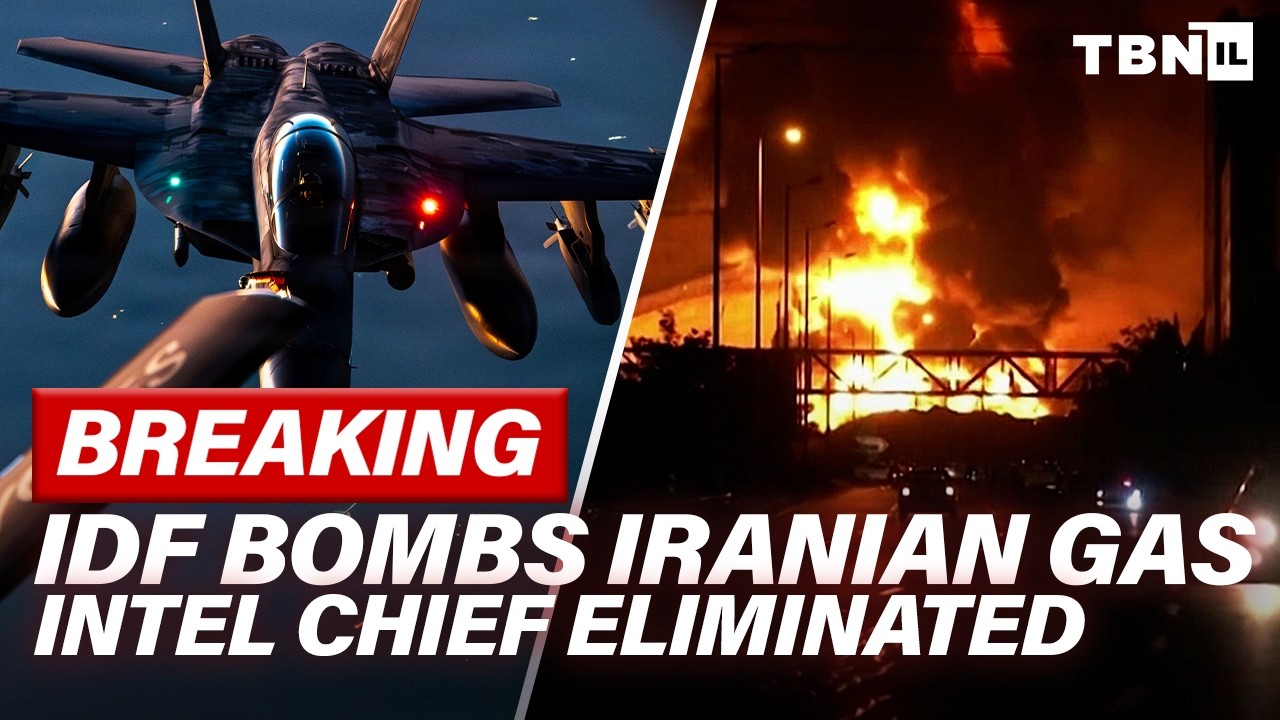
BREAKING: Israel BOMBS Major Iran Gas Site; Top Mullah ELIMINATED; Iran Vows VENGEACE | TBN Israel
"Israel and the United States have escalated their 'Roaring Lion War' against Iran, striking its largest gas facilities, eliminating key intelligence and military figures, and disrupting missile production, while Iran threatens a broader energy war in the Gulf."

Larry Johnson: Iran Missiles Rain Down on Northern Israel – Massive Strikes!
"Geopolitical analyst Larry Johnson details how Israel's recent strike on an 'empty building' in Beirut triggered direct Iranian missile retaliation, escalating regional tensions and jeopardizing a US-Iran peace deal brokered by Pakistan."