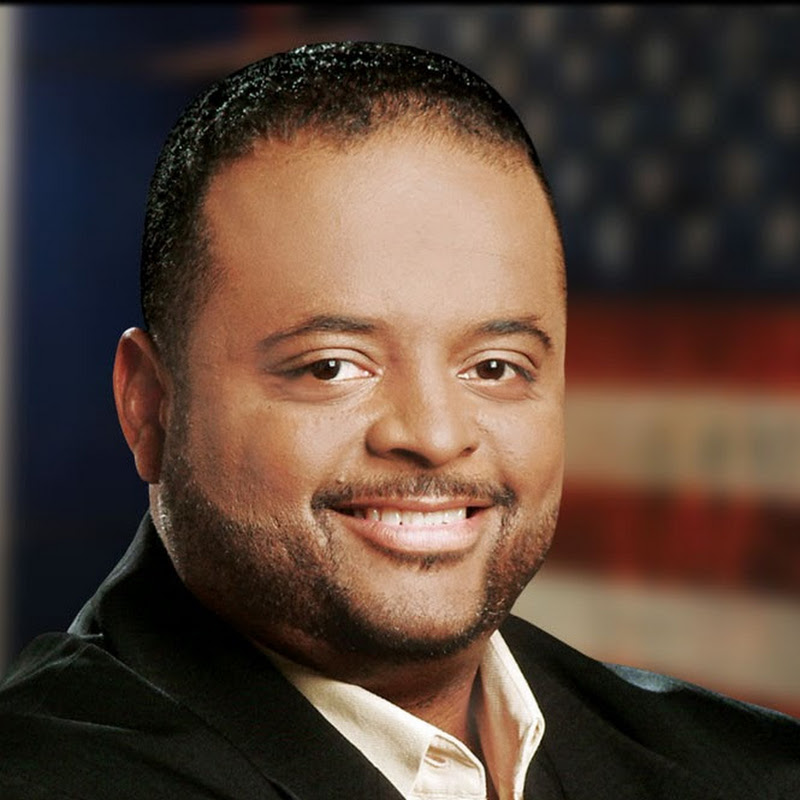
New Minneapolis ICE Shooting Video, Philly Sheriff Warns ICE, Black Women Jobless Spike
YouTube · gsMVacvqHVk
Quick Read
Summary
Takeaways
- ❖A new video of the Minneapolis ICE shooting of Renee Good from an officer's perspective does not support the ICE agents' case, leading to charges against officer Jonathan Ross.
- ❖Philadelphia County Sheriff Rochelle Bilal publicly warns ICE agents against 'thuggish behavior' in her county, threatening arrest for any criminal acts.
- ❖Retired FBI agent Steve Lazarus states that deadly force is not authorized merely to stop a fleeing suspect, and nothing in the Minneapolis shooting video supports the use of lethal force.
- ❖Minneapolis City Councilwoman Robin Wley draws parallels between Renee Good's killing and George Floyd's murder, noting similar attempts by the Trump administration to smear victims and federal efforts to cover up incidents.
- ❖The Trump administration is criticized for deploying Border Patrol and other federal agents to cities like Minneapolis and Chicago, leading to the detention of US citizens and the use of chemical irritants against protesters.
- ❖Sheriff Bilal highlights that professional law enforcement does not wear masks, shoot at fleeing vehicles, or stand in front of moving vehicles to provoke action, questioning the training and legitimacy of some federal agents.
- ❖The economy under the Trump administration is described as 'sucking,' with only 500,000 jobs created in 2025 compared to 2 million under Biden in 2024, and a significant rise in Black unemployment.
- ❖Bishop William Barber advocates for a 'micro-to-macro' voter mobilization strategy, focusing on engaging infrequent poor and low-wage voters with clear policy agendas.
- ❖Congressional hearings are criticized for being 'hypocritical witch hunts' that cherry-pick issues to demonize immigrant populations and cut social programs, rather than genuinely addressing fraud or improving oversight.
Insights
1Minneapolis ICE Shooting and Federal Accountability
A new video from an ICE officer's perspective in the shooting death of Renee Good in Minneapolis does not support the officers' actions. Hennepin County DA plans to charge officer Jonathan Ross. Critics, including former FBI agents and city officials, argue the shooting reflects a failure of training and judgment, and that federal agencies are attempting to cover up the incident and frame the victim as an aggressor.
Host Roland Martin and Minneapolis City Councilwoman Robin Wley discuss the new video and the DA's intent to charge. Retired FBI agent Steve Lazarus states, 'Deadly force is never authorized merely to stop a fleeing suspect. Yes, if a vehicle is being used as a weapon, that changes the analysis, but nothing in this video supports that.' Wley notes the Trump administration's 'smear campaign' against Good and federal attempts to exclude local investigation.
2Philadelphia Sheriff's Stance Against ICE Overreach
Philadelphia County Sheriff Rochelle Bilal issued a direct warning to ICE agents, stating they will be arrested if they engage in 'thuggish behavior' or commit crimes in her jurisdiction. She criticized federal agents for wearing masks, lacking identification, and operating outside established law enforcement protocols, emphasizing that professional officers do not shoot at fleeing vehicles or provoke confrontations.
Sheriff Bilal states, 'ICE do not bring your thuggish behavior to my county or we're going to put you in jail.' She adds, 'No law enforcement professional wears a mask. None.' and 'Law enforcement professionals do not shoot at moving vehicles... Law enforcement professionals do not stand in front of moving vehicles invoking an action that is illegal.'
3Economic Downturn and Disproportionate Impact on Black Communities
The economy under the Trump administration experienced anemic job growth in 2025, with only 500,000 jobs created compared to 2 million in the previous year. Unemployment rose overall, with Black unemployment significantly higher and individuals staying unemployed for longer periods. Tariffs and a lack of supply-side investment are cited as contributing factors, leading to increased costs and business closures, particularly impacting African-American communities.
Morgan Harper, Director of Policy and Advocacy for the American Economic Liberties Project, states, 'there were only about 500,000 jobs created for the whole year' in 2025. She notes, 'particularly black unemployment is much much higher from this point last year' and 'those that are unemployed, they're staying unemployed longer.'
4Grassroots Voter Mobilization Strategy for Change
Bishop William Barber advocates for a 'micro-to-macro' approach to voter mobilization, focusing on sustained, early engagement with infrequent voters, especially poor and low-wage individuals. This strategy involves connecting specific policy issues (e.g., healthcare, living wages, voting rights) to the power of their vote, organizing at local levels, and challenging politicians to articulate what they stand for, not just who they oppose.
Bishop Barber explains, 'We must nationalize state movements... we need to be rallying the people in our states... around what we stand for.' He cites examples of millions of infrequent poor and low-wage voters who did not participate in past elections, emphasizing that even a small increase in turnout can 'flip almost any state.' He details a planned march in North Carolina tied to early voting and same-day registration.
5Congressional Oversight and Political Weaponization of Fraud
Congressional hearings on fraud are criticized as politically motivated 'witch hunts' targeting Democratic states and immigrant populations, rather than genuine efforts to improve social service programs. The Trump administration is accused of undermining oversight mechanisms by firing inspectors general and attacking whistleblowers, while simultaneously cutting essential programs like Medicaid, CHIP, and SNAP.
Congresswoman Summer Lee states, 'the tone of this hearing seems to be a hypocritical witch hunt.' She highlights that 'Trump has attacked the oversight mechanisms within the federal government. He illegally fires 17 inspectors general... He goes after whistleblowers.' She also notes that the 'big beautiful bill is estimated to cut more than 1 trillion from Medicaid and CHIP benefits and cut SNAP for 40 million people.'
Key Concepts
Micro to Macro Organizing
This model, championed by Bishop William Barber, emphasizes starting voter mobilization efforts at the most local level (e.g., within a church, then a 2-5 mile radius, then specific neighborhoods and blocks) and scaling up. It focuses on sustained, direct engagement with infrequent voters, particularly poor and low-wage individuals, by connecting their pain points (e.g., healthcare, living wages) to the power of their vote, rather than relying solely on large, infrequent rallies.
Lessons
- Educate yourself on your rights when encountering law enforcement, especially federal agents. Demand identification and understand jurisdictional limits, as highlighted by the Uber driver's confrontation with Border Patrol.
- Engage in sustained, local voter mobilization efforts, focusing on infrequent voters in your community. Connect specific policy issues like healthcare, living wages, and voting rights to the power of their vote, as advocated by Bishop William Barber.
- Support independent media and organizations that provide fact-based analysis and advocate for accountability in law enforcement and economic policy, recognizing their role in countering misinformation and political spin.
Bishop William Barber's Micro-to-Macro Voter Mobilization Strategy
**Identify and Engage Infrequent Voters:** Focus on the 80 million poor and low-wage voters, particularly the 30 million who did not vote in recent elections. Understand their specific concerns (e.g., healthcare, living wages, food stamps).
**Start Locally and Expand:** Begin mobilization within your immediate community (e.g., church congregation), then expand to a 2-5 mile radius, targeting neighborhoods with high concentrations of poor and low-wage residents. Conduct door-to-door outreach and community meetings.
**Connect Pain to Power:** Clearly link the tangible struggles people face (e.g., loss of Medicaid, rising costs) to the direct impact of elections and policy decisions. Emphasize that their vote can change these conditions.
**Demand Policy Commitments from Candidates:** Challenge politicians to articulate specific plans and actions they will take in their first 50 days in office, rather than just campaigning against opponents. Hold town halls and public forums.
**Utilize Strategic Timing and Data:** Align mobilization efforts with key electoral dates like early voting periods and same-day registration. Use data and economic mapping to identify target demographics and measure impact, aiming for even small percentage increases in turnout to shift outcomes.
Notable Moments
Philadelphia Sheriff Rochelle Bilal's direct warning to ICE agents.
This moment signifies a rare and powerful challenge from local law enforcement to federal agencies, highlighting concerns about federal overreach and lack of accountability, and potentially setting a precedent for other jurisdictions.
Uber driver Ben Hassan's verbal confrontation with Border Patrol agents in Minneapolis.
This incident demonstrates a citizen's active resistance to perceived unlawful questioning and lack of identification from federal agents, serving as an example of how individuals can assert their rights and expose questionable tactics.
Congresswoman Summer Lee's direct challenge to James Comer during a congressional hearing.
This moment highlights the partisan nature of congressional oversight and the accusation that fraud investigations are politically weaponized to target specific populations and cut social programs, rather than genuinely addressing systemic issues.
Quotes
"Deadly force is never authorized merely to stop a fleeing suspect. Yes, if a vehicle is being used as a weapon, that changes the analysis, but nothing in this video supports that."
"ICE do not bring your thuggish behavior to my county or we're going to put you in jail."
"If you have a badge, you do not have a license to kill."
"You can't talk about respecting law enforcement when you try to kill something. You can't talk about respecting the president when he don't respect the citizens of this country."
"The current Congress that we have in office right now is there because of a 7,000 vote margin. In a time when 90 million people didn't vote, we have to start getting folk to understand that so they can own their power."
"The greatest fear of the greedy oligarchy in this country is for the masses of poor black people and poor low-wage white people and others to join together and form a voting block that can fundamentally shift the economic architecture."
Q&A
Recent Questions
Related Episodes

Iran Deal Skepticism. Whoopi Vs Vance. Potomac Park Invasion. Racist Hurls Slurs At Black Boy.
"This episode dissects multiple instances of alleged anti-Black policies and racial injustice, from the Trump administration's legal challenges to reparations and the Iran deal, to police brutality and the erasure of Black history."
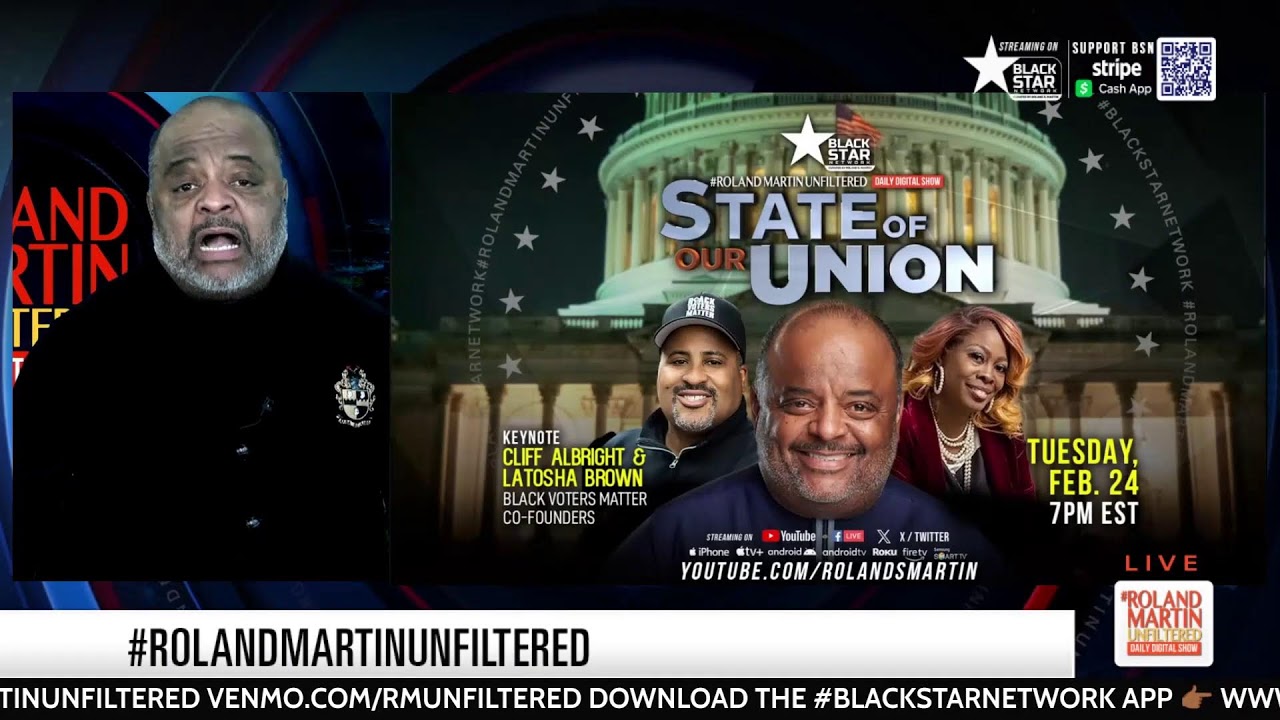
Black Woman Killed in ICE Pursuit. Newsom “Can’t Read” Remark. Tariff Repayment Push. TPS Fight
"This episode dissects multiple critical events, from the tragic deaths during an ICE pursuit and a police shooting, to debunking a viral controversy around Governor Gavin Newsom's remarks, and honoring Reverend Jesse Jackson's enduring legacy in economic and media justice."
NC Mom Sues Hospital For Negligence. Black NFL Coaches Win Major Ruling. Drug Test Scandal Exposed
"This episode exposes systemic failures and racial disparities across healthcare, professional sports, and politics, featuring a mother's harrowing hospital negligence lawsuit, a landmark NFL discrimination ruling, and alarming findings on flawed drug tests criminalizing new mothers."

NC Targets DEI. Trump Blocks Housing Bill. Minority Banks Face New Rules. Kohen Wiley Protests
"This episode exposes how current political actions, from changes in minority bank definitions to attempts to regulate college athlete earnings and block foreign aid, are systematically undermining Black economic power, voting rights, and social justice."