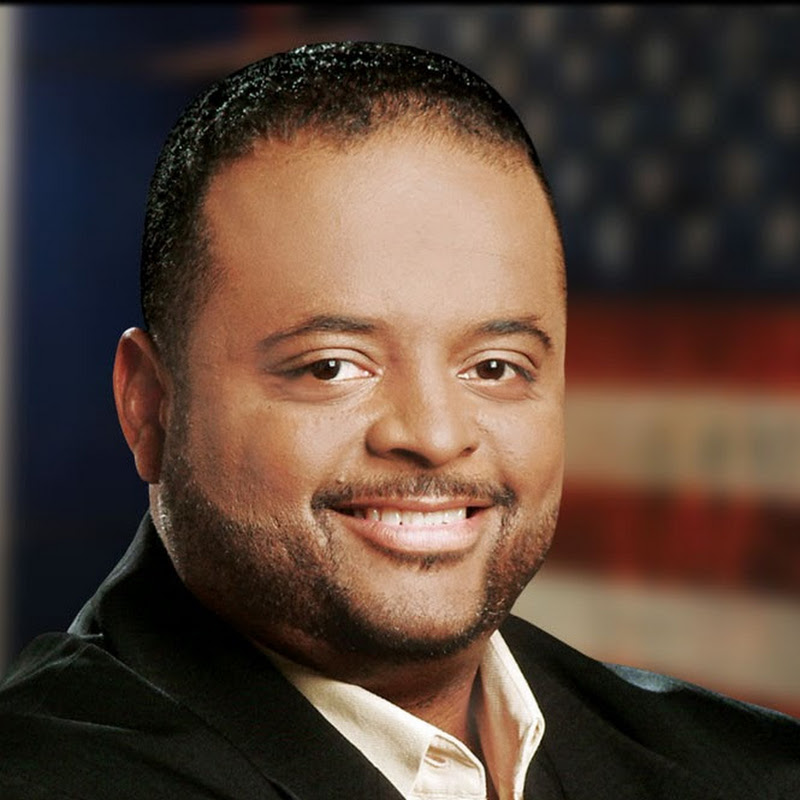
Afroman Wins Lawsuit. Government Shutdown Airpot Closures. Staten Island Black Angels |#TheBreakdown
YouTube · h3z8IPB1M9c
Quick Read
Summary
Takeaways
- ❖The 'Save America Act' is criticized as a voter suppression bill, not a voter ID bill, due to its requirements for documentary proof of citizenship and attempts to eliminate mail-in voting.
- ❖New York State's Community Commission on Reparations and Remedies is actively holding public hearings to gather community input on redress for slavery's harms, focusing on policy changes beyond direct payments.
- ❖Afroman won a defamation lawsuit brought by Ohio sheriff's deputies who raided his home, affirming his First Amendment right to create parody videos using their body cam footage.
- ❖Louisiana's proposed hair braiding bill aims to increase training hours to 600, primarily to allow students to qualify for federal financial aid, not to restrict the industry.
- ❖A body cam video of a Texas traffic stop ignited a debate among panelists regarding the driver's conduct, the officer's actions, and the broader context of police interactions with Black individuals.
- ❖The Alabama Supreme Court ruled that police can demand physical ID during a stop if not satisfied with verbal responses, raising concerns about police authority.
Insights
1The 'Save America Act' as Voter Suppression
Senator Lisa Rochester Blunt and panelists argue that the Republican-backed 'Save America Act' is a voter suppression bill, not a voter ID bill. It proposes requirements for documentary proof of citizenship (e.g., passport, birth certificate) for voter registration and voting, which would disenfranchise millions, particularly women with name changes, rural voters, students, seniors, and people with disabilities. It also seeks to eliminate mail-in voting and criminalize election administrators for non-compliance.
Senator Blunt states that the bill would require mailing photocopies of proof of citizenship with ballots, rendering current IDs insufficient. Rebecca Kurthers notes that over 50% of Americans lack passports and 21 million lack readily accessible birth certificates. Roland Martin highlights the bill's aim to centralize voter roles and eliminate mail-in voting.
2New York State's Reparations Commission
The New York State Community Commission on Reparations and Remedies, established in 2023, is examining the legacy of slavery and systemic racism to provide recommendations for redress. The commission emphasizes that reparations extend beyond financial checks to include significant policy changes addressing economic harms and health inequities. New York aims to be a model for other states in this process.
Dr. Cel Hawkins, the commission's chair, details their active public hearings across the state, gathering community input. She mentions the report is due in January 2027 and highlights New York's active role in the historical slave trade, including a slave market on Wall Street.
3Afroman's First Amendment Victory in Defamation Lawsuit
Afroman (Joseph Foreman) won a defamation and privacy invasion lawsuit filed by seven Ohio sheriff's deputies. The deputies sued him for using footage from his home security cameras, recorded during a 2022 raid where no drugs were found and no charges filed, in his music parody videos. The jury ruled in Afroman's favor, affirming the protection of parody under the First Amendment.
Afroman describes the raid, the officers' actions, and their subsequent lawsuit. He details how he created multiple parody songs like 'Lemon Pound Cake' and 'Will You Help Me Repair My Gate?' to satirize the incident. The host emphasizes that the case reinforces legal precedents for parody songs, citing the Luther Campbell Supreme Court case.
4Louisiana Hair Braiding Regulation Bill
Louisiana House Bill 912, proposed by State Representative Candace Newell, seeks to increase the required training hours for hair braiding licenses from 500 to 600 hours. The primary rationale is to enable students to qualify for federal financial assistance, making the profession more accessible and professionalized, rather than to restrict it.
Representative Newell explains that the additional 100 hours are specifically to meet federal financial aid eligibility requirements. She also cites concerns about public safety and hygiene from unregulated home-based braiding as a secondary motivation.
5Controversial Traffic Stop and Police Interaction Debate
A body cam video of a Texas traffic stop, where a Black woman was arrested after allegedly throwing a ticket out of her car, sparked a heated debate. While panelists acknowledged the systemic issues and trauma associated with police encounters for Black individuals, the host strongly criticized the driver's attitude and escalation of the situation, particularly with a child present.
The video shows the officer's demeanor and the interaction. Roland Martin asserts the driver was 'dead ass wrong' for escalating the situation and refusing a lawful command, despite the officer's non-aggressive tone. Panelists Rebecca Kurthers and Win Cooney discuss the trauma response in Black individuals during police stops and the importance of de-escalation.
Bottom Line
Afroman's successful defense against a police defamation lawsuit, where his parody videos went viral, demonstrates how artists can leverage public scrutiny and legal battles to amplify their message and even increase their market value.
This case sets a precedent for artistic freedom in the digital age, showing that creative expression, even when critical of authority, can be protected and even monetized, especially when the authority's actions are questionable.
Artists and content creators can be emboldened to use real-world events, including contentious interactions with public figures or institutions, as material for parody, knowing there's legal protection. This also highlights the 'Streisand Effect' in legal disputes.
Opportunities
Afroman Lemon Pound Cake Line
Capitalize on the viral 'Lemon Pound Cake' meme from Afroman's trial by launching a branded line of lemon pound cakes, potentially as a perishable product or a frozen food item for holiday orders.
Lessons
- Educate yourself and your family on how to interact with law enforcement during traffic stops to prioritize safety and avoid escalation, especially when minors are present.
- Support legislative efforts like the New York State Community Commission on Reparations and Remedies by participating in public hearings and advocating for policy changes that address historical injustices.
- Understand your First Amendment rights regarding parody and free speech, as demonstrated by Afroman's case, and be aware of how these rights are being challenged and defended.
Notable Moments
Afroman's lawyer playing Cardi B's 'WAP' in court to illustrate the nature of parody and non-literal interpretation in music.
This moment highlighted the absurdity of the defamation claims against Afroman by using a widely recognized, explicit, and non-literal song to demonstrate how audiences understand artistic expression, ultimately bolstering Afroman's defense.
Afroman detailing how he watched the police raid his home via security cameras while 65 miles away, then deciding to 'milk the situation' for songs.
This showcases Afroman's strategic and creative response to an unjust situation, turning personal violation into a platform for artistic expression and legal vindication, ultimately leading to his victory.
Quotes
"The point of this bill is trying to solve a problem that's not there. And in doing so, it moves the goalpost for people who want to vote. It will squeeze people out of the democratic process by finding ways to cost you money and cost you time if you want to vote."
"If you say a person needs a birth certificate and they don't have one, they have to pay to get one. If a person needs a passport, they have to pay to get a passport."
"Just because we know how to braid our sisters, our cousins, our own hair, does not mean that we're ready to go out and braid for the public."
"I was thinking where was those tears when her finger was around that AR-15 ready to shoot me in my ass."
"Don't cry cuz that's going to make it worse. We learned that as little kids. Like don't let the other little kids know that hurt your feeling cuz then they going to really pick on you."
"Before I can get my big Republican tax break, I need my black life."
"The bottom line is white people in this country don't get arrested for littering."
"A ticket, we can fight that in court. What we can't fight is a bullet entering your body."
Q&A
Recent Questions
Related Episodes

Iran Deal Skepticism. Whoopi Vs Vance. Potomac Park Invasion. Racist Hurls Slurs At Black Boy.
"This episode dissects multiple instances of alleged anti-Black policies and racial injustice, from the Trump administration's legal challenges to reparations and the Iran deal, to police brutality and the erasure of Black history."

NC Targets DEI. Trump Blocks Housing Bill. Minority Banks Face New Rules. Kohen Wiley Protests
"This episode exposes how current political actions, from changes in minority bank definitions to attempts to regulate college athlete earnings and block foreign aid, are systematically undermining Black economic power, voting rights, and social justice."

SHOCK LIVE: MAGA COLLAPSES, GHISLAINE MAXWELL PRISON FOOTAGE LEAKS!
"This episode dissects conservative outrage over the Bad Bunny Super Bowl halftime show, debates Don Lemon's arrest as journalistic suppression, exposes GOP hypocrisy on gay marriage and Trump, and questions the motives behind Ghislaine Maxwell's prison transfer and deposition silence."

HOT TOPICS | Donald Trump In The Epstein Files - They Arrested The Wrong Don!
"Don Lemon and Congressman Jason Crow discuss the weaponization of the justice system against journalists and critics of Donald Trump, alongside the controversial handling of the Epstein files and the rise of independent media."