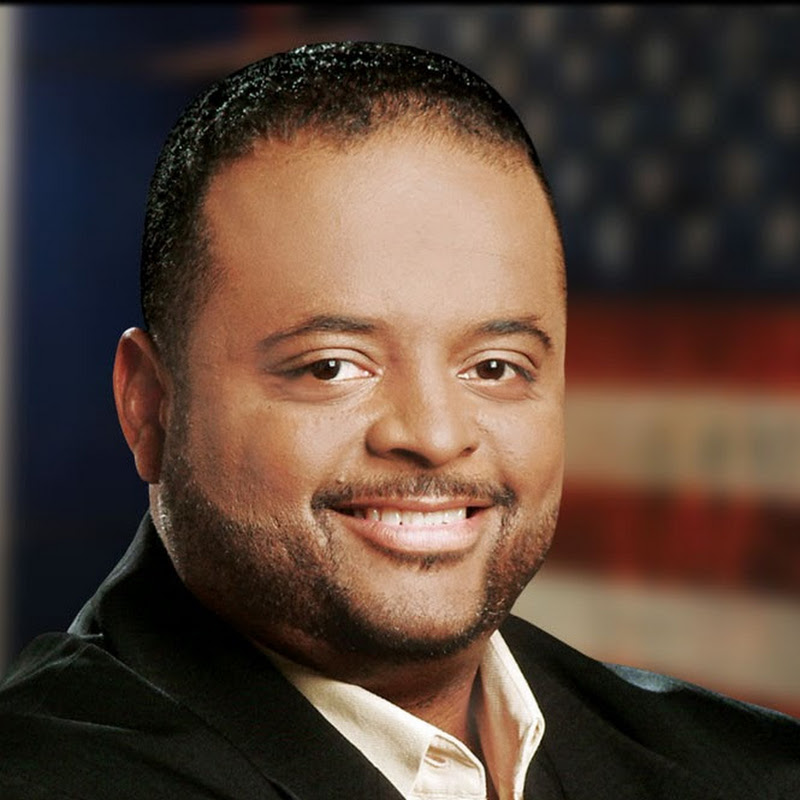
Black Voters Give Dems 92% Support. Democrats Give Us Scraps In Return
YouTube · hPOaRxRXY7g
Quick Read
Summary
Takeaways
- ❖The Democratic Party's traditional 'civil rights model' and church-based outreach for Black voters is outdated and ineffective.
- ❖Black voter support for Democrats is declining, with some moving Republican and others disengaging entirely, especially among younger demographics.
- ❖Barack Obama's campaigns, while successful, inadvertently led to a decline in investment in Black political infrastructure by subsequent Democratic campaigns.
- ❖The Democratic Party's $8 billion campaign ecosystem allocates only 1-2% of its funds to Black initiatives, equating to minimal investment per Black voter.
- ❖Black voters, particularly in states like Texas, are identified as 'swing voters' whose engagement is critical for Democratic victories.
- ❖The Stacey Abrams model in Georgia, emphasizing long-term, early, and rural engagement, is the blueprint for effective Black voter mobilization.
- ❖Black leadership must adopt a more 'transactional' approach, demanding significant investment and infrastructure building from the Democratic Party.
- ❖Black-owned media and grassroots organizations are essential for effective voter education and mobilization, requiring direct investment.
Insights
1Erosion of Black Voter Support Due to Outdated Democratic Strategy
The Democratic Party continues to use an outdated 'civil rights model' for Black voter engagement, relying on late-stage, church-based outreach. This approach fails to resonate with younger Black voters, leading to a decline in self-identification as Democrats and increased disengagement or shifts towards the Republican Party. The host notes this trend began as early as 1991 and has accelerated in recent cycles.
Roland Martin recounts observing changes among African-Americans in 1991, noting a shift from self-identified Democrats to a leaning, then to non-identification and some moving Republican or checking out of the process completely. He states the 'civil rights model' and 'church model' for outreach are 'obliterated'.
2Obama's Legacy and Subsequent Underinvestment in Black Political Infrastructure
While Barack Obama's campaigns saw high Black voter turnout, they inadvertently contributed to the Democratic Party's neglect of Black political infrastructure. Subsequent campaigns assumed similar turnout without the necessary groundwork, leading to a significant drop-off in Black male voter support even during Obama's second term, and further exacerbating the issue in later elections.
The host states Obama 'changed the game, not for good' by not needing the existing black political infrastructure. He cites a 9-point gap between Black men and women in 2012 due to 'softness' among African-Americans who felt they weren't seeing results from their vote, leading to 'divestment' and 'no investment made in building and shoring up the infrastructure of black political power on the ground'.
3Disproportionate Campaign Spending and Lack of Investment in Black Media
The Democratic Party's $8 billion campaign ecosystem allocates a minuscule 1-2% of its budget to Black initiatives, including Black-owned media and consultants. This stark disparity means Black voters receive minimal investment per person, while hundreds of millions go to white consulting firms and non-Black media outlets, despite Black voters being the party's most loyal base.
The guest highlights that out of an '$8 billion industry,' Black people receive 'about one to 2% investment,' which is 'about a buck and a quarter per black voter.' He contrasts this with '$800 million white folks got' and '$9.5 million BET got that's not even black-owned,' and 'the hundred million the white consulting firm got'.
4The Georgia Model as a 'North Star' for Black Voter Engagement
Stacey Abrams' strategy in Georgia serves as a successful blueprint for mobilizing Black voters. This model involves long-term, early investment in building local Black political infrastructure, and actively engaging Black voters, particularly in rural areas, where they were previously overlooked. This sustained effort proved crucial in turning Georgia purple.
The guest states, 'The north star is Georgia. What Stacy Abrams did in Georgia is the new model.' She 'made long-term investments in building up the infrastructure of black political power in Georgia' and went 'early where black voters are. Rural black voters made the difference'.
5Black Voters as 'Swing Voters' in Key States like Texas
Contrary to conventional wisdom, Black voters, particularly in states like Texas, function as crucial 'swing voters' or 'persuasion voters' for the Democratic Party. Their engagement, or lack thereof, can determine election outcomes, yet the party often prioritizes chasing a small percentage of white swing voters instead.
The guest provocatively states, 'black folks are the swing voters. Black people are the swing. They're definitely persuasion voters. They're so they are the swing voters.' He questions why Democrats chase 'one small percentage of white voters' when Black voters are the real swing voters in Texas.
Bottom Line
The Democratic Party's financial woes, including a significant negative balance, are linked to its lack of a clear vision beyond being 'anti-Trump,' making it difficult to mobilize and fundraise effectively.
Without a proactive vision and concrete plans, the party struggles to inspire its base and attract funding, leading to a cycle of underperformance and reliance on negative campaigning.
Develop a compelling, localized vision that addresses constituents' direct needs, moving beyond national talking points to create distance from the national party's perceived failures, as seen in successful local elections.
Black leadership and organizations often operate in silos, preventing them from fully recognizing and leveraging their collective capacity and financial resources to build independent political power.
This fragmentation weakens their bargaining position with political parties and limits their ability to implement sustained, effective voter education and mobilization efforts independent of campaign cycles.
Foster greater collaboration among Black organizations (e.g., D9 fraternities/sororities, professional groups, black millionaires) to pool resources, share data, and develop unified strategies for long-term political power building, independent of party funding.
Opportunities
Black-Owned Political Media Network
Establish a well-funded, independent Black-owned political media network (TV, radio, digital) that can serve as a primary information ecosystem for Black voters. This network would provide policy education, candidate analysis, and voter mobilization content year-round, funded by a combination of direct community investment and strategic advertising from campaigns that commit to equitable spending.
Black Political Infrastructure Investment Fund
Create a dedicated fund, managed by Black leadership, that pools resources from Black philanthropists, organizations (like D9s), and potentially mandated portions of campaign spending. This fund would provide grants and operational support to Black grassroots organizations focused on voter registration, education, and year-round mobilization, ensuring sustained political power building beyond election cycles.
Key Concepts
The Civil Rights Model vs. The Abrams Model
The 'Civil Rights Model' describes the Democratic Party's outdated approach to Black voter engagement, characterized by late-stage, superficial outreach (e.g., Sunday church visits in October). This contrasts with the 'Abrams Model' (Stacey Abrams in Georgia), which emphasizes long-term, early, and sustained investment in building Black political infrastructure and engaging voters where they are, including rural areas, leading to significant electoral success.
The Transactional Politics Model
This model posits that Black voters and leadership should approach their relationship with political parties, particularly the Democratic Party, from a transactional perspective. Instead of offering unconditional loyalty, Black leadership should demand concrete investments in infrastructure, media, and policy commitments in exchange for their crucial electoral support. This shifts the dynamic from assumed loyalty to a negotiation based on mutual benefit and accountability.
Lessons
- Black political leaders must adopt a 'transactional' approach, explicitly demanding significant, early, and sustained investments in Black political infrastructure and media from Democratic candidates and the party.
- Black organizations should prioritize building independent, year-round voter education and mobilization infrastructure, rather than solely relying on last-minute campaign funding or party initiatives.
- Democratic campaigns must shift their investment strategy to include early, long-term funding for Black grassroots organizations and Black-owned media, mirroring successful models like Stacey Abrams' in Georgia.
The Georgia 'North Star' Model for Black Voter Engagement
Make long-term investments in building Black political power infrastructure in key states, rather than short-term, election-cycle-dependent efforts.
Engage Black voters early in the election cycle, meeting them where they are, including previously overlooked rural Black communities.
Focus on ground-level engagement and organizing, rather than just buying TV and radio ads, to build genuine connections and trust within the community.
Notable Moments
Roland Martin recounts a 2012 conversation with then-Congressman Chris Van Hollen, where he urged investment in Georgia and Texas, only to be dismissed because 'Both of those are red.'
This illustrates the historical short-sightedness and resistance within the Democratic Party to invest in states perceived as 'red,' even when data suggested potential for change, directly preceding Georgia's eventual flip.
The guest highlights Jamie Harrison's quote about candidates needing to support the Democratic Party, framing it as a complaint against Democratic Socialists who organized and mobilized effectively.
This moment exposes an internal party conflict where established leadership criticizes insurgent movements for not adhering to party loyalty, even when those movements are successfully mobilizing voters and offering a clear vision that the party itself lacks.
Quotes
"If you take, this is 1991, if you take your civil rights movement, folk, uh, very much hardcore self-identified Democrats, and when I look at polls and things done, identified pro black. No, no, no, no, no, no, no. I'm not. Follow me here. Self-identified Democrats. Okay. And then you go to the next decade, then the second decade, you begin to see again when you go below 65, that begins to change. They get further and further from self-identifying. Now, they were showing that they were self they were not self-identifying, but were still leaning, still voting Democrat. In the last three to four cycles, what you're now seeing not self-identifying and some moving towards Republican side, others simply checking out of the process completely."
"The love and admiration that black people have for Barack Obama is not transferable to anybody else. To your point, we started bleeding support among black voters when he was in the White House."
"We give 92% to this party and we don't get anything in return."
"What Stacy Abrams did in Georgia is the new model. What she decided to do is she said, 'A, I'm going to make long-term investments in building up the infrastructure of black political power in Georgia. I'm going to secondly go early where black voters are. Rural black voters made the difference in Georgia. I'm going to go and engage black voters where we've never engaged them before. That is really the new formula to driving black turnout.'"
"If you look at the numbers objectively, you can say to some degree in the state of Texas, black folks are the swing voters. Black people are the swing. They're definitely persuasion voters. They're so they are the swing voters. So the question is, why are we why are you chasing this one small percentage of white voters who you think are the swing voters when the reality is black voters are your swing voters?"
"The entire democratic ecosystem, including what Mr. Jeff is in charge of the DEC. It is an $8 billion industry. Black people get about one to 2% investment out of $8 billion. That's about a buck and a quarter per black voter. Okay, that's abysmal."
"What needs to happen is Jaime needs to turn the mirror on the Democratic party and ask the party why are we not laying out a vision? Why are we not providing the American people with a level of confidence uh that we can do the job come November, any November."
Q&A
Recent Questions
Related Episodes

Secret Podcast Preview: The Last Temptation of Sarah Longwell
"Sarah Longwell and JVL delve into Pete Buttigieg's evolving political philosophy and critically analyze a viral tweet about Democratic election lessons, revealing their differing views on institutional reform and voter sentiment."

GOP Plots New Trump Supreme Court Pick Before Midterms | Elie Mystal | TMR
"Elie Mystal and Sam Seder discuss the Republican strategy to pressure Justice Samuel Alito into retiring before the midterms to allow Donald Trump to appoint a new, younger conservative justice, and the origins of the Supreme Court's 'shadow docket'."

Warnock UNLOADS on Trump SAVE Act. Calls It a Power Grab to Block Voters
"Senator Raphael Warnock vehemently opposes the 'SAVE Act,' framing it as a politically motivated voter suppression tactic that disproportionately disenfranchises eligible citizens under the false pretense of preventing non-existent voter fraud."

Trump’s Weakness EXPOSED After Epic Losing Week for Republicans
"This episode dissects a tumultuous week for Republicans, highlighting Donald Trump's political vulnerabilities through the lens of Christine Gnome's firing, the incoherent Iran war strategy, and shifting dynamics in key primary races."