
Col. Jacques Baud: Iran Strikes 8 U.S. Military Sites After Attacks on Southern Coast
YouTube · hXWykBs3KtI
Quick Read
Summary
Takeaways
- ❖The US is using the MOU as a 'trap' for Iran, aiming for a decisive victory through 'diplomacy under pressure' rather than a fair agreement.
- ❖Recent Iranian strikes on eight US military targets in the Persian Gulf (Bahrain, Ali Salm air base in Kuwait) were a response to US attacks on southern Iran, violating the MOU's ceasefire spirit.
- ❖Israel's exclusion from the MOU and its non-compliance in Lebanon are critical flaws, as the US overestimates its ability to impose solutions on its allies.
- ❖The Strait of Hormuz remains a key bargaining chip for Iran, but the US seeks ultimate control, leading to ongoing pressure tactics.
- ❖Colonel Baud suggests Iran might be strategically wise to exit the MOU if the US continues to act in bad faith and violate its terms.
- ❖The US-sponsored Lebanon-Israel agreement is deemed illegal under Lebanese law and flawed by excluding Hezbollah, the primary non-state actor in the conflict.
Insights
1US Strategy: MOU as a Trap for Decisive Victory
Colonel Baud asserts that the US did not sign the MOU with Iran in good faith. Instead, it views the MOU as a 'trap' to draw Iran into negotiations where the US can apply 'diplomacy under pressure' to force a decisive victory, rather than achieving a balanced agreement. This strategy is evident in the US's continued military actions and refusal to acknowledge any defeat.
The US intensified attacks on southern Iran, leading to Iran's response on eight US military targets. The US consistently frames its objective as a 'victory' and uses pressure tactics during negotiations. (, , )
2Israel's Exclusion and Non-Compliance Undermine MOU
A significant flaw in the MOU is Israel's exclusion, despite being a key party to the broader regional conflict, particularly in Lebanon. This allows Israel to act independently, violating the MOU's core principle of immediate and permanent termination of military operations on all fronts, including Lebanon. The US's inability to control Israel's actions renders the agreement ineffective.
Israel is not part of the MOU, and its continued attacks on Lebanon directly contradict the first clause of the agreement. The US bypassed Israel in the MOU's creation, then overestimated its ability to impose the solution on Israel. (, , )
3Strait of Hormuz as a Bargaining Chip vs. US Control
The Strait of Hormuz is a critical economic and strategic point. While Iran could use its control over the strait as a bargaining chip in negotiations, the US is unwilling to allow Iran to dictate terms for passage, seeking ultimate control. This disagreement fuels ongoing tensions and pressure tactics.
Iran attacked ships in the Strait, and the US is trying to use different routes. Colonel Baud states Iran could use it as a bargaining chip, but the Americans 'don't want to have that. They want to have the ultimate word on that.' (, , )
4Israel as the Root Cause of Regional Instability
Colonel Baud argues that many of the current regional conflicts, including those involving Iran and Lebanon, are 'manufactured' or directly caused by Israel's non-compliance with international law, its territorial ambitions (e.g., Litani River, Golan), and its aggressive actions against neighbors. He suggests that if Israel adhered to its borders and international law, many conflicts would not exist.
Israel has not completely left Lebanese territory since 1985 and occupies pieces of it. Claims exist within Israel for the border to be at the Litani River, deep within Lebanon. The Golan Heights are still Syrian territory. (, , , , )
Key Concepts
Diplomacy Under Pressure
A negotiation strategy where one party (the US) combines diplomatic talks with continuous military or economic pressure to force the other party (Iran) into an agreement that heavily favors the pressuring side, rather than seeking a mutually satisfactory compromise.
The Mediator's Dilemma
A situation where a mediator (Pakistan/Oman) lacks sufficient authority or recognition from all parties (especially the US) to effectively enforce fair play or ensure compliance, leading to one party dictating terms rather than facilitating a balanced resolution.
Lessons
- Policymakers should critically assess whether the US is genuinely pursuing a negotiated peace or a strategic victory in conflicts involving Iran, considering the implications for regional stability.
- Diplomatic efforts in complex regions like the Middle East must ensure the inclusion and genuine commitment of all significant parties, including non-state actors like Hezbollah, to prevent agreements from being undermined.
- International bodies and states should re-evaluate the historical context and root causes of conflicts, particularly regarding territorial disputes and compliance with international law, to avoid perpetuating cycles of violence.
Quotes
"The MOU is kind of a trap to attract Iran into a negotiation. But as uh we discussed already many times, this MOU, if you read it correctly, you have the two third, the two first, the two or three first paragraphs that outline the principle under which this MOU was signed and the two last paragraph that explain a little bit what would be the fate of the the result of the negotiation, namely the US, the UN Security Council resolution. And in between, all those measures regarding uh restitution of frozen funds, uh uh the straight of aros, the withdrawal of forces and so on and so forth. All that is subject to negotiation."
"The problem is that Israel is not destroyed enough. It still feels that it has the choice to decide whether or not it wants an agreement and likely not."
"The problem is that I think the US overestimate its ability to impose solution to its allies."
"Hezbollah is a defensive organization. It has as far as I know never done any terrorist attack outside its uh its area of operation that means southern Lebanon in Lebanon let's say uh so you know we we have created a problem here in 1982 we are still carrying this problem we try to solve by saying okay Hezbollah is a terrorist organization that means we don't talk to it. But if you don't talk to Hezbollah, how can you solve the problem?"
"All this is has been in fact created, manufactured I would say, by Israel because there is absolutely no reason to have white any kind of conflict here is absolutely no reason. Would Israel remain in its border? Would Israel treat people as normal people within Israel by the way, but also with its neighbors? There would be no problem."
Q&A
Recent Questions
Related Episodes

Patrick Henningsen: Hezbollah JUST Fired Back at Israel - Iran Vows to “Crush” All Attacks
"Patrick Henningsen argues that the US and Israel initiated an illegal war against Iran, driven by Trump's incompetence and Israeli influence, leading to an inevitable escalation with severe global economic repercussions."

Alex Krainer: US STRIKES Iran – Iran RETALIATES Against Kuwait, Bahrain & Jordan!
"Amidst escalating US-Iran conflict and Iranian retaliation against regional US allies, this episode argues that US foreign policy is deeply controlled by an 'Anglo-Zionist conspiracy' led by the Rothschild banking dynasty, prioritizing Israeli interests over American ones."

Bibi DEMANDS Ground Troops As Marines Rushed to Iran
"Benjamin Netanyahu is pushing for US ground troops in Iran, framing air strikes as insufficient, while the US rushes Marines to the region and struggles to secure the Strait of Hormuz against surprisingly capable Iranian defenses."
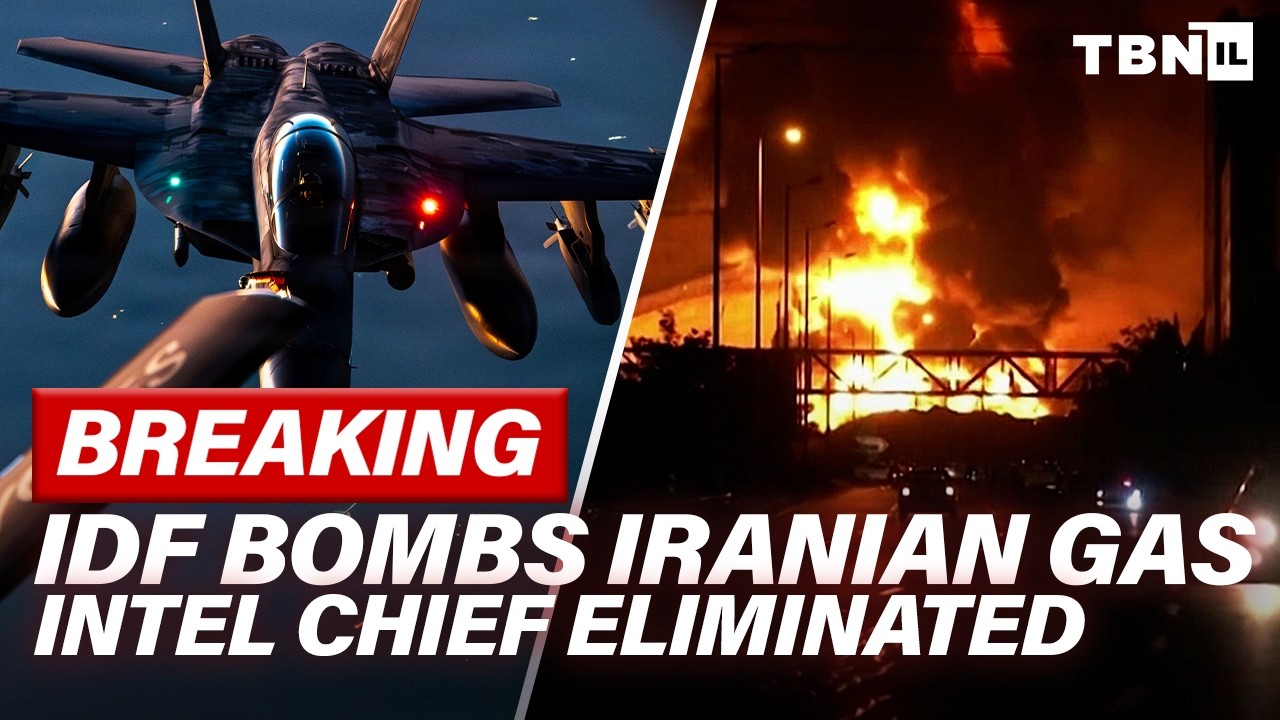
BREAKING: Israel BOMBS Major Iran Gas Site; Top Mullah ELIMINATED; Iran Vows VENGEACE | TBN Israel
"Israel and the United States have escalated their 'Roaring Lion War' against Iran, striking its largest gas facilities, eliminating key intelligence and military figures, and disrupting missile production, while Iran threatens a broader energy war in the Gulf."