
Yakov M. Rabkin: Iran Remains the Principal STRONGHOLD of Resistance to Israel
YouTube · hgDMZWX1gZY
Quick Read
Summary
Takeaways
- ❖The US-Iran conflict is primarily an Israeli war, with the US mobilized due to the Israel lobby's influence, not its own strategic interests.
- ❖Zionism, as an ethnic nationalist movement, inherently creates violence to preserve an apartheid state on already populated land.
- ❖The 1996 'Israel Firsters' report for Netanyahu outlined a strategy to aggressively weaken states supporting Palestinians, a plan now nearing completion.
- ❖The 'tail wags the dog' dynamic describes how Israel dictates US foreign policy in the Middle East, leading to significant resentment within the US.
- ❖Three distinct agendas drive the conflict: Israeli (to eliminate resistance), Christian Zionist (to usher in Armageddon), and the US (an incoherent, lobby-driven one).
- ❖Iran is the principal stronghold of resistance to Israel's regional agenda, motivated by religious and moral principles of justice for Palestinians.
- ❖Accusations of anti-Semitism are a 'weapon of mass distraction' used to suppress free debate about Israeli policies and undermine freedom of speech.
Insights
1US-Iran Conflict as an Israeli War
The ongoing war involving the United States and Iran is fundamentally an Israeli war, not an American one. The US has been mobilized for this conflict primarily due to the influence of the Israel lobby, rather than any compelling American strategic interests. This dynamic is leading to increased resentment among American officials and citizens.
Rabkin states, 'it's not so much an American war against Iran as it is an Israeli war against Iran. The United States has been mobilized for this war.' He cites Joe Kent's resignation and the Mearsheimer and Walt book on the Israel lobby.
2Zionism's Inherent Violence and Apartheid Nature
Zionism, as a political movement aiming to create a state on land already populated by others, inherently generates violence. The preservation of Israel's 'apartheid nature' necessitates continuous violence and the elimination of resistance to maintain its structure, rather than seeking coexistence or equal citizenship.
Rabkin explains, 'its very nature which is a Zionist state to create a Zionist state on a territory which is already populated by other people necessarily creates violence and that's what we see in order to ensure that the partite nature of Israel is preserved.'
3The 1996 'Israel Firsters' Plan and Its Culmination
A report written in 1996 for the incoming Netanyahu government, by 'Israel firsters' in American officialdom, spelled out an ambitious plan for Israel to become more aggressive and weaken or fragment states supporting Palestinians. This plan, leveraging the post-Soviet unipolar world, is now being observed as its 'last chapter' in practice.
Rabkin references 'the report that was written for the incoming Netanyahu government in 1996... in which it was spelled out that Israel can change the situation in the Middle East by becoming more aggressive, more ambitious... to weaken or fragment states that support the Palestinians.'
4Iran as the Principal Stronghold of Resistance
Iran remains the primary regional state resisting Israel's expansionist agenda. Unlike Arab governments, which often cooperate with Israel and its allies, Iran's government and population are united by a religious duty to support justice for Palestinians, making it a unique and formidable opponent.
Rabkin states, 'Iran however is different... both the government and the population consider it their religious duty to support justice. And what's being done to the Palestinians is injustice.' He later reiterates, 'Iran remains the principal stronghold of the resistance to Israel.'
5Three Distinct Agendas Driving the Conflict
The conflict is not driven by a singular purpose but by three overlapping agendas: 1) Christian Zionists seeking apocalyptic events for the second coming of Christ, 2) Israel aiming to dismember and weaken Iran to preserve its apartheid state, and 3) the United States, which lacks a clear, unified agenda and is swayed by lobby pressure and internal political factors.
Rabkin identifies 'the agenda of Christian Zionists to bring about a massive conflration, tremendous violence, apocalyptic events, Armageddon in order to usher in the second coming of Christ.' He contrasts this with Israel's goal to 'dismember, to weaken, to eliminate Iran as part of a resistance' and the US's 'incoherent narrative' due to a lack of clear goals.
6Accusations of Anti-Semitism as a 'Weapon of Mass Distraction'
The accusation of anti-Semitism is frequently employed as a tactic to silence critics of Israel and suppress free debate, particularly in the United States, where it also undermines freedom of speech. This tactic is effective despite historical connections between early Zionism and anti-Semitic sentiments, and the fact that many Jews oppose Zionism.
Rabkin calls it 'a weapon of mass distraction... blaming critics of Israel as anti-semmites.' He quotes Theodor Herzl, 'anti-semmites will be our best friends and allies,' and notes that 'many Jews in fact oppose it.'
Bottom Line
Israel maintains significant connections with Russia, China, and India, strategically cultivating these relationships as a hedge against potential future declines in US support.
This suggests Israel's long-term strategic planning extends beyond its primary alliance with the US, aiming for geopolitical flexibility and diversified support, indicating a pragmatic approach to maintaining its regional dominance regardless of shifting global power dynamics.
Analysts should monitor Israel's engagements with these non-Western powers for signs of deepening alliances or shifts in its foreign policy, which could signal a future rebalancing of its international relations.
To maintain US involvement in the war and mobilize American public opinion, Israel might resort to 'false flag operations' or 'targeted assassinations' on US soil, akin to a 'mini 9/11,' blamed on Iran.
This highlights a potential extreme measure to manipulate public and political sentiment, suggesting that the stakes are perceived as existential for Israel's regional agenda and that unconventional tactics are not off the table.
Intelligence communities and independent analysts should be vigilant for any suspicious events that could be exploited to escalate conflict, particularly those that could be falsely attributed to adversaries.
Key Concepts
Ethnic Nationalism
This model describes a political ideology where the state belongs exclusively to one ethnic group, leading to the discrimination, expulsion, or elimination of other groups. Rabkin applies this to Zionism, arguing that its ethnic nationalist foundation necessitates violence to maintain a 'pure' state, mirroring dangerous historical precedents in Eastern Europe.
Lessons
- Critically distinguish between Zionism and Judaism/Jewish people when discussing Israeli policies to avoid falling into the 'anti-Semitism' trap, which is used to suppress legitimate debate.
- Educate yourself on the historical and ideological roots of Zionism, particularly its ethnic nationalist tendencies, to better understand the drivers of conflict and the challenges to peace in the Middle East.
- Scrutinize claims of 'imminent threats' or justifications for military intervention, especially when they lack a unified narrative, as they may be influenced by external lobbies rather than genuine national interests.
Notable Moments
Joe Kent, former head of a US counterterrorism unit, resigned after his office was reportedly blocked from investigating foreign connections to alleged assassination attempts on Donald Trump and Charlie Kirk, implying external interference.
This suggests a deep level of foreign influence within US intelligence and political structures, potentially impacting national security and foreign policy decisions, and highlights the sensitivity around investigating such connections.
Rabkin highlights a 1910 quote from Zionist ideologue Jabotinsky, who dismissed 'childish humanism' and the expectation that a suffering nation would show mercy, stating 'the rules of the game are different.'
This quote provides a historical ideological foundation for Israel's current 'without mercy, without compassion' approach to conflict, suggesting that current policies are not a deviation but an embodiment of core Zionist tenets, challenging the narrative of a 'hijacked' movement.
Quotes
"It's not so much an American war against Iran as it is an Israeli war against Iran. The United States has been mobilized for this war."
"Israelis have a choice between destroying Iran and destroying the whole region in order not to permit Palestinians to be equal citizens in one state."
"The tail wags the dog that Israel decides and the United States has to follow."
"Accusations of anti-semitism serve largely to suppress free debate and in the case of the United States to undermine freedom of speech."
Q&A
Recent Questions
Related Episodes

Patrick Henningsen: Hezbollah JUST Fired Back at Israel - Iran Vows to “Crush” All Attacks
"Patrick Henningsen argues that the US and Israel initiated an illegal war against Iran, driven by Trump's incompetence and Israeli influence, leading to an inevitable escalation with severe global economic repercussions."
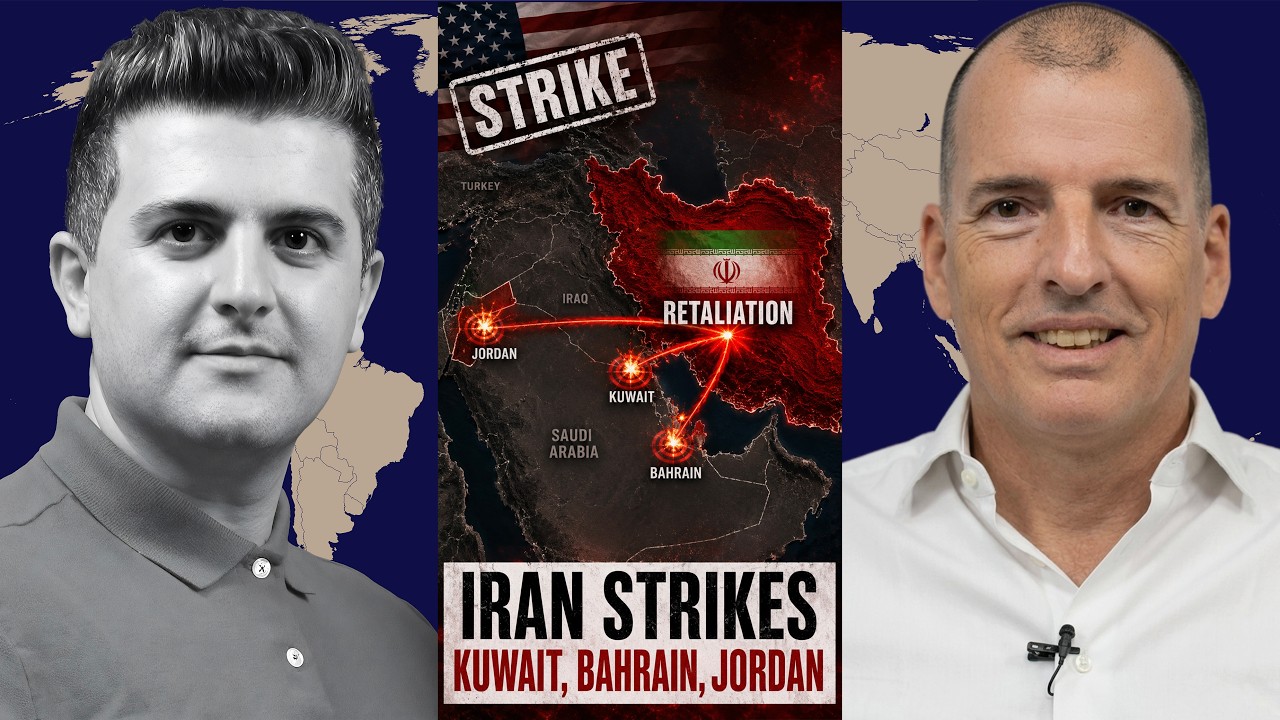
Alex Krainer: US STRIKES Iran – Iran RETALIATES Against Kuwait, Bahrain & Jordan!
"Amidst escalating US-Iran conflict and Iranian retaliation against regional US allies, this episode argues that US foreign policy is deeply controlled by an 'Anglo-Zionist conspiracy' led by the Rothschild banking dynasty, prioritizing Israeli interests over American ones."

LIVE: Trump HIDES FROM PUBLIC as US SOLDIER KILLED!!! 6/2/2026
"The host exposes alleged government cover-ups regarding military casualties, Trump's unexplained public absence, and questionable political appointments, arguing these reflect a 'regime of loser babies' and a failing foreign policy."
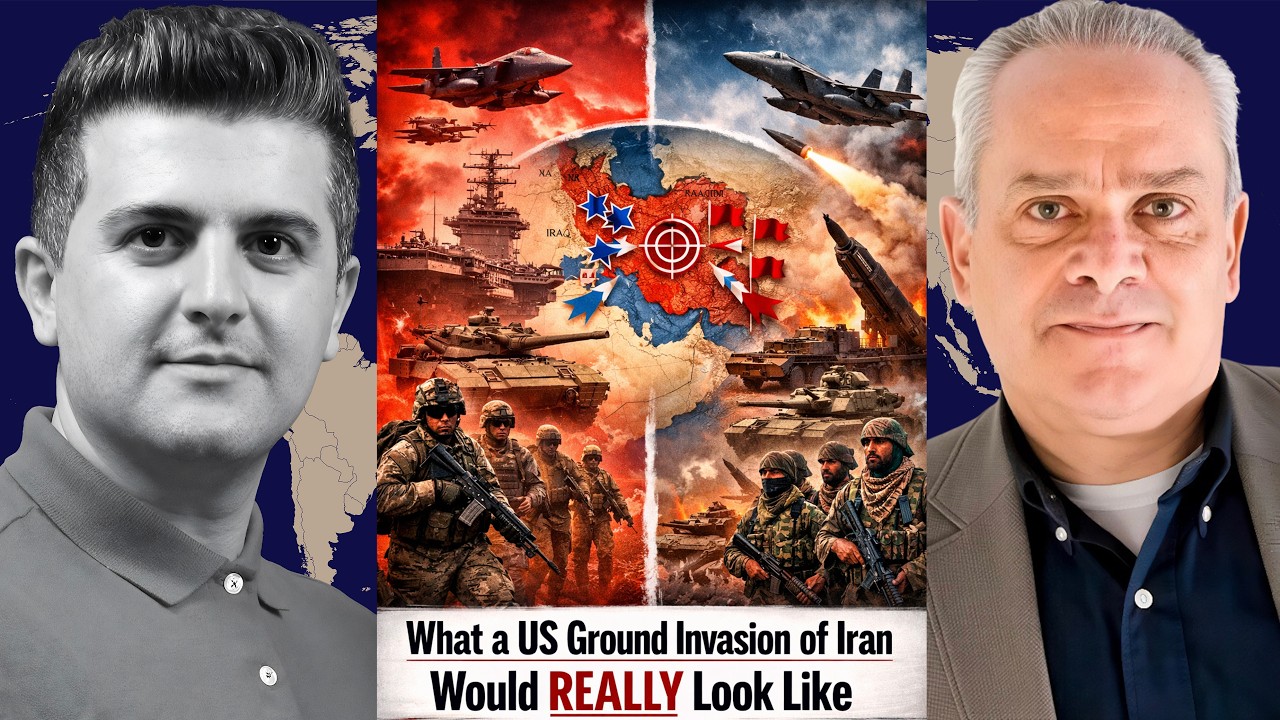
Col. Jacques Baud: What a US Ground Invasion of Iran Would REALLY Look Like
"Colonel Jacques Baud dissects the strategic futility of a US ground invasion of Iran, arguing that current troop levels are insufficient and such an action would backfire, exposing US allies and potentially leading to Iran's nuclearization."