US RUSHES Mil Equipment To Iran As Last Ditch Diplomacy Breaks Out
YouTube · hi5CVe3xaYM
Quick Read
Summary
Takeaways
- ❖Diplomatic negotiations between the US and Iran are highly unlikely to succeed quickly due to extreme differences on nuclear and missile issues.
- ❖Iran believes it cannot win a direct war but can inflict enough damage (on energy markets, US inflation) to influence a US presidential election.
- ❖Regional countries (Saudi, Oman, Pakistan, Egypt, Qatar) are collectively trying to influence US policy and provide guarantees for Iran in negotiations.
- ❖Trump's decision to call off a military strike was likely due to Iran's explicit threat of full-scale war, not symbolic retaliation.
- ❖Israel has continuously shifted its demands on Iran (from no nuclear weapons to no enrichment to missile production) to push the US towards war.
- ❖Other regional states fear a completely weakened Iran, as it would disrupt the balance against an 'increasingly aggressive and unrestrained Israel'.
- ❖Iran's regime is in a state of shock following protests where 5,000-7,000 people were killed, further eroding its legitimacy.
- ❖Violent elements, described as professional 'men in black' and potentially externally supported, were present in recent Iranian protests, distinct from peaceful demonstrators.
- ❖A majority within Iran's IRGC now advocates for racing to develop a nuclear bomb as the only effective deterrent, despite the Supreme Leader's opposition.
Insights
1Skepticism on US-Iran Diplomatic Breakthrough
The guest expresses strong skepticism about the current diplomatic negotiations, citing that US and Iranian positions on nuclear and missile issues are 'extremely far away'. He notes that Iran has 'almost zero maneuverability' and the Trump administration overestimates Iran's weakness, leading to an expectation of capitulation that Iran is unwilling to provide.
The Iranians have almost zero maneuverability and are not in really in a position to give that much. And I think the Trump administration is overestimating Iran's weakness.
2Iran's Strategic Calculation: Outlast, Not Win
Iran's leadership calculates that while it cannot win a direct war, it can 'last long enough to make sure that Trump loses his presidency' by inflicting significant damage on energy markets and causing inflation in the US. This strategy aims to deter the US through political and economic costs rather than military victory.
The calculation on the Iranian side essentially is they cannot win a war, but they can last long enough to make sure that Trump loses his presidency with the damage that they would be inflicted on him, the damage that would be inflicted on energy markets, inflation in the US, etc.
3Regional Actors Mediate Against Israeli Influence
Countries like Saudi Arabia, Oman, Pakistan, Egypt, and Qatar are becoming 'fully involved' in the diplomatic process. This collective regional effort aims to 'impose itself on Trump' to ensure he listens to them rather than solely to Israel, and to provide a 'proxy of a guarantee' for Iran that the US will uphold any agreement.
You're now seeing the region being fully involved in this... by acting collectively they really can get Trump's attention and get Trump to listen to them rather than to listen to Israel.
4Iran's Full-Scale War Threat Deterred US Strike
Trump nearly launched a military strike but called it off because Iran rejected the idea of a 'limited strike' with symbolic retaliation. Iran's firm stance was that 'if there is an attack, you will have full-scale war,' which caused the president to reconsider.
My understanding is that there had been an attempt to get the Iranians to agree to a limited strike... But the Iranian response was no, if there is an attack, you will have fullscale war.
5Israel's Goalpost Shifting Pushes US to War
Israel has consistently moved its demands regarding Iran, starting from no nuclear weapons, then to no enrichment, and now to missile production. Each acceptance by the US 'boxes himself in' and leads closer to military conflict, as these premises are 'designed to bring the United States into this war'.
He accepted the Israeli position of no enrichment... Now he's then gone along and accepted missiles as a new demand... the premise of the Israeli position is designed to bring the United States into this war.
6Regional Balance Against Unrestrained Israel
Other regional countries are not just trying to avoid war but also to 'save a certain balance' because the US lifting all restrictions on Israel during the Biden administration led to Israel bombing US allies. These countries now need their 'own balancing against Israel,' and a weakened Iran would negatively affect their security by making it harder to counter an 'increasingly aggressive and unrestrained Israel'.
A new situation has emerged in the region following the US completely lifting all restrictions on Israel... these countries need to have their own balancing against Israel.
7Domestic Instability and External Influence in Iranian Protests
Iran's domestic situation is 'very problematic,' with the country in 'complete state of shock' after 5,000-7,000 killings during protests, eroding regime legitimacy. There were also 'very very violent elements' within the protest movement, described as 'men in black' who were professional, had clear plans, and engaged in extreme violence, distinct from peaceful protesters. These elements may have been 'supported by outside groups,' indicating the regime's loss of security control.
It does seem very likely that between five and 6,000 or perhaps more up to 7,000 were killed... I spoke to one person who was out in the streets... they were just shocked to see these men in black acting very fast... putting buildings on fire, fighting with police, putting policemen on fire.
8Growing Support for Nuclear Bomb in Iran
Within the Iranian government and IRGC, a majority now believes that 'racing to a bomb' is the 'only thing that is going to act as a deterrence' and the 'only rational choice'. The primary obstacle is the Supreme Leader's fatwa against nuclear weapons, which he appears to take seriously.
Those voices at this point probably are a majority... the obstacle they have is that the supreme leader himself seems to be dead set against it.
Bottom Line
The presence of highly organized, violent 'men in black' within Iranian protests, distinct from the main non-violent movement, suggests potential external orchestration or exploitation of domestic unrest, significantly complicating the regime's internal security narrative.
This narrative challenges the simplistic view of protests as purely organic, implying a more complex, possibly externally influenced, destabilization effort. It could be used by the Iranian regime to justify crackdowns and by external actors to escalate tensions.
Further investigation into the origins and funding of these violent elements could reveal hidden geopolitical strategies and proxy conflicts, offering a more nuanced understanding of internal conflicts in authoritarian states.
Regional US allies are actively seeking to preserve a weakened but not collapsed Iran to maintain a strategic balance against an 'increasingly aggressive and unrestrained Israel,' indicating a divergence from US-Israeli objectives.
This reveals a significant fault line in US Middle East policy, where US allies are working to counter another US ally, Israel, by indirectly supporting Iran's continued existence as a balancing force. It implies US policy is not uniformly serving regional stability.
Policymakers could leverage this regional desire for balance to construct more sustainable security architectures that address the concerns of multiple regional actors, rather than solely focusing on US-Israeli alignment, potentially leading to more stable diplomatic solutions.
Lessons
- Policymakers should critically assess the 'moving goalposts' phenomenon in US foreign policy, particularly when influenced by external allies, to avoid being drawn into conflicts that do not serve core national interests.
- Analysts should consider the domestic political calculations of adversaries, such as Iran's strategy to influence US elections through prolonged conflict, when evaluating diplomatic and military options.
- Diplomatic efforts in complex regions like the Middle East benefit significantly from broad regional involvement, as collective action can provide crucial guarantees and counter-pressures against unilateral agendas.
Quotes
"The calculation on the Iranian side essentially is they cannot win a war, but they can last long enough to make sure that Trump loses his presidency."
"If he really does not want to go to war then he should not accept the premise of the Israeli position because the premise of the Israeli position is designed to bring the United States into this war."
"A war with Iran that either further weakens Iran or you have chaos in Iran or you have a pro-Israel puppet installed in Iran is a devastating geopolitical development for these countries."
"They will not be pacified until he has gone into fullscale war with Iran. There is no half measure. Either you tell them no or you're going to have to tell them yes."
"If they give on enrichment, then it will be missiles. If they give on missiles, eventually it will be kitchen knives. There's no end to this."
Q&A
Recent Questions
Related Episodes
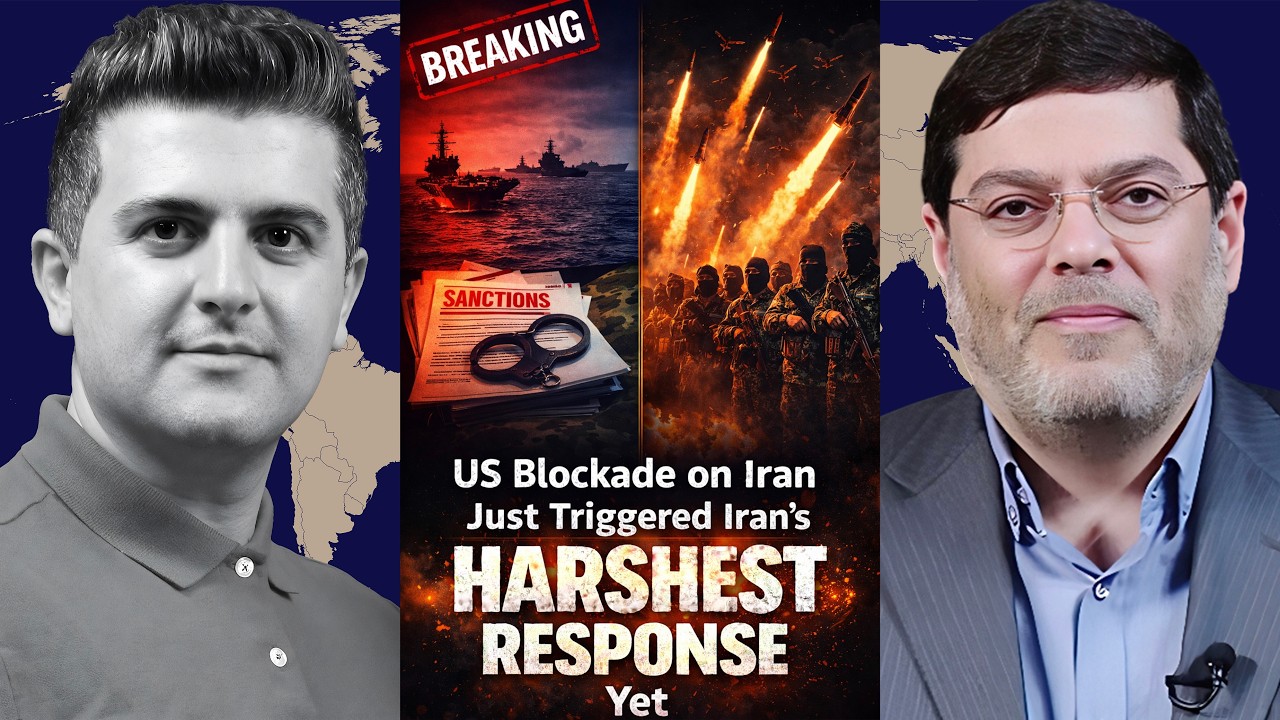
Seyed M. Marandi: US Blockade on Iran Just Triggered Iran’s HARSHEST Response Yet
"An Iranian professor details how US demands and an imposed blockade triggered Iran's harshest response, exposing American strategic missteps and the vulnerability of Gulf Arab states."

Col. Jacques Baud: Middle East on Fire — Is This the Start of Something Bigger?
"Colonel Jacques Baud dissects the escalating conflict between the US, Israel, and Iran, arguing that Western misunderstanding of Iranian culture and strategic duplicity have forced Iran into a position of necessary escalation, ultimately degrading the West's own strategic posture."
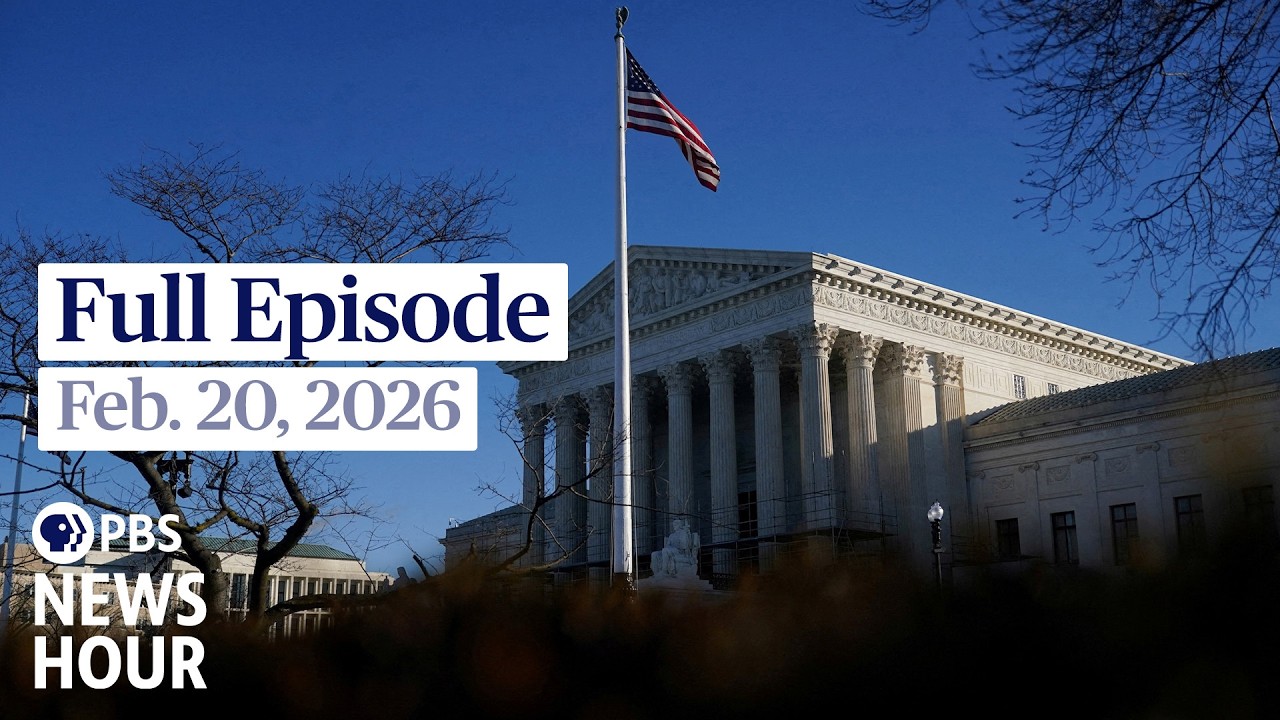
PBS News Hour full episode, Feb. 20, 2026
"The Supreme Court struck down President Trump's sweeping global tariffs, prompting an immediate presidential counter-move with new tariffs and escalating tensions with Iran, while the EPA rolled back critical environmental protections."

Pentagon Prepares For EXTENDED War With Iran
"This episode dissects the geopolitical maneuvers surrounding potential US-Iran conflict, revealing strategic leaks, Netanyahu's diplomatic sabotage playbook, and the true intent behind economic sanctions."