
LIVE: MeidasTouch RESPONDS to MAJOR BREAKING NEWS - 4/13/26
YouTube · htEt2tIdhKA
Quick Read
Summary
Takeaways
- ❖US-Iran negotiations in Pakistan failed after the Trump regime attempted to alter a previously agreed-upon 10-point framework.
- ❖Donald Trump announced a full blockade of the Persian Gulf targeting Iranian oil, a move questioned for its enforceability and potential for escalation.
- ❖The US Navy deployed mine-sweeping ships to the Strait of Hormuz, which hosts suggest is a tactic by Trump to bait Iran into conflict.
- ❖Trump posted 'deranged' AI-generated images of himself as Jesus, Trump buildings on the moon, and random photos of Bruce Springsteen.
- ❖A White House press conference featuring a 'DoorDash grandma' praising Trump's tax policies was exposed as a staged event involving a GOP activist from Arkansas.
- ❖The pro-democracy Teisa party, led by Peter Maguiar, achieved a significant victory in Hungary, challenging Victor Orban's authoritarian rule and rejecting 'Trumpism'.
- ❖Canadian Prime Minister Carney delivered a powerful speech advocating for Canada to reduce military spending with the US and prioritize Canadian products, citing the crumbling international order and unreliable US ties.
- ❖International Monetary Fund (IMF) and World Bank meetings in Washington D.C. saw delegates quietly advised not to discuss climate change to avoid provoking the Trump administration.
- ❖A defamation lawsuit filed by Donald Trump against the Wall Street Journal regarding an alleged Jeffrey Epstein birthday card was dismissed, though Trump plans to refile.
- ❖Congressional representatives Eric Swalwell and Tony Gonzalez resigned amidst allegations of sexual misconduct and abuse of power, respectively.
Bottom Line
The global community, including traditional US allies, is actively developing strategies to operate independently of the United States, driven by a perceived lack of reliability and stability from the Trump administration.
This shift indicates a fundamental reordering of international alliances and supply chains, with long-term implications for US geopolitical influence and economic leverage, regardless of future US leadership.
Nations can capitalize on this by strengthening regional blocs, investing in diversified trade routes, and promoting multilateral institutions that are less susceptible to the whims of a single superpower's domestic politics.
The Trump administration's pressure on international bodies, such as the IMF and World Bank, to suppress discussions on critical global issues like climate change, forces these organizations to adopt 'linguistic gymnastics' to pursue their objectives covertly.
This self-censorship hinders transparent global cooperation on urgent challenges and can lead to less effective, indirect solutions, potentially exacerbating crises in the long run.
Advocacy groups and non-governmental organizations can play a more prominent role in openly championing these suppressed issues, providing alternative platforms for discussion and funding, and holding powerful nations accountable for their obstructionist policies.
Key Concepts
The Fraudulent Strongman
This model describes a leader who consistently employs deceit, staged events, and exaggerated claims to project an image of strength and success, even when facts contradict these assertions. The podcast argues Trump embodies this by fabricating stories (Ed McMahon), staging press conferences (DoorDash grandma), and making unrealistic claims (Gulf of America, market performance), ultimately undermining trust and international relations.
America Alone
This model suggests that an 'America First' policy, particularly under Trump, leads to the US becoming isolated on the global stage. Instead of strengthening alliances, it pushes traditional partners (like Canada and European nations) to forge new agreements and pursue independent paths, recognizing US unreliability and the erosion of a stable world order.
Lessons
- Actively scrutinize political statements and media narratives, especially those from high-profile figures, for signs of propaganda, fabrication, or manipulation.
- Support and engage with independent media outlets that commit to objective analysis and fact-checking to counter misinformation and 'deranged' political discourse.
- Participate in local and national elections, recognizing that collective civic engagement is crucial to defending democratic values against authoritarian tendencies and political fraud, as demonstrated by the Hungarian election.
Notable Moments
The hosts' detailed breakdown of Trump's failed Iran negotiations, emphasizing his unilateral shift from a 10-point framework he initially agreed to, and the subsequent announcement of a blockade.
This highlights a pattern of diplomatic instability and aggressive posturing that could lead to international conflict, demonstrating a lack of consistent strategy and respect for negotiation protocols.
The exposure of Trump's 'DoorDash grandma' press conference as a staged event, revealing the woman was a pre-selected GOP activist flown in from Arkansas.
This exemplifies the Trump administration's reliance on manufactured public support and propaganda, undermining the authenticity of political messaging and public trust in official events.
Canadian Prime Minister Carney's speech declaring Canada's move away from US military reliance and toward 'Canadian products first,' citing the crumbling international order and US unreliability.
This signifies a tangible shift in a key US ally's foreign policy, indicating a loss of international confidence in US leadership and potentially inspiring other nations to pursue similar independent paths.
Quotes
"Trump's plan to open up the Strait of Hormuz is to further close the Strait of Hormuz by adding yet another layer of a blockage there."
"The foundations of the international order, the order which Canada helped build and from which we have benefited for so long, that order is crumbling."
"I say I really don't actually like politics and I don't really like politicians. I like the values and principles set that we stand for and we fight for the people."
Q&A
Recent Questions
Related Episodes

Iran Deal Skepticism. Whoopi Vs Vance. Potomac Park Invasion. Racist Hurls Slurs At Black Boy.
"This episode dissects multiple instances of alleged anti-Black policies and racial injustice, from the Trump administration's legal challenges to reparations and the Iran deal, to police brutality and the erasure of Black history."

Larry Johnson: Iran Missiles Rain Down on Northern Israel – Massive Strikes!
"Geopolitical analyst Larry Johnson details how Israel's recent strike on an 'empty building' in Beirut triggered direct Iranian missile retaliation, escalating regional tensions and jeopardizing a US-Iran peace deal brokered by Pakistan."

LIVE: Trump HIDES FROM PUBLIC as US SOLDIER KILLED!!! 6/2/2026
"The host exposes alleged government cover-ups regarding military casualties, Trump's unexplained public absence, and questionable political appointments, arguing these reflect a 'regime of loser babies' and a failing foreign policy."
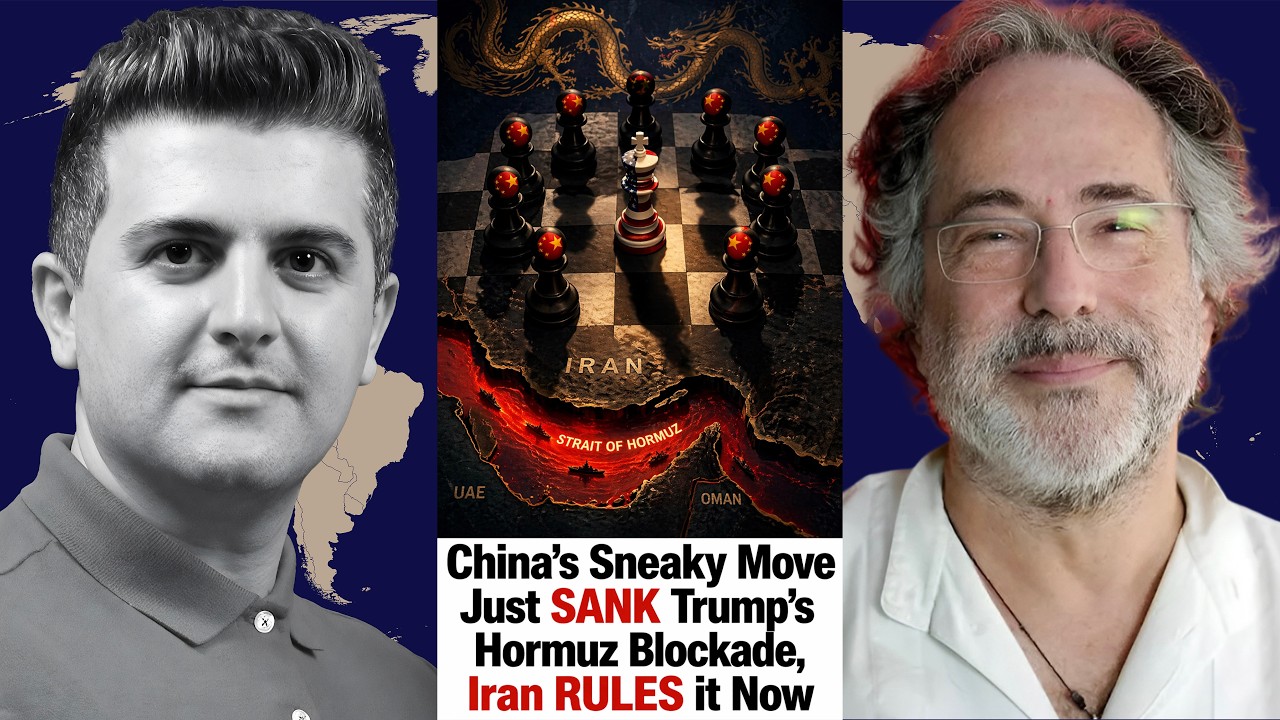
Pepe Escobar: “Total Failure”: Trump’s Blockade Just Backfired Disastrously
"Pepe Escobar argues that the US blockade against Iran, spearheaded by Donald Trump, has utterly failed and backfired, accelerating global economic chaos and challenging US geopolitical dominance."