BREAKING: Iran DEFIANT As US Weighs Strike, HARDENS Demands; Khamenei SOLIDIFIES Power | TBN Israel
YouTube · ifHik7GPB20
Quick Read
Summary
Takeaways
- ❖Iran has presented five new, non-negotiable conditions for talks with the US, including compensation for war damages and recognition of its sovereignty over the Strait of Hormuz.
- ❖The US is considering renewed military action against Iran, with options ranging from limited operations to a full-scale 'Heavy Hammer' campaign.
- ❖Iran's economy is in a severe downturn due to US sanctions and a naval blockade, leading to soaring inflation, business closures, and public despair.
- ❖The US-China summit in Beijing is a critical diplomatic effort to address the Iran conflict, global trade deficits, technology competition, and stability in the South China Sea.
- ❖European nations are forming an international coalition to secure the Strait of Hormuz, deploying naval assets and mine countermeasures.
- ❖Internal power struggles in Iran show Supreme Leader Mujtaba consolidating authority, while the Revolutionary Guards suppress dissent through executions.
- ❖The hosts argue that the military war against Iran's 'war machine' has largely been won, but the asymmetrical nature of fighting a terrorist nation means the conflict is far from over.
- ❖The conflict is framed as a 'spiritual war' by the guest, Daniel Cohen, who asserts that Israel and the US are 'winning' despite media narratives.
Insights
1Iran's Hardened Negotiation Demands
Iran has set five new, non-negotiable conditions for resuming talks with the United States. These include an end to fighting on all fronts, removal of sanctions, release of frozen funds, compensation for war damages, and recognition of Iranian sovereignty over the Strait of Hormuz. Tehran views these as minimum requirements for building basic trust, indicating a significant hardening of its stance.
Iran announced that it will not resume negotiations with the United States before five conditions are met. Condition it defines as the minimum required for building basic trust. According to sources in Iranian media, these conditions are seen by Tehran as an essential framework without which there is no point in renewing the dialogue. The official false news agency detailed the five conditions. The end of fighting on all fronts with an emphasis on confrontation withah and Lebanon. The removal of sanctions on the release of frozen Iranian funds. compensation for the damage caused to Iran during the war, recognition of Iranian sovereignty over the state of Humuz.
2US-China Summit Addresses Iran and Global Rivalry
US President Donald Trump's visit to Beijing for a summit with Chinese President Xi Jinping is taking place amidst heightened tensions with Iran. The leaders are expected to discuss the war with Iran, global trade imbalances, the technology war (chips, rare minerals), and the Taiwan issue. This meeting is framed as an attempt to diffuse an intense rivalry between the two global powers, with the Iran conflict serving as a proxy battleground.
Trump lands in Beijing. The American Chinese summit is taking place in the shadow of the tension with Iran. The power struggles over global trade and the technology war. US President Donald Trump arrives in China for the first visit of his kind in almost a decade. As a struggle between Washington and Beijing intensifies over artificial intelligence, Taiwan, Iranian oil, and rare earth metals... The two leaders are expected to discuss the war with Iran, which will take a central place in these conversations.
3Economic Blockade Cripples Iranian Oil Exports
The US is maintaining heavy maritime pressure around Iranian ports in the Strait of Hormuz, effectively blocking oil exports. The oil terminal on Kharg Island, a key export hub, is deserted, and 18 tankers are stuck as 'floating storage facilities.' This bottleneck is pushing Iran's oil fields to storage capacity limits, potentially forcing a shutdown of production and severely impacting Iran's fuel-dependent economy.
The United States is applying heavy maritime pressure around Iranian ports in the Strait of Hummus. This is not just a picture of a blockade on a map. It is a daily operation... At the same time, this pressure is beginning to hit the heart of the Iranian economy. The oil terminal on Kharg Island, one of the most important centers for Iran's oil exports, has looked almost deserted for days. Tankers that were supposed to go out to sea are effectively becoming floating storage facilities. According to the published data, the number of tankers stuck around the area jumped from three in midappril to 18 at the beginning of May.
4European Coalition to Secure Strait of Hormuz
Several European countries, including Britain, Lithuania, France, and Italy, are forming an international coalition to secure the Strait of Hormuz. Britain is deploying unmanned mine countermeasure vessels, fighter jets, and a destroyer. This mission is defined as defensive but prepares for potential Iranian physical actions to close the strait, signaling a unified international response to protect global shipping.
The Europeans are coming fashionably late. Britain will participate in an international force in the Strait of Humuz. British Defense Secretary John Haley announced the deployment of a force of unmanned mine countermeasure vessels, fighter jets, and the destroyer Dragon to the Strait of Humu area... Lithuania announced the deployment of 40 sailors... France sent one aircraft carrier... even Italy is moving two ships closer towards humus in preparation for the international coalition.
5Iran's Internal Repression Amidst Economic Crisis
Amidst a collapsing economy, with food prices up over 100% and widespread poverty, the Iranian regime is increasing fear and repression. The Revolutionary Guards are continuing executions, exemplified by the recent execution of a citizen accused of spying for Israel. This is interpreted as a sign of weakness, as a confident regime would not need such extreme measures to quell potential rebellion or protest.
Inside Iran, the public is already feeling the price. Inflation is high. Food prices have jumped by more than a 100% in a year... This morning, Iran reported the execution of Ishan Afar Hath... An Iranian citizen who was convicted of spying on Israel... While the regime is under economic, military, and internal pressure, it's trying to send citizens a clear message. Don't even think about moving towards rebellion, cooperation, or protest. This is a sign of weakness, not strength.
Bottom Line
The US-China trade war and the Iran conflict are deeply intertwined, with China benefiting from sanctioned Iranian oil and supplying Iran with military components, while the US uses its control over global oil routes (like the Strait of Hormuz) to pressure both Iran and China.
This reveals that the Iran crisis is not merely a regional issue but a strategic lever in the broader US-China geopolitical competition, meaning a resolution in the Middle East could significantly alter the global balance of power.
Businesses and governments should monitor the US-China negotiations closely, as any agreement or escalation could dramatically impact global supply chains, energy prices, and technology markets, creating opportunities for strategic resource acquisition or market diversification.
Iran's aggressive demands for negotiation, including compensation and sovereignty over the Strait of Hormuz, are seen by Israel and the US as a 'trap' designed to gain time and resources for rebuilding its military capabilities and calming internal unrest without dismantling its nuclear program.
This suggests that any 'peace' agreement without robust, verifiable dismantling of Iran's nuclear and military infrastructure would be temporary, allowing Iran to re-emerge stronger and more dangerous.
International bodies and negotiating parties must prioritize concrete, verifiable disarmament and oversight mechanisms over superficial agreements to prevent Iran from exploiting diplomatic pauses for rearmament. Investment in advanced monitoring and verification technologies could be critical.
Key Concepts
Economic Strangulation
The strategy of applying overwhelming economic pressure, such as naval blockades and sanctions, to choke off a nation's revenue streams (e.g., oil exports) and force it into compliance or collapse, akin to a 'boa constrictor' slowly constricting its prey.
Proxy Warfare
A conflict where major powers (e.g., US and China) avoid direct confrontation by supporting opposing sides (e.g., Iran) in smaller, regional conflicts, using them as instruments to advance their own geopolitical interests and test each other's influence.
War Over Narrative
The concept that modern conflicts are fought not only on military and economic fronts but also in the 'court of public opinion' and social media, where controlling the story and shaping public perception is a critical strategic objective.
Lessons
- Actively pray for the people of Israel, for peace in the Middle East, and for soldiers and leaders working to protect the region, recognizing the spiritual dimension of the conflict.
- Support media outlets and content creators (like TBN Israel and Real Life Network) that provide on-the-ground reporting and challenge mainstream narratives to gain a comprehensive and unfiltered understanding of geopolitical events.
- Share accurate information and analysis with your networks to counter disinformation and help others understand the complex realities of the conflict, contributing to the 'war over truth'.
Notable Moments
Kuwaiti authorities arrested four Iranian Revolutionary Guards members attempting to infiltrate Bubiyan Island, a strategic location in the Persian Gulf, to attack American and Kuwaiti targets.
This incident demonstrates Iran's continued willingness to engage in direct hostile actions against Gulf states and US interests, even amidst negotiations, challenging the notion of a ceasefire and highlighting regional instability.
Daniel Cohen highlights a Pew study indicating that over 50% of American people are 'souring on Israel,' despite Israel being the 'tip of the spear' against radical Islam and having God's protection.
This reveals a significant shift in public opinion in a key ally, posing a challenge to Israel's long-term international support and underscoring the importance of the 'war over narrative' in shaping global perceptions.
Quotes
"The most obvious thing, excuse me, here is that Israel and the United States are winning. We're winning. We are winning. This isn't even It's not even a close fight."
"The war on the military level has already been won. And then the the flip side of that is is the complexity of fighting an asymmetrical war which is even though we long ago this is on day you know two of this war we already beat the the Iranian army the Iranian let's call it war machine still the war isn't over."
"God is a Zionist and there's this they're trying to tar and feather this term Christian Zionist. Tucker Carlson said he hates Christian Zionists more than anyone else. What is a Zionist? A Zionist is just someone who believes that Israel that the Jewish people deserve uh to live in their ancient homeland. That's all it is."
"If you're somehow subscribing to this replacement theory that God's done with the Jews, God's done with his people, he can't break a promise. Because if he breaks a promise to the Jews, what promise do you have that he won't how do you know he won't break his promise to you?"
Q&A
Recent Questions
Related Episodes

Iran Update: Israel’s Newest Bombing Campaign, the Oncoming War With China and How to Avoid It
"Colonel Wilerson reveals how the US and Israel are actively bombing China's strategic infrastructure in Iran, escalating a covert economic war that Beijing intends to win without direct military conflict by dismantling the dollar's global dominance."
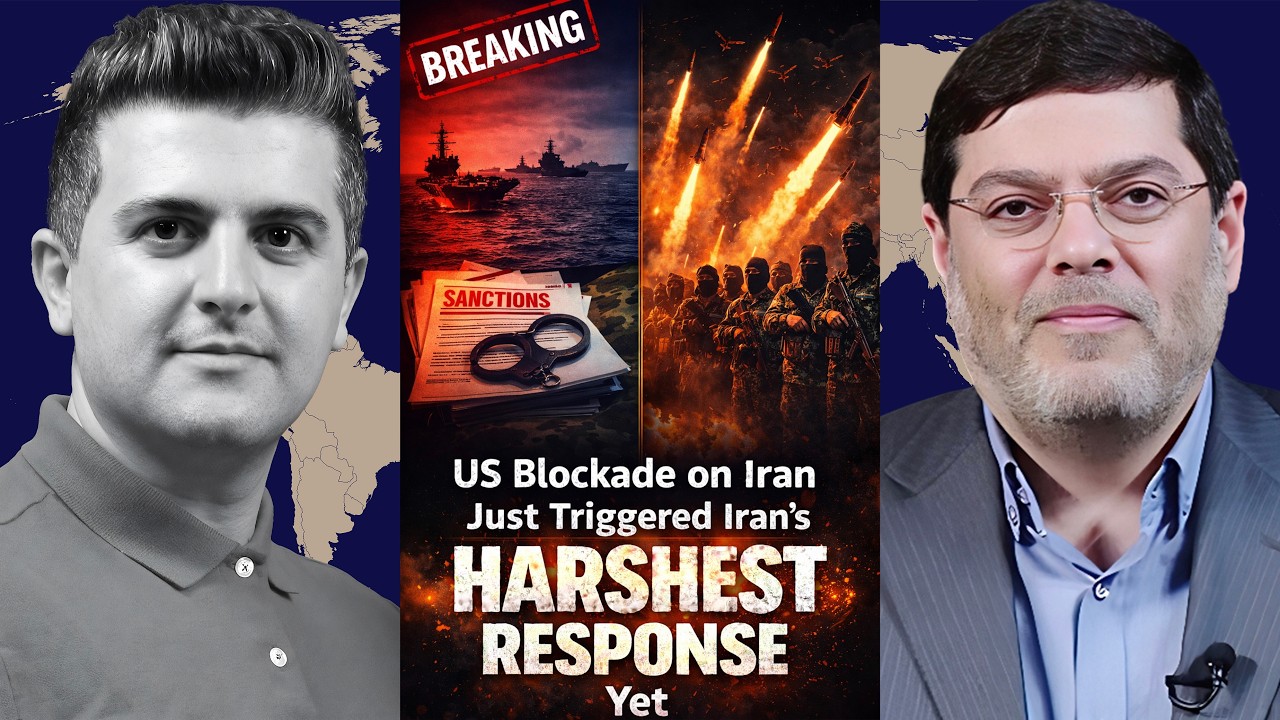
Seyed M. Marandi: US Blockade on Iran Just Triggered Iran’s HARSHEST Response Yet
"An Iranian professor details how US demands and an imposed blockade triggered Iran's harshest response, exposing American strategic missteps and the vulnerability of Gulf Arab states."
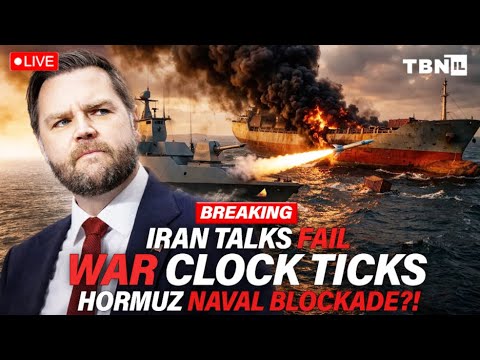
BREAKING: U.S.-Iran Talks COLLAPSE; Hormuz Standoff Deepens; Hezbollah Fire | TBN Israel
"US-Iran negotiations in Islamabad collapsed over the nuclear issue and control of the Strait of Hormuz, leading to heightened tensions and a potential US naval blockade strategy."

Patrick Henningsen: Hezbollah JUST Fired Back at Israel - Iran Vows to “Crush” All Attacks
"Patrick Henningsen argues that the US and Israel initiated an illegal war against Iran, driven by Trump's incompetence and Israeli influence, leading to an inevitable escalation with severe global economic repercussions."