
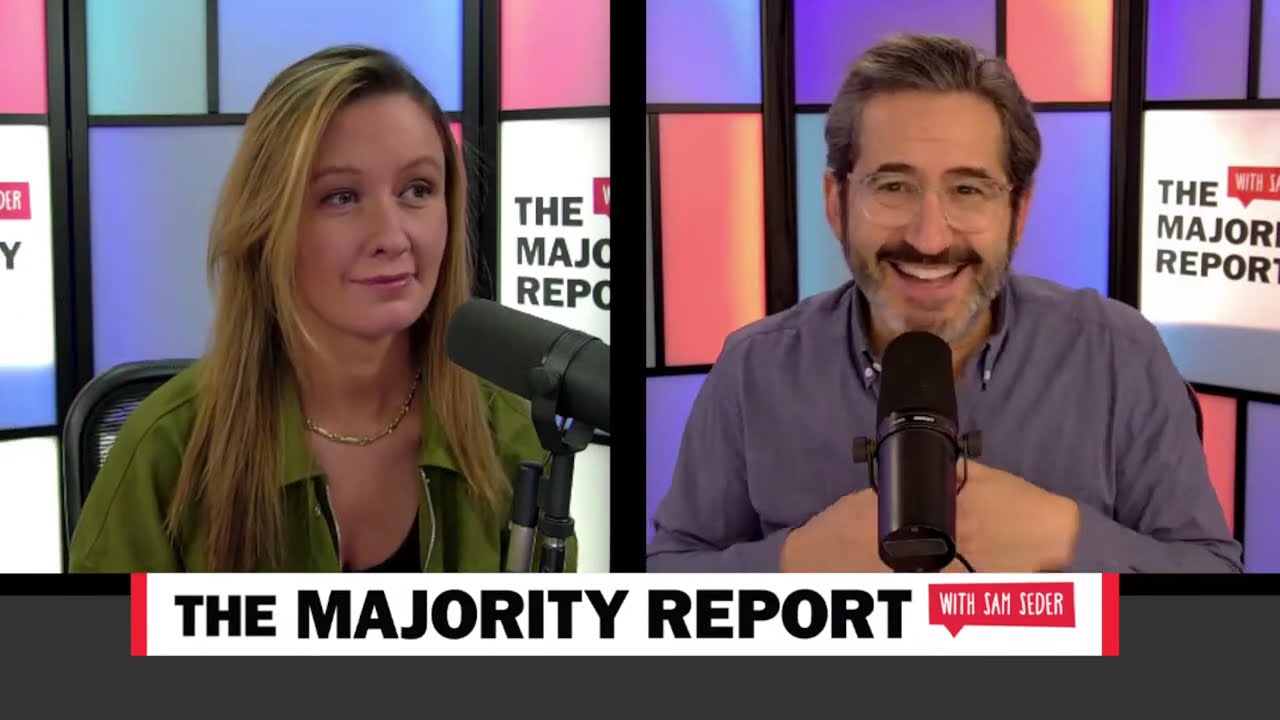
Trump’s DOJ Made an Embarrassing Legal U-Turn (w/ Andrew Weissmann) | Illegal News
YouTube · imiXxIlhsus
Quick Read
Summary
Takeaways
- ❖The Trump DOJ initially withdrew appeals against lawsuits challenging executive orders targeting law firms, only to reinstate them the next morning, suggesting political pressure.
- ❖Andrew Weissmann was personally targeted by one of Trump's executive orders for his work on the Mueller investigation and his association with Jenner & Block.
- ❖The proposed DOJ rule would mandate state bar associations to suspend ethics investigations into DOJ attorneys until the DOJ completes its own internal review, effectively delaying or preventing external accountability.
- ❖A federal judge, appointed by Donald Trump, ruled that ICE agents in Minnesota engaged in unconstitutional stops and arrests based solely on race and ethnicity.
- ❖The congressional investigation into Jeffrey Epstein is criticized as 'farcical' and 'performative' for failing to interview key witnesses like FBI agents, prosecutors, or Epstein's staff, while calling irrelevant figures like Hillary Clinton.
- ❖Sarah Longwell argues that Democrats fail to effectively communicate their policy positions to 'news receivers' (those who get news algorithmically), ceding narrative dominance to Republicans who use their own media ecosystems.
Insights
1DOJ's Unprecedented U-Turn on Law Firm Lawsuits
The Trump Department of Justice initially filed a motion to withdraw appeals in four cases where federal judges struck down executive orders targeting law firms. These orders were deemed violations of the First Amendment. However, the very next morning, the DOJ reversed course and reinstated the appeals. Andrew Weissmann, whose former firm Jenner & Block was targeted, views this as a direct result of Donald Trump's intervention after seeing negative press, demonstrating a lack of consistent legal strategy and potential political interference in judicial processes.
DOJ filed a motion to withdraw appeals on Monday, then filed to withdraw that withdrawal on Tuesday morning, subsequently filing their brief on Friday. Trump reportedly claimed unawareness and threw a 'fit.'
2DOJ's Proposed Rule to Shield Attorneys from State Ethics Probes
The DOJ proposed a federal rule that would require state bar ethics investigations into current or former DOJ attorneys to be suspended while the DOJ conducts its own internal investigation first. This move is seen by the hosts as an attempt to remove a key mechanism of accountability for federal lawyers, potentially enabling cover-ups and undermining the McDade Amendment, which mandates federal attorneys adhere to state bar rules.
The proposed rule would force states to suspend investigations while DOJ investigates first. Public comment period is open until April 8th. Andrew Weissmann, a former DOJ attorney, emphasizes the importance of ethical rules for all lawyers.
3Federal Judge Finds ICE Engaged in Racial Profiling in Minnesota
A federal district judge in Minnesota, appointed by Donald Trump, found that ICE and CBP agents involved in 'Operation Metro Surge' engaged in a 'pattern and practice' of unconstitutional stops and arrests without reasonable suspicion or probable cause. The judge explicitly determined that race and ethnicity were the sole factors for these actions, violating the Fourth Amendment and demonstrating discriminatory practices against US citizens with 'foreign-sounding' names.
Three US citizens, including Mr. Hussein, were stopped and arrested by ICE/CBP without basis. The judge credited plaintiffs' testimony over federal agents, finding a pattern of racial profiling.
4Critique of the Epstein Congressional Investigation
Andrew Weissmann, with 20+ years of investigative experience, dismisses the ongoing congressional inquiry into Jeffrey Epstein as 'farcical' and 'performative.' He argues that a serious investigation would begin by interviewing FBI agents, prosecutors, and Epstein's numerous staff members who would possess firsthand knowledge, rather than focusing on high-profile, often irrelevant, figures like Hillary Clinton, while neglecting those with direct contact like Donald Trump or the victims themselves.
The committee has called Epstein's accountant and the Clintons, but not FBI agents, prosecutors, or Epstein's staff. Weissmann notes the accountant's admission of impersonating Epstein to banks as a potential leverage point not fully explored.
5Democrats' Communication Failures in the Modern Media Landscape
Sarah Longwell criticizes Democrats for their inability to effectively communicate and persuade the public on critical issues like DHS funding. She argues they are too reliant on traditional 'news seekers' and fail to engage 'news receivers' who consume information through algorithmically driven social media. Republicans, by contrast, have built a relentless media ecosystem that bypasses traditional intermediaries and directly shapes narratives, even if toxic.
Longwell contrasts Republican 'screaming and yelling' to an entire media ecosystem with Democrats' 'nervousness' and struggle to 'make the case relentlessly.' She highlights the shift from 'news seekers' to 'news receivers' and the need for Democrats to adapt.
Lessons
- Publicly comment on the proposed DOJ rule regarding state bar ethics investigations before April 8th to voice opposition to what is perceived as an attempt to shield federal attorneys from accountability.
- Advocate for congressional representatives to adopt a more aggressive and unified communication strategy, especially on issues like DHS funding, by clearly articulating policy positions and directly engaging voters through diverse media channels.
- Demand greater transparency and a more rigorous, non-performative approach from congressional investigations, such as the Epstein inquiry, by insisting on interviewing key, relevant witnesses like federal agents, prosecutors, and staff members.
Quotes
"It is it is, you can tell I can get really triggered here. And it's and it's such a manifestation of the incompetence and cruelty that that is so manifest in so many other parts unrelated to the sort of specific legal issue that we're talking about."
"When you know the administration lies to you about everything, what we're supposed to believe them about what about about American casualties, about like, I just, I find it preposterous that anybody would think, oh, well, all the old rules that we used to have about how America does things, all none of those exist anymore, but we should still all have the same opinions about how America should behave."
"The media does not need to be the intermediary between you and voters anymore. Donald Trump is communicating about waging a war on his personal janky, privately held social media."
"You can be like, I want the border to be closed. It doesn't mean you shoot a nurse in Minnesota."
"This is not an investigation. Period. The end. Full stop."
Q&A
Recent Questions
Related Episodes
Iran Attack Imminent?; ICE Widens its Terror Campaign w/ Trita Parsi | MR Live
"This episode exposes the escalating brutality of ICE operations in the US, drawing parallels to fascist tactics, while also analyzing the complex dynamics of protests in Iran and the counterproductive nature of US intervention threats."

We're finally breaking it...
"The hosts argue that young, progressive Democrats must abandon outdated political norms, adopt aggressive communication strategies, and reject corporate money to effectively counter Republican tactics and restore faith in democracy."

Trump DOJ REACHES NEW LOW Trying to SAVE Trump
"Professor Aziz Huck dissects the foundational principles of the rule of law, revealing how modern political partisanship and the Justice Department's 'weaponization fund' challenge core constitutional mechanisms and legal predictability."

The Immortal Jim Crow. 'Goon Squad' Defamation Suit. Google Race Discrimination Case. #TheBreakdown
"This episode exposes the enduring grip of systemic racism through a Mississippi defamation suit, Google's racial discrimination settlement, and a deep dive into how Jim Crow's legacy still shapes Black America today."