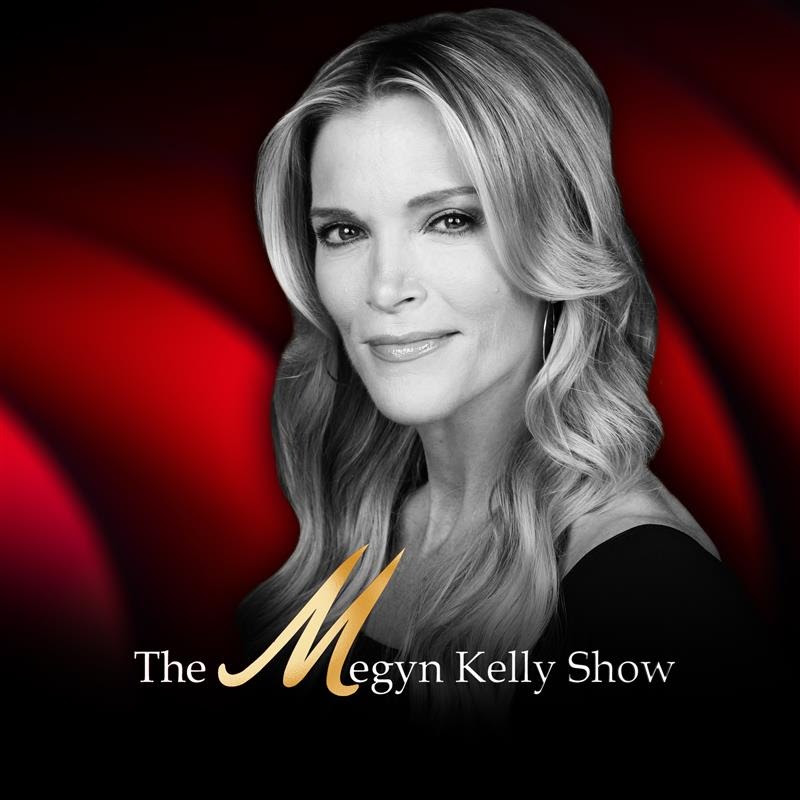
Steyer's Plan to Protect Illegals, and Gallego's Swalwell Spin, Plus Jack Carr on American Distrust
YouTube · ixNK7q3If4c
Quick Read
Summary
Takeaways
- ❖Trump's administration has reportedly scaled back immigration enforcement, leading to a significant drop in ICE detentions and a focus primarily on immigrants with serious criminal records.
- ❖California gubernatorial candidate Tom Steyer is criticized for promising to abolish ICE and release detained immigrants, with the host arguing these proposals are legally impossible and politically opportunistic.
- ❖The host expresses deep concern over violent crimes committed by both illegal immigrants and repeat offenders released by the justice system, citing specific cases to illustrate perceived failures.
- ❖Former Navy SEAL Jack Carr emphasizes the importance of mental resilience and historical perspective in overcoming extreme challenges, drawing parallels between military training and life's obstacles.
- ❖Carr provides a strategic analysis of the Iran conflict, highlighting the broader implications for global order and the need for effective military deterrence, while noting the perceived competence of current military commanders.
Insights
1Trump Administration's Softening on Immigration Enforcement
The host argues that President Trump's mass deportation plan has 'collapsed in slow motion,' citing a 12% drop in ICE detentions from January to March. This shift is attributed to political pressure and negative media coverage following incidents in Minneapolis, leading to a policy change from 'worst first' to 'worst only' enforcement, where ICE primarily targets immigrants with criminal records and largely avoids arresting others encountered during operations.
ICE detentions dropped 12% by end of March after a record January. Border patrol commander Greg Bavino retired, and DHS chief Gnome was removed. Operation Metro Surge in Minnesota ended. (, , , )
2Tom Steyer's 'Abolish ICE' Platform Criticized as Illegal and Hypocritical
California gubernatorial candidate Tom Steyer promised to abolish ICE, jail its agents, and 'bring back' detained immigrants. The host asserts these promises are 'illegal' and 'nonsense,' arguing a governor lacks the power to override federal law due to the supremacy clause. She highlights Steyer's estimated $2.4 billion net worth and multiple luxury properties, suggesting he is insulated from the consequences of his proposed policies, which would disproportionately affect working-class Californians.
Steyer's statement promising to abolish ICE and jail agents. Host's legal analysis citing the supremacy clause. Forbes estimates Steyer's net worth at $2.4 billion. Details of his $4 million San Francisco mansion and $18 million Lake Tahoe house. (, , , , , )
3Concerns Over Immigrant Crime and Judicial Leniency
The host presents two graphic crime cases to highlight perceived failures in immigration and criminal justice. Ola Olu Katan Adan Ael, a naturalized UK national with prior sexual battery and assault convictions, allegedly murdered two women and attacked a homeless man. Naomi Guzman, who had previously doused her father in flammable liquid and cut him with a knife, and later broke into a church, was found not guilty by reason of insanity and released, subsequently attacking a toddler in Walmart with a knife.
Details of Ola Olu Katan Adan Ael's naturalization in 2022, prior convictions for sexual battery and assault with a deadly weapon, and subsequent murders. Details of Naomi Guzman's 2024 arrest for attacking her father, church break-in, 'not guilty by reason of insanity' ruling, and 2026 Walmart attack. (, , )
4Ruben Gallego's Evasive Responses on Eric Swalwell Allegations
Senator Ruben Gallego, a close friend of Eric Swalwell, is scrutinized for his responses regarding Swalwell's sexual misconduct allegations. The host analyzes Gallego's body language and verbal cues, interpreting them as deceptive and nervous. Gallego initially claimed to have heard rumors 'a few weeks ago' but then contradicted himself by saying he heard them 'for years,' ultimately stating Swalwell 'lied' to him.
Gallego's interview clip where he states he heard rumors 'a few weeks ago' then 'for years.' Host's analysis of his body language (hands above midline, arms crossed, spiraling, deflecting). Gallego's later claim that Swalwell 'lied to me.' (, , )
5Jack Carr's Perspective on Military Resilience and Societal Softness
Former Navy SEAL Jack Carr attributes his success in military training and writing to early reading and a mindset of mental fortitude. He explains that 80% of BUD/S candidates quit, often those who are physically strongest, because they lack the mental toughness to 'play hurt' and put their suffering into perspective by thinking of greater sacrifices made by others. He contrasts this with modern societal 'softness,' where people are less accustomed to hardship.
Carr's account of BUD/S training, including sleep deprivation, flash crashes, and M60 machine gun blanks. His statement that 80% of candidates quit. His explanation of mental fortitude vs. physical strength and comparing his suffering to historical battles. (, , , )
6Strategic Ambiguity and Global Order in the Iran Conflict
Jack Carr expresses initial sadness and a 'this again' sentiment regarding the Iran conflict, but then analyzes it from a strategic perspective. He views the conflict as having much more at stake than just midterms or energy prices, linking it to the post-WWII global order guaranteed by America. He suggests that the world, particularly China, is observing whether the U.S. can effectively use its military to coerce the Iranian regime, impacting the perception of American power and deterrence globally.
Carr's initial reaction to the Iran conflict. His analysis of post-WWII global trade and prosperity guaranteed by the US. His assertion that the world is watching US military effectiveness in Iran, linking it to Ukraine and China's actions regarding Taiwan. (, , )
Bottom Line
The host suggests that the Trump administration's perceived softening on immigration enforcement is a direct result of 'outraged blue-haired women in Minneapolis and their weird TikToks,' implying that vocal progressive activism can significantly alter national policy.
This highlights a potential vulnerability in policy-making, where public outcry, even from a minority, can influence core campaign promises and shift government priorities, potentially at odds with the broader electorate's mandate.
For political strategists, this suggests the power of targeted, emotional activism to sway policy, even against established political agendas. Understanding and leveraging or counteracting such influence is key.
Jack Carr's 'Fourth Option' book explores a scenario where individuals seek justice outside a perceived failing system, hinting at a growing public distrust in government and judicial institutions.
This reflects a societal undercurrent of disillusionment with traditional governance, where citizens feel increasingly compelled to take matters into their own hands when institutions fail to deliver justice or security. This erosion of trust can lead to unpredictable social and political outcomes.
Policymakers and leaders should recognize this growing distrust and actively work to restore faith in institutions through transparency, accountability, and effective governance, or risk further societal fragmentation and vigilantism.
Jack Carr notes that current military commanders (like those in CENTCOM) seem 'much more competent' than senior leaders he observed during his time at the tactical level in Iraq and Afghanistan, who often gave generic requests for 'more money, more time, more troops.'
This suggests a generational shift in military leadership, where those who came up through the 'lessons learned' of prolonged conflicts are now in command, potentially leading to more nuanced and effective strategic decision-making. This could signify a positive evolution in military effectiveness.
This insight could inform public confidence in military leadership and suggest that past failures are being actively addressed through the promotion of more adaptable and strategically astute commanders. It also implies a need for political leadership to listen more closely to these evolved military perspectives.
Key Concepts
Relative Terms for Resilience
Jack Carr explains that during intense Navy SEAL BUD/S training, he would put his suffering into 'relative terms' by comparing it to the sacrifices of soldiers in historical battles like Iwo Jima or Normandy. This mental model suggests that by contextualizing personal hardship against greater historical or external struggles, individuals can find the mental fortitude to endure and overcome challenges, minimizing self-focus.
The 'Fourth Option' (Justice Beyond the System)
Jack Carr's new book, 'The Fourth Option,' explores the concept of justice when traditional systems (police, politicians, courts) are perceived to have failed. This mental model suggests that when public trust in institutions erodes, individuals may seek alternative, often extra-legal, means to achieve perceived justice, driven by a deep frustration with systemic inadequacies.
Lessons
- Critically evaluate political promises, especially those related to complex issues like immigration, by scrutinizing their legal feasibility and potential societal impacts.
- Recognize that public sentiment and vocal activism, even from smaller groups, can significantly influence policy shifts, and consider how to engage constructively with such dynamics.
- Cultivate mental fortitude by contextualizing personal challenges against broader historical or collective struggles, as demonstrated by military training philosophies, to enhance resilience.
- Stay informed about geopolitical conflicts, such as the Iran situation, by seeking diverse analytical perspectives beyond immediate political narratives to understand their long-term global implications.
- Support initiatives that aim to improve the effectiveness and accountability of the justice system, particularly concerning repeat offenders and those with a history of violent crime, to enhance public safety.
Notable Moments
Megyn Kelly's detailed critique of Tom Steyer's 'abolish ICE' plan, including his personal wealth and luxury properties, framed as evidence of hypocrisy.
This segment highlights the host's strong political stance and her method of discrediting political opponents by contrasting their policy proposals with their personal circumstances and perceived legal impossibilities.
The harrowing account of Naomi Guzman's attack on a toddler in Walmart, following her release despite a history of violent crime and mental health issues.
This incident serves as a stark illustration of the host's argument regarding the failures of the criminal justice system and the perceived dangers of not institutionalizing mentally unwell individuals or keeping violent offenders incarcerated.
Jack Carr's description of the mental challenges in Navy SEAL BUD/S training, including the 'flash crash' grenade and M60 machine gun blanks used to wake recruits, and the high attrition rate.
This provides a vivid, firsthand account of the extreme physical and psychological demands of elite military training, underscoring the unique mental fortitude required and offering a powerful example of resilience.
Jack Carr's strategic analysis of the Iran conflict, linking it to the post-WWII global order and suggesting that China is closely observing U.S. military effectiveness.
This offers a broader, geopolitical perspective on current events, moving beyond immediate political talking points to highlight the long-term implications for international power dynamics and American global influence.
Quotes
"The Trump administration lost that whole standoff in Minneapolis. Unfortunately, they've changed their policies as a result. And um, you know, when Homan came in and Gnome got fired, well first she got pushed out, then she gets fired. The softer touch is now we've gone from worst first to pretty much worst only if that."
"You're an idiot. Okay, that that's never going to happen. They have federal responsibilities under the law that they are enforcing. And if you try to insert yourself in that process by dubbing federal immigration enforcement behaviors crimes, the courts will not listen to you. There's something called the supremacy clause where the federal law where it conflicts with the state law trumps it."
"I mean, like the deception meter is going off the charts. A lot of signs of deception there. Hands above the midline, arms crossed defensively, not answering the specific question, spiraling, deflecting, adding in unnecessary details."
"Someone's become a SEAL before. Someone's made it through this training and someone's on that New York Times list at number one. I can do it too. Somebody else has done it."
"I mean, that woman having that knife to that kid's head. I mean, some people will probably get me cancelled. My my my publicist is probably like, 'Oh my gosh.' Uh, but some people just need to be shot."
"It's more afterward that you can look back and say what was all that worth and how can we take the lessons of what happened in Iraq and Afghanistan and apply them to the next problem set as wisdom. We're not very good at doing that in this country."
Q&A
Recent Questions
Related Episodes

Alex Krainer: US STRIKES Iran – Iran RETALIATES Against Kuwait, Bahrain & Jordan!
"Amidst escalating US-Iran conflict and Iranian retaliation against regional US allies, this episode argues that US foreign policy is deeply controlled by an 'Anglo-Zionist conspiracy' led by the Rothschild banking dynasty, prioritizing Israeli interests over American ones."
The Fat Electrician Vs Tactically Acquired | Unsubscribe Podcast 267
"This episode features military content creators discussing current geopolitical hotspots, advanced weaponry, and the surprising psychological warfare tactics of modern conflict, alongside their personal journeys building online communities."

AJ Pasciuti - Marine Scout Sniper on Hunting Juba, the Deadliest Enemy Sniper in Iraq | SRS #305
"Former Marine Scout Sniper AJ Pasciuti recounts the untold, deeply personal story of mistakenly killing two innocent Iraqi men during his third deployment, revealing the profound moral cost of war and challenging traditional views of masculinity."

Robby Soave GOES OFF On ANNOYING Liberal Black Woman Making Emotional Trump Deranged Arguments!
"The host dissects a heated foreign policy debate, arguing that 'left-wing' emotionalism and 'Trump derangement' prevent a rational understanding of US sanction strategies against Cuba and Iran."