
🚨 LIVE: U.S. Military URGENT Announcement - Iran War Escalation
YouTube · j6_J4haNmyo
Quick Read
Summary
Takeaways
- ❖Three US aircraft carrier strike groups (Lincoln, Ford, Bush) are deployed in the Middle East, a concentration not seen since 2003.
- ❖The US has established a global 'ironclad blockade' against Iran, turning around 34 ships and seizing two 'dark fleet' vessels in the Indo-Pacific.
- ❖US Navy forces disabled the MV Tuska container ship with inert rounds and seized it after it attempted to breach the blockade.
- ❖Two large crude tankers, the Tiffany and Majestic X, transporting sanctioned Iranian oil, were interdicted and seized by US INDOPACOM forces.
- ❖The 'Secretary of War' authorized US Navy to 'shoot and kill' Iranian fastboats attempting to lay mines or disrupt passage in the Strait of Hormuz.
- ❖The 'Pentagon' criticized European NATO members for not contributing sufficiently to regional security, suggesting the Strait of Hormuz is 'much more their fight.'
- ❖Internal Iranian regime sources allegedly show paranoia, with members accusing each other of being coup plotters and a theory emerging that Afghan proxies were brought in for an internal coup, not just protest suppression.
- ❖A 'historic Afghanistan review' is underway to account for the 'disastrous withdrawal' under the Biden administration, linking it to perceived US weakness that emboldened adversaries like Putin, Hamas, and Houthis.
Insights
1Global Blockade and Naval Dominance
The 'Secretary of War Pete Hexeth' announced an 'ironclad blockade' on Iran, extending from the Gulf of Oman globally. He asserted that 'no one sails from the Strait of Hormuz to anywhere in the world without the permission of the United States Navy,' claiming 34 ships were turned around and two Iranian 'dark fleet' ships seized in the Indo-Pacific.
Secretary Hexeth stated, 'Our Navy is enforcing this blockade without hesitation or apology... 34 total [ships]... We seized two Iranian dark fleet ships in the Indo-Pacific region.'
2Aggressive Enforcement and Rules of Engagement
General Cain detailed the disabling and seizure of the MV Tuska, a large container ship, after it ignored warnings and attempted to breach the blockade. US Navy forces fired nine inert rounds into its engine room to disable it, followed by Marine helicopter infiltration and seizure. The 'Secretary of War' also stated that President Trump authorized the US Navy to 'destroy any Iranian fastboats that attempt to put mines in the water or disrupt passage... to shoot and kill.'
General Cain described, 'CENTCOM authorized disabling fire against the Tosca... firing nine inert rounds... US Marines maneuvered quickly to the disabled ship, boarded her... and took custody.' Secretary Hexeth added, 'President Trump has authorized the United States Navy to destroy any Iranian fastboats... to shoot and kill.'
3Pressure on European Allies and 'Free Riding'
The 'Secretary of War' criticized European and Asian nations for 'free riding' on US protection, especially concerning the Strait of Hormuz, which he claimed the US 'barely use[s]' for its energy needs. He suggested Europe, whose jet fuel stocks are reportedly low, should 'start doing less talking... and getting a boat,' implying their greater stake in the region's stability.
Secretary Hexeth stated, 'This should not be America's fight alone. We barely use the Strait of Hormuz... Europe and Asia have benefited from our protection for decades, but the time for free riding is over.' He later added, 'Europe and Asia... might want to start doing less talking... and getting a boat.'
4Internal Iranian Instability and Coup Speculation
The host reported on alleged internal paranoia within the IRGC, with members accusing each other of being coup plotters. A theory emerged that Afghan proxy forces, previously used in Syria and for suppressing Iranian protests, were actually brought in to execute a coup against the regime, a notion reinforced by mass deportations of Afghans accused of spying for Israel.
Ammar 2C stated, 'They are getting extremely paranoid and keep accusing each other of being coup plotters, spies, or traitors.' He quoted an IRGC member saying, 'Those forces that they brought in from Iraq and Afghanistan were not for the protesters. They were for us.'
Bottom Line
The 'Pentagon briefing' explicitly linked the current aggressive US stance and the need to reestablish deterrence to the 'disastrous withdrawal' from Afghanistan under the Biden administration, claiming it emboldened adversaries like Putin, Hamas, and Houthis.
This narrative suggests a direct causal link between perceived US weakness in one region and global instability, implying that current military actions are a corrective measure to restore US credibility and deter future aggression.
For political analysts, this framing offers insight into a specific political ideology that views military strength and decisive action as paramount for global stability, and attributes past failures to perceived leadership weakness.
The host speculated that Iran's request for negotiations in Pakistan is a 'surrender deal,' and that regardless of whether Iran signs, the outcome will be 'the end of them,' either through a deal or resumed military operations.
This suggests a 'no-win' scenario for the Iranian regime from this perspective, indicating an expectation of regime change or severe capitulation. It frames any negotiation as a tactical delay rather than a genuine peace effort.
This perspective could inform strategies for those seeking to understand or influence geopolitical outcomes in the region, highlighting the perceived inevitability of a decisive confrontation or collapse of the current Iranian regime.
Notable Moments
The 'Secretary of War' dismissed the Pope's comments on 'just war theory' regarding the conflict with Iran, stating the US military operates under clear legal authority and presidential orders.
This highlights a strong assertion of secular military authority over religious moral frameworks in determining the legitimacy of military actions, emphasizing adherence to national laws and presidential directives.
The 'Pentagon' announced a 'historic Afghanistan review' to fully account for the 'disastrous withdrawal' under the Biden administration, stating it had 'ripple effects for our military, for our country, and for the world.'
This indicates a significant internal re-evaluation and public critique of a past administration's foreign policy, framing it as a foundational event that undermined US deterrence and contributed to current global conflicts.
Quotes
"No one sails from the Strait of Hormuz to anywhere in the world without the permission of the United States Navy."
"Their real Navy is at the bottom of the Arabian Gulf."
"President Trump is the only president with the guts and moral clarity to finally do something about it."
"If Iran is putting mines in the water or otherwise threatening American commercial shipping or American forces, we will shoot to destroy. No hesitation, just like the drug boats in the Caribbean."
"Europe and Asia have benefited from our protection for decades, but the time for free riding is over."
"War is violent. War requires doing difficult things, but I want our people to feel empowered, so it's our guys that come home, and their guys that do not."
"The one institution that should win the Nobel Peace Prize every single year is the United States military because we are the guarantor of the safety and security of not just of our country but of a lot of people world."
Q&A
Recent Questions
Related Episodes

Patrick Henningsen: Hezbollah JUST Fired Back at Israel - Iran Vows to “Crush” All Attacks
"Patrick Henningsen argues that the US and Israel initiated an illegal war against Iran, driven by Trump's incompetence and Israeli influence, leading to an inevitable escalation with severe global economic repercussions."
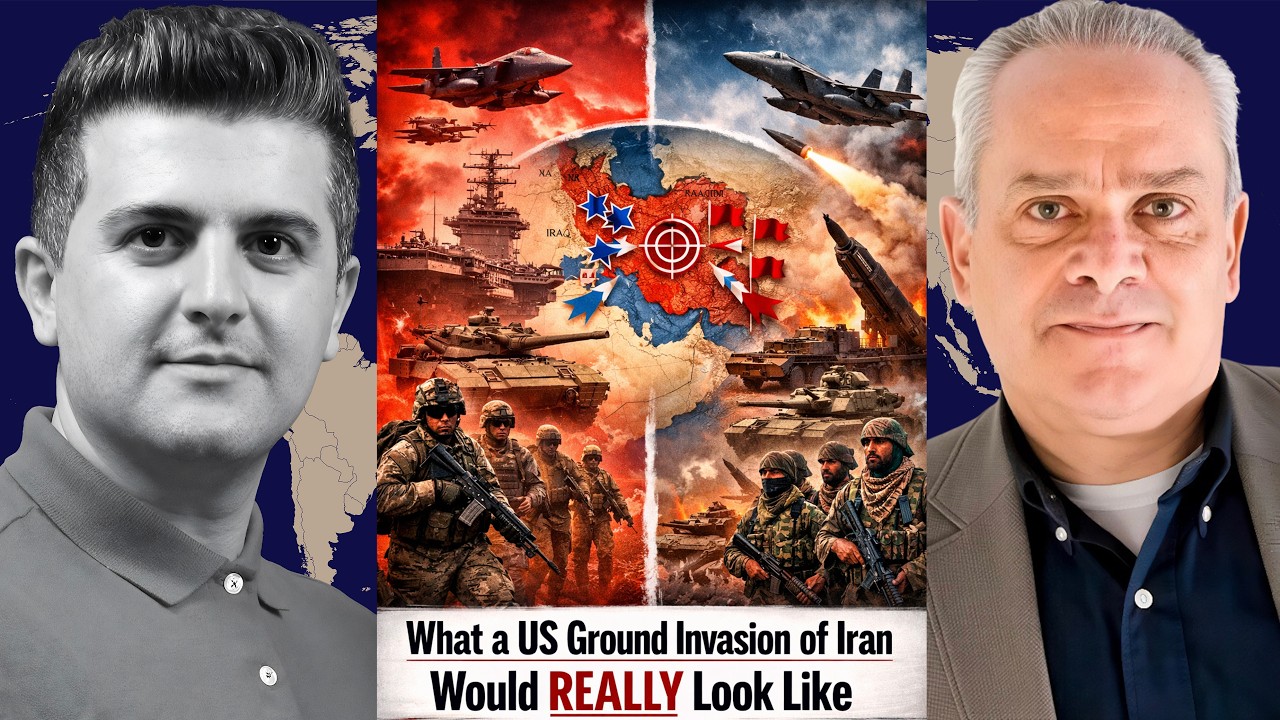
Col. Jacques Baud: What a US Ground Invasion of Iran Would REALLY Look Like
"Colonel Jacques Baud dissects the strategic futility of a US ground invasion of Iran, arguing that current troop levels are insufficient and such an action would backfire, exposing US allies and potentially leading to Iran's nuclearization."
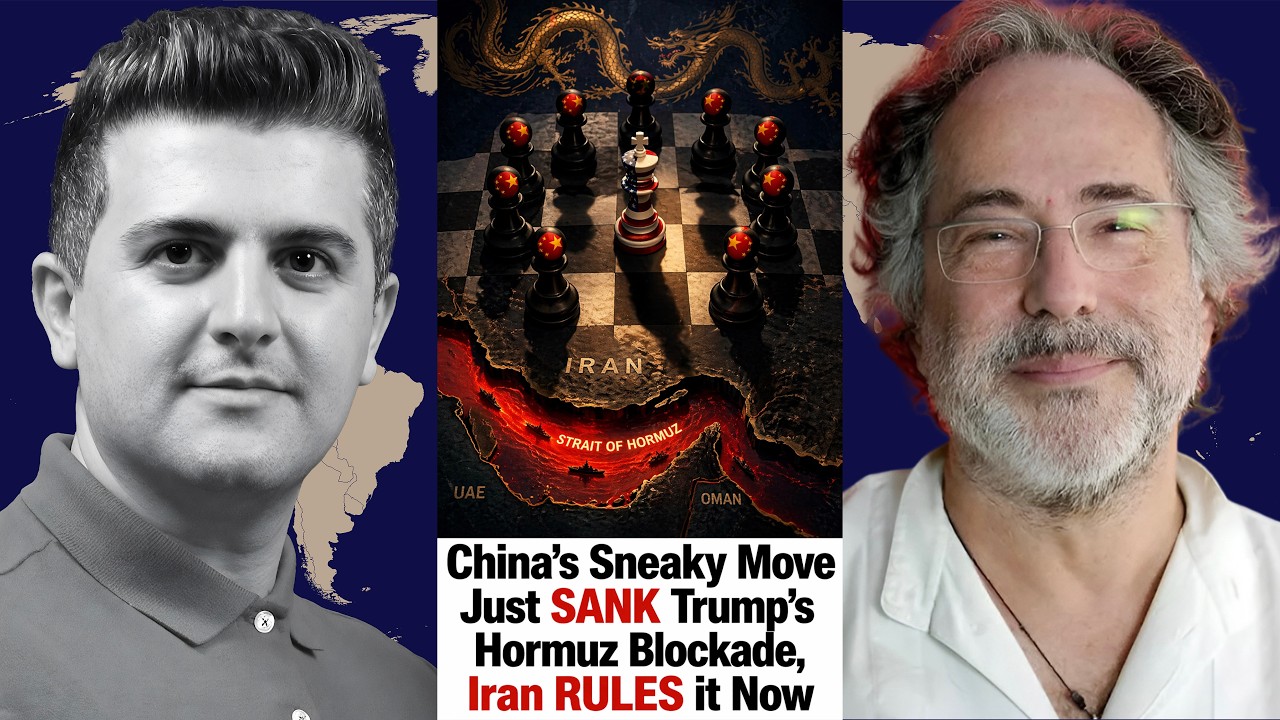
Pepe Escobar: “Total Failure”: Trump’s Blockade Just Backfired Disastrously
"Pepe Escobar argues that the US blockade against Iran, spearheaded by Donald Trump, has utterly failed and backfired, accelerating global economic chaos and challenging US geopolitical dominance."

🚨 TOTAL F*CKING CHECKMATE 😂😂😂
"The host argues that Trump's 'ceasefire' with Iran was a calculated '5D chess' move to orchestrate a global energy market reshuffle, while simultaneously lambasting 'woke' domestic policies and the 'freefall' of anti-Trump conservative figures."