"Americans Are SICK Of This!" Joe Kent v Alan Dershowitz On Iran & ‘Israel First’ + John Mearsheimer
YouTube · jwbRwsyyjBc
Quick Read
Summary
Takeaways
- ❖The US and Israel misjudged Iran's ability to control the Strait of Hormuz and retaliate against Gulf State neighbors.
- ❖The war's economic fallout, including rising energy and food prices, is politically toxic for US leadership and threatens a global depression.
- ❖Iran is unlikely to surrender its nuclear enrichment capability, making a comprehensive negotiated settlement extremely difficult.
- ❖Popular support for Israel is plummeting in the US across all demographics, with more Americans sympathizing with Palestinians.
- ❖Joe Kent argues Israel's 'outsized influence' has historically driven the US into Middle East conflicts, including the current Iran war.
- ❖Alan Dershowitz shifted to the Republican party, citing the Democratic party's increasing anti-Israel stance and rising antisemitism.
- ❖Ian Bremmer predicts China will be the ultimate beneficiary of the current geopolitical instability, leveraging US unreliability.
- ❖Gulf States are severely impacted, with their diversification into tourism and leisure undermined by regional insecurity, though Saudi Arabia is more insulated than the UAE.
Insights
1Iran War's Unwinnable Nature and Economic Catastrophe
International relations scholar John Mearsheimer asserts that the US has no 'war-winning strategy' against Iran. The initial US-Israeli strategy of a 'shock and awe' campaign to decapitate the regime and prevent Strait of Hormuz closure failed. Iran's ability to close the Strait of Hormuz and the Red Sea, coupled with its ballistic missile capabilities to devastate Gulf states, creates an economic crisis that could lead to a 'Great Depression of the 1930s' scenario. This economic pressure forced President Trump to extend a ceasefire, as further military action would exacerbate global economic devastation.
Mearsheimer states, 'President Trump understands full well that if he bombs Iran, Iran will retaliate by completely closing the straight of Hormuz and shutting down the Red Sea as well. And this will have even further devastating consequences on the international economy.' He adds, 'lots of people are arguing that we're in danger of moving into a world that looks like the Great Depression of the 1930s.'
2Israel's Influence on US Foreign Policy and the 'America First' Debate
Joe Kent, a retired Green Beret, argues that Israel exerts an 'outsized influence' on US foreign policy, leading America into conflicts not aligned with its national interest. He cites the New York Times' deep dive, suggesting Benjamin Netanyahu persuaded Trump to initiate the Iran war based on a flawed premise of regime collapse. Kent claims Israeli officials circumvented US intelligence channels to push for 'zero enrichment' and regime change, ultimately driving the US into the conflict. Alan Dershowitz, in contrast, argues that Israel is a vital, mutually beneficial ally and that accusations of 'pulling strings' are antisemitic tropes. He highlights Israel's intelligence and military contributions to the US.
Joe Kent states, 'The Israelis told us this much. The MSAD director David Berna specifically said that their goal was regime change in Iran.' He adds, 'they used their outsized influence on our government to drive this war.' Dershowitz counters, 'That's the oldest anti-semitic trope in history that Israel is pulling the strings.'
3Global Economic Damage and China's Geopolitical Gains
Ian Bremmer details the severe, often underestimated, global economic damage from the Strait of Hormuz blockade. He notes that while the US economy is somewhat insulated, countries like India are experiencing immediate fuel shortages and restaurant closures, and European airlines are canceling thousands of flights due to lack of fuel. Poorer countries in sub-Saharan Africa face potential financial crises. Bremmer concludes that China is the ultimate beneficiary, possessing vast commodity stockpiles and leveraging US unreliability to strengthen its diplomatic and security alignments globally, particularly by offering Trump favorable trade deals in exchange for a softened stance on Taiwan.
Bremmer explains, 'India already have like restaurants across the country that have closed down because they can't get fuel... Lufansza today is cutting back on 10,000 flights.' He states, 'this is a war that America is fighting that Israel supports and that almost no other country in the world does... the Chinese are doing well' and 'China has the upper hand not only because Trump really wants a stable relationship.'
Bottom Line
The current geopolitical instability, particularly the Iran war and US-Israel dynamics, is accelerating a global shift away from reliance on the US, pushing nations like Saudi Arabia towards new alignments with powers like China and Pakistan for security and stability.
This fragmentation of traditional alliances could lead to a more multipolar world, where US influence diminishes, and new power blocs emerge, impacting global trade, security architectures, and diplomatic norms.
Businesses and investors should diversify geopolitical risk by understanding these emerging power dynamics, potentially exploring new markets and supply chain routes less dependent on traditional US-aligned regions or the Strait of Hormuz.
The 'America First' sentiment among a significant portion of the Republican base, fueled by economic hardship and perceived foreign policy missteps, will be a defining issue in the 2028 US presidential election, forcing candidates to prioritize domestic concerns over international interventions.
Future US foreign policy is likely to become more isolationist or transactional, potentially leading to reduced military engagements abroad and a re-evaluation of long-standing alliances and aid packages.
Companies reliant on US military presence or aid in certain regions should anticipate shifts in policy and potentially reduced support, necessitating independent risk assessments and adaptation strategies.
Key Concepts
America First
A foreign policy doctrine prioritizing domestic US interests and resources over international interventions and alliances, particularly those perceived to benefit other nations disproportionately. Joe Kent argues for this, asserting that Americans are tired of focusing on foreign conflicts when domestic issues like poverty and economic hardship are prevalent.
Lessons
- Monitor global energy and commodity markets closely, as the Strait of Hormuz blockade continues to exert upward pressure on prices and could trigger broader economic instability.
- Evaluate supply chain vulnerabilities, particularly for goods reliant on Middle Eastern shipping lanes or critical components like helium, and explore diversification strategies to mitigate risks.
- Stay informed on shifts in US foreign policy and public opinion regarding international alliances, as these changes will influence future trade agreements, investment climates, and geopolitical stability.
Notable Moments
Alan Dershowitz announces his registration as a Republican, citing the Democratic party's anti-Israel stance.
This highlights a significant political realignment driven by foreign policy issues, indicating the deep partisan divide over Israel and its impact on traditional party loyalties.
Joe Kent details how Israeli officials allegedly circumvented US intelligence to push for regime change in Iran, leading to the current conflict.
This accusation, if true, suggests a profound failure of US intelligence and decision-making processes, raising questions about accountability and the integrity of foreign policy formulation.
Quotes
"That's the oldest anti-semitic trope in history that Israel is pulling out. Most people in America just don't care."
"President Trump and the Israelis... completely misread the situation. They thought that the United States and Israel acting together could produce a quick and decisive victory."
"The real problem with Israel is that it's a democracy, damn it. They actually get to vote and decide who their leaders are and they get to decide what their policies are."
"Americans... are sick and tired of having these discussions about foreign countries... Israel right now has a outsized influence on our foreign policy in the Middle East, which has catapulted us into this current conflict with Iran."
"The Chinese have already shown Trump that they have the ability to hit back and that's why Trump is so excited about coming to Beijing in May and and there China has the upper hand."
Q&A
Recent Questions
Related Episodes

🚨 TOTAL F*CKING CHECKMATE 😂😂😂
"The host argues that Trump's 'ceasefire' with Iran was a calculated '5D chess' move to orchestrate a global energy market reshuffle, while simultaneously lambasting 'woke' domestic policies and the 'freefall' of anti-Trump conservative figures."

BREAKING: Iran Threatens To END Talks; U.S. Vows Retaliation; Hezbollah Collapsing? | TBN Israel
"Iran is leveraging Hezbollah and the Strait of Hormuz to manipulate US negotiations, while Israel asserts its right to dismantle Hezbollah's eroding but still dangerous infrastructure in Lebanon, independent of international talks."
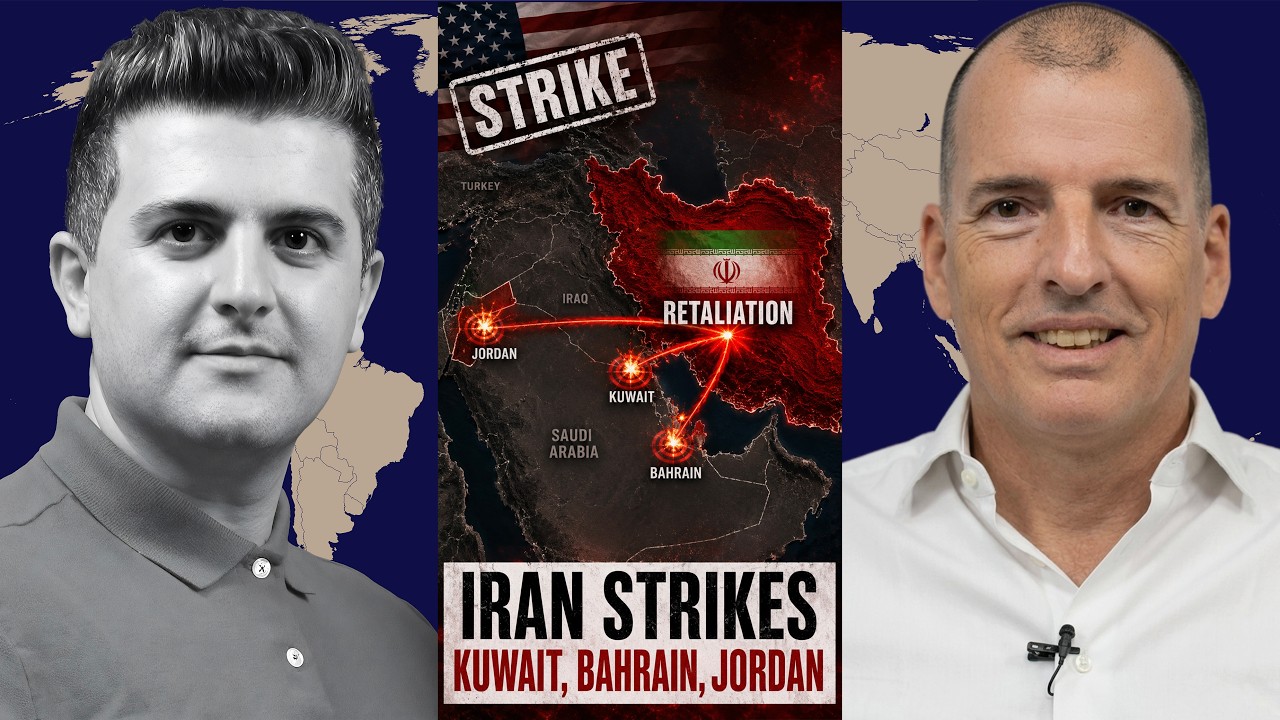
Alex Krainer: US STRIKES Iran – Iran RETALIATES Against Kuwait, Bahrain & Jordan!
"Amidst escalating US-Iran conflict and Iranian retaliation against regional US allies, this episode argues that US foreign policy is deeply controlled by an 'Anglo-Zionist conspiracy' led by the Rothschild banking dynasty, prioritizing Israeli interests over American ones."

Iran Update: Israel’s Newest Bombing Campaign, the Oncoming War With China and How to Avoid It
"Colonel Wilerson reveals how the US and Israel are actively bombing China's strategic infrastructure in Iran, escalating a covert economic war that Beijing intends to win without direct military conflict by dismantling the dollar's global dominance."