
BREAKING: IRGC Attack U.S. Bases - Israel Targeted From North & South - Clashes Resume
YouTube · k4Py-j0SjD8
Quick Read
Summary
Takeaways
- ❖The IRGC and its proxies launched drone and missile attacks on US bases in Iraq, Kurdish sites in Erbil, and Israel from Lebanon and Yemen.
- ❖Most IRGC and proxy attacks were intercepted by US Patriot systems and Israeli air defenses, resulting in minimal damage.
- ❖Esmail Qaani of the IRGC's Quds Forces announced a 'new security belt of resistance' across the region.
- ❖The Iranian regime demanded $24 billion, sanction relief, and the destruction of Israel as non-negotiable terms for any deal with the US.
- ❖Polish authorities intercepted a large heroin shipment from Iran, exposing the IRGC's new revenue strategy from drug trafficking.
- ❖Crown Prince Reza Pahlavi condemned the IRGC's actions as anti-Iranian and called for international support to end the regime.
- ❖Analysis suggests Iran 'blinked first' in recent escalations, failing to hit targets while Israel achieved military gains despite diplomatic setbacks.
Insights
1IRGC's Failed Military Escalations and New 'Security Belt' Declaration
The Islamic Revolutionary Guard Corps (IRGC) and its proxies launched multiple drone and missile attacks against US bases in Iraq, Kurdish sites in Erbil, and Israeli targets from both Lebanon and Yemen. Despite these widespread attacks, US Patriot systems and Israeli air defenses successfully intercepted most projectiles, resulting in minimal damage. Esmail Qaani, head of the IRGC's Quds Forces, declared a 'new security belt of resistance' spanning from the Strait of Hormuz to the Red Sea, praising Houthi actions as intelligent.
IRGC launched drones at US bases in Iraq; Patriot system intercepted. IRGC attacked Kurdish sites in Erbil. Houthis targeted Eilat, intercepted by IDF. Qaani's statement on a 'new security belt of resistance' and praising Houthis.
2Iran's Financial Desperation Leads to Heroin Trafficking
Facing severe financial strain and an inability to pay proxies like Hezbollah, the Iranian regime has resorted to international drug trafficking as a new revenue stream. This was evidenced by the Polish government's seizure of a large heroin shipment originating from Iran, which reportedly sources opium from Afghanistan.
Host states IRGC is running out of money, can't pay Houthis or Hezbollah. Polish government seized a huge heroin shipment from Iran, described as a 'new way of making revenue' from opium in Afghanistan.
3Iranian Regime's Extreme Demands for a US Deal
The Iranian regime has presented non-negotiable and extreme demands for any potential deal with the United States. These conditions include a payment of $24 billion, comprehensive sanction relief, and the explicit requirement for Hezbollah to 'wipe out Israel.' The host frames these demands as unrealistic and unacceptable, even for previous administrations.
Iranian regime said President Trump must give them $24 billion for a deal. Conditions include 'free money, sanction relief, and also Hezbollah wiping out Israel.'
4Israel's Military Gains Versus Diplomatic Losses
Jonathan Conricus, former IDF spokesman, assessed that Iran 'blinked first' in recent escalations, failing to achieve military objectives against Israel and suffering hits. While Israel continues to make military achievements and advance technologically, it is simultaneously 'bleeding diplomatic currency.' The host attributes this diplomatic loss not to genuine anti-Semitism, but to the 'cowardice' of liberal-minded European leaders who are intimidated by anti-Jewish and anti-Israeli rhetoric.
Jonathan Conricus stated 'Iran blinked first,' failed to hit Israeli targets, and suffered hits. He noted Israel 'bleeds diplomatic currency' while gaining military achievements. Host explained diplomatic losses are due to 'cowardice' of European leaders like Macron, Starmer, Merz.
Bottom Line
The IRGC's pivot to international heroin trafficking for revenue highlights the extreme financial pressure on the regime and its willingness to engage in illicit activities to fund its operations, indicating a deeper level of desperation than previously understood.
This revenue stream bypasses traditional financial sanctions and provides a black market alternative, potentially prolonging the regime's ability to fund proxies and destabilize the region, making it harder to exert economic pressure.
International intelligence and law enforcement agencies should prioritize disrupting Iran's drug trafficking networks, particularly in Europe, to cut off this vital new source of funding for the IRGC and its proxies.
Lessons
- Monitor reports on Iran's illicit financial activities, specifically drug trafficking, as this indicates a new and desperate strategy to circumvent sanctions and fund regional proxies.
- Recognize that the Iranian regime's public demands for a deal with the US (e.g., $24 billion, Israel's destruction) are likely political posturing rather than serious negotiation terms, reflecting their internal and external pressures.
- Consider the long-term implications of Israel's military success coupled with diplomatic isolation, understanding that military strength alone may not secure regional stability without robust international alliances.
Quotes
"From the Strait of Hormuz to Bab al-Mandab, and from the Persian Gulf to the Red Sea, there will be a new security belt of resistance. The timely and authoritative action of the heroic Yemeni demonstrates as in the Houthis demonstrates the intelligence of the resistance front. When in need others also come. The evils of the Zionist regime and America in the region will result in a united reaction from the resistance fronts."
"The Islamic Republic in its support for Hezbollah terrorists in Lebanon has started yet another military conflict and further revealed its anti-Iranian nature. This regime has taken the Iranian nation hostage and views the lives and property of Iranians as mere tools for exporting terror, war, and instability, and now this, heroin. In this conflict, as always, the Islamic Republic is responsible for any damage to Iran's infrastructure and for the lives of innocent civilians on both sides."
"Iran blinked first. They lashed out. Israel checked the Iranian attempt to restrict Israeli freedom of action against Hezbollah. This despite reported rows between the US and Israel, very important as we move forward. Iran failed to hit Israeli targets and suffered a few hits on military targets as it remains exposed and vulnerable to the Israeli Air Force."
Q&A
Recent Questions
Related Episodes

Patrick Henningsen: Hezbollah JUST Fired Back at Israel - Iran Vows to “Crush” All Attacks
"Patrick Henningsen argues that the US and Israel initiated an illegal war against Iran, driven by Trump's incompetence and Israeli influence, leading to an inevitable escalation with severe global economic repercussions."
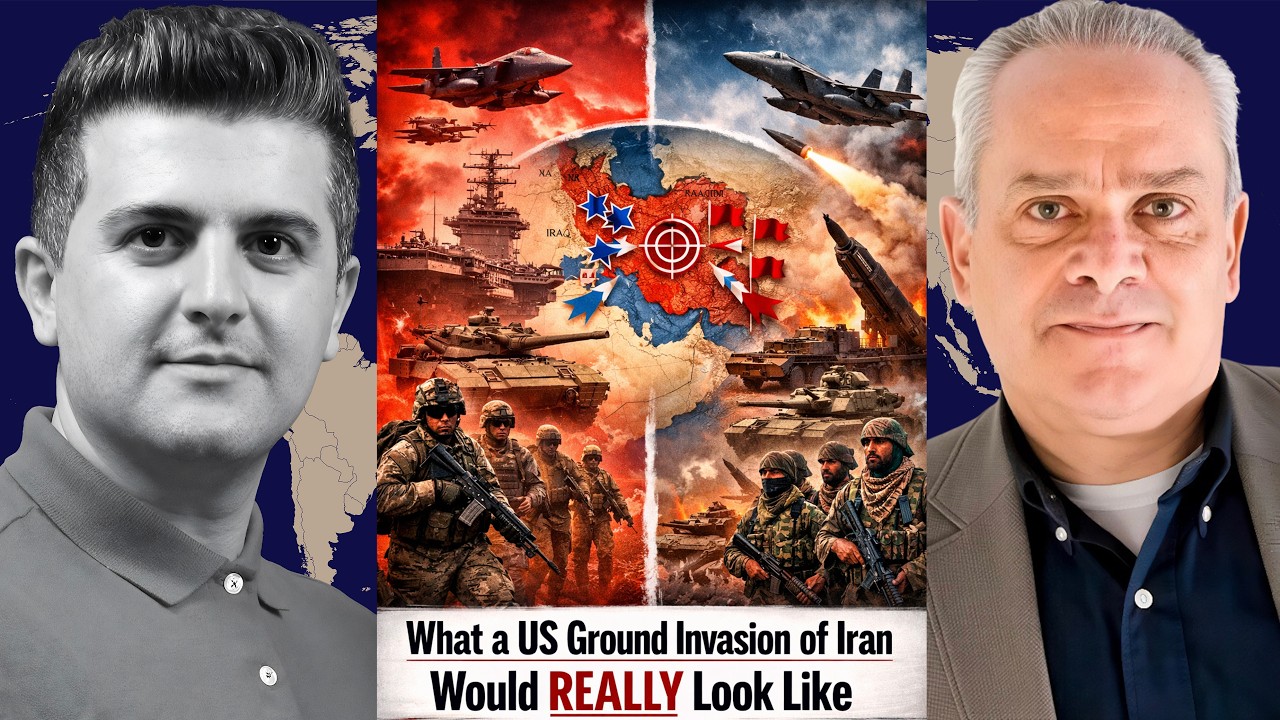
Col. Jacques Baud: What a US Ground Invasion of Iran Would REALLY Look Like
"Colonel Jacques Baud dissects the strategic futility of a US ground invasion of Iran, arguing that current troop levels are insufficient and such an action would backfire, exposing US allies and potentially leading to Iran's nuclearization."
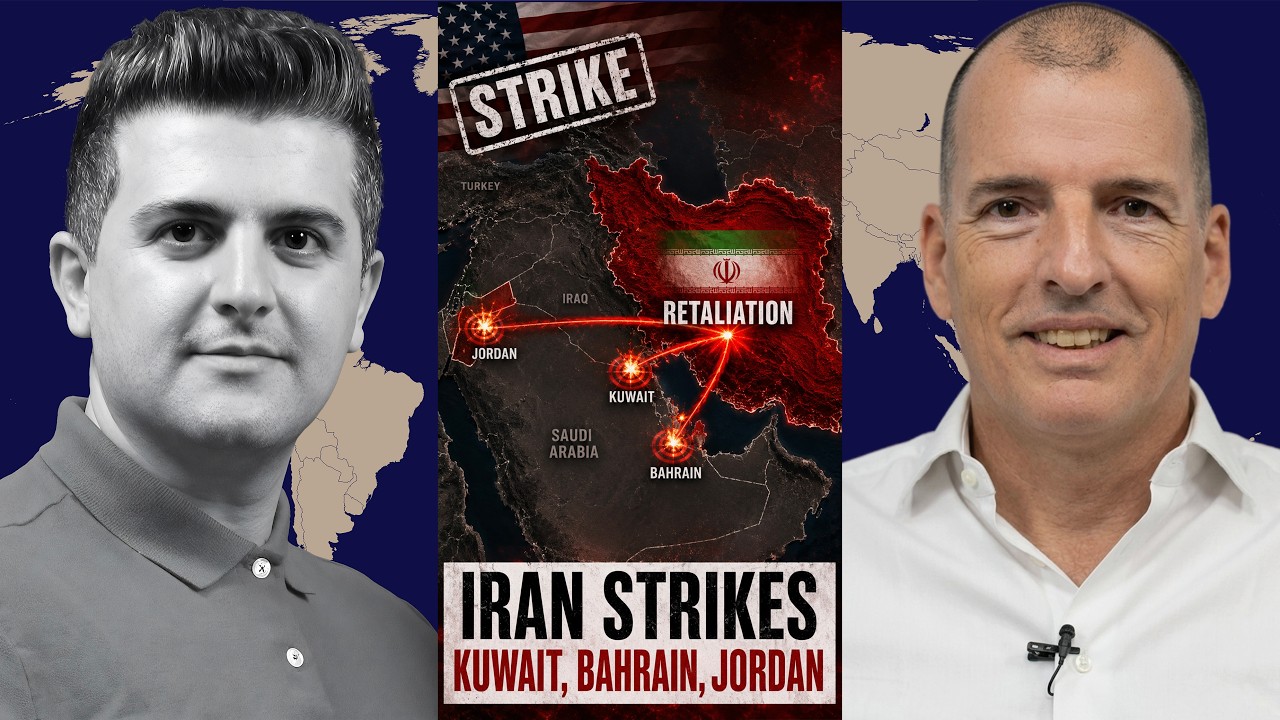
Alex Krainer: US STRIKES Iran – Iran RETALIATES Against Kuwait, Bahrain & Jordan!
"Amidst escalating US-Iran conflict and Iranian retaliation against regional US allies, this episode argues that US foreign policy is deeply controlled by an 'Anglo-Zionist conspiracy' led by the Rothschild banking dynasty, prioritizing Israeli interests over American ones."

Iran Update: Israel’s Newest Bombing Campaign, the Oncoming War With China and How to Avoid It
"Colonel Wilerson reveals how the US and Israel are actively bombing China's strategic infrastructure in Iran, escalating a covert economic war that Beijing intends to win without direct military conflict by dismantling the dollar's global dominance."