Trump DECLARES Victory, Israel Other IDEAS
YouTube · k9azEBJ11qs
Quick Read
Summary
Takeaways
- ❖Donald Trump's rhetoric on the Middle East conflict is contradictory, claiming both victory and ongoing war while asserting Iran's military capacity is destroyed.
- ❖US intelligence indicates Iran's leadership remains stable and its military, including the IRGC, continues to operate effectively despite strikes.
- ❖A pro-war lobbyist's shift from demanding regime change to merely reducing Iran's defense capability suggests the conflict is not going as planned for the US/Israel.
- ❖Iran has attacked a US-flagged tanker, Oman storage facilities, and multiple ships in the Strait of Hormuz, demonstrating continued operational capability.
- ❖Iran has threatened regional banking systems in Dubai and tech companies complicit in US/Israeli war efforts.
- ❖Domestic unrest is escalating in Bahrain against the monarchy and US military presence, potentially leading to an 'Arab Spring' scenario.
- ❖Israel continues to pursue regime change, using drones to target police forces and incite civil war in Iran.
- ❖The conflict is projected to cause oil prices to reach $200 a barrel ($8/gallon gas) and diesel to hit $5 a gallon, creating immense pressure for escalation.
- ❖Qatar's shutdown of helium production, which accounts for one-third of global supply, threatens a critical chip shortage for semiconductors.
- ❖The hosts predict a high likelihood of a US ground invasion, with some even suggesting an atmospheric nuclear test as a signal for unconditional surrender.
Insights
1Trump's Contradictory War Narrative Versus Ground Reality
Donald Trump's statements about the Middle East conflict are inconsistent, oscillating between declaring victory, calling it an 'excursion' and a 'war,' and claiming Iran's military capabilities are decimated. However, US intelligence reports indicate Iran's leadership remains stable, and its military, including the IRGC, continues to operate with contingency plans. This disconnect suggests official rhetoric does not align with the actual situation.
Trump's statements (-, , -, -). Intel community reports Iran's leadership stable (-, -). IRGC operating (-).
2Escalating Iranian Retaliation and Regional Instability
Contrary to claims of Iranian defeat, Iran has demonstrated significant retaliatory capabilities. It has attacked a US-flagged tanker, Oman storage facilities, and multiple ships in the Strait of Hormuz. Iran has also threatened regional banking systems in Dubai and tech companies perceived as complicit in US/Israeli military actions. This active response indicates a robust and escalating conflict, not a winding down.
10 countries struck, US-flagged tanker hit, Oman facilities on fire, 3 ships in Hormuz attacked (-). Iran threatening Dubai banking system (-). Iran threatening tech companies (-).
3Global Economic Fallout and Pressure for Escalation
The conflict is projected to have severe global economic consequences. Experts predict oil prices could reach $200 a barrel, translating to $8 a gallon for gasoline, and diesel could hit $5 a gallon. This immense economic pressure is expected to force the US to 'wrap things up' through further escalation, such as a ground invasion or even an atmospheric nuclear test, due to pride and hubris preventing de-escalation.
Oil at $200/barrel, $8/gallon gas (-). 'Immense pressure to wrap things up' (). Diesel at $5/gallon (-). Host predicting 5% chance of nuclear bomb, 20% chance of atmospheric test (-).
4Shifting Objectives and Iranian Nationalism
The US objectives in the conflict have shifted from regime change to securing nuclear material, and then to destroying Iran's navy, without clear success. Meanwhile, the attacks have inadvertently fostered Iranian nationalism, with even critics of the regime rallying around the flag. This suggests that US actions are counterproductive to achieving regime change or destabilizing the country from within.
US objectives unclear (-). Financial Times report on Iranian nationalism (-). People rallying around the flag, even critics (-).
Bottom Line
Qatar's decision to shut down helium production, which constitutes one-third of the global supply, directly impacts the semiconductor industry.
Helium is critical for chip manufacturing in the US, South Korea, and Taiwan. This shutdown could trigger a global chip shortage, disrupting numerous tech sectors and supply chains.
Companies reliant on semiconductors should immediately assess their supply chain vulnerabilities related to helium and explore alternative sourcing or manufacturing strategies. Investors could look into companies developing helium alternatives or those with diversified chip supply chains.
Lessons
- Monitor global energy markets closely for rapid price increases in oil and diesel, as these are indicators of escalating conflict and potential economic instability.
- Evaluate supply chain resilience, particularly for semiconductors, given the threat of a global helium shortage from Qatar's production shutdown.
- Critically assess official government statements regarding military conflicts by cross-referencing with independent intelligence reports and on-the-ground developments to form a more accurate understanding of the situation.
Quotes
"If you don't if you do this, I'm going to bomb you. And Tyrron is like, 'Well, you are bombing us. You have threatened and killed you've killed our Ayatollah. You killed a vast majority of our upper echelon. You have literally made acid rain fall on the streets of Thrron. You have killed border guards. You have tried to ferment civil war. You've demanded unconditional surrender. What more can you do to us?'"
"The longer this goes on, if we start to get to oil at 200 a barrel, the energy secretary this morning said 200 a barrel. We need to stop talking about this. Let me let me put it in gas prices. That's $8 a gallon. So $8 a gallon at the pump. People are going to riot or they should at $8 a gall."
"The only regime change that we currently seem to be on track for is potentially in Bahrain. From drop site news, Bahrain is bringing in foreign riot police the first time since 2011 to deploy foreign forces to contain their domestic unrest."
"All Iran has to do is survive and they win. That is all they have to do. And right now, what our own intelligence community is saying is that they are winning. That is the translation there. They say the regime is stable."
Q&A
Recent Questions
Related Episodes

Patrick Henningsen: Hezbollah JUST Fired Back at Israel - Iran Vows to “Crush” All Attacks
"Patrick Henningsen argues that the US and Israel initiated an illegal war against Iran, driven by Trump's incompetence and Israeli influence, leading to an inevitable escalation with severe global economic repercussions."
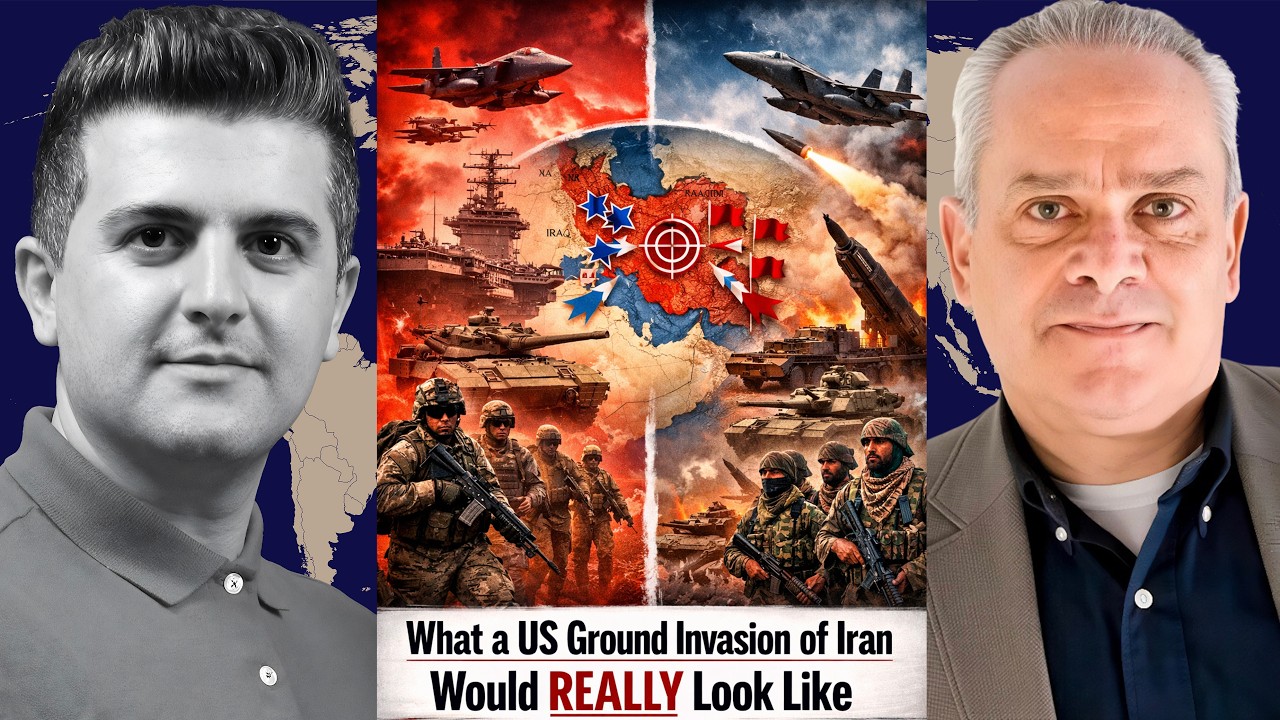
Col. Jacques Baud: What a US Ground Invasion of Iran Would REALLY Look Like
"Colonel Jacques Baud dissects the strategic futility of a US ground invasion of Iran, arguing that current troop levels are insufficient and such an action would backfire, exposing US allies and potentially leading to Iran's nuclearization."
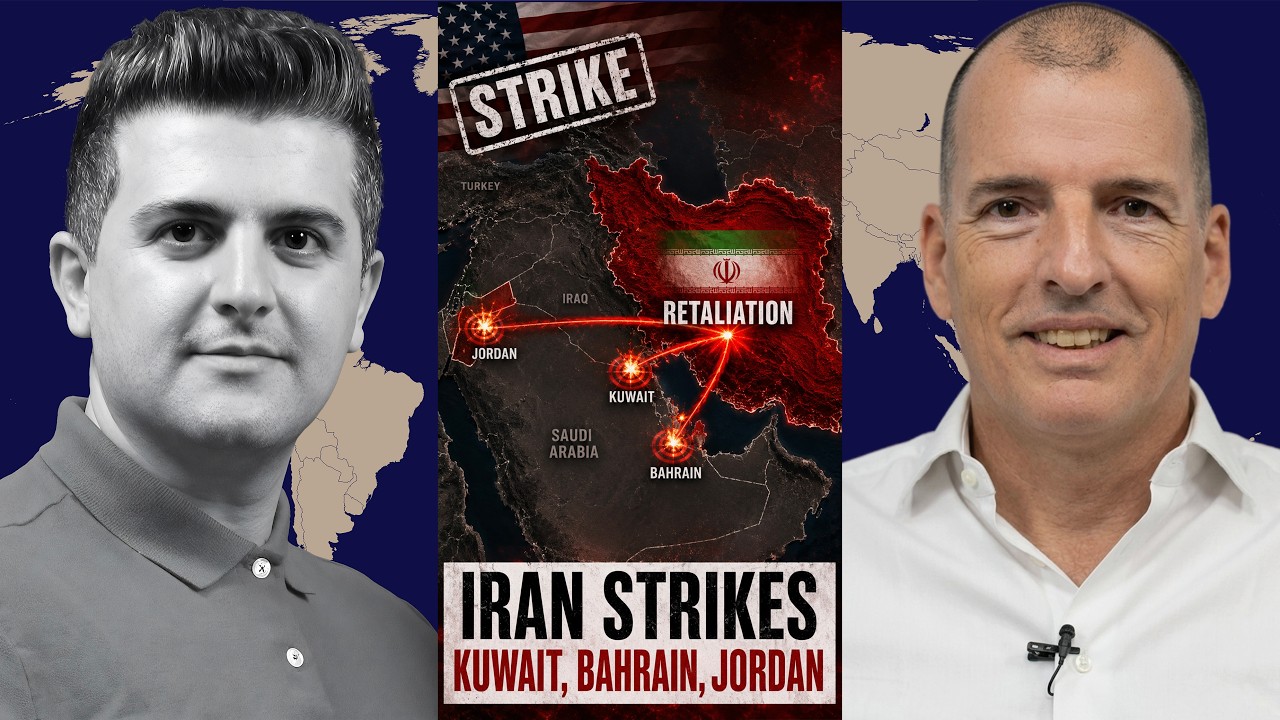
Alex Krainer: US STRIKES Iran – Iran RETALIATES Against Kuwait, Bahrain & Jordan!
"Amidst escalating US-Iran conflict and Iranian retaliation against regional US allies, this episode argues that US foreign policy is deeply controlled by an 'Anglo-Zionist conspiracy' led by the Rothschild banking dynasty, prioritizing Israeli interests over American ones."
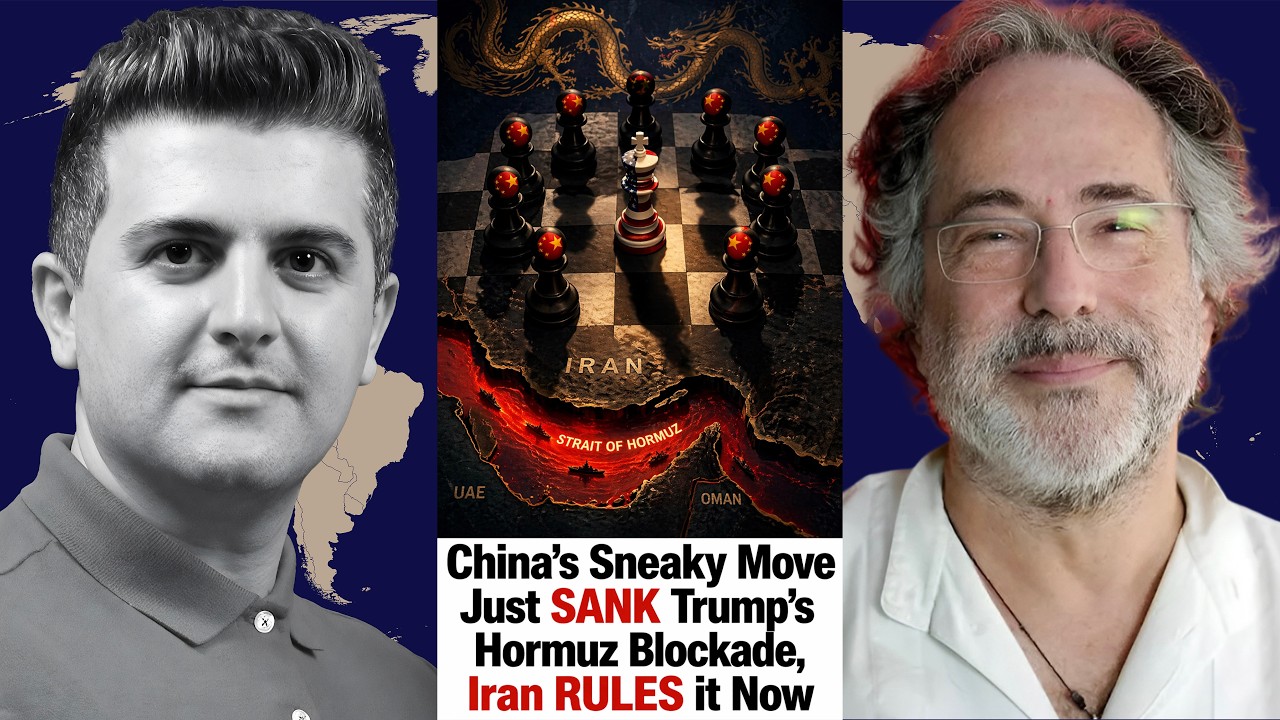
Pepe Escobar: “Total Failure”: Trump’s Blockade Just Backfired Disastrously
"Pepe Escobar argues that the US blockade against Iran, spearheaded by Donald Trump, has utterly failed and backfired, accelerating global economic chaos and challenging US geopolitical dominance."