
LIVE: Huge U.S. Military Deployment Towards Iran - IRGC Hit Arab States - IDF Strikes Hezbollah
YouTube · kGyqWx2G5m4
Quick Read
Summary
Takeaways
- ❖The US military has executed its largest logistical deployment to the Middle East since the 2003 Iraq war, signaling readiness for a major conflict.
- ❖Iran's IRGC launched missile and drone attacks on Kuwait and Bahrain, which were mostly intercepted, but still caused minor damage to residential areas.
- ❖The IDF is conducting extensive strikes against Hezbollah in Southern Lebanon, targeting operatives and destroying significant underground facilities.
- ❖Iran's state media openly discussed acquiring nuclear weapons while its officials contradicted claims about canceling negotiations with the US.
- ❖The host believes the Iranian regime will only fall through external military pressure leading to internal strife, not through immediate popular revolution.
Insights
1Massive US Military Deployment to Middle East
The United States military launched one of its largest deployments to the Middle East and Iran, described by defense sources as the largest logistical operation in its history, exceeding the scale of the 2003 Iraq war. This includes strategic supplies, personnel, and leadership, with Admiral Brad Cooper discussing regional security with Israeli and Lebanese governments.
Host states 'one of its largest military deployment to the Middle East and Iran' and 'largest logistical operation in its history according to the defense sources' exceeding 'the scale of the 2003 war in Iraq.'
2IRGC Attacks on Gulf States Largely Intercepted
The IRGC released footage of missile and drone attacks targeting Bahrain and Kuwait. While the IRGC called the operation 'decisive,' it was largely unsuccessful, with most projectiles intercepted by American, Kuwaiti, and Bahraini defenses. Some residential buildings in Bahrain were reportedly hit, while US bases remained unaffected.
Host mentions 'IRGC released their footage of the missile and drone attacks towards the Arabs' and 'everything was mostly intercepted by the Americans and Kuwaitis and the Bahrainis.' Later, 'somehow managed to hit residential buildings... in Bahrain.'
3IDF Operations Against Hezbollah in Southern Lebanon
The Israeli Defense Forces launched a major military operation against Hezbollah in Southern Lebanon, striking multiple targets including Dar al-Sarayan and Nabatieh. The IDF eliminated several Hezbollah operatives and demolished a large underground facility in Majdal Zoun, which was used to store weapons and IRGC-made drones.
Host states 'Israeli defense forces have launched a major military operation now against the IRGC's Hezbollah' and 'several strikes started to happen in the southern parts of Lebanon... a huge number of Hezbollah operatives have been eliminated.' Later, 'Israeli Defense Forces have now demolished a large Hezbollah underground facility in the village of Majdal Zoun.'
4Iran's Contradictory Stance on Nuclear Weapons and Negotiations
Iranian state media indicated the Islamic regime 'has no choice but to obtain the atomic bomb' to remove the military option from the table, contradicting their ongoing participation in negotiations with the Americans. The IRGC initially claimed negotiations were canceled, but the White House confirmed talks were still scheduled, suggesting a US strategy to force Iran to the negotiating table.
Host quotes Islamic Republic state media saying 'the Islamic regime has no choice but to obtain the atomic bomb' and discusses IRGC claims of canceled negotiations versus White House confirmation that 'talks that are set for the coming week in Switzerland are still on.'
5Iranian Attempts to Control Strait of Hormuz
The IRGC announced it is effectively closing the Strait of Hormuz by creating its own 'safe transit route' and requiring permission for vessels to cross. This move follows a failed attempt to partner with Oman to control the strait, after President Trump threatened Oman, leading them to instead work with the Americans on a separate safe corridor.
Host states 'the Strait of Hormuz is now closed without being closed' by creating 'our own safe transit route' and requiring 'permission 48 hours in advance.' He also notes 'only a few days ago we had the Islamic Republic announcing that with the help of Oman they are now going to be together controlling the Strait of Hormuz. The Americans, President Trump threatened to bomb Oman.'
Bottom Line
The host frames the ongoing US military operations and Israeli strikes as part of a coordinated strategy to prepare for a 'great Middle East war' aimed at dismantling the Iranian regime's regional influence in Iraq, Lebanon, and Yemen.
This suggests a long-term, multi-front conflict is anticipated, extending beyond direct confrontation with Iran to include its proxy forces across the region.
Understanding this broader strategic context allows for better anticipation of regional shifts and potential areas of conflict or intervention, which is critical for geopolitical forecasting.
The host interprets the silence from Bahrain and Kuwait after IRGC attacks as a sign that the US has assured them of a larger, coordinated retaliation plan, telling them to 'take their time' rather than react independently.
This implies a high level of strategic coordination and trust between the US and certain Gulf states, indicating a unified front against Iran and a deliberate, patient approach to conflict resolution.
This dynamic could lead to increased security cooperation and defense spending in these Gulf states, potentially creating strategic advantages for allied nations and defense sector businesses.
The host suggests that allowing the IRGC to participate in 'fake negotiations' with the US is a deliberate strategy to create internal divisions within the Iranian regime, as signing any American deal would lead to a 'massive internal civil war' among its factions.
Diplomacy, in this view, is not about peace but about psychological warfare and internal destabilization, presenting a lose-lose scenario for the IRGC.
This perspective highlights the importance of understanding internal political dynamics within adversarial regimes and how external actions, even diplomatic ones, can be leveraged to exploit these divisions.
Lessons
- Monitor the Strait of Hormuz for increased volatility and potential disruptions to shipping, given Iran's attempts to establish its own 'safe transit route' and control.
- Analyze official statements from the Iranian regime with skepticism, as contradictions regarding negotiations and nuclear ambitions indicate internal disarray or strategic deception.
- Recognize that the current geopolitical climate in the Middle East is characterized by a long-term, multi-pronged strategy by the US and its allies to dismantle the Iranian regime's regional influence, rather than isolated incidents.
Quotes
"The only success of Trump is the increased income of American coffin makers and wheelchair manufacturers for his soldiers in this defeated war."
"If somehow a one in a million chance the Islamic Republic sign the American deal, they are done. The IRGC will be done and there will be a massive internal civil war in the regime inside the regime in Iran."
"The Islamic regime has no choice but to obtain the atomic bomb in order to remove the military option from the table."
Q&A
Recent Questions
Related Episodes

Patrick Henningsen: Hezbollah JUST Fired Back at Israel - Iran Vows to “Crush” All Attacks
"Patrick Henningsen argues that the US and Israel initiated an illegal war against Iran, driven by Trump's incompetence and Israeli influence, leading to an inevitable escalation with severe global economic repercussions."

Col. Jacques Baud: What a US Ground Invasion of Iran Would REALLY Look Like
"Colonel Jacques Baud dissects the strategic futility of a US ground invasion of Iran, arguing that current troop levels are insufficient and such an action would backfire, exposing US allies and potentially leading to Iran's nuclearization."

Alex Krainer: US STRIKES Iran – Iran RETALIATES Against Kuwait, Bahrain & Jordan!
"Amidst escalating US-Iran conflict and Iranian retaliation against regional US allies, this episode argues that US foreign policy is deeply controlled by an 'Anglo-Zionist conspiracy' led by the Rothschild banking dynasty, prioritizing Israeli interests over American ones."
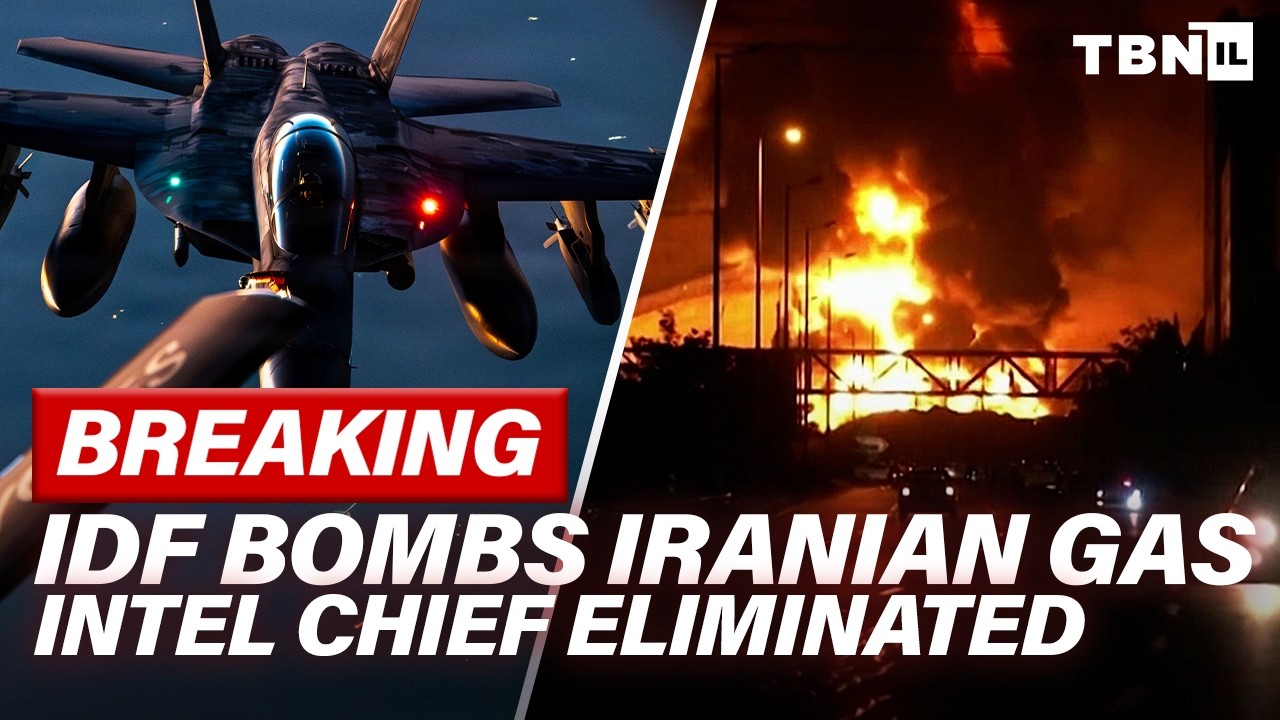
BREAKING: Israel BOMBS Major Iran Gas Site; Top Mullah ELIMINATED; Iran Vows VENGEACE | TBN Israel
"Israel and the United States have escalated their 'Roaring Lion War' against Iran, striking its largest gas facilities, eliminating key intelligence and military figures, and disrupting missile production, while Iran threatens a broader energy war in the Gulf."