
Larry Johnson: Giant Mushroom Cloud Blasts Over Israeli Defense Company – What We Know
YouTube · kIlLKqPzY8Y
Quick Read
Summary
Takeaways
- ❖A major explosion at an Israeli defense facility, producing missile engines, was likely an industrial accident caused by rushed production, not an Iranian attack.
- ❖US plans for renewed attacks on Iran are stalled because Saudi Arabia and Kuwait denied US access to their airspace for refueling tanker aircraft (KC-135s), essential for F-35 operations.
- ❖Russia and China are proposing a new regional security architecture in the Persian Gulf, uniting Turkey, Saudi Arabia, and Iran, explicitly aiming to remove US military presence.
- ❖Iran has adopted a 'victim' strategy, avoiding preemptive strikes to gain moral high ground and bolster support from China and Russia.
- ❖The two pillars of US global hegemony—the petrodollar and foreign countries buying US debt—are unraveling, with China's yuan gaining traction in oil transactions and major countries selling off US treasuries.
- ❖US arms sales to Taiwan are a 'fraud' because the US lacks the rare earth minerals, primarily controlled by China, to produce the promised advanced weapons.
- ❖Pakistan is emerging as a key intermediary in the new security architecture, coordinating with China and Russia to unite Saudi Arabia and Iran against US influence.
- ❖The Abraham Accords are considered 'dead' and 'kaput' due to current regional dynamics.
- ❖Israel faces significant manpower challenges, with its military stretched thin across multiple fronts (Gaza, Lebanon, Syria) and a limited population base.
- ❖Russia is prepared to expand its offensive in Ukraine to include strikes on European countries that are producing weapons and drones used against Russia, potentially escalating to a full-scale NATO-Russia war.
Insights
1Israeli Defense Plant Explosion: An Accidental Catastrophe
A massive explosion at an Israeli defense factory, which produced engines for nearly all Israeli missiles (including Arrow 2, Arrow 3, and satellites), was likely an industrial accident. Larry Johnson hypothesizes that pressure to rapidly develop or upgrade air defense systems in anticipation of a new attack on Iran led to unsafe handling of explosives, wiping the facility off the map. This was not a missile attack from Iran, as previous Iranian missile strikes never caused such a large mushroom cloud or devastation.
Larry Johnson references Andre Mataniano's information and contrasts the explosion's scale with previous Iranian missile attacks, noting the absence of similar damage. The plant produced engines for Arrow 2, Arrow 3, and satellites.
2US War Plans Against Iran Stalled by Gulf States
US military plans for renewed attacks on Iran are 'locked and loaded' but are currently on hold due to the refusal of Saudi Arabia and Kuwait to allow US KC-135 refueling aircraft to use their airspace. These tankers, based at Prince Saud Air Base (PSAB), are essential for extending the combat radius of F-35 jets (based in Jordan and Israel) to reach targets in the Persian Gulf and Iran. Without refueling access, F-35s cannot complete their missions, effectively derailing the air campaign.
Larry Johnson cites an incident two weeks prior where Saudis and Kuwaitis denied US aerospace for 'Project Freedom.' He details the F-35's 550-mile combat radius versus the 819-mile distance to Riyadh from Jordan, requiring multiple refuelings for missions over the Persian Gulf.
3Russia-China Spearhead New Persian Gulf Security Architecture
Russia and China are actively constructing a new security architecture in the Persian Gulf, aiming to create a strategic regional alliance between Turkey, Saudi Arabia, and Iran. This alliance seeks to protect regional interests, exclude Israel, and fundamentally push the United States military out of the Persian Gulf by removing its bases and personnel. The proposal emphasizes an 'Islamic model' embracing both Sunni and Shia theologies, moving beyond sectarian divisions.
Johnson states the Chinese and Russian proposal is to bring together Turkey, Saudis, and Iran into a strategic regional alliance, with the fundamental premise being the US's exit from the Persian Gulf. He mentions Iran's seriousness about creating a 'Persian Gulf Strait Authority' (PGSA) to control traffic.
4US Arms Sales to Taiwan: A 'Fraud' Due to Rare Earth Dependency
The United States' offers to sell advanced weapons like Patriot or THAAD missiles, JASMs, and Tomahawks to Taiwan amount to a 'fraud' because the US lacks the necessary rare earth minerals to produce these weapons in sufficient quantities. China controls the majority of the world's rare earth minerals, and by withholding them, China can effectively prevent the US from manufacturing and delivering these promised arms, rendering any sales agreements moot.
Johnson compares it to selling a Lamborghini one doesn't possess. He states the US 'does not have inventories' of these weapons and 'still has to make them,' but 'without those rare earth minerals, the United States can't produce those weapons.'
5Russia's Intent to Strike European Targets in Ukraine War Escalation
Russia is preparing to expand its offensive beyond Ukraine, with clear intentions to strike targets in European countries that are producing and supplying drones and weapons used against Russia. This escalation could trigger NATO's Article 5, leading to a full-scale war between Russia and NATO. Russian Ambassador Dmitri Polansky's statements are cited as official policy, indicating this is not an idle threat but a serious declaration of intent.
Johnson references Ambassador Dmitri Polansky's statements, noting Polansky is a 'measured diplomat' who expresses official Russian policy. Polansky reportedly made it 'very clear' that if attacks persist, Russia 'will attack and deal with the threats in Europe,' specifically mentioning destroying logistic support from Germany, Romania, Poland, and France.
Bottom Line
The 'Persian Gulf Strait Authority' (PGSA) is a formal mechanism being established by Iran to control traffic through the Strait of Hormuz, which is critical to the world economy. This move, coupled with the US blockade, shifts the blame for hindering global trade away from Iran and onto the United States.
This new authority could fundamentally alter global energy trade routes and supply chain dynamics, giving Iran significant leverage and potentially isolating the US from regional economic control.
Businesses reliant on Persian Gulf shipping should monitor the PGSA's development and potential operational impacts, considering alternative routes or new diplomatic engagement strategies with the emerging regional powers.
Pakistan is emerging as China's 'pointy end of the spear' in the new Middle East security architecture, acting as a major intermediary between Iran and Saudi Arabia, and coordinating with China and Russia. Pakistan has a security agreement with Saudi Arabia, potentially to protect them against the US.
Pakistan's growing influence signifies a significant shift in regional power dynamics, challenging traditional US alliances and offering a new, non-Western-aligned diplomatic and security channel.
Governments and businesses seeking engagement in the Middle East should recognize Pakistan's increasing strategic importance and consider it a crucial partner in navigating the evolving geopolitical landscape, especially in relation to China's Belt and Road Initiative.
Key Concepts
Two Pillars of US Hegemony
Larry Johnson posits that US global dominance is underpinned by two main financial mechanisms: the petrodollar (requiring international oil transactions in USD) and the willingness of foreign countries to continuously buy US debt. The unraveling of these pillars, through de-dollarization efforts (e.g., yuan for oil) and divestment from US treasuries, directly threatens US hegemonic power.
Victim Strategy
Iran's strategic decision to avoid initiating military contact, even when anticipating attacks, is framed as a 'victim strategy.' By only acting in self-defense, Iran gains moral high ground, bolsters international support (especially from China and Russia), and shifts blame for escalation onto its adversaries.
Lessons
- Monitor the diplomatic posture of Saudi Arabia and Qatar regarding US military access, as their decisions are critical to regional conflict escalation or de-escalation.
- Evaluate the long-term implications of the unraveling petrodollar and US debt market for global financial stability and investment strategies, considering diversification into non-USD assets.
- Assess the potential for expanded conflict in Europe, including direct Russian strikes on NATO member countries, and prepare for significant disruptions to supply chains and international relations.
Notable Moments
Discussion of the massive explosion at an Israeli defense plant, with Larry Johnson hypothesizing it was an accident due to rushed production of new air defense systems.
This event highlights potential vulnerabilities in Israel's defense industrial base and suggests internal pressures are impacting operational safety, rather than external attacks.
Larry Johnson reveals that US war plans against Iran were stalled because Saudi Arabia and Kuwait denied US access to their airspace for refueling KC-135s.
This demonstrates the significant leverage Gulf states now hold over US military operations, indicating a weakening of traditional alliances and US influence in the region.
Larry Johnson describes the 'fraud' of US arms sales to Taiwan, explaining that the US cannot produce the promised weapons due to its reliance on Chinese rare earth minerals.
This exposes a critical vulnerability in the US defense industrial base and highlights China's strategic control over essential resources, impacting global power projection.
Quotes
"You read me on Andre Mataniano's take and it sounds like he got some better information than I had access to, but that that this entire plant facility was blown up and it wasn't done by an attack by Iran. Rather, the you know, they did something wrong in handling the explosives that were being produced inside that factory and boy apparently it wiped it off the face of the earth."
"The holdup I believe is with the Saudis and Qataris and Kuwaitis because we saw two weeks ago when the Saudis and Kuwaitis told the United States, 'No, you're not going to use our aerospace to for your project freedom. Not going to happen.' And Trump had to cause a had to call it off."
"The fundamental premise in that new security architecture is the United States has got to get the hell out of the Persian Gulf. Remove its bases, remove its personnel."
"By adopting that role, they've made it very very clear to the world they're the victim here. We didn't start this. We were not using military force against Israel or the United States. We've only done it in self-defense. And it is you know and in that regard they they've acquired what I say the moral high ground and it has it's bolstered their support from countries like China and Russia."
"I'm selling you something I don't have. And in this case, the United States is offering to sell Taiwan weapons. It does not have it doesn't have inventories of these sitting around... Without those rare earth minerals, the United States can't produce those weapons. And if they can't produce them, you can't deliver them."
"Russia is going to expand its offense against Ukraine and will it it will include attacks on Europe. I think there there will Russia will strike targets in some of the European countries and those countries that are producing drones, producing weapons that are being used in against Russia, hitting targets inside Russia, that those European countries are going to be hit."
Q&A
Recent Questions
Related Episodes
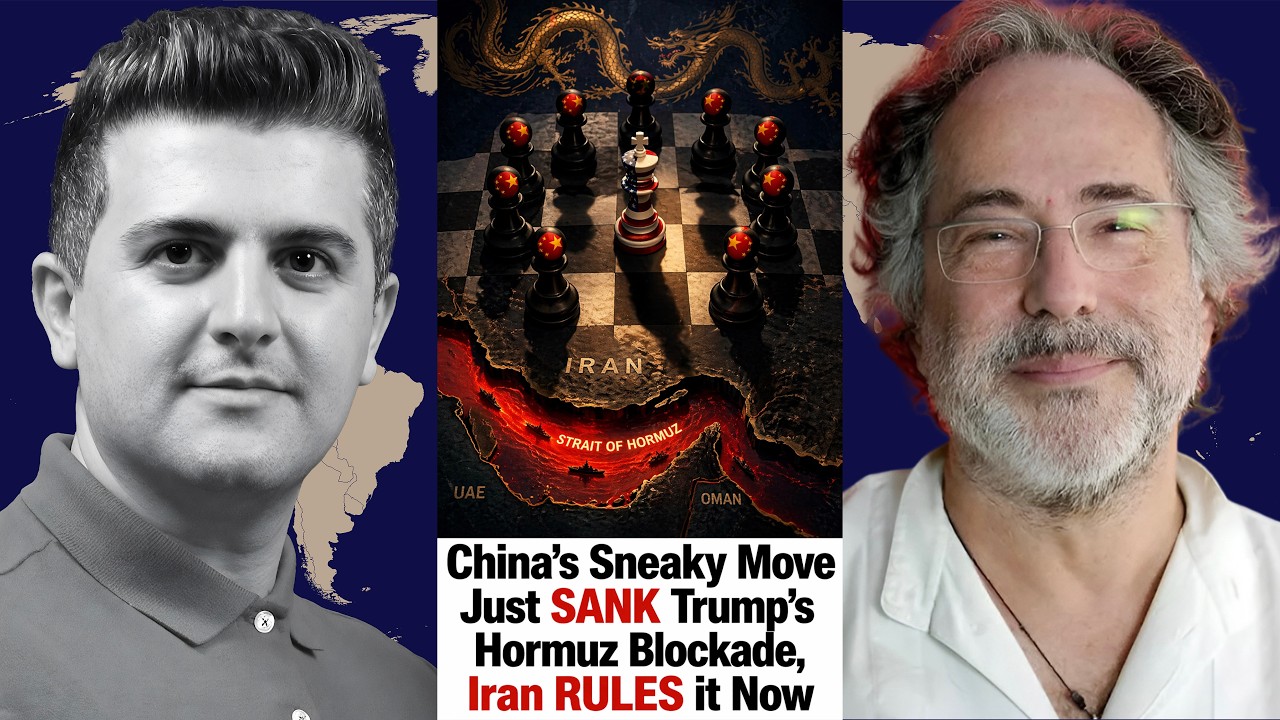
Pepe Escobar: “Total Failure”: Trump’s Blockade Just Backfired Disastrously
"Pepe Escobar argues that the US blockade against Iran, spearheaded by Donald Trump, has utterly failed and backfired, accelerating global economic chaos and challenging US geopolitical dominance."

Col. Jacques Baud: What a US Ground Invasion of Iran Would REALLY Look Like
"Colonel Jacques Baud dissects the strategic futility of a US ground invasion of Iran, arguing that current troop levels are insufficient and such an action would backfire, exposing US allies and potentially leading to Iran's nuclearization."

Patrick Henningsen: Hezbollah JUST Fired Back at Israel - Iran Vows to “Crush” All Attacks
"Patrick Henningsen argues that the US and Israel initiated an illegal war against Iran, driven by Trump's incompetence and Israeli influence, leading to an inevitable escalation with severe global economic repercussions."

Alex Krainer: US STRIKES Iran – Iran RETALIATES Against Kuwait, Bahrain & Jordan!
"Amidst escalating US-Iran conflict and Iranian retaliation against regional US allies, this episode argues that US foreign policy is deeply controlled by an 'Anglo-Zionist conspiracy' led by the Rothschild banking dynasty, prioritizing Israeli interests over American ones."