BREAKING: U.S. Prepares GROUND Invasion Of Iran; Arak Reactor HIT; Houthis Attack Israel |TBN Israel
YouTube · kegoI9InOhU
Quick Read
Summary
Takeaways
- ❖The U.S. announced a 5-day delay in strikes against Iran's energy infrastructure following talks, but military buildup continues.
- ❖The Pentagon is preparing for a ground invasion of Iran, involving special forces raids and infantry operations lasting weeks.
- ❖Israel has struck Iran's heavy water reactor in Arak, along with missile production sites, steel plants, and defense ministry infrastructure.
- ❖Three Iranian nuclear scientists were reportedly terminated in recent days, including the head of research for SPND, a nuclear weapons program successor.
- ❖Iran is attempting to impose 'transit extortion' in Chinese currency on tankers passing through the Strait of Hormuz, severely impacting global shipping.
- ❖Houthi forces in Yemen launched ballistic and cruise missiles at Israel, seen as an Iranian-orchestrated distraction to bolster negotiation leverage.
- ❖An American E3 Sentry aircraft was damaged in an Iranian attack on Prince Sultan air base in Saudi Arabia, and 15 US soldiers were wounded.
- ❖Iranian President Pazian warned of economic collapse within a month without a ceasefire, highlighting internal regime disputes.
- ❖Israel estimates 70% of Iran's military industry components have been hit, with a goal of 90% damage to paralyze production capability.
- ❖US Marine Expeditionary Units (MEUs) are deploying to the Middle East, capable of amphibious assaults on key islands like Karaj.
Insights
1US Prepares for Ground Invasion of Iran
The Pentagon is actively preparing for a ground invasion of Iran, involving special forces and infantry raids on strategic targets, potentially lasting weeks. This signals a significant escalation beyond aerial strikes, aiming to secure critical choke points like the Strait of Hormuz and key oil islands.
The Pentagon is preparing for a ground operation inside the Islamic Republic of Iran that would last for weeks. The plan includes special forces raids on strategic targets, including the central oil island of Karaj. US Central Command announced a task force aboard the USS Tripoli, with thousands of Marines and sailors, has arrived in the area.
2Israel's 'Scorched Earth' Campaign Against Iranian Industry
Israel is implementing a 'scorched earth' strategy, systematically destroying Iran's military-industrial complex. This includes targeting steel plants, engine factories, fuel industries, and development centers, aiming to paralyze Iran's production and recovery capabilities, not just delay them. Over 70% of Iran's military industry has been damaged, with a goal to reach 90%.
The IDF estimates that 70% of Iran's military industry has already been damaged, with a goal of reaching 90% within days. More than 1,300 munitions have been dropped on military industries, destroying hundreds of factories and eliminating commanders. Targets include steel plants, engine factories, and solid/liquid fuel industries.
3Iran Weaponizes Strait of Hormuz for 'Transit Extortion'
Iran is turning the Strait of Hormuz into a mechanism for 'transit extortion,' demanding payments in Chinese currency from tankers for safe passage. This strategy bypasses sanctions, puts pressure on global trade, and has dramatically reduced shipping traffic, leading to higher energy prices globally.
Iran is turning the Strait of Hormuz into a mechanism for collecting protection money or transit extortion, demanding payment in Chinese currency. Shipping traffic through the strait has dropped to just a handful of vessels, as companies refuse to risk passage due to threats of mines, fast boats, and shore fire.
4Targeted Elimination of Iranian Nuclear Scientists and Military Leaders
In addition to industrial strikes, Israel and the U.S. are targeting Iran's human capital. Recent operations have eliminated three nuclear scientists, including a key figure in Iran's nuclear weapons program, and senior military leaders, demonstrating deep intelligence penetration and aiming to cripple the regime's command structure and expertise.
Three nuclear scientists have been terminated in Iran in recent days, including Ali Pulvadan, head of research in the SPND organization. Senior military leaders, including Revolutionary Guards navy commander Ali Razi Tangasiri, have also been eliminated, demonstrating Israeli intelligence and operational superiority.
5US Aircraft Damaged, Soldiers Wounded in Iranian Attack
An American E3 Sentry aircraft, a critical surveillance and early warning asset, was damaged in an Iranian attack on Prince Sultan air base in Saudi Arabia. This attack also wounded at least 15 American soldiers, highlighting the direct costs and operational risks faced by U.S. forces in the region.
An E3 Sentry aircraft was damaged in the Iranian attack on the American base inside Saudi Arabia, at Prince Sultan air base. In the latest attack on the base, at least 15 American soldiers were wounded.
Bottom Line
The global trade of oil is permanently altered by the Strait of Hormuz situation, establishing a new benchmark for energy costs and demonstrating the power of rogue nations to leverage strategic choke points.
This signifies a fundamental shift in global energy markets and supply chain security. Businesses and governments must re-evaluate long-term energy strategies, including investments in alternative transport routes like pipelines, and prepare for sustained higher energy prices and geopolitical instability affecting trade.
Investment in secure shipping technologies, alternative energy transport infrastructure (pipelines bypassing straits), and regional security partnerships to protect maritime trade routes could see increased demand and strategic importance.
The U.S. and Israel are pursuing a strategy to create internal regime pressure in Iran by inflicting severe economic and military damage, aiming to force negotiations when Tehran is weakest.
This approach suggests that military actions are not just about destruction but are calculated to exacerbate internal divisions within the Iranian regime, potentially leading to a change in leadership or policy. It indicates a long-term strategy beyond immediate military objectives.
Intelligence agencies and geopolitical analysts should closely monitor internal Iranian power struggles and economic indicators for signs of regime instability or shifts in negotiation posture, which could present diplomatic or strategic opportunities.
Iran may be attempting to develop a new 'unconventional weapon' that is not necessarily nuclear but could change the rules of engagement and create a new deterrent at a moment of weakness.
This implies a potential for unexpected and disruptive military developments from Iran, moving beyond conventional and known nuclear threats. It necessitates heightened vigilance and intelligence gathering regarding Iran's clandestine weapons programs.
Defense and intelligence communities need to diversify their threat assessment models and invest in counter-measures for novel, unconventional warfare capabilities, rather than solely focusing on traditional nuclear or ballistic missile threats.
Key Concepts
Choke Point Leverage
This model describes how a nation can exert significant economic and strategic pressure by controlling or threatening critical narrow waterways (choke points) through which global trade, particularly energy, must pass. Iran's actions in the Strait of Hormuz, demanding transit payments and deterring shipping, exemplify this by turning physical control into a strategic weapon that bypasses sanctions and impacts global markets.
Scorched Earth Strategy (Industrial Warfare)
This military strategy involves systematically destroying an adversary's industrial and economic capacity to wage war and rebuild. The U.S. and Israel are applying this by targeting not just military assets but also steel plants, engine factories, fuel industries, and subcontractor workshops, aiming to erase entire production capabilities rather than merely delaying them, making post-war recovery extremely difficult for Iran.
Lessons
- Monitor global energy markets closely, as the weaponization of the Strait of Hormuz by Iran is expected to cause sustained higher oil prices and supply chain disruptions.
- Assess geopolitical risks in the Middle East, particularly regarding the potential for U.S. ground operations in Iran and the ongoing proxy conflicts involving Hezbollah and Houthis.
- Track developments in Iran's internal political and economic stability, as severe military and economic pressure is designed to create regime-level disputes and potentially force a change in Tehran's strategic calculus.
The 'Scorched Earth' Strategy Against Iran's Military-Industrial Complex
Identify and systematically target all components of the adversary's military-industrial base, including raw material suppliers (e.g., steel plants), manufacturing facilities (engine factories, fuel industries), and R&D centers.
Conduct continuous, high-intensity aerial campaigns to destroy entire factories and infrastructure, aiming for paralysis rather than mere delay, making post-war reconstruction nearly impossible.
Eliminate key human capital, including nuclear scientists, engineers, and senior military commanders, to degrade expertise, leadership, and institutional knowledge within the adversary's defense sector.
Utilize deep intelligence penetration to identify and strike targets, demonstrating operational superiority and further destabilizing the adversary's command and control structures.
Notable Moments
A missile alarm sounds live during the podcast recording in Arad, southern Israel, forcing the hosts to move indoors from a missile strike site.
This moment dramatically underscores the immediate and pervasive threat of missile attacks in Israel, providing a visceral, real-time illustration of the conflict's impact on daily life and the constant state of alert faced by residents.
Quotes
"The arena has not come down. It has only become more dangerous, more blurred, and even more dependent on a single decision in the White House."
"The Pentagon is preparing for a ground operation inside the Islamic Republic of Iran that would last for weeks."
"The global trade of oil is never going back to where it was before. Never."
"Iran is not losing only inventory. It is losing production capability. It is losing its supply chain. It is losing its experts. It is losing its recovery infrastructure."
"This is not a strike meant to delay. This is a strike meant to paralyze."
"If Washington signs an agreement without breaking this mechanism and may discover that Iran lost militarily but moved up a level economically and also strategically."
Q&A
Recent Questions
Related Episodes

BREAKING: Iran Threatens To END Talks; U.S. Vows Retaliation; Hezbollah Collapsing? | TBN Israel
"Iran is leveraging Hezbollah and the Strait of Hormuz to manipulate US negotiations, while Israel asserts its right to dismantle Hezbollah's eroding but still dangerous infrastructure in Lebanon, independent of international talks."
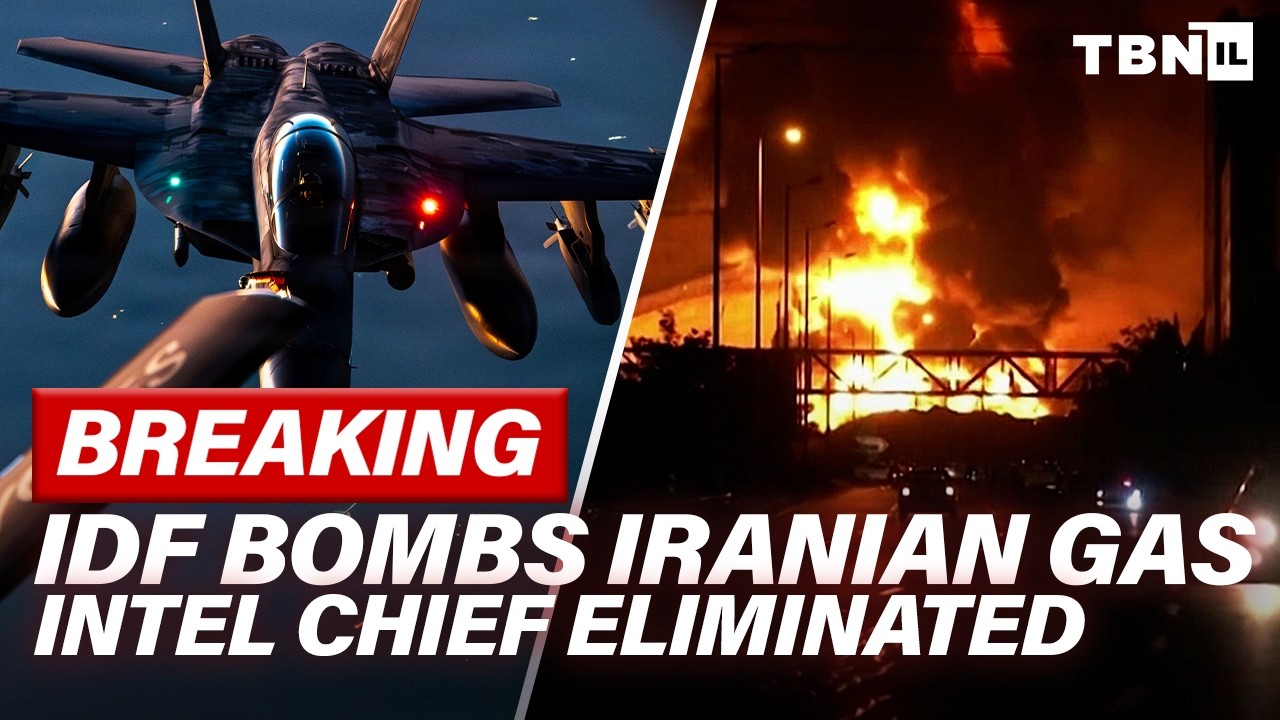
BREAKING: Israel BOMBS Major Iran Gas Site; Top Mullah ELIMINATED; Iran Vows VENGEACE | TBN Israel
"Israel and the United States have escalated their 'Roaring Lion War' against Iran, striking its largest gas facilities, eliminating key intelligence and military figures, and disrupting missile production, while Iran threatens a broader energy war in the Gulf."

Patrick Henningsen: Hezbollah JUST Fired Back at Israel - Iran Vows to “Crush” All Attacks
"Patrick Henningsen argues that the US and Israel initiated an illegal war against Iran, driven by Trump's incompetence and Israeli influence, leading to an inevitable escalation with severe global economic repercussions."
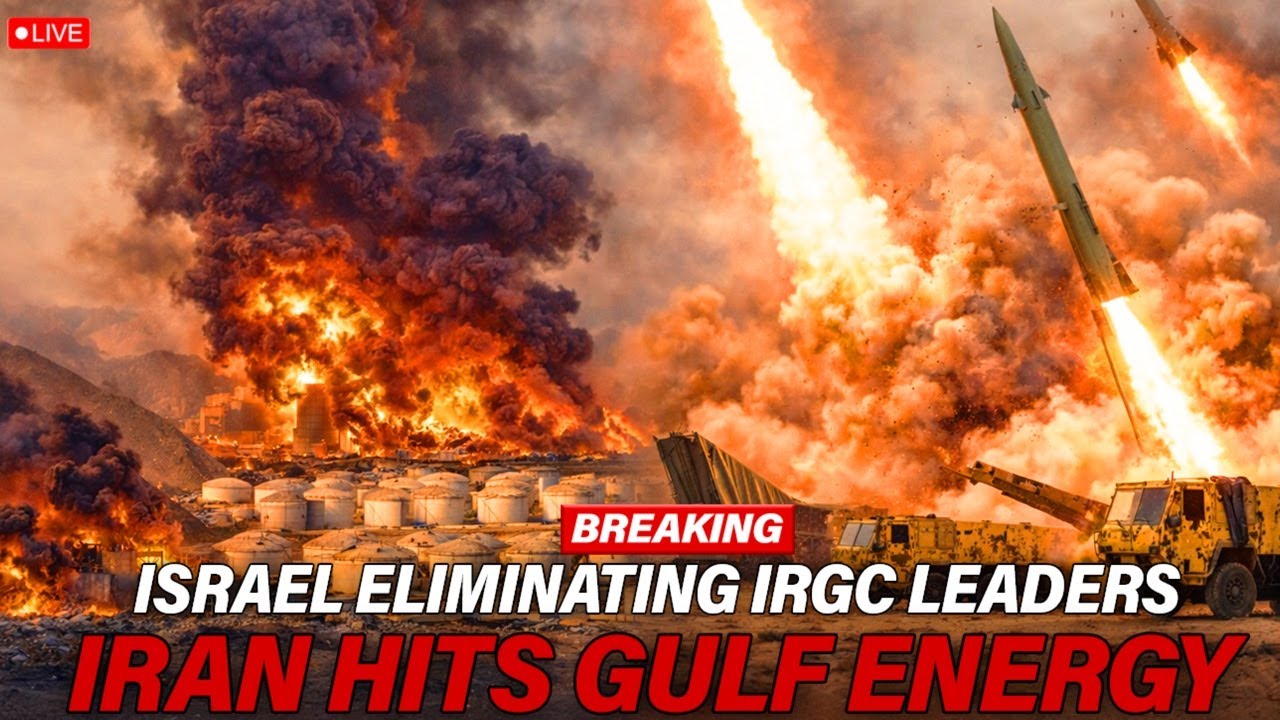
BREAKING: U.S. Weighs INVADING Iran Oil Island; Gulf Energy Crisis Grows | TBN Israel
"As the US and Israel systematically dismantle Iran's military and leadership, the conflict escalates into an energy war, with the US considering ground invasion of Iran's critical Karag oil island to secure global oil routes."