Costco vs. Sam's Club Cooking Challenge
YouTube · ks1kI9gnWwc
Quick Read
Summary
Takeaways
- ❖Sam's Club total spend: $380 for a 9.7lb Prime rib roast and 1.25lb lobster.
- ❖Costco total spend: $558 for a large untrimmed Choice rib roast and 5lbs of lobster.
- ❖The host used a reverse sear method for the prime rib, cooking at a low temperature before a high-heat blast for crust.
- ❖For mashed potatoes, Yukon Gold potatoes were preferred, and a potato ricer was used to prevent gumminess.
- ❖The taster preferred the overall flavor of the Sam's Club plate but found the Costco plate juicier with more powerful seasonings.
- ❖The final cost per prepared plate was $22 for Sam's Club and $28 for Costco.
Insights
1Costco vs. Sam's Club: Ingredient and Cost Breakdown
The challenge pitted Sam's Club's 9.7lb USDA Prime rib roast and 1.25lb lobster against Costco's large untrimmed USDA Choice rib roast (trimmed to 8.5lbs) and 5lbs of lobster. Sam's Club's total grocery bill was $380, while Costco's was $558, largely due to the larger quantity of lobster and the untrimmed nature of the beef.
Host states: '$558 at Costco and $380 at Sam's Club to make a prime rib and lobster dinner.' Sam's Club had '9.7 lb chunk of prime rib.' Costco had 'large untrimmed choice rib roast.' Costco required '5 lbs of lobster' while Sam's Club had '1.25 lb thing.'
2Prime Rib Preparation: Salting and Reverse Sear
The host demonstrated salting the prime rib generously, noting it can be done days in advance for deeper seasoning, though it might alter the beef's texture. The cooking method involved a low-temperature roast followed by a high-heat blast to create a crust, a technique known as reverse searing, pulling the meat at 115-118°F internal temperature.
Host explains: 'You could salt it the night before. You could salt it several days before.' 'You're never really going to oversalt it.' 'We're going to roast this at a low temp for a while almost kind of doing like a reverse sear situation. And then we're going to blast the heat.' 'Pull it at like 115 118.'
3Mashed Potato Technique: The Potato Ricer and Potato Variety
For perfectly smooth mashed potatoes, the host advocates boiling Yukon Gold potatoes whole and then processing them through a potato ricer or food mill, explicitly warning against food processors which can make potatoes gummy by over-whipping starch. A notable difference was found in the potatoes: Sam's Club used actual Yukon Golds, while Costco's were Idaho yellows, a waxy variety with different starch content.
Host states: 'This is my favorite way to make mashed potatoes.' 'Would not recommend using a food processor because that like that it like whips up the starch too much of potatoes and you can make them kind of gummy.' 'Sam's Club, they are using actual Yukon gold potatoes.' 'Over here, they're actually not Yukon Golds. They're called Idaho yellows.'
4Lobster Presentation: The 'Flayed Man' Technique
To achieve the classic steakhouse lobster tail presentation, the host demonstrated a method he likened to the 'flayed man' from Game of Thrones. This involves cutting through the top shell, detaching the meat, and then perching the exposed tail meat on top of the shell, brushed with garlic butter, before baking.
Host describes: 'where they kind of like perch the... exposed tail meat.' 'If it was like a human, what we'd do is is we would sort of like crack all the way through our breastplate and then pull all of our organs and flesh muscles out from our breastplate... That's what we're doing to this lobster.'
Bottom Line
The same brand of Worcestershire sauce was found to be more expensive at Costco than Sam's Club, despite Costco's higher membership fee.
This suggests that even for identical branded products, price comparison between warehouse clubs is necessary, as a higher membership fee doesn't guarantee lower prices across the board.
Consumers should cross-reference prices for staple branded items between warehouse clubs to maximize savings, rather than assuming one club is always cheaper.
The host's 'flayed man' description for preparing lobster tails highlights the often-unsettling reality behind aesthetically pleasing food presentations in fine dining.
It challenges the perception of 'fancy' food by exposing the visceral, almost brutal, steps involved in achieving certain culinary aesthetics.
Content creators could explore the 'dark side' or 'unseen realities' of popular food preparations, offering a more transparent and perhaps humorous look at gourmet cooking processes.
Lessons
- When cooking large roasts, consider salting the meat days in advance for deeper flavor penetration, but be aware it might slightly alter the texture.
- Utilize a potato ricer or food mill for mashed potatoes to achieve a smooth, non-gummy texture, avoiding food processors for this task.
- Don't hesitate to delaze a pan with broth or water after searing meat to capture flavorful 'mayards' (browned bits) for sauces like jus.
Reverse Sear Prime Rib for a Perfect Crust
Generously crust the entire prime rib roast with salt, potentially several days in advance for deeper seasoning.
Rub the roast with a mixture of softened butter and mustard; the mustard particulates help seasoning bind to the beef.
Roast the prime rib at a low temperature until its internal temperature reaches 115-118°F.
Increase oven heat to a high temperature to blast the roast, creating a crispy, flavorful crust before resting.
Notable Moments
The host's graphic description of the 'flayed man' lobster preparation, comparing it to the Bolton clan in Game of Thrones, while demonstrating the classic steakhouse presentation.
This moment provides a darkly humorous and memorable take on a common culinary aesthetic, making the often-sanitized process of food preparation more visceral and engaging.
The host's repeated, unhinged screaming for his 'afternoon fun drink' (Lollipop soda) and later for his car keys, which were in his pocket.
These comedic outbursts add a chaotic, unscripted element to the cooking show, highlighting the host's persona and providing unexpected entertainment.
Quotes
"If you look at that, that is a nice prime piece of rib. However, going over to the Costco, we got a large untrimmed choice rib roast. So technically it's not even prime rib, but I think it could be almost just as good if we really treat it right."
"I like a perfectly smooth mashed potato as opposed to a chunky rustic mashed potato."
"If it was like a human, what we'd do is is we would sort of like crack all the way through our breastplate and then pull all of our organs and flesh muscles out from our breastplate like and then kind of just like spllay our meat across our shattered breastplate just like you ever saw what the Bolton clan did in Game of Thrones, the flayed man. That's what we're doing to this lobster."
"Overall flavor-wise, I like this plate a lot better. This one, I like the sides and I didn't like the cut as much, but it was still seasoned well and prepared very well."
Q&A
Recent Questions
Related Episodes
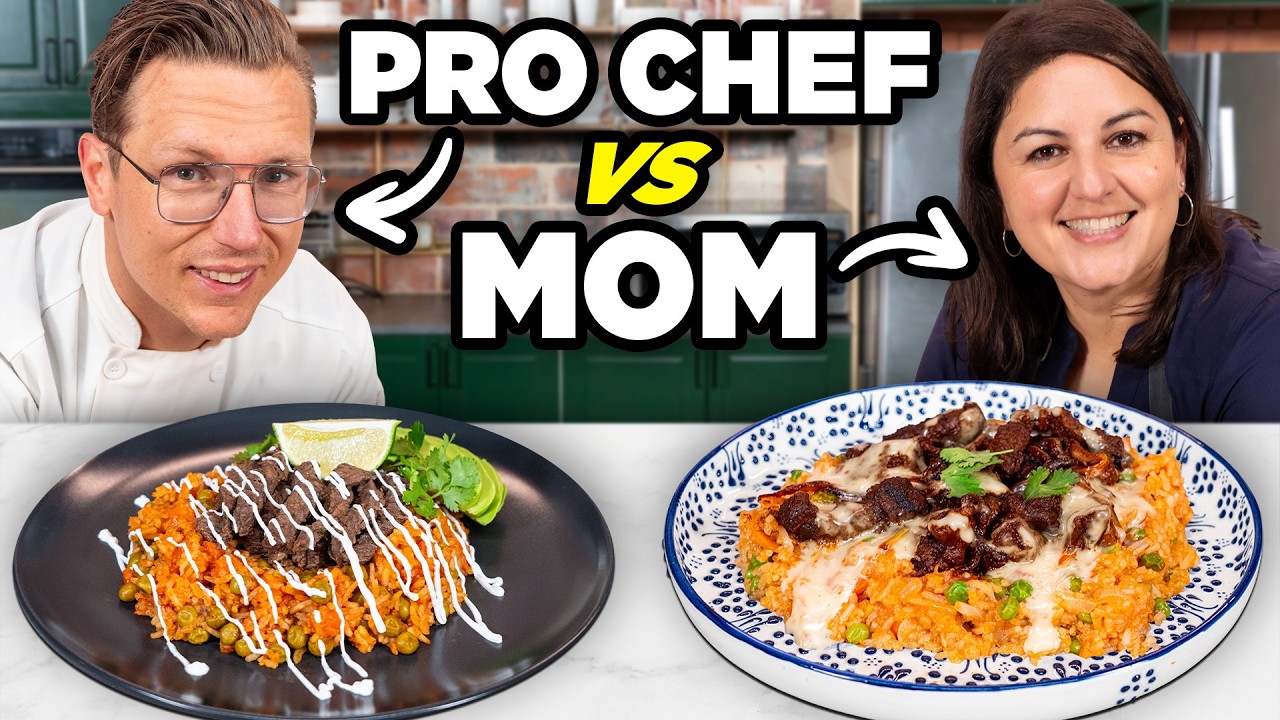
Pro Chef vs. Mom: Who Makes Better Comfort Food?
"A professional chef challenges a mother to a comfort food cook-off, revealing how love and convenience shape beloved recipes."

Low vs. High Heat (Taste Test)
"Rhett and Link conduct a series of taste tests to determine if cooking various foods at extremely low or high temperatures yields superior results, challenging common culinary assumptions."

Cheap vs Fancy Macaroni & Cheese
"This episode pits Dollar Tree against Whole Foods in a mac and cheese and broccoli salad showdown, revealing surprising results about ingredient cost versus taste and quality."
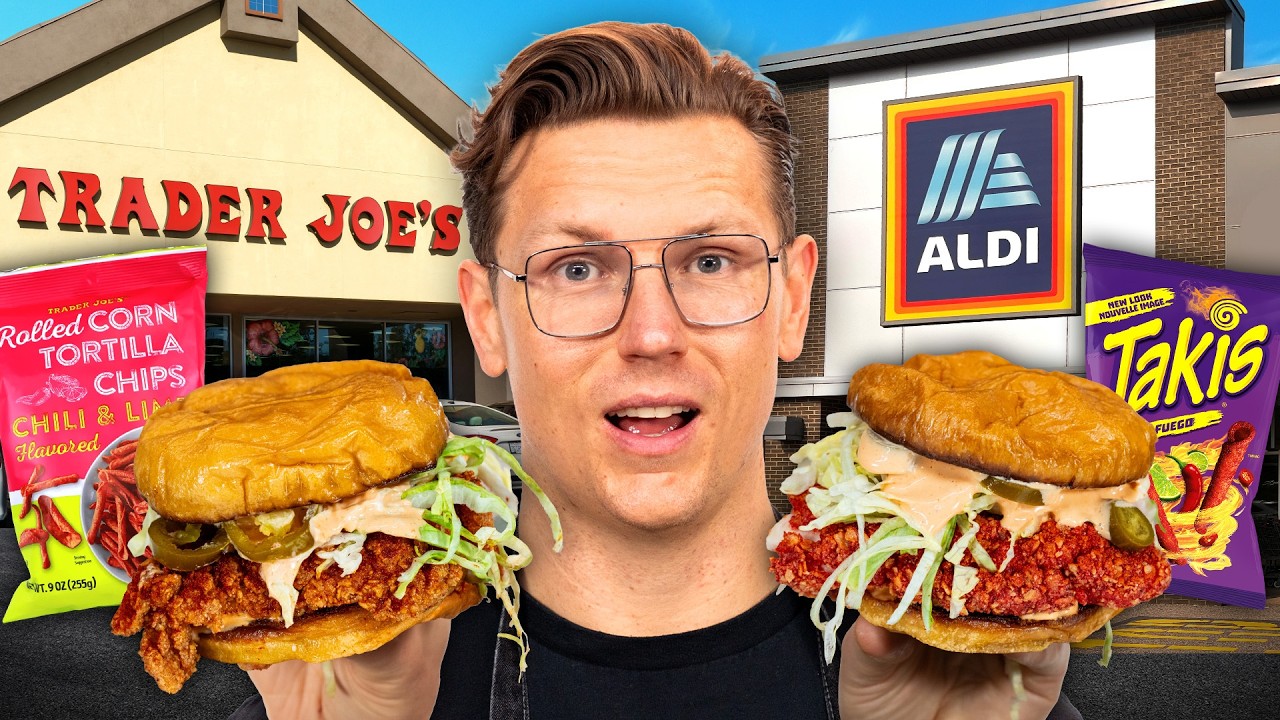
Trader Joe's vs. Aldi Cooking Challenge
"This episode pits Trader Joe's against Aldi in a head-to-head cooking challenge, revealing surprising differences in cost, ingredient quality, and taste for a Flamin' Hot Takis chicken sandwich and buffalo cauliflower."