
PBS News Hour full episode, April 23, 2026
YouTube · l2-PSI5DTu8
Quick Read
Summary
Takeaways
- ❖Tensions in the Strait of Hormuz are escalating with Iranian ship seizures and U.S. threats, impacting global oil prices.
- ❖President Trump extended the Israel-Lebanon cease-fire, while both sides accuse each other of violations.
- ❖The federal government reclassified marijuana to Schedule III, facilitating research and offering tax benefits to the cannabis industry.
- ❖The 'America First' foreign aid strategy in Africa focuses on direct government deals and promoting U.S. products, raising concerns about local sustainability and data control.
- ❖Over 1,000 Afghan allies, including children and military families, are stranded in Qatar with potential relocation to the Democratic Republic of Congo or Afghanistan.
- ❖A DACA recipient, Maria de Jesus Estrada Juarez, was wrongfully deported and later returned, highlighting the trauma and insecurity within the immigration system.
- ❖An art exhibition by Holocaust survivor Ceija Stojka sheds light on the often-overlooked persecution of Romani people and warns against rising nationalism.
Insights
1Escalating Tensions in the Strait of Hormuz and Extended Middle East Cease-fire
Tensions in the Strait of Hormuz have risen significantly, with Iran's Revolutionary Guard seizing two vessels and President Trump ordering the U.S. Navy to 'shoot and kill' any boat threatening the strait with mines. This brinksmanship coincides with a three-week extension of the cease-fire between Israel and Lebanon, brokered by President Trump, despite ongoing accusations of truce violations from both Israel and Iran-backed Hezbollah. Crude oil prices have surpassed $100 a barrel due to the standoff.
Iranian state TV broadcast video of ship seizures; President Trump posted social media orders to the Navy; Stephanie Sy reported crude oil prices over $100 a barrel; Israeli Ambassador Danny Danon discussed the cease-fire extension and Hezbollah's actions.
2Federal Reclassification of Marijuana to Schedule III
The federal government has reclassified marijuana from Schedule I (high potential for abuse, no accepted medical use) to Schedule III (moderate to low potential for dependence, accepted medical use), aligning it with drugs like Tylenol with codeine. This move, pushed by the Justice Department, is expected to significantly ease research into marijuana's safety and efficacy and provide a 'financial windfall' for cannabis companies by allowing them to deduct business expenses.
William Brangham reported on the reclassification, quoting Acting Attorney General Todd Blanche on enabling 'more targeted rigorous research' and expanding 'patients' access to treatments.'
3Trump Administration's 'America First' Global Health Strategy in Africa
The Trump administration's new 'America First Global Health Strategy' revamps foreign aid by dismantling USAID and focusing on smaller, direct government-to-government deals. These agreements, like those with Kenya and Uganda, require recipient nations to co-finance programs and share data/biological samples with U.S. experts. The strategy promotes American products, such as Gilead Sciences' HIV prevention drug lenacapavir, which is being made available at 'no profit' to 2 million people in targeted nations, while also allowing generic production in low-income countries.
Fred de Sam Lazaro reported from Kenya and Uganda; Secretary of State Marco Rubio stated the new approach 'works directly with governments and cuts out international agencies'; Ajay Kumar Pal, CEO of QCIL, discussed generic production.
4Concerns Over 'America First' Aid: Sustainability, Data Control, and Scope
Experts express significant concerns about the new 'America First' aid strategy. African governments, often debt-burdened, may struggle to fulfill co-financing commitments. The focus on U.S. priorities excludes vital services like family planning for young women, which were previously integrated into HIV prevention efforts. There are also worries about the requirement for African nations to export pathogens, data, and biological samples to the U.S., potentially hindering the development of a local biomedical industry and repeating a historical pattern of Africa exporting raw materials without benefiting from finished products.
Dr. Elizabeth Bukusi noted that 'funding doesn't always follow through' and emphasized the need for products addressing 'unplanned or unwanted pregnancies'; Dr. Kenneth Ngure's research on combined HIV/contraceptive drugs ended due to USAID dismantling; Dr. Peter Waiswa raised concerns about 'strings attached' and the economic potential of biological samples.
5Afghan Allies Stranded and Facing Deportation to War Zones
Over 1,000 Afghans who aided the U.S. war effort, including families of active duty military members and 42% children, are detained in Camp As Sayliyah in Qatar. The State Department is considering sending them back to Afghanistan or to the Democratic Republic of Congo, a nation experiencing a deep humanitarian crisis. This plan follows President Trump's halt of the Afghan resettlement program over a year ago, despite claims of 'extraordinary vetting' by organizations like AfghanEvac.
Shawn VanDiver, president of AfghanEvac, briefed Congress and stated people were 'shocked' by the plan, calling the vetting process 'safest, most secure, legal immigration pathway in history.' He warned of 'certain death for many' if returned to Afghanistan.
6Wrongful Deportation and Return of a DACA Recipient
Maria de Jesus Estrada Juarez, a DACA recipient with no criminal record, was detained by ICE at a USCIS green card appointment and deported to Mexico within 24 hours. A judge later ruled her deportation illegal, ordering her return. This case highlights the vulnerability of DACA recipients, as DHS maintains DACA does not confer legal status and recipients can be subject to arrest and deportation. The experience caused significant trauma and a loss of trust in the system for Juarez and her daughter.
Maria de Jesus Estrada Juarez recounted her experience of being handcuffed and treated 'as the criminal that I'm not'; a DHS spokesperson stated 'DACA does not confer any form of legal status'; Juarez explained her final removal order lacked a supervisor's signature, leading to its invalidation.
7Art as Memory and Warning: Ceija Stojka and the Romani Holocaust
An exhibition titled 'Ceija Stojka: Making Visible' at The Drawing Center in New York showcases the work of Romani Holocaust survivor Ceija Stojka. Stojka, a self-taught artist, used her paintings and drawings to remember the murder of some 500,000 Roma and Sinti people during the Holocaust (which Romani people call 'the Devouring'). Her art also served as an advocacy tool and a warning against the resurgence of right-wing nationalism and anti-Roma rhetoric in Europe, emphasizing that 'Auschwitz is only sleeping.'
Jeffrey Brown reported on the exhibition, citing Rutgers professor Ethel Brooks and curator Lynne Cooke; Stojka's artwork titles like 'They Devoured Us' and 'The Destitution, the Suffering, I Feel It Still' are mentioned; Stojka's quote 'Auschwitz is only sleeping' is highlighted.
Bottom Line
The federal reclassification of marijuana, while not full legalization, significantly de-risks cannabis research and provides substantial financial benefits to existing recreational marijuana companies through tax deductions.
This change could accelerate medical breakthroughs related to cannabis and solidify the economic foundation of the legal cannabis industry, potentially leading to increased investment and market expansion.
Investors and entrepreneurs in the cannabis sector should monitor the long-term impact of tax relief and increased research, which could drive product innovation and market acceptance. Pharmaceutical companies may find new avenues for drug development based on cannabis compounds.
The 'America First' foreign aid strategy, by prioritizing U.S. products and direct government deals, risks undermining local health infrastructure development and African nations' control over their own biomedical data and samples.
This approach could create dependency on foreign products and expertise, potentially stifling indigenous scientific and pharmaceutical innovation in Africa, while also raising ethical concerns about data sovereignty.
African nations and international organizations could explore alternative funding models and partnerships that prioritize local capacity building, technology transfer, and equitable data sharing to foster self-reliance in health care and biomedical research.
The proposed relocation of Afghan allies to the Democratic Republic of Congo or back to Afghanistan, despite their service to the U.S. and existing vetting, signals a potential erosion of U.S. promises to its international partners.
This action could severely damage U.S. credibility and future ability to recruit local allies in conflicts, as it demonstrates that U.S. commitments are 'temporary and conditional' based on political shifts.
Advocacy groups and bipartisan legislative efforts are crucial to push for a permanent and secure resettlement pathway for these allies in the U.S., demonstrating commitment to those who supported American efforts abroad.
Opportunities
Generic Lenacapavir Manufacturing in Africa
Establish or expand generic drug manufacturing facilities in African nations (like Uganda's QCIL) to produce HIV prevention drugs like lenacapavir at significantly lower costs ($20 per dose vs. $14,000 list price). This addresses the continent's reliance on imported treatments and promotes local pharmaceutical sustainability.
Biomedical Industry Development from Pathogen Data
Invest in training and infrastructure within African nations to analyze biological samples and pathogen data locally. This would allow African countries to derive economic potential from their own biological resources, leading to the development of vaccines, medicines, and gene therapies, rather than exporting raw samples without benefit.
Lessons
- Monitor geopolitical developments in the Strait of Hormuz and their impact on global oil prices and regional stability, as U.S. and Iranian actions escalate.
- Understand the implications of marijuana's federal reclassification on research opportunities, medical access, and the financial landscape for cannabis businesses.
- Engage with advocacy efforts like AfghanEvac to support secure resettlement pathways for Afghan allies, particularly those with family ties to active U.S. military personnel, to uphold U.S. commitments.
- Evaluate the 'America First' foreign aid strategy's long-term effects on global health initiatives, local capacity building, and data sovereignty in recipient countries.
- Recognize the human impact of immigration policies, as illustrated by the DACA deportation case, and consider supporting organizations that advocate for immigrant rights and legal protections.
Notable Moments
President Trump's order to 'shoot and kill' vessels laying mines in the Strait of Hormuz.
This aggressive directive significantly escalates military posture in a critical global shipping lane, raising the risk of direct conflict and impacting international relations and oil markets.
The Israeli Ambassador to the U.N. denying Israel targets journalists, despite documented deaths.
This exchange highlights the contentious debate surrounding civilian casualties and journalistic safety in conflict zones, particularly regarding Israel's military actions and accountability.
The federal reclassification of marijuana from Schedule I to Schedule III.
This is a landmark shift in U.S. drug policy, acknowledging marijuana's medical potential and reducing regulatory hurdles for research and financial burdens for the cannabis industry.
The proposed relocation of Afghan allies, including families of U.S. military, to the Democratic Republic of Congo or back to Afghanistan.
This plan raises severe ethical concerns about abandoning those who aided the U.S. and could have dire consequences for their safety, while also undermining future U.S. alliances.
Maria de Jesus Estrada Juarez's wrongful deportation as a DACA recipient and her subsequent return.
This individual case underscores the vulnerability of DACA recipients and the traumatic impact of aggressive immigration enforcement, even against those with no criminal record and active legal processes.
Quotes
"They don't even know who's leading the country. They're in turmoil. They're in turmoil. So we thought we'd give them a little chance to get some of their turmoil resolved."
"Why would I use a nuclear weapon when we have totally, in a very conventional way, decimated them without it? No, I wouldn't use it. A nuclear weapon should never be allowed to be used by anybody."
"We all want to get rid of Hezbollah. We want to see sovereign Lebanon controlling the territory of Lebanon."
"We are the most moral military in the world, if you compare our actions to other militaries that engage in the past with terrorist organizations."
"To accuse Israel that we target reporters, that's a blood libel."
"These actions will enable more targeted rigorous research into marijuana's safety and efficacy, expanding patients' access to treatments, and empowering doctors to make better-informed health care decisions."
"The message that this is sending is that the U.S.' promises are temporary and conditional and dependent on who is sitting behind the Resolute Desk. And that just cannot be."
Q&A
Recent Questions
Related Episodes

🚨 THEY F*CKED AROUND FOR THE LAST TIME 😭😭😭
"This episode unleashes a torrent of highly opinionated commentary on the US-Iran deal, Israel's role, and a scathing critique of 'leftist' policies and immigration, particularly highlighting the UK grooming gang report as evidence of Western societal decay."
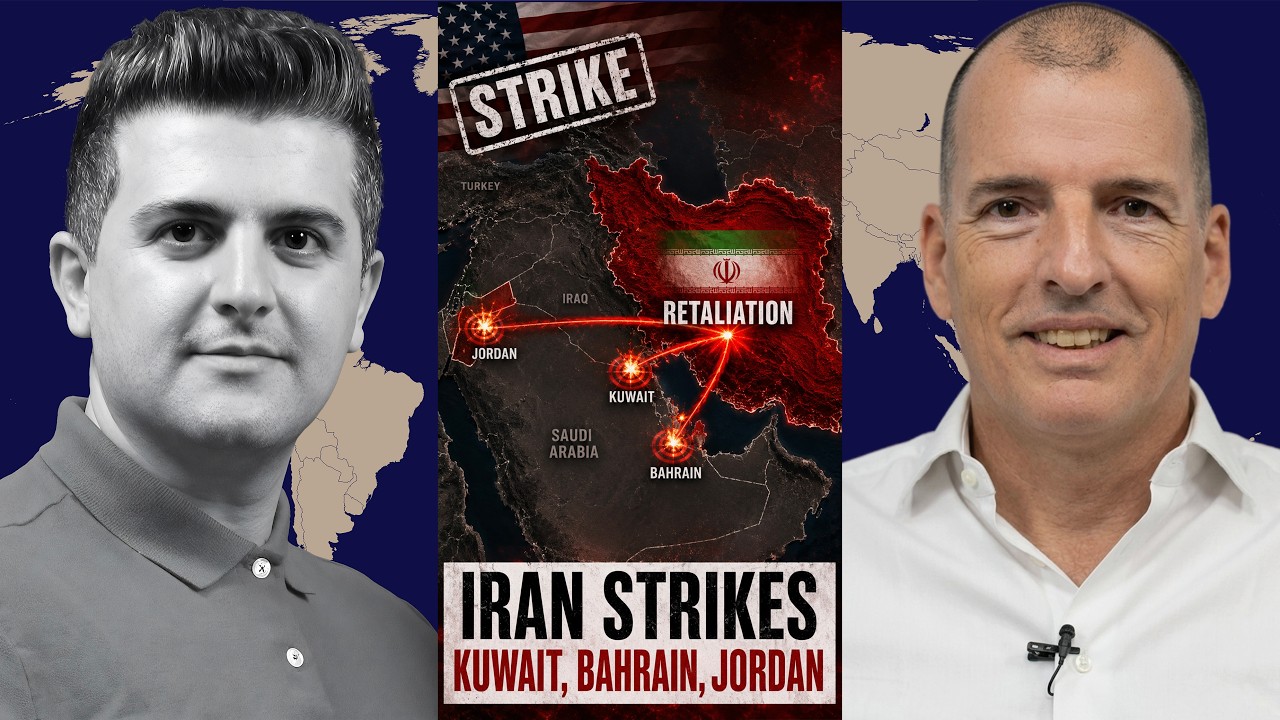
Alex Krainer: US STRIKES Iran – Iran RETALIATES Against Kuwait, Bahrain & Jordan!
"Amidst escalating US-Iran conflict and Iranian retaliation against regional US allies, this episode argues that US foreign policy is deeply controlled by an 'Anglo-Zionist conspiracy' led by the Rothschild banking dynasty, prioritizing Israeli interests over American ones."

Patrick Henningsen: Hezbollah JUST Fired Back at Israel - Iran Vows to “Crush” All Attacks
"Patrick Henningsen argues that the US and Israel initiated an illegal war against Iran, driven by Trump's incompetence and Israeli influence, leading to an inevitable escalation with severe global economic repercussions."

🚨 TOTAL F*CKING CHECKMATE 😂😂😂
"The host argues that Trump's 'ceasefire' with Iran was a calculated '5D chess' move to orchestrate a global energy market reshuffle, while simultaneously lambasting 'woke' domestic policies and the 'freefall' of anti-Trump conservative figures."