
Seyed M. Marandi: Yemen STRIKES Israel - They Hit Iran’s WATER & POWER… Now RETALIATION Has Started
YouTube · lo_khjFMcMM
Quick Read
Summary
Takeaways
- ❖The US and Israel are allegedly targeting Iranian civilian infrastructure, including pharmaceutical companies, schools, hospitals, and water resources, out of frustration that they cannot destroy Iran's underground military bases.
- ❖Iran's missile and drone production is operating 24/7, with increasing numbers of strikes against Israel and Gulf states, contrary to Western claims of diminishing capabilities.
- ❖Iran warns it will retaliate 'much harder' against any attacks on its water or energy infrastructure, threatening to target desalination plants in 'occupied Palestine' and Gulf states, and destroy global energy infrastructure if its own is hit.
- ❖There is an increasing consensus in Iran to withdraw from the Nuclear Non-Proliferation Treaty (NPT) to protect its vital infrastructure from future attacks, not necessarily to build nuclear weapons.
- ❖Iran intends to demand full compensation from Gulf regimes (Qatar, Saudi Arabia, Emirates) for their complicity in hosting US bases and facilitating attacks, using leverage like the Strait of Hormuz.
- ❖European elites are perceived as 'rats' abandoning a 'sinking ship,' unwilling to join the war due to depleted resources from the Ukraine conflict and a long-term 'European winter.'
Insights
1Alleged Civilian Targeting by US/Israel
Professor Marandi asserts that the US and Israel are intentionally targeting Iranian civilian infrastructure, including pharmaceutical companies (producing cancer medicine), schools, hospitals, universities, poultry farms, and water desalination plants. He claims these targets are chosen because the US/Israel cannot effectively strike Iran's hundreds of underground missile and drone bases, leading to 'revenge on ordinary people.'
Host mentions pharmaceutical companies (), a school (). Guest adds homes, apartment blocks, poultry farms (), schools, hospitals, universities (), water resources in Half Kale (), and a desalination plant in Qeshm Island (). Guest also mentions a woman killed at a demonstration in Tehran () and medics/ambulances targeted in Lebanon ().
2Iran's Escalatory Retaliation Strategy
Iran has warned that continued attacks on its civilian infrastructure, especially water resources, will lead to direct retaliation against desalination plants in 'occupied Palestine' and complicit Persian Gulf states (Qatar, Saudi Arabia, Emirates). Iran previously retaliated against gas installations with 'far greater devastation' and struck aluminum factories in the Emirates and Bahrain after its own factories were bombed. If the US destroys Iran's key infrastructure, Iran threatens to 'destroy everything,' rendering the Strait of Hormuz irrelevant for global exports.
Iran will target desalination plants in 'occupied Palestine' and Persian Gulf (). Iran retaliated 'far greater devastation' after gas installations hit (). Iran struck aluminum factories in Emirates/Bahrain after its factories were bombed (). If key infrastructure is destroyed, Iran will 'destroy everything,' making Strait of Hormuz irrelevant ().
3Robustness of Iran's Military Production and Strategy
Contrary to US/Israeli claims of reducing Iran's arms production, Professor Marandi states that Iran is producing missiles and drones 24/7 and has been doing so for 20 years. He reports that the number of missiles and drones fired at Israel and Gulf states is increasing, reaching an 'all-time high.' Most of Iran's underground missile and drone bases remain unused, kept secret for future strategic deployment. The destruction of a US AWACS jet by an 'inexpensive drone' is cited as evidence of US vulnerability.
Missile/drone production 24/7 for 20 years (). Numbers increasing, not decreasing (). Most underground bases unused, waiting for orders (). AWACS hit by drone ().
4Growing Support for NPT Withdrawal in Iran
There is an increasing consensus within Iran, including among high-ranking parliament members, to withdraw from the Nuclear Non-Proliferation Treaty (NPT). This move is framed as a measure to protect Iran's vital infrastructure from future attacks, not necessarily to build nuclear weapons. Iran's advanced technological capabilities, including new centrifuge technologies, are highlighted as making such a move feasible and effective.
Consensus to leave NPT to protect vital infrastructure (). Dr. Burujardi (parliament) supports this (). Iran's technological advancement with new centrifuges ().
Bottom Line
Iran's parliament head, Muhammad Bib, is providing investment advisory services for US financial markets, with his advice reportedly proving correct. This is framed as a counter-economic warfare tactic against US market manipulation by figures like Donald Trump and Pete Hegseth.
This suggests a sophisticated, multi-front approach by Iran, extending beyond military and diplomatic actions into economic warfare and market manipulation. It implies that Iran is actively seeking to exploit perceived corruption and instability within the US financial system for its own strategic advantage.
Analysts and investors could monitor public statements or 'advisory' from Iranian political figures for potential market signals, recognizing that such actions might be part of a broader geopolitical and economic strategy.
Iran views the current conflict as a necessary 'last war' to permanently deter future US aggression, aiming to inflict such a 'punishing response' that the United States will not return to threaten the country again.
This reframes Iran's actions not just as retaliation, but as a long-term strategic effort to establish a new regional power dynamic. It implies a willingness to endure significant short-term costs for a definitive long-term security outcome, suggesting a high threshold for de-escalation without achieving this objective.
Policymakers and strategists should recognize Iran's 'last war' mindset, as it indicates a commitment to a decisive outcome rather than a temporary ceasefire. This suggests that traditional diplomatic or military pressure alone may be insufficient to alter Iran's course without addressing its core security concerns.
Key Concepts
Deterrence by Punishment
Iran's strategy aims to inflict such severe costs on aggressors and their allies that they are deterred from future attacks. This involves hitting back 'harder' and threatening disproportionate retaliation against critical infrastructure, not just military targets, to make the current conflict the 'last war'.
Asymmetric Warfare Leverage
Despite facing a larger coalition, Iran leverages its deep underground military infrastructure, continuous domestic production of drones and missiles, and geographical control over strategic chokepoints like the Strait of Hormuz to maintain offensive capabilities and impose economic costs on adversaries and their enablers.
Lessons
- Monitor Iranian statements regarding NPT withdrawal, as this could signal a significant shift in global non-proliferation dynamics and potentially lead to new sanctions or diplomatic pressures.
- Evaluate the potential for Iran to leverage its control over the Strait of Hormuz, not just for oil transit fees, but as a mechanism to extract reparations from Gulf states deemed complicit in attacks against Iran.
- Analyze the implications of Iran's alleged 24/7 missile and drone production and the increasing number of strikes, as this challenges Western narratives of diminishing capabilities and suggests a sustained, escalating conflict.
Quotes
"They're lying. It's clear as day for anyone in Iran that they're targeting homes, apartment blocks. They're... targeting poultry farms in order to wipe out the food industry in the country. They've been targeting pharmaceutical companies. They've been targeting schools and hospitals, universities."
"Iran has warned that if this continues, it's going to target desalination plants in occupied Palestine and on the other side of the Persian Gulf because all remember from uh all of them are complicit in this war. They're all a part of a broad coalition."
"If he does that, if he moves to um if Trump moves to destroy our key infrastructure, Iran will destroy everything. There will be nothing left. And if that happens, then this rate of hormones opening it or uh closing it really is is irre irrelevant because there will be nothing left to export."
"It's the Iranian side that's has no problem with continuing the war. The the Trump regime wants out. So we you know the Iranians are saying come in. Come and invade. We're we're waiting for you. Because the Iranians want them to attack. The Iranians want to land attack. They want this war to go on because they want to give the Trump regime a a punishing response so that this will never happen again. It's not that Iran wants war. It's Iran it's the fact that Iran wants to make this the last war."
"That's increasingly becoming the consensus in Iran that we should leave the NPT not because we want to build a nuclear weapon, but we we want to protect our vital infrastructure so that they can't bomb it in future."
Q&A
Recent Questions
Related Episodes

Patrick Henningsen: Hezbollah JUST Fired Back at Israel - Iran Vows to “Crush” All Attacks
"Patrick Henningsen argues that the US and Israel initiated an illegal war against Iran, driven by Trump's incompetence and Israeli influence, leading to an inevitable escalation with severe global economic repercussions."

🚨 THEY F*CKED AROUND FOR THE LAST TIME 😭😭😭
"This episode unleashes a torrent of highly opinionated commentary on the US-Iran deal, Israel's role, and a scathing critique of 'leftist' policies and immigration, particularly highlighting the UK grooming gang report as evidence of Western societal decay."
BREAKING: Protests ERUPT In Iran Over IRGC Surrendering To Trump - Infighting Clashes In Tehran
"Iran is experiencing severe internal infighting and protests as hardline IRGC elements clash with government figures over a perceived 'surrender' to the US, while mainstream Western media misrepresents the situation."
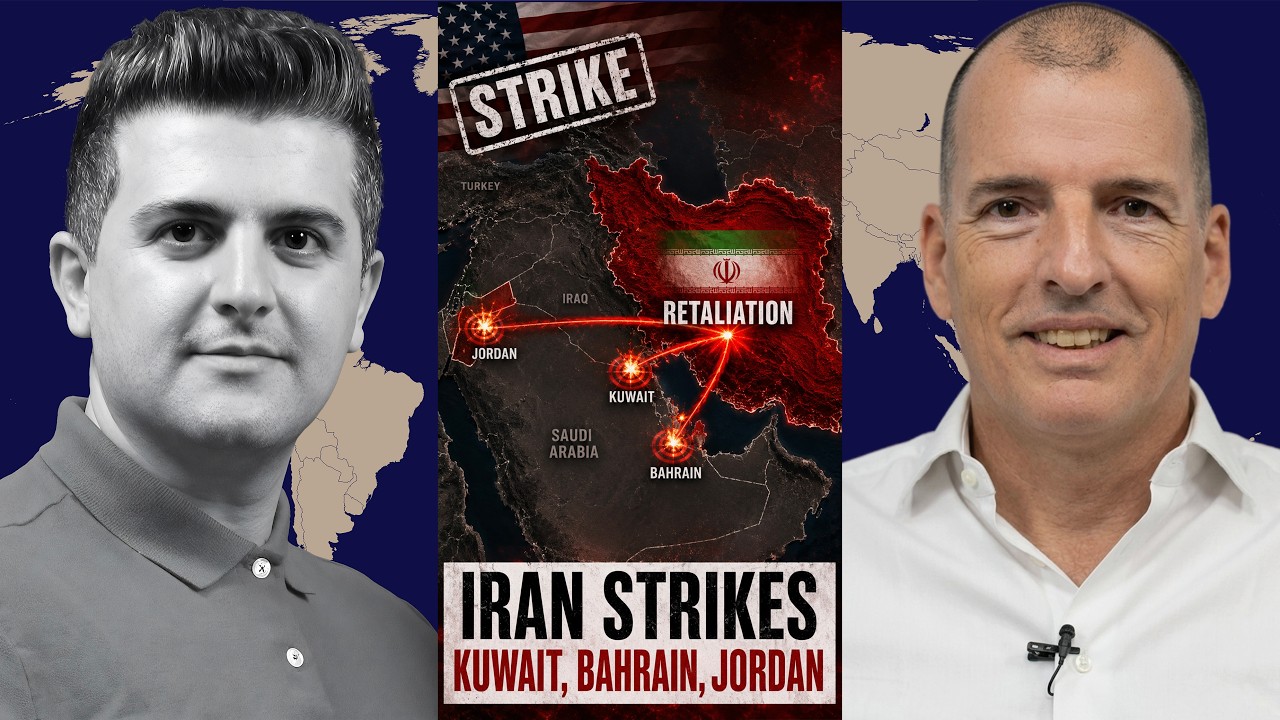
Alex Krainer: US STRIKES Iran – Iran RETALIATES Against Kuwait, Bahrain & Jordan!
"Amidst escalating US-Iran conflict and Iranian retaliation against regional US allies, this episode argues that US foreign policy is deeply controlled by an 'Anglo-Zionist conspiracy' led by the Rothschild banking dynasty, prioritizing Israeli interests over American ones."