
War Escalates FAST: Iran’s Massive Response Catches US-Israel Off Guard | Nima R. Alkhorshid
YouTube · m2-TiWNumcI
Quick Read
Summary
Takeaways
- ❖US/Israel's psychological operations against Iran, including rumors of internal collapse and leadership assassinations, have failed.
- ❖US/Israeli forces are targeting Iranian schools, universities, hospitals, steel factories, nuclear sites, and water facilities due to a lack of accurate military intelligence.
- ❖Iran has successfully purged Israeli intelligence agents and is experiencing growing internal unity and public support for its government.
- ❖Iran possesses advanced domestic missile capabilities, including hypersonic missiles, and is prepared for a long-term conflict (7-8 years).
- ❖Iran's strategic objectives include removing the US from West Asia, controlling the Strait of Hormuz, and potentially withdrawing from the Nuclear Non-Proliferation Treaty (NPT).
- ❖The speaker claims the USS Gerald Ford aircraft carrier was hit by Iranian missiles/drones, signifying US military defeat in the Persian Gulf.
- ❖Donald Trump's actions are portrayed as driven by a personal obsession with historical legacy rather than sound strategic objectives.
Insights
1Failure of US/Israeli Psychological Warfare and Intelligence
The speaker asserts that US and Israeli attempts to destabilize Iran through psychological warfare, including spreading rumors of internal collapse, assassinating leaders, and fabricating political cooperation, have completely failed. This failure is attributed to weak intelligence, forcing them to resort to targeting civilian infrastructure.
Rumors about General Kani and Hassan Rouhani cooperating with Trump/Israel (, , ). Claims of Mossad's widespread presence proved false (). JD Vance's alleged phone call with Netanyahu revealing inaccurate Mossad intelligence (). US/Israel hitting schools, universities, hospitals, and water facilities (, ) because they 'don't know where are the targets' ().
2Iran's Growing Unity and Domestic Resilience
Despite external pressures and attacks, the Iranian people are uniting and growing stronger, unaffected by Western mainstream media due to a domestic internet. This unity is a direct counter-effect of US/Israeli civilian targeting, which the speaker claims backfires by fostering greater support for the Iranian government.
People in Iran are 'not that much connected with what is happening in the mainstream media in the west' (). 'Unity that is happening and is growing and is getting stronger inside of Iran' (). 'As you hit civilians, they're going to be more they're going to be closer... people are in Iran are furious' ().
3Escalation to Civilian and Critical Infrastructure Targeting
The US and Israel have escalated their attacks to include non-military targets such as schools, universities, hospitals, steel factories, two nuclear sites (Bushehr and Arak), and water facilities. This is framed as a desperate measure due to the inability to locate and effectively target Iran's military-industrial complex.
Three universities hit in Tehran and Isfahan (). 'Destroying the Iranian infrastructure when it comes to the education when it comes to the health everything' (). Attacks on steel factories, nuclear sites in Bushehr and Arak, and water facilities in Halfkill (, ).
4Iran's Advanced Military Capabilities and Long-Term Strategy
Iran has developed robust domestic military capabilities, including advanced ballistic and hypersonic missiles, and is prepared for a prolonged conflict of 7-8 years. Their strategy focuses on hitting US/Israeli radars and logistics, aiming to remove the US from West Asia and potentially withdraw from the NPT.
Iran has the capability of producing ballistic missiles, and the US 'don't have hypersonic missiles' (, ). Iran can continue the war 'at least for seven or eight years' (). Iran's objective is 'radars, logistics' (). Iran will 'sooner or later... withdraw from NPT' ().
5US Military Defeat in the Persian Gulf
The speaker claims the US military has been strategically defeated in the Persian Gulf, citing instances like the USS Gerald Ford being hit by Iranian missiles and drones. He argues that US bases in the region are vulnerable, and deploying expensive assets like radars is a 'losing game' against Iran's cheaper missile capabilities.
USS Gerald Ford 'was hit by Iranian missiles and drones' (). 'The United States is militarily defeated, militarily and strategically defeated in the Persian Gulf' (). '15 air bases were attacked. 17 air bases were attacked and destroyed. All those radars in this air bases were destroyed by Iranian you know missiles and drones' (, ).
Bottom Line
Iran's strategy includes deliberately hitting facilities in certain Arab states (Saudi Arabia, UAE, Kuwait) to 'keep them in the fight' and ensure they are perceived as enemies, thereby preventing regional unity against Iran.
This suggests Iran views some Arab states not as neutral parties but as active participants in the conflict, using targeted strikes to reinforce this perception and manage regional alliances.
Analysts should closely monitor shifts in Arab state responses and alliances, particularly how these targeted strikes influence their long-term foreign policy and security postures relative to Iran and the US.
The speaker claims that Donald Trump's insult to the Saudi Crown Prince ('kiss his rear end') was a profound political 'nuke' in Arabian culture, potentially creating significant internal turmoil and shifting Saudi Arabia's stance on the conflict.
This highlights the critical importance of cultural context in international relations and how seemingly minor diplomatic gaffes can have major geopolitical repercussions, potentially driving a wedge between the US and key Arab allies.
Observe Saudi Arabia's long-term alignment and any subtle or overt shifts in its relationship with the US and Israel, as well as its engagement with regional powers like Iran or Turkey.
The speaker suggests that Israel benefits from Iran attacking Arab states' oil and desalination plants, as it weakens potential Arab rivals and solidifies Israel's position as the primary US ally in the region.
This implies a complex, multi-layered conflict where the weakening of one adversary (Arab states) by another (Iran) indirectly strengthens a third party (Israel), complicating any straightforward 'us vs. them' narrative.
Analyze the economic and political stability of Gulf Arab states in the aftermath of any strikes, and how their weakened positions might alter regional power balances and their dependence on external security guarantees.
The speaker claims that Arab states buying advanced US fighter jets like the F-35 are unable to use them against Israel or even to defend their own allies (like Qatar) without US permission, rendering them ineffective for independent defense.
This suggests that military sales to US allies in the region come with significant operational restrictions, limiting their sovereignty and effectiveness in regional conflicts, effectively making them dependent on US strategic objectives.
Examine the terms and conditions of US military sales to Middle Eastern countries and assess their true operational autonomy in regional conflicts, especially when US interests might diverge from their own.
Lessons
- Monitor Iranian statements and actions regarding the Nuclear Non-Proliferation Treaty (NPT) for any signs of withdrawal, which would signal a major escalation in its nuclear program.
- Analyze US/Israeli targeting patterns for continued emphasis on civilian infrastructure, which, according to the speaker, indicates intelligence failures and could further galvanize Iranian public support.
- Observe shifts in the foreign policy and defense postures of Gulf Arab states, particularly Qatar and Oman, for moves towards neutrality or reduced alignment with US/Israeli interests, as Iran's strategy aims to exploit such divisions.
Notable Moments
The speaker states the current date is Sunday, March 29th, 2026, framing the entire discussion from a future perspective.
This establishes a specific temporal context for the conflict, presenting events as ongoing or recently concluded within this future timeline, lending a sense of immediacy and predictive authority to the speaker's analysis.
The speaker claims the USS Gerald Ford aircraft carrier was hit by Iranian missiles and drones, dismissing official US explanations of a laundry room fire.
This assertion, if true from the speaker's perspective, represents a significant military victory for Iran and a major defeat for the US, challenging the narrative of US naval dominance in the Persian Gulf and indicating a new level of Iranian capability.
The speaker details Donald Trump's alleged motivations, including an obsession with winning a Nobel Peace Prize and securing a legacy in Israeli history by moving the embassy to Jerusalem and 'defeating Iran.'
This provides a psychological profile of a key global leader, suggesting that personal ambitions and ego are driving critical geopolitical decisions, rather than purely strategic considerations, which could lead to unpredictable outcomes.
Quotes
"The most important part of this war, this war is the psychological one."
"The United States is militarily defeated, militarily and strategically defeated in the Persian Gulf."
"As you hit civilians, they're going to be more they're going to be closer. they're going to get closer to the Iranian government to the policies and people are in Iran are furious."
"Donald Trump didn't change Benjamin Netanyahu. Donald Trump became Benjamin Netanyahu."
Q&A
Recent Questions
Related Episodes

The Fat Electrician Vs Tactically Acquired | Unsubscribe Podcast 267
"This episode features military content creators discussing current geopolitical hotspots, advanced weaponry, and the surprising psychological warfare tactics of modern conflict, alongside their personal journeys building online communities."

Patrick Henningsen: Hezbollah JUST Fired Back at Israel - Iran Vows to “Crush” All Attacks
"Patrick Henningsen argues that the US and Israel initiated an illegal war against Iran, driven by Trump's incompetence and Israeli influence, leading to an inevitable escalation with severe global economic repercussions."

Bibi DEMANDS Ground Troops As Marines Rushed to Iran
"Benjamin Netanyahu is pushing for US ground troops in Iran, framing air strikes as insufficient, while the US rushes Marines to the region and struggles to secure the Strait of Hormuz against surprisingly capable Iranian defenses."
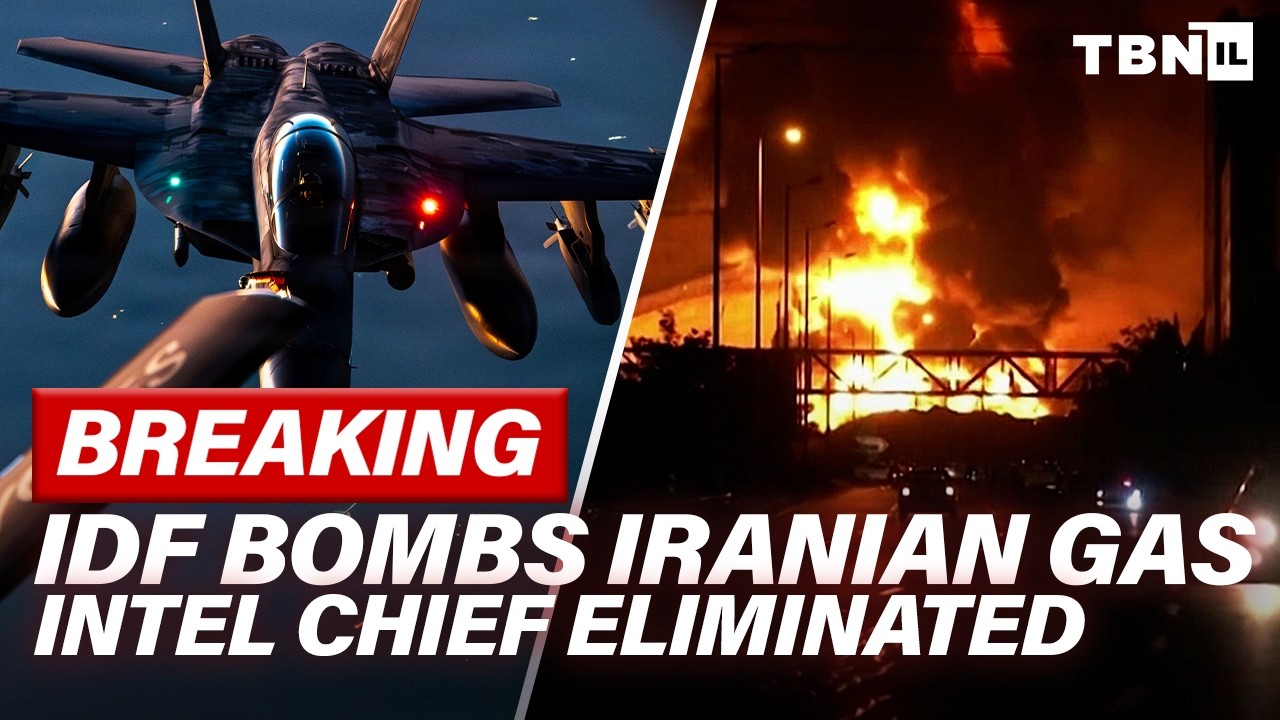
BREAKING: Israel BOMBS Major Iran Gas Site; Top Mullah ELIMINATED; Iran Vows VENGEACE | TBN Israel
"Israel and the United States have escalated their 'Roaring Lion War' against Iran, striking its largest gas facilities, eliminating key intelligence and military figures, and disrupting missile production, while Iran threatens a broader energy war in the Gulf."