
Stanislav Krapivnik: Iran & US Prepare MASSIVE Firing Power as Talks Going Nowhere
YouTube · mH8FCgM67Aw
Quick Read
Summary
Takeaways
- ❖The US seizure of an Iranian commercial vessel 'Tuska' has effectively ended the ceasefire in the Persian Gulf.
- ❖Negotiations between the US and Iran are deadlocked over Iran's uranium enrichment and sovereignty over the Strait of Hormuz.
- ❖The US military is perceived as significantly overstretched and under-resourced for a major conflict with Iran, which possesses formidable defensive capabilities.
- ❖A US attack on Iranian infrastructure could trigger a regional humanitarian catastrophe and lead to the collapse of US allies in the Gulf.
- ❖A high-value US MQ-4C Triton drone reportedly disappeared in the Persian Gulf, possibly captured by Iran using advanced electronic warfare tactics.
Insights
1US Seizure of Iranian Vessel Escalates Conflict
The United States seized an Iranian commercial vessel, the 'Tuska,' in the Arabian Sea, firing upon its engine room and taking control. This act is framed as piracy and a 'double slap' to Iran, effectively ending the existing ceasefire and pushing the region towards direct military confrontation.
The United States has seized or somehow take the control of one of the Iranian commercial vessels in in close to the Arabian Sea. The vessel is called Tuska and he was going in that direction that it was right now is under the control of the United States. They fired at him at the engine room and then they took it. That's right. Now he's in custody of the United States. (, , ) If I was Iran at this point, I would be sending a few American ships to the bottom. That because you know that that's piracy. The US is conducting piracy against the Iranian ships in Iranian territorial waters. That's a double slap. (, )
2Sticking Points: Uranium and Strait of Hormuz
Negotiations between the US and Iran are stalled on two key issues: Iran's uranium enrichment and the US demand for control over the Strait of Hormuz. Iran views both as non-negotiable, zero-sum issues, with the US seeking to acquire Iranian uranium for its own energy needs and control a vital shipping lane.
There were two key issues that couldn't be resolved in these negotiations... What do you do with the uranium? (, ) The US wants Iran to give up sovereignty of of its territorial waters uh the straits of Harmus. () These two cases are zero some nature issue and Iran cannot back down on them. (, )
3US Military Overextension and Vulnerability
The US Navy is described as having the same mission as during the Cold War but with less than half the ships, leading to exhausted personnel, low morale, and incomplete training. US naval assets in the Strait of Hormuz are highly vulnerable to Iran's extensive defensive capabilities, including land-based missiles, underground bases, speedboats, and drones.
The US Navy has the same mission it had during the cold war but it has less than half the ships that it had during the cold war. A lot of people are exhausted. A lot of people have left. A lot of these ships do not have full garrisons or full compliments and a lot of people are not fully trained and morale uh was crap before. (, ) You just feel absolutely exposed because you know there's mountains with missile launchers somewhere in them on them in them also because you know there's bases underground uh and and speedboats and drones underwater drones water drones air drones. (, )
4Iran's Formidable Defensive Capabilities
Iran is characterized as a 'natural fortress' with 70% mountainous terrain, fortified paths, and a standing army of one million, capable of mobilizing up to 10 million men for national defense. This makes a US ground invasion practically impossible, requiring millions of troops and years of preparation that the US currently lacks.
Iran is a natural fortress. 70% of the countries is mountains, high mountains... any path through those mountains is covered by fortifications. Iran's been preparing for a long time. Iran has a million men under arms can easily if if it's a full national invasion, they'll just mobilize everyone they can. You'll get 10 million men under arms in defensive positions in mountains. (, ) US would need about 3 to four million men for that. And again, you got to be able to feed them, arm them, keep them in a field, keep the logistics there, and be able to command the air to keep the logistics from being destroyed by missiles coming in. (, )
5Catastrophic Regional Impact of US Attacks
If the US were to destroy Iran's electric power grids or desalination plants, Iran would retaliate by targeting similar infrastructure in allied Gulf countries like the UAE, Qatar, and Saudi Arabia. This would lead to a rapid humanitarian crisis, with tens of millions of deaths within days due to lack of water and electricity, and the collapse of US bases in the region.
If he destroys Iran's uh electric power grids, he goes after desalination plants, Iran's going to respond uh to that by taking out everything that is in the southern uh Persian Gulf. (, ) If Iran even takes out the electric power plants in countries like the United Arab Emirates... if it does that to Qatar if it does that to the Saudis even taking out the electric power plants the deselination plants stop and you're looking possibly at tens of millions of dead people within two three days. (, )
6Disappearance of High-Value US Drone
A $240 million US MQ-4C Triton drone, more expensive than two F-35s, reportedly disappeared in the Persian Gulf. It is speculated that Iran may have shot it down or, more likely, seized control of it by exploiting a brief communication gap during its handover from launch control to Nevada headquarters, similar to previous drone captures.
This drone is MQ4C Triton. Yeah, it's treated. It's called $240 million. It cost more than two F-35. And you know, they said they reported the United States reported that it was disappeared in the Persian Gulf. And they don't know if Iran shot it down or Iran somehow took the control of the drone and it's in the hand of Iranians right now. (, ) When they use it to in the Persian Gulf, when they, you know, when when you send it up in the air and there is a crucial moment that the people in Nevada who are controlling these drones going to get the control of the drone, there is some sort of gap. It's going to be less than I don't know if it's going to be two minute, one minute, less than one minute 30 seconds. They have this crucial time to to get it's all encrypted. They have to connect to the drone. (, )
Lessons
- Policymakers should urgently re-evaluate the strategic objectives and military capabilities in the Persian Gulf, considering the high costs and low probability of success for a direct confrontation with Iran.
- Businesses reliant on global shipping or energy should assess and mitigate risks associated with potential disruptions in the Strait of Hormuz due to escalating US-Iran tensions.
- Defense strategists should analyze Iran's asymmetric warfare capabilities and defensive fortifications to understand the limitations of conventional military approaches in the region.
Quotes
"If 90% is a valley and the last 10% is Mount Everest, you could be 90%, you could be 10%, but you ain't going to get to the top."
"The US is conducting piracy against the Iranian ships in Iranian territorial waters. That's a double slap."
"The US Navy has the same mission it had during the cold war but it has less than half the ships that it had during the cold war."
"If the US fired every single damn missile it has, when the smoke cleared, Iran would still be standing there and most of Iran's missiles which are protected would still be there."
"Iran is a natural fortress. 70% of the countries is mountains, high mountains."
"The American system is so freaking open for corruption, it's made for corruption."
Q&A
Recent Questions
Related Episodes
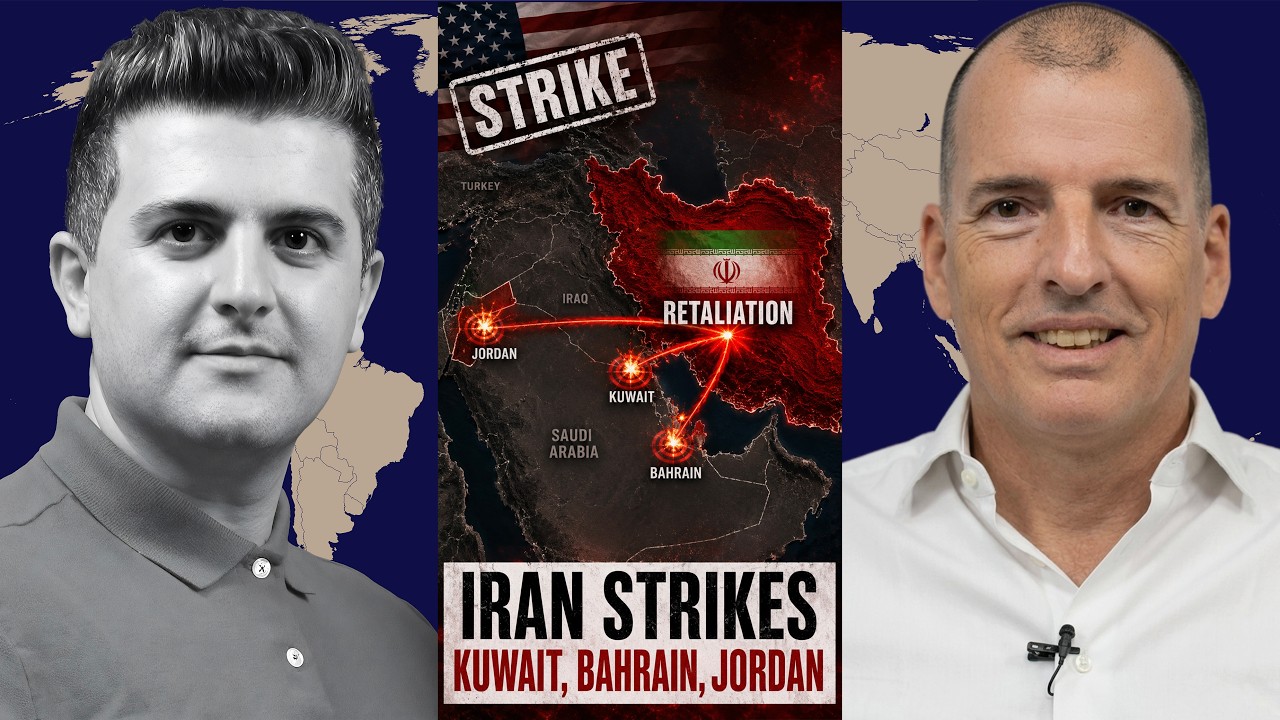
Alex Krainer: US STRIKES Iran – Iran RETALIATES Against Kuwait, Bahrain & Jordan!
"Amidst escalating US-Iran conflict and Iranian retaliation against regional US allies, this episode argues that US foreign policy is deeply controlled by an 'Anglo-Zionist conspiracy' led by the Rothschild banking dynasty, prioritizing Israeli interests over American ones."

Patrick Henningsen: Hezbollah JUST Fired Back at Israel - Iran Vows to “Crush” All Attacks
"Patrick Henningsen argues that the US and Israel initiated an illegal war against Iran, driven by Trump's incompetence and Israeli influence, leading to an inevitable escalation with severe global economic repercussions."
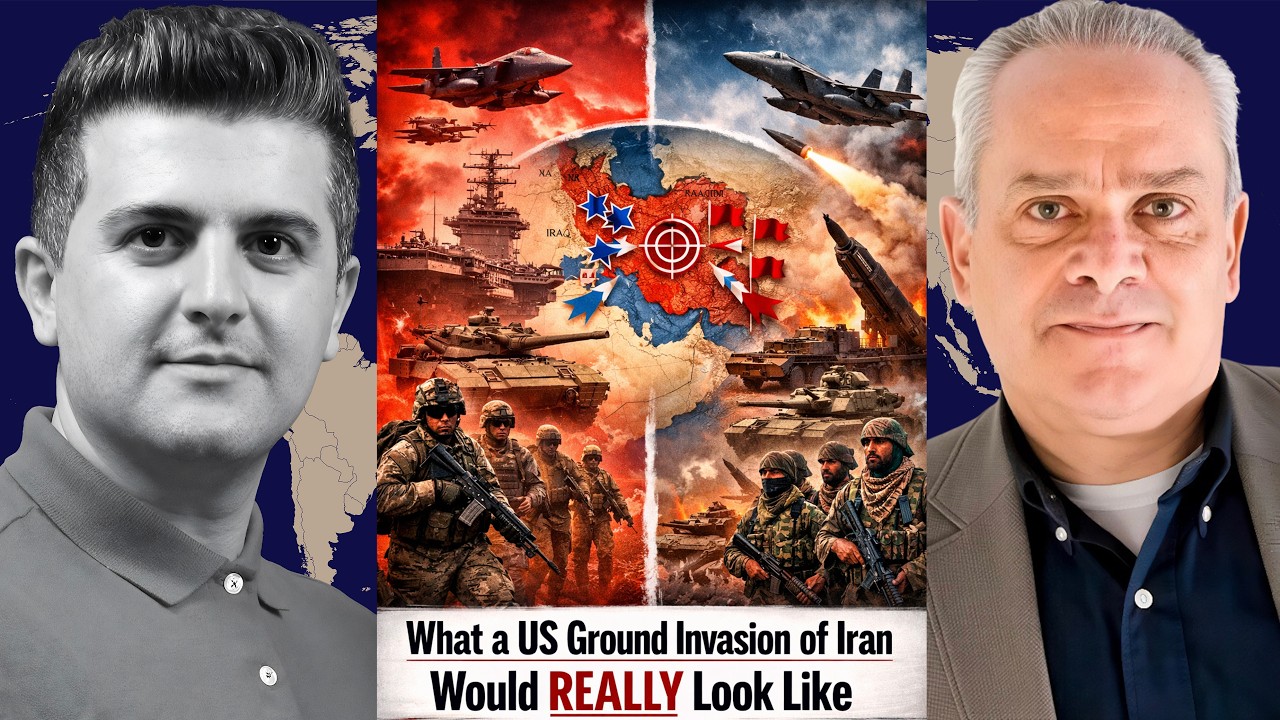
Col. Jacques Baud: What a US Ground Invasion of Iran Would REALLY Look Like
"Colonel Jacques Baud dissects the strategic futility of a US ground invasion of Iran, arguing that current troop levels are insufficient and such an action would backfire, exposing US allies and potentially leading to Iran's nuclearization."

Pentagon Prepares For EXTENDED War With Iran
"This episode dissects the geopolitical maneuvers surrounding potential US-Iran conflict, revealing strategic leaks, Netanyahu's diplomatic sabotage playbook, and the true intent behind economic sanctions."