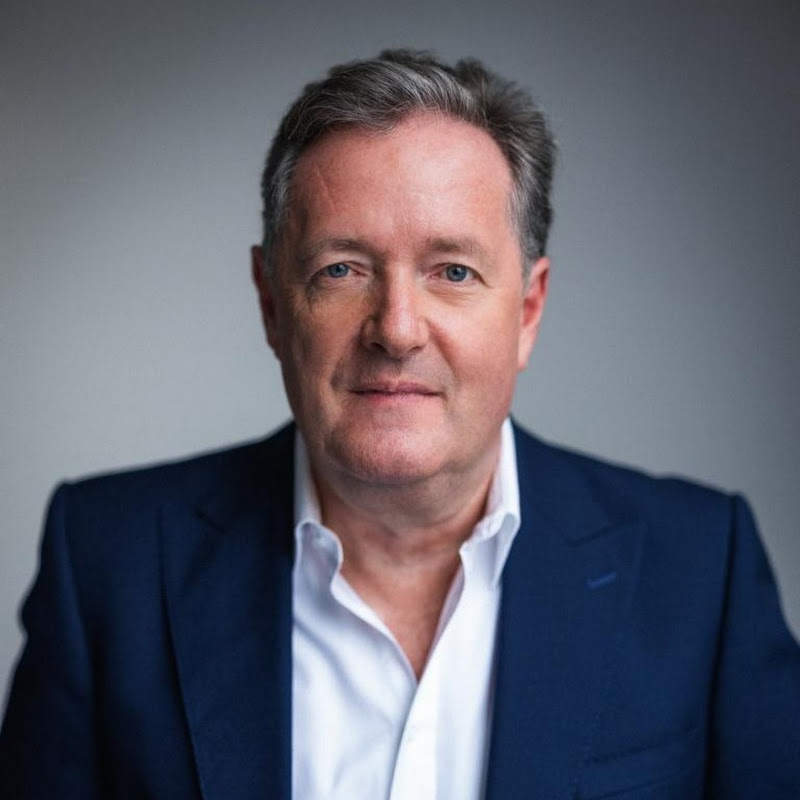
"Lying Us Into Wars Is TERRORISM!" MAGA Feuds Over Trump-Iran | Feat. Bill O'Reilly
YouTube · m_BQNhEPkYo
Quick Read
Summary
Takeaways
- ❖The Trump administration's Iran war is seen by critics as a miscalculation, particularly regarding Iran's economic retaliation via the Straits of Hormuz.
- ❖The conflict has exposed divisions within the MAGA coalition, with influential podcasters opposing the war despite core Republican support for Trump's actions.
- ❖Dave Smith controversially argues that US foreign policy, when it involves lying into wars and targeting civilians, constitutes 'terrorism,' drawing sharp criticism from Adam Snick and Ben Shapiro.
- ❖Former CIA Director Leon Panetta suggests the US and Israel were naive in expecting a quick regime change in Iran, underestimating the regime's entrenchment.
- ❖Bill O'Reilly defends Trump's decision, citing new intelligence about Iran's nuclear program and failed negotiations as triggers, while acknowledging miscalculations.
- ❖Jesse Ventura vehemently opposes the war, calling Trump a 'draft-dodging coward' and highlighting historical US interference in Iran as a root cause of animosity.
- ❖The influence of new media (podcasts, YouTube) in shaping political narratives and challenging mainstream views is a recurring theme, with Piers Morgan asserting its growing power.
Insights
1Trump's Iran War: A Policy Inconsistency and Coalition Fracture
Piers Morgan and guest Dave Smith argue that Trump's Iran war contradicts his 'America First' campaign promises to avoid costly Middle Eastern conflicts. This policy shift has alienated parts of his anti-establishment coalition, including libertarians and young men weary of 'woke' politics, who were drawn to his non-interventionist rhetoric. While core MAGA support for Trump remains high, this war is seen as potentially destroying the broader coalition needed for future electoral success.
Piers Morgan states Trump did 'exactly what he said he wouldn't do,' launching a war 'so close to the midterms' (). Dave Smith claims the coalition that got Trump elected 'has been destroyed' ().
2Miscalculation of Iran's Economic Retaliation
Former CIA Director Leon Panetta and Piers Morgan suggest that the US and Israeli administrations failed to adequately anticipate Iran's economic response, specifically the closure of the Straits of Hormuz. This move significantly impacts global oil prices and creates economic pressure, which was an 'obvious result' that appeared to catch decision-makers 'ill-prepared.'
Panetta notes, 'there wasn't a lot of time kind of considering the consequences of what could happen when you attack Iran... one of the first things that Iran would do is close the straits of Hormuz' (). Piers Morgan adds, 'the administrations of both countries appear to have been taken a bit by surprise or have they?' ().
3The 'Terrorism' Debate: US Foreign Policy under Scrutiny
Dave Smith provocatively claims that if 'terrorism' is defined as 'targeting civilians in order to affect a political change,' then the US military and the IDF are 'more guilty of it than anyone else over the last 25 years.' He cites examples like the embargo on Cuba and Israeli aid cuts to civilians. This assertion sparks a heated exchange with Adam Snick and draws strong condemnation from Ben Shapiro, who labels it 'idiotic' and 'hating the country.'
Dave Smith states, 'when our politicians lie us into wars that slaughter millions of innocent people... I consider that terrorism' (). He later clarifies, 'if you define terrorism as targeting civilians in order to affect a political change, then by that objective definition, the US military and the IDF are more guilty of it than anyone else over the last 25 years' ().
4China's Undiscussed Role in the Iran Conflict
Bill O'Reilly highlights China's significant, yet largely unaddressed, role in the Iran conflict. China relies on Iran for 80% of its oil, making it a critical player. O'Reilly suggests that secret negotiations between Washington and Beijing are likely occurring to de-escalate the situation, as China would not permit itself to be 'starved of energy.'
Bill O'Reilly states, 'The one factor that hasn't been reported or discussed is China. China gets 80% of Iran's oil. Did you know that, Pierce?' (). He adds, 'China is not going to allow itself to be starved of energy' ().
Bottom Line
The narrative of a 'MAGA split' over Iran, popular in liberal media, is 'complete fiction,' as polls show 'massive overwhelming support' for Trump's strikes among Republican voters.
This suggests that while certain influential podcasters (Tucker Carlson, Joe Rogan) may express dissent, the core Republican base remains loyal to Trump's foreign policy decisions, challenging the idea of a significant internal party schism.
Political strategists should focus on understanding the nuances of 'MAGA' as a coalition versus a core base, recognizing that while the base is unwavering, the broader coalition is more susceptible to policy shifts like foreign interventions.
The Trump administration's decision to strike Iran was influenced by new intelligence indicating Iran was 'weeks away' from enriching uranium for a nuclear weapon and a unique opportunity to target the 'Mullers' in one location.
This reframes the war not as an aggressive, unprovoked act, but as a preemptive strike based on perceived imminent threat and a tactical opportunity, according to Bill O'Reilly's sources.
Analysts should scrutinize the intelligence claims and the 'deal-making' context described by O'Reilly, as it presents a different motivation for the war than the 'regime change' narrative initially pushed by Trump.
Lessons
- Critically evaluate political narratives, especially those claiming widespread splits or consensus, by seeking out diverse sources and checking underlying data like poll numbers.
- Recognize the increasing influence of new media (podcasts, YouTube) in shaping political discourse and challenging traditional media's narratives, particularly among younger demographics.
- When assessing foreign policy decisions, consider the potential for economic retaliation and the roles of global powers like China, which may not be immediately apparent in public discussions.
Notable Moments
Dave Smith and Adam Snick engage in a highly personal and aggressive debate, with Snick accusing Smith of 'clickbait of the mouth' and lacking credibility, while Smith defends his controversial 'US as terrorist organization' statement.
This exchange exemplifies the polarization and often ad-hominem nature of contemporary political debates, particularly within the new media landscape, where substantive arguments can quickly devolve into personal attacks.
Jesse Ventura challenges Baron Trump to enlist in the military, stating, 'Do something your father didn't have the courage to do,' and criticizes Trump's WWE Hall of Fame induction as undeserved.
This moment highlights a common critique of political leaders who advocate for war without having served or sending their own children to conflict, and also underscores the intersection of politics and celebrity culture in America.
Quotes
"When our politicians lie us into wars that slaughter millions of innocent people, I consider that terrorism."
"The narrative that MAGA is split over Iran, beloved by the liberal media and the anti-Israel far-left and right, is complete fiction."
"I think it was a little naive because the intelligence indicated that the regime was much more entrenched than that."
"China gets 80% of Iran's oil... China is not going to allow itself to be starved of energy."
"A war is justified if you're willing to send your kids. Because how can you send somebody else's kids to a war if you won't send your own?"
"The hatred of America was started by America. It was not started by the Iranians. We interfered in their government way back in the 50s and overturned their democratic elected president."
Q&A
Recent Questions
Related Episodes
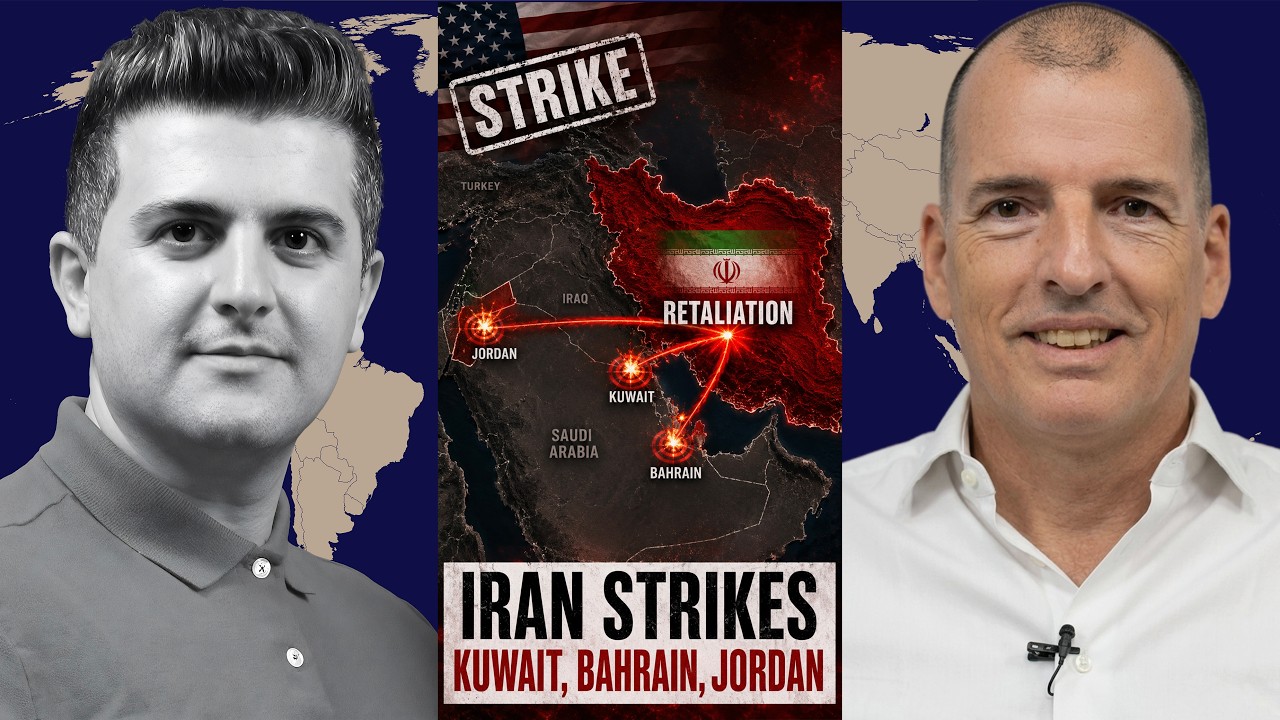
Alex Krainer: US STRIKES Iran – Iran RETALIATES Against Kuwait, Bahrain & Jordan!
"Amidst escalating US-Iran conflict and Iranian retaliation against regional US allies, this episode argues that US foreign policy is deeply controlled by an 'Anglo-Zionist conspiracy' led by the Rothschild banking dynasty, prioritizing Israeli interests over American ones."

Iran Update: Israel’s Newest Bombing Campaign, the Oncoming War With China and How to Avoid It
"Colonel Wilerson reveals how the US and Israel are actively bombing China's strategic infrastructure in Iran, escalating a covert economic war that Beijing intends to win without direct military conflict by dismantling the dollar's global dominance."

Will Venezuela Be Trump's Vietnam?
"An expert breaks down three perilous pathways for Venezuela under potential US intervention, from a 'Panamanian model' to a 'Libyan-style civil war,' and the broader geopolitical fallout for Latin America."

Trump Just ENDED JD Vance’s White House Dreams
"A New York Times article and internal White House dynamics reveal Donald Trump's deep dissatisfaction with J.D. Vance, potentially ending Vance's 2028 presidential ambitions and highlighting a broader struggle for control within the Republican Party."