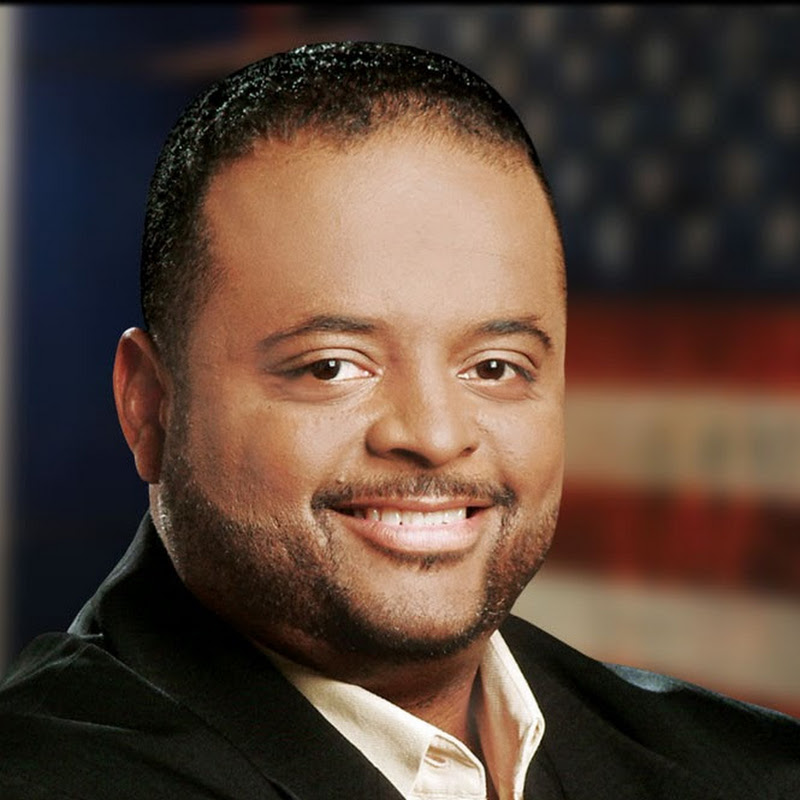
SCOTUS Weighs Birthright Citizenship. Black Census Mobilizes. Nick Cannon Backlash Explodes
YouTube · mwvCEpaCw0k
Quick Read
Summary
Takeaways
- ❖The Supreme Court is considering ending birthright citizenship, using arguments from the 1896 Plessy v. Ferguson case, which established 'separate but equal.'
- ❖This legal challenge is framed as a political strategy by the Trump administration and conservative justices to target undocumented workers and Black immigrants.
- ❖The Black Census, led by the Black Futures Lab, is conducting the largest survey of Black people in American history to inform a comprehensive Black agenda.
- ❖Celebrities like Nick Cannon and Amber Rose are criticized for spreading historically inaccurate claims, such as 'Democrats started the KKK' and 'Republicans freed the slaves,' without proper context.
- ❖Roland Martin provides a detailed historical analysis, emphasizing that 'whiteness' has been the consistent driver of anti-Black policies across both Democratic and Republican parties throughout American history.
- ❖The 'Lily White movement' within the Republican party and the 'Redeemers' are cited as examples of white supremacy operating across party lines post-Civil War.
- ❖Donald Trump's judicial appointments often refused to affirm the Brown v. Board of Education decision, mirroring historical resistance to desegregation.
- ❖Current Republican policies, including ending DEI, affirmative action, and specific settlements benefiting Black communities, are framed as manifestations of 'white fear' and a strategy to maintain white power.
- ❖Black Americans are urged to base their political decisions on current policies and facts, not on celebrity opinions or incomplete historical narratives.
Insights
1SCOTUS Birthright Citizenship Challenge Rooted in Racist History
The Supreme Court is considering the Trump administration's attempt to end birthright citizenship, a move blocked by a federal judge in July. Legal scholars note the administration is using arguments from the 1896 Plessy v. Ferguson case, which established 'separate but equal' and supported Jim Crow laws. These arguments were originally made by Alexander Porter Morris, a Confederate officer and segregationist attorney. The host and guests argue this is a political play by the 'MAGA Supreme Court' to target undocumented workers and Black immigrants, despite the 14th Amendment's clear application to anyone born in the U.S. since its 1868 ratification.
Trump's Truth Social post arguing the 14th Amendment only applies to children of enslaved people; citing 1896 Plessy v. Ferguson case; discussion of six conservative justices potentially overturning precedent like Roe v. Wade.
2Black Census: An Imagination Project for Black America
The Black Futures Lab launched the largest survey of Black people in American history, aiming to engage 300,000 African-Americans across all 50 states. Executive Director Kristen Pow describes it as an 'imagination project' for Black people to design what government and communities should look like, moving beyond just civic engagement and voting motivations. Previous surveys (2018, 2022) revealed deep distrust in institutions (police, federal/local government) and top concerns around economics, affordability (childcare, healthcare, housing), schools, and police relations. The current survey focuses on values and desired government systems.
Black Futures Lab aims for 300,000 participants; website blacksensuspro.org; previous surveys in 2018 (30k) and 2022 (211k); focus on 'dreams and what system of government would really work for them.'
3Historical Context: Deconstructing Celebrity Misinformation on Race and Politics
Roland Martin provides an extensive historical lesson to counter claims by celebrities like Nick Cannon and Amber Rose that 'Democrats started the KKK' and 'Republicans freed the slaves.' He clarifies that the Democratic Party was founded in 1792, and while Southern Democrats supported slavery and created the KKK, there were also Northern Democrats against slavery. The Republican Party was formed to oppose slavery. However, 'whiteness' consistently drove anti-Black policies across both parties, citing the 'Lily White movement' within the Republican Party (led by figures like Herbert Hoover) and 'Redeemers' who battled Black advancement. He details the 'Great Migration' of Black voters from the Republican to the Democratic Party due to shifts in civil rights platforms (e.g., JFK's actions, LBJ's Civil Rights Acts, Goldwater's opposition).
Discussion of Democratic Party founding (1792), Republican Party creation to oppose slavery; Southern Democrats creating KKK; 'Lily White movement' in Republican party (Herbert Hoover); 'Redeemers' movement; LBJ's 'Southern Strategy' prediction; Goldwater's opposition to 1964 Civil Rights Act; Nixon's 'Southern Strategy'.
4Modern Republican Party Driven by 'White Fear'
The host argues that the modern Republican Party is 'the party of whiteness,' driven by 'white fear' and a desire to maintain power amidst demographic shifts. This 'white fear' manifests in policies targeting DEI, affirmative action, and even the challenge to birthright citizenship. Examples include Senator Mike Lee's tweet about declining birth rates (interpreted as white birth rates) and the Trump administration's actions like pardoning cops convicted of violence against Black people, pulling out of environmental justice lawsuits in Black communities, and reversing settlements for Black residents affected by sewage issues.
Discussion of CPAC attendees' white nationalist views; Senator Mike Lee's tweet on declining birth rates (); Trump's pardons of convicted cops; Trump's DOJ pulling out of Briana Taylor indictments; Trump's reversal of environmental justice settlements in Louisiana and Alabama.
Bottom Line
The current Supreme Court's willingness to disregard established legal precedent (stare decisis) and reinterpret constitutional amendments based on 'originalism' poses a significant threat to civil rights, potentially reversing over a century of legal progress.
This judicial approach means that rights previously considered settled, like birthright citizenship or voting rights, are vulnerable to politically motivated reinterpretation, creating instability and potentially disenfranchising large segments of the population.
Advocacy groups and legal organizations must proactively identify and challenge these 'originalist' arguments, educating the public on their historical context and potential impact, while also pushing for judicial reforms that prioritize precedent and non-partisan interpretation.
The rise of 'white fear' and white nationalism within mainstream conservative politics is directly linked to demographic shifts and is being strategically leveraged by political leaders to mobilize a base through narratives of victimhood and cultural preservation.
This strategy intensifies racial polarization, fuels policies that actively harm non-white communities, and normalizes extremist ideologies, making it harder to address systemic inequalities and build a truly inclusive society.
Counter-narratives need to be developed and amplified that expose the political manipulation of 'white fear,' promote accurate demographic understanding, and highlight the benefits of diversity. This requires direct engagement with affected communities and robust historical education to inoculate against divisive rhetoric.
Key Concepts
Originalism (as a political tool)
The right-wing judicial philosophy of interpreting the Constitution based on the 'original intent of the framers' is used to justify narrow, restrictive readings of amendments like the 14th, allowing for the reversal of long-standing precedents and civil rights protections. This approach is seen as a political pathway to achieve desired outcomes rather than a neutral legal one.
Whiteness as a driving force in American politics
This model posits that the fundamental driver of American political history, particularly concerning race, is the preservation and advancement of 'whiteness' and white power, transcending specific party platforms or ideologies. It explains how both Democrats and Republicans, at various points in history, have enacted policies or held views that were anti-Black, demonstrating that racial oppression is deeply embedded in the nation's political fabric, not exclusive to one party.
The 'Simple Simon Negro' phenomenon
A recurring pattern, especially during election cycles, where Black individuals (often celebrities or influencers) promote simplistic, historically inaccurate, or anti-voting narratives that inadvertently serve to undermine Black political power and engagement, often due to a lack of historical depth or critical analysis.
Lessons
- Participate in the Black Census (blacksensuspro.org) to contribute to a data-driven agenda for Black communities and counter false narratives about Black priorities.
- Educate yourself on American history, particularly the nuanced and often anti-Black actions of both major political parties, to discern misinformation and make informed political decisions.
- Challenge celebrities and influencers who spread historically inaccurate or simplistic political information, demanding factual context and holding them accountable for their public statements.
- Support organizations and media platforms that provide in-depth, fact-based analysis of political and social issues, especially those focused on Black perspectives and empowerment.
Notable Moments
Discussion on the political nature of Supreme Court appointments and the concept of 'originalism' as a tool for conservative judicial outcomes.
This segment highlights how judicial philosophy can be weaponized to achieve political goals, directly impacting civil rights and constitutional interpretations, and underscores the importance of understanding judicial appointments beyond their stated legal principles.
Roland Martin's extensive historical breakdown of American political parties and race, debunking common myths about the KKK and slave liberation.
This provides critical context for understanding the complex relationship between race and politics in the U.S., demonstrating that 'whiteness' has been a consistent factor across party lines, and equips listeners to challenge historically inaccurate narratives.
Critique of celebrities like Chilli, Nick Cannon, and Amber Rose for their uninformed political commentary and the dangers of relying on such figures for historical or political guidance.
This emphasizes the responsibility of public figures to be informed and the need for audiences to critically evaluate information, especially from non-experts, to avoid being misled by 'half information' or 'historically inaccurate information.'
Quotes
"The 14th Amendment has applied to anybody actually born in this country. So conservatives, Republicans, MAGA, they have been opposing what they call anchor babies."
"You cannot separate this analysis of the 14th Amendment law that has been established for well over 150 years and the current mess that exists within MAGA country. You see, it's primarily non-white people being born in the United States and they're scared."
"The problem is that when you when every time we have a Supreme Court nomination hearing, they talk about stare decisis, precedent, but the reality is there really is no such thing as precedent because a Supreme Court can overrule a previous decision."
"What Donald Trump and what they have been arguing is that the original intent of the 14th Amendment was not for it to apply to anybody in the future. They're arguing that it the intent that it only applied to the children of formerly enslaved people of African descent."
"We have a Supreme Court. These justices, they don't care... This is a Supreme Court that is hellbent on reversing the rights of pretty much everybody who is not a, you know, a cisgendered white male."
"Democrats don't care about black people and they don't care about people they don't care about people of color and the Republicans do. And that's the misconception."
"People don't know that the Democrats is the party of the KKK. People don't know that the Republicans are the party that freed the slaves."
"American history has no party that is a savior for black people. American history shows that Republicans and Democrats have been anti-Black. And you've had Republicans and Democrats who been supportive of African-Americans."
"The problem we have today, we got folk who don't read, who don't study, and they choose to go to YouTube University and Tik Tok College and Instagram... That's the problem that we have today."
Q&A
Recent Questions
Related Episodes

Roland Checks Nick Cannon And Chilli. Black MAGA Claims Collapse
"Roland Martin meticulously debunks celebrity claims about Black support for Donald Trump and the historical roles of the Democratic and Republican parties, emphasizing the critical importance of historical context and factual accuracy."

Trump Impact On Black America. SCOTUS Birthright Citizenship Case. Alabama College DEI probe
"This episode dissects the multifaceted impacts of Trump-era policies on Black America, from economic destabilization and civil rights rollbacks to an inspiring narrative of an entrepreneur rebuilding her life and community."

Scott Jennings Notices Something in Trump’s Chilling Warning No One Noticed
"Dave Rubin dissects Donald Trump's aggressive Iran strategy and the ensuing political polarization, arguing that Democrats are actively undermining American success and national identity through policies like birthright citizenship and DEI."

Trump Impact On Black America. SCOTUS Birthright Citizenship Case. Alabama College DEI probe
"This episode details the extensive impact of Trump administration policies on Black Americans, from legal challenges to birthright citizenship and DEI initiatives to the economic resilience of Black women entrepreneurs."