
Unc, Ocho & Iso Joe react to UFC Freedom 250: Gaethje def Topuria, Gane def. Pereira | Nightcap
YouTube · nO0sv0aSpsA
Quick Read
Summary
Takeaways
- ❖Justin Gaethje's victory over Ilia Topuria was a masterclass in jab utilization, faints, and maintaining distance, leading to a knockout.
- ❖Ciryl Gane's TKO win against Alex Pereira demonstrated the challenges of a middleweight moving up to heavyweight, impacting speed and power.
- ❖Jon Jones reportedly rejected a $15 million offer, seeking $30 million, highlighting top fighters' awareness of their market value and the UFC's revenue streams.
- ❖Jalen Brunson's decision to sign a smaller contract to allow the Knicks to build a championship-contending team is praised as a blueprint for prioritizing team success.
- ❖The hosts argue that politics and sports are inherently intertwined, citing historical examples and recent events like the White House MMA fight and Josh Hokkei's controversial post-fight comments.
- ❖Fighters like Angel Reese, despite lower shooting percentages, demonstrate immense value through relentless effort and offensive rebounding, akin to a 'modern-day Dennis Rodman'.
Insights
1Justin Gaethje's Strategic Masterclass Against Ilia Topuria
Gaethje executed a flawless game plan, using a stiff jab to control distance and inflict damage, setting up an overhand right. His faints were crucial in catching Topuria off guard, leading to a knockout victory and the undisputed lightweight championship.
Gaethje told them last week what he was going to do: 'I'm gonna make that pretty face... ugly.' He used the jab to punish Topuria, caught him coming in, and utilized faints effectively. Topuria made no adjustments despite repeatedly getting hit with the same jab.
2The Challenges of Weight Class Jumps: Alex Pereira's Heavyweight Struggle
Alex Pereira, a former middleweight, moved up to heavyweight to fight Ciryl Gane. Despite his power, the significant weight gain (from 185 lbs to 251 lbs) likely impacted his speed and agility, making him a more sluggish target against the quicker, more polished Gane.
Pereira moved up from middleweight (185 lbs) to heavyweight, weighing 251 lbs for the fight. The hosts observed him looking sluggish and walking into punches, suggesting the weight gain hindered his performance against Gane's speed and precision.
3Fighter Compensation and Market Value in UFC
Top-tier UFC fighters, like Jon Jones, are increasingly aware of their significant draw and the revenue they generate. Jones reportedly turned down a $15 million offer, seeking $30 million, understanding that the UFC's valuation and overall revenue streams (TV deals, gates, advertising) justify higher pay for star attractions.
Jon Jones was offered $15 million for one fight and turned it down, reportedly wanting $30 million. The hosts discuss how fighters see the UFC's sale price, CEO's earnings, and TV revenue, realizing their contribution to gate and viewership makes them deserving of a larger share.
4Jalen Brunson's Blueprint for Championship Team Building
Jalen Brunson's decision to sign a 4-year, $156 million contract extension, leaving $113 million on the table, allowed the New York Knicks to acquire additional talent and build a championship-contending roster. This strategy prioritizes team success over individual maximum earnings, with the expectation of a larger contract later once a championship is achieved.
Brunson left $113 million on the table by signing a $156 million deal, stating it was '100% worth it' for the journey to achieve a championship. This enabled the Knicks to acquire players like Mikal Bridges and OG Anunoby. He is now projected for a 5-year, $418 million extension.
Bottom Line
The 'lead wins the fight' principle in MMA, where the first significant strike (often a jab) dictates the pace and outcome, is a recurring theme across multiple fights in UFC Freedom 250.
This highlights the critical importance of a strong opening and effective range control in striking-heavy matchups, suggesting that fighters who establish their lead early gain a significant psychological and tactical advantage.
Fighter training could emphasize 'first strike' drills and defensive counters to early leads, while analysts could predict fight outcomes by evaluating fighters' historical success with opening exchanges.
The value of a player like Angel Reese, who excels in effort, rebounding, and 'dirty work' despite lower shooting efficiency, is often underestimated but crucial for team success.
This challenges the conventional focus on scoring efficiency as the primary metric for player value, suggesting that 'motor' and offensive rebounding can be equally, if not more, impactful in certain team dynamics.
Teams should prioritize scouting and developing players with high motors and complementary skill sets, even if their scoring numbers aren't elite, recognizing their potential to elevate team performance through sheer effort and hustle stats.
Lessons
- For aspiring MMA fighters: Develop a potent jab and master faints to control distance and set up power shots, as demonstrated by Justin Gaethje.
- For athletes and agents: Understand your true market value beyond initial offers, and consider the long-term career benefits of team success over maximizing every dollar in early contracts, as seen with Jalen Brunson.
- For sports organizations: Recognize that top-tier talent is increasingly aware of their financial leverage; fair compensation is crucial for retaining stars and maintaining competitive integrity.
Notable Moments
Josh Hokkei's controversial post-fight comments at the White House MMA event, where he made disparaging remarks about Michelle Obama.
This moment sparked a debate on the intersection of sports and politics, with the hosts arguing that politics has always been intertwined with sports, and criticizing Hokkei's choice of 'low-hanging fruit' for controversy rather than focusing on his opponent.
The discussion about Jon Jones's contract negotiations, where he reportedly turned down $15 million, seeking $30 million.
This highlights the growing financial savviness of top athletes who understand their market value and the revenue they generate for organizations like the UFC, leading to significant negotiation impasses.
Jalen Brunson's decision to take a smaller contract with the Knicks to enable the team to build a championship roster.
This is presented as a 'blueprint' for star players prioritizing team success and long-term legacy over immediate maximum earnings, with the expectation of a larger payout after achieving collective goals.
Quotes
"I'm gonna make that pretty face. I'm gonna make it ugly, and I'm going to walk out of there with the belt."
"All it takes is a clip. All it takes is one little shot. So you're really never out of the fight."
"You can't say that when when when you're having a a fight, a sport, a sporting event at a White House, which that intertwines politics and sports. It's always been sports and politics."
Q&A
Recent Questions
Related Episodes
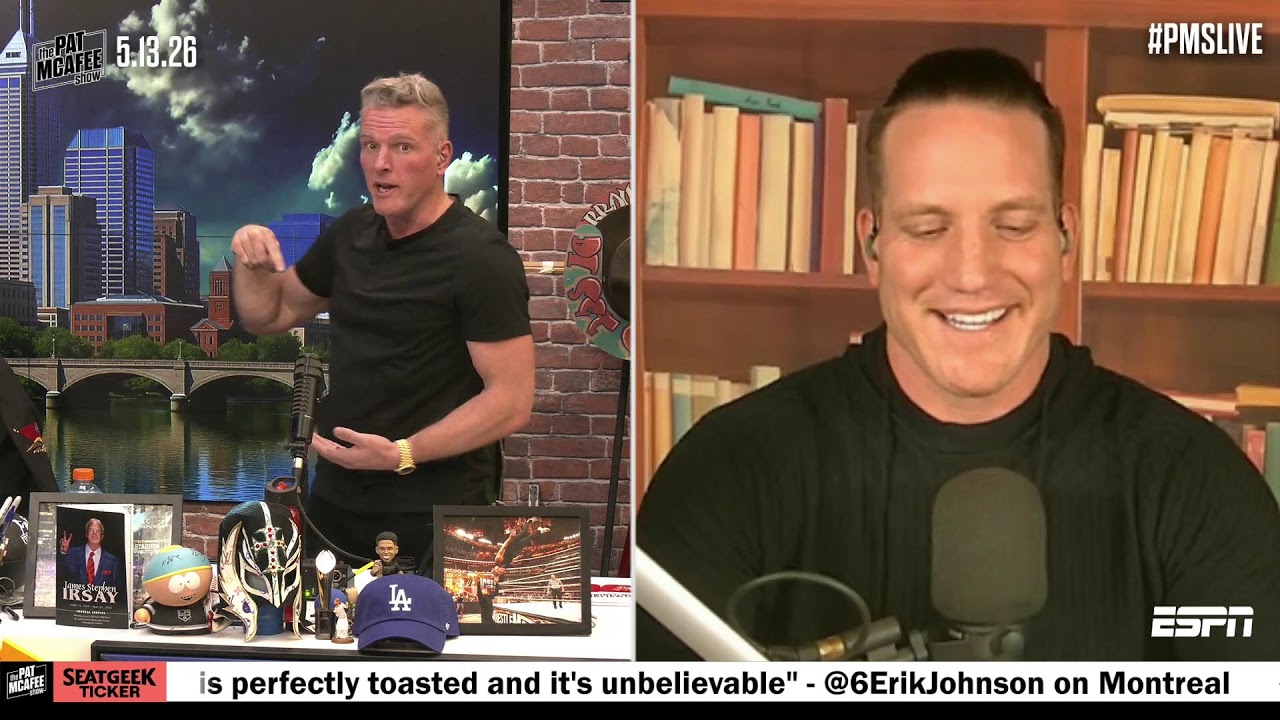
The Pat McAfee Show Live | Wednesday May 13th 2026
"Pat McAfee and guests dive into the latest in sports, from NBA playoff drama and NFL international expansion debates to Ronda Rousey's MMA return and college football buzz, all while sharing wild behind-the-scenes stories from the Disney upfronts."

PBS News Hour full episode, June 12, 2026
"The U.S. and Iran inch closer to a contentious peace deal amidst conflicting terms, while President Trump hosts a UFC cage fight on the White House lawn, and Gaza's children struggle for education in war-torn conditions."

Joe Rogan Experience #2498 - Brendan Schaub
"Joe Rogan and Brendan Schaub dive into controversial UFC fight outcomes, the economics of fighter pay, the pervasive impact of social media, and their shared passion for high-performance cars."

Unc, Ocho & Iso react to Cavs beat Hawks, Cade returns, JJ Redick drama brewing w/ Lakers | Nightcap
"The hosts dissect critical NBA playoff races, the financial implications of player contracts, and the brewing internal drama within the Lakers, offering strong opinions on player power and team management."