Trump's Credit Card CAP, Musk's Iran Move, 50% OnlyFans Tax + Efran Soltani Execution | PBD Podcast
YouTube · nWduFqy0-jc
Quick Read
Summary
Takeaways
- ❖Argentina's prompt repayment of a $2.5 billion currency swap has significantly boosted its international financial credibility, challenging past perceptions of default.
- ❖The 'Buy Now Pay Later' (BNPL) market is experiencing rapid growth, but high rates of missed payments, especially among Gen Z (50%), indicate a looming debt crisis exacerbated by often undisclosed high fees.
- ❖Trump's proposal for a 10% cap on credit card interest rates, while popular, could lead banks to reduce credit availability for riskier, lower-income borrowers, potentially driving them to less regulated alternatives.
- ❖The US threat of 25% tariffs on countries doing business with Iran aims to further suffocate the Iranian regime but risks accelerating the development of a parallel, non-dollar-based global financial system led by China.
- ❖Elon Musk's Starlink is a critical geopolitical tool for providing internet access in censored regions, but its de facto control by one individual (Musk) raises concerns about potential misuse or leverage.
- ❖The millennial career crisis reflects a disconnect between traditional education and current economic realities, with many graduates struggling with student debt and home ownership, highlighting the need for critical thinking and adaptable skills over conventional degrees.
- ❖The disappearance of sub-$20,000 new cars in the US is driven by increasing regulatory costs and thin profit margins for automakers, pushing the market towards wealthier buyers and reinforcing a 'rental generation' mentality for transportation.
- ❖A Florida gubernatorial candidate's proposal for a 50% tax on OnlyFans earnings, framed as a moral intervention, is criticized by the panel as populist market interference, akin to 'socialist' policies.
Insights
1Argentina's Fiscal Turnaround and Enhanced Credibility
Argentina, under President Milei, repaid a $2.5 billion currency swap from the US two months ahead of schedule. This move, following a period of high inflation (200% down to 31.5%), has significantly boosted Argentina's international credibility, transforming its image from a historically unreliable borrower to a fiscally responsible nation. The US taxpayer even earned tens of millions in interest from the short-term loan.
Argentina repaid $2.5 billion of a possible $20 billion currency swap. Inflation dropped from 200% to 31.5%. Scott Bessant of the US Treasury confirmed the repayment and continued support for President Milei.
2The Hidden Debt Crisis of 'Buy Now Pay Later' (BNPL)
The BNPL market saw a record $20 billion in spending during the 2025 holiday season, a 9.8% increase from the previous year. While marketed as interest-free, 41% of all BNPL users missed at least one payment last year, with this figure rising to 50% for Gen Z. Missed payments often trigger high late fees that can equate to effective annual interest rates exceeding traditional credit cards, trapping consumers in a 'bear trap' of debt. Many BNPL providers (like Klarna and Afterpay) do not report to credit bureaus, obscuring the true debt burden from traditional lenders.
Shoppers spent a record $20 billion with BNPL (Nov 1-Dec 31, 2025). 41% of BNPL users missed at least one payment last year; 50% of Gen Z users missed a payment since holiday spending. Affirm reports to credit bureaus, but Klarna and Afterpay generally do not.
3Trump's Proposed 10% Credit Card Cap: Unintended Consequences
President Trump proposed a one-year 10% cap on credit card interest rates, arguing current rates (averaging 23.79%) are exploitative. However, experts and the panel argue that such a cap would likely lead credit card companies to reduce credit limits and restrict access for higher-risk borrowers, disproportionately affecting the low-income individuals it aims to help. This would force them towards unregulated, higher-interest alternatives like loan sharks or less transparent BNPL services. Credit card issuers like Capital One and Amex operate on thinner margins (5-20%) compared to payment processors like Visa and Mastercard (45-55%), making a cap more impactful on the actual lenders.
Trump's Truth Social post called for a one-year 10% cap on credit card rates. Average credit card interest rate was 23.79% in January. Net profits for Visa are 47-52%, Mastercard 45%, Amex 14-20%, and Capital One around 5%.
4Weaponizing the Dollar: Tariffs on Iran and the Rise of a Parallel Financial System
Trump's declaration of a 25% tariff on any country doing business with Iran aims to further economically isolate the already struggling nation. While intended to pressure the Iranian regime, this 'weaponization' of the dollar accelerates the global trend towards de-dollarization. China is actively building a parallel financial system, settled in gold and using the Renminbi, with swap lines established with 32 countries. This alternative network allows nations to bypass US sanctions, diminishing the dollar's reserve currency status and long-term geopolitical leverage.
Trump stated, 'Any country doing business with Iran will face a 25% tariff.' Mark Moss noted China is setting up a parallel financial system through Hong Kong, settled in gold, with swap lines with 32 countries.
5Starlink's Geopolitical Power and the Need for Competition
Elon Musk's Starlink is emerging as a critical tool for providing internet access in regions experiencing government-imposed blackouts, such as Iran. Trump's intention to contact Musk for this 'key Iran mission' highlights Starlink's unique strategic importance. However, with Elon Musk holding de facto control over SpaceX (and thus Starlink), the concentration of such a vital communication network in one individual's hands raises concerns about potential monopolies, leverage, and the ability to dictate access. The panel emphasizes the need for multiple, competing low-Earth orbit (LEO) satellite internet providers (like Amazon's Kuiper or EU's Iris) to prevent a single entity from having undue influence.
Trump stated he would 'speak to Elon' about Starlink for Iran. Starlink is a division of SpaceX, privately held and controlled by Elon Musk (40% voting control, more via super-voting shares). Amazon's Kuiper is a major competitor, along with OneWeb and EU's Iris.
6Millennial Career Crisis: Outdated Education vs. New Opportunities
Many millennials (ages 29-44) are experiencing a 'career crisis,' marked by burnout, financial insecurity, and difficulty achieving traditional milestones like homeownership, despite pursuing higher education. The panel attributes this to an 'industrial era' education system that fails to equip individuals for the modern 'intelligence age.' While traditional college degrees may lead to struggles with stagnant wages and high debt, the current economic landscape offers unprecedented opportunities for those with creativity and specialized 'digital trades' (e.g., video editing, social media management) to earn significant income outside conventional employment.
Christopher Drake, 39, with $120,000 in student debt (now $150,000), exemplifies the millennial career crisis. Mark Moss stated his daughters would not attend college, with one pursuing holistic health coaching and Pilates certification via trade school.
7The Disappearance of Affordable New Cars
The Nissan Versa's cancellation marks the end of new cars priced under $20,000 in the US market, following similar exits by Chevy Spark, Hyundai Accent, Kia Rio, and Mitsubishi Mirage. This trend is driven by increasing regulatory costs (safety, EPA standards) and thin profit margins for automakers, making it unprofitable to produce entry-level vehicles. This pushes the market towards wealthier buyers and contributes to a 'rental generation' mentality for transportation, as younger demographics increasingly rely on ride-sharing or delay car ownership.
Nissan Versa, America's last new car under $20,000, ended production. In 2017, 36 models were priced under $25k; by late 2025, only 114 models were priced at $60k or more. Mark Moss cited regulations preventing cheaper, popular models like the Toyota Hilux from being sold in the US.
Bottom Line
The 'weaponization' of the US dollar through sanctions and tariffs, while effective in the short term, is accelerating the global shift towards a parallel financial system, primarily led by China and settled in gold, which could undermine the dollar's long-term reserve currency status.
This trend poses a significant risk to US economic and geopolitical power, as it reduces the effectiveness of future sanctions and allows adversarial nations to conduct trade outside dollar-denominated systems.
For investors, this highlights the increasing importance of gold and potentially other non-fiat assets as hedges against de-dollarization. For policymakers, it necessitates a re-evaluation of sanction strategies to balance short-term pressure with long-term dollar stability.
The concentration of critical global infrastructure, like low-Earth orbit internet (Starlink), under the de facto control of a single private individual (Elon Musk) creates a new vector for geopolitical influence and potential leverage that bypasses traditional state-level diplomacy.
This power dynamic means that access to essential communication during crises could depend on the decisions of a private entity, potentially leading to situations where national leaders must 'beg' for services or face significant information blackouts.
This creates an urgent imperative for governments and international bodies to foster robust competition in critical space-based communication technologies, or to establish clear regulatory frameworks to ensure equitable and reliable access, mitigating the risks of a single-point-of-failure or control.
Key Concepts
Price Controls (Economic Intervention)
The idea that capping prices (like credit card interest rates or turkey prices) to appease the public often leads to unintended consequences, such as reduced supply, black markets, or restricted access for those who need it most, as seen throughout economic history.
Network Effect
The concept that the value of a product or service increases with the number of users. Visa and Mastercard benefit immensely from owning the global payment network, creating high barriers to entry for competitors. Similarly, Starlink's value grows as it becomes the dominant low-Earth orbit internet provider.
Critical Thinking vs. Rote Learning
The argument that traditional education often stifles creativity and critical thinking, leaving individuals ill-equipped for a rapidly changing 'intelligence age.' Emphasizes the importance of developing problem-solving skills and adaptability over memorization or outdated vocational training.
Lessons
- Parents should prioritize teaching critical thinking skills over rote memorization, engaging children in discussions about current events and complex problems to prepare them for an evolving job market.
- Individuals, especially younger generations, should explore 'digital trades' and entrepreneurial paths that offer uncapped upside and leverage new technologies like AI, rather than solely relying on traditional college degrees for career security.
- Consumers should be highly cautious of 'Buy Now Pay Later' (BNPL) services, understanding all terms, fees, and credit reporting implications before use, as missed payments can quickly lead to high-interest debt.
Notable Moments
The panel debates the role of government in protecting consumers from 'predatory' financial products like BNPL or high-interest credit cards, contrasting free-market principles with the need for consumer protection and clear disclosure.
This discussion highlights the tension between individual responsibility and systemic safeguards in a complex financial landscape, particularly when new products emerge with hidden risks.
A Florida gubernatorial candidate proposes a 50% tax on OnlyFans earnings, explicitly framed as a moral intervention to 'stop smart and capable women from being exploited,' rather than a fiscal necessity.
This exemplifies the use of taxation as a tool for moral or social engineering, sparking debate on government overreach into legal, albeit controversial, markets and the potential for populist policies to interfere with free enterprise.
Microsoft agrees with Trump to self-subsidize energy for new data centers or build small nuclear reactors, ensuring their operations do not increase electricity costs for surrounding communities.
This demonstrates a model of corporate responsibility and government negotiation that addresses infrastructure demands (like AI data centers) without burdening local populations, offering an alternative to traditional regulation.
The PBD team highlights the impending execution of Efran Sultani in Iran for 'waging war against God,' a 26-year-old arrested during protests for calling for freedom.
This serves as a stark reminder of severe human rights abuses and lack of free speech under the Iranian regime, underscoring the urgency of international attention and the value of independent communication channels like Starlink.
Quotes
"Argentina was that person. They came, they got debt, '82, they never paid it back. They defaulted. '89 defaulted, never paid back. '01 defaulted, didn't pay back. And it happened two more times. So the entire world looks at Argentina and says, 'This is the one country that if you give them money, guess what? Never expected back.' And then all of a sudden, boom, here's your money back. Wait, what?"
"If you cut the rate to 10% or 8% or 18%, whatever that number is, everybody that wouldn't qualify for that rate is then left without credit. And that will then drive people either to the BNPL or drive them to their back alley, you know, neighborhood loan shark."
"The more that we weaponize the dollar and the more that we slap sanctions, the more it drives people to that network. And so what happens is this has diminishing returns. And so while I certainly would love to help the people in Iran... the problem is is that it's accelerating the demise of the dollar."
"It's never been harder to survive right now with a college degree because wages haven't kept up with prices... But the paradox is that it's never been easier to make money than it is today."
Q&A
Recent Questions
Related Episodes
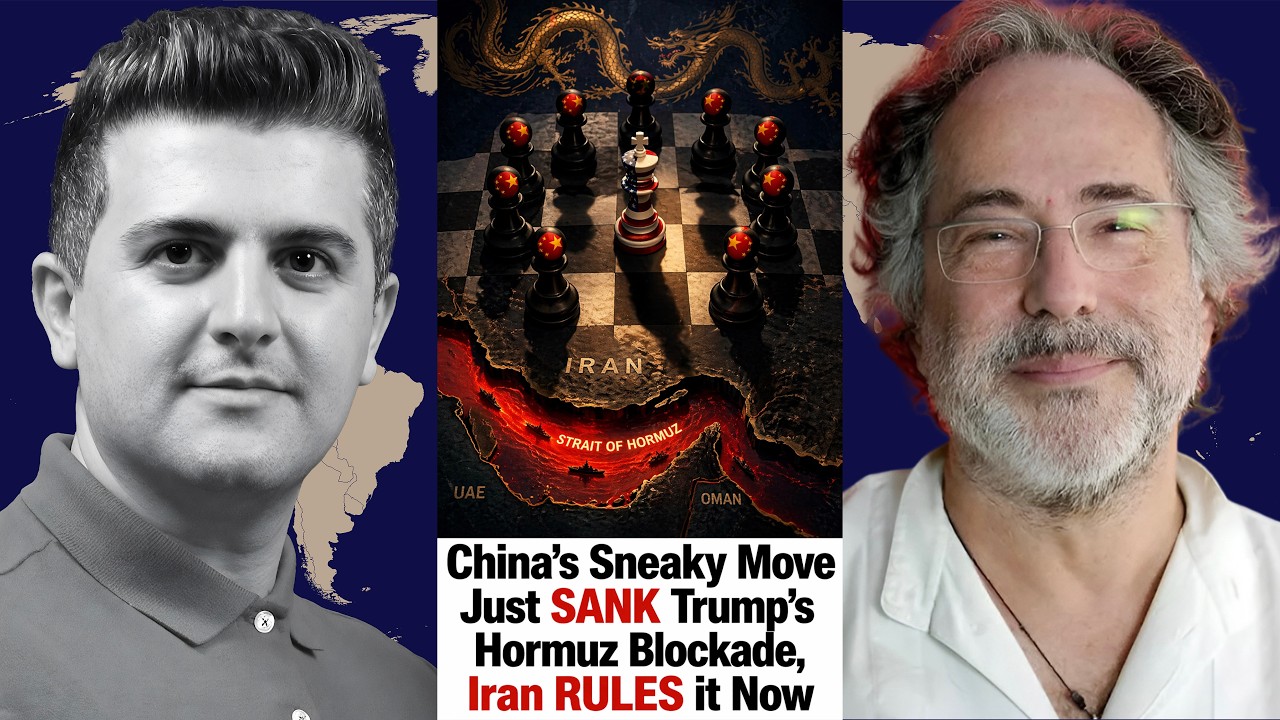
Pepe Escobar: “Total Failure”: Trump’s Blockade Just Backfired Disastrously
"Pepe Escobar argues that the US blockade against Iran, spearheaded by Donald Trump, has utterly failed and backfired, accelerating global economic chaos and challenging US geopolitical dominance."

Mamdani CELEBRATES NYC Rent Freeze, This Will DESTROY The City | Timcast IRL
"New York City's rent freeze, celebrated by Mandami, is framed as a socialist 'land grab' that will devastate the city's housing market and economy, while a FIFA Pride Match in Seattle sparks outrage from conservative nations."

BREAKING: Iran Threatens To END Talks; U.S. Vows Retaliation; Hezbollah Collapsing? | TBN Israel
"Iran is leveraging Hezbollah and the Strait of Hormuz to manipulate US negotiations, while Israel asserts its right to dismantle Hezbollah's eroding but still dangerous infrastructure in Lebanon, independent of international talks."

🚨 THEY F*CKED AROUND FOR THE LAST TIME 😭😭😭
"This episode unleashes a torrent of highly opinionated commentary on the US-Iran deal, Israel's role, and a scathing critique of 'leftist' policies and immigration, particularly highlighting the UK grooming gang report as evidence of Western societal decay."