Iran Escalates Deadly Crackdown on Mass Protests as Trump Threatens to Launch Military Attack
YouTube · ndZoeb2VUGQ
Quick Read
Summary
Takeaways
- ❖Over 500 Iranian protesters and 48 security officials reportedly died in recent anti-government demonstrations.
- ❖The Iranian government imposed an internet and phone communication blackout, hindering information flow and enabling severe crackdowns.
- ❖President Trump threatened military action against Iran and claimed Iranian leaders called to negotiate, a claim not independently verified.
- ❖Iran's foreign minister blamed the US and Israel for the protests, while its parliament speaker warned of retaliation against US bases and 'occupied lands' if attacked.
- ❖Professor Narges Bogli states that foreign intervention, especially military threats, provides a 'carte blanche' for governments to repress internal dissent by labeling it as 'enemy rhetoric'.
- ❖Hamidreza Muhammadi, brother of an imprisoned Nobel Peace Laureate, emphasizes the Iranian people's agency and desire for freedom as the core reason for protests, not foreign influence.
- ❖The current protests are primarily driven by economic grievances, including a severe currency crash, high inflation, and the cost of living crisis, unlike the 2022 protests which focused on women's rights.
Insights
1Regime's Brutality Amidst Information Blackout
The Iranian regime has implemented a complete information blackout, cutting off internet and phone communications, to suppress anti-government protests. This tactic enables security forces to kill a large number of demonstrators and pile bodies in morgues without immediate international scrutiny, as reported by Hamidreza Muhammadi via Starlink videos.
Hamidreza Muhammadi states, 'there's a complete information blackout in Iran... via Starlink some people have been able to post videos of demonstrations and unfortunately videos of a lot of bodies piled on one another in the hospitals or in the morgs.'
2Foreign Intervention Risks Empowering Repression
Professor Narges Bogli argues that foreign intervention, particularly military threats and overt support from the US and Israel, inadvertently strengthens the Iranian government's ability to repress its own citizens. The regime uses such external rhetoric to frame legitimate internal dissent as foreign-backed terrorism, justifying severe force against protesters.
Professor Bogli states, 'any kind of foreign intervention and especially strikes and war always gives governments a cart blanch to say that any kind of internal dissent can be or is sort of enemy rhetoric and then it further represses.'
3Iranian People's Agency as Primary Driver of Protests
Hamidreza Muhammadi counters the idea that the regime's increased violence is primarily a reaction to US or Israeli threats. He asserts that the Iranian people's deep-seated desire for a different system, freedom, and equal rights is the fundamental driver of the protests, and their willingness to face bullets demonstrates their independent agency.
Hamidreza Muhammadi states, 'it overlooks the agency of the Iranian people on the ground. You must remember that going on the streets in front of the bullets is not something that happens when a foreign country sends a message or encourages people to do.'
4Economic Grievances Fuel Current Uprising
Unlike the 2022 'Woman, Life, Freedom' movement, which focused on women's rights and civil disobedience, the current uprisings are largely a response to Iran's severe economic crisis. This includes a currency crash, high inflation, and a cost of living crisis, exacerbated by US sanctions and the regime's mismanagement of resources.
Professor Bogli explains, 'This movement is one in which or this this recent uprisings is one in which it was caused by a severe currency crash which is connected to US sanctions. And it's caused by a severe cost of living crisis in Iran. Very high inflation.'
Lessons
- Recognize the dual challenge of supporting human rights in authoritarian states while avoiding actions that inadvertently strengthen the repressive regime's narrative.
- Prioritize independent information channels (e.g., Starlink, human rights organizations) when assessing situations in countries with communication blackouts.
- Understand that economic sanctions, while intended to pressure regimes, can also fuel popular discontent that may or may not coalesce into organized movements for change.
Quotes
"We may have to act because of what's happening before the meeting, but a meeting is being set up. Iran called, they want to negotiate."
"Know that in the case of an attack on Iran, the occupied lands as well as the US military bases in the region will be our legitimate targets."
"Any kind of foreign intervention and especially strikes and war always gives governments a cart blanch to say that any kind of internal dissent can be or is sort of enemy rhetoric and then it further represses."
"The people of Israel and the entire world are in awe of the immense courage of Iranian citizens. Israel supports their struggle for freedom and strongly condemns the mass killings of innocent civilians."
"My goal is to achieve peace and human rights. I am determined to try more than before. I'm sure with our efforts perseverance in Iran and with your human rights colleagues protections we will win all together for peace and human rights."
"It overlooks the agency of the Iranian people on the ground. You must remember that going on the streets in front of the bullets is not something that happens when a foreign country sends a message or encourages people to do."
Q&A
Recent Questions
Related Episodes
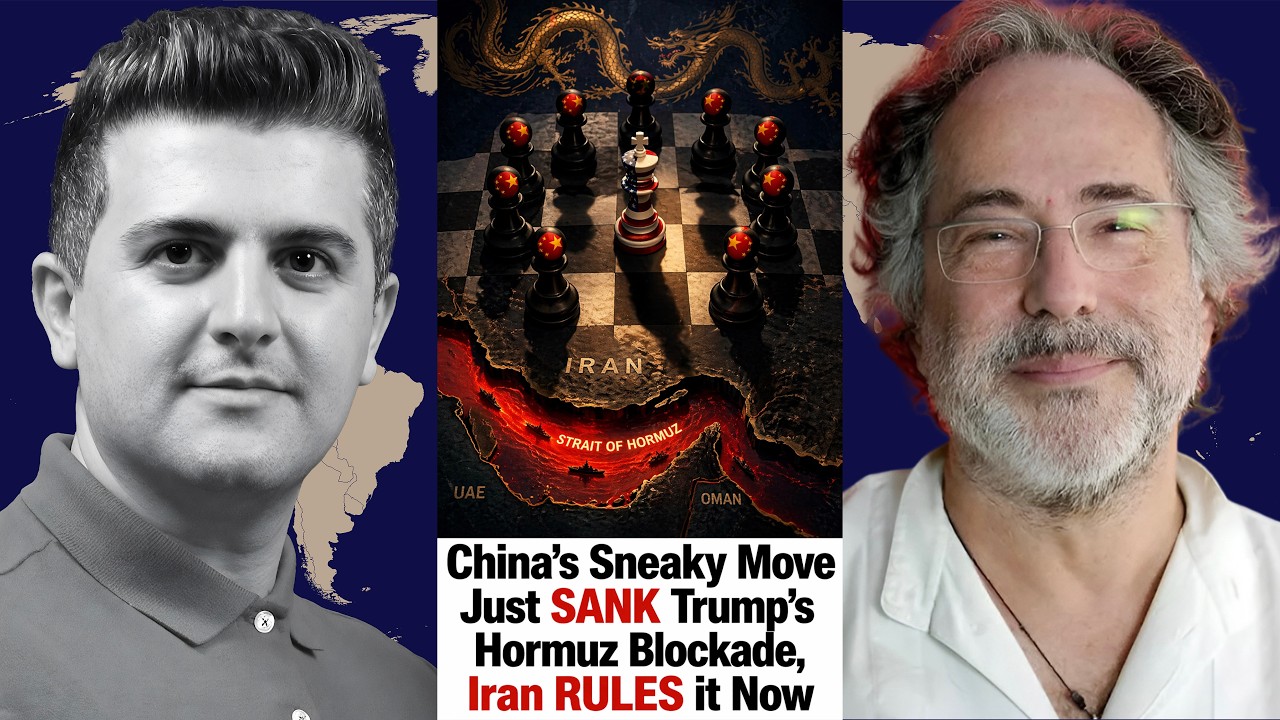
Pepe Escobar: “Total Failure”: Trump’s Blockade Just Backfired Disastrously
"Pepe Escobar argues that the US blockade against Iran, spearheaded by Donald Trump, has utterly failed and backfired, accelerating global economic chaos and challenging US geopolitical dominance."
Robby Soave GOES OFF On ANNOYING Liberal Black Woman Making Emotional Trump Deranged Arguments!
"The host dissects a heated foreign policy debate, arguing that 'left-wing' emotionalism and 'Trump derangement' prevent a rational understanding of US sanction strategies against Cuba and Iran."

Bibi DEMANDS Ground Troops As Marines Rushed to Iran
"Benjamin Netanyahu is pushing for US ground troops in Iran, framing air strikes as insufficient, while the US rushes Marines to the region and struggles to secure the Strait of Hormuz against surprisingly capable Iranian defenses."
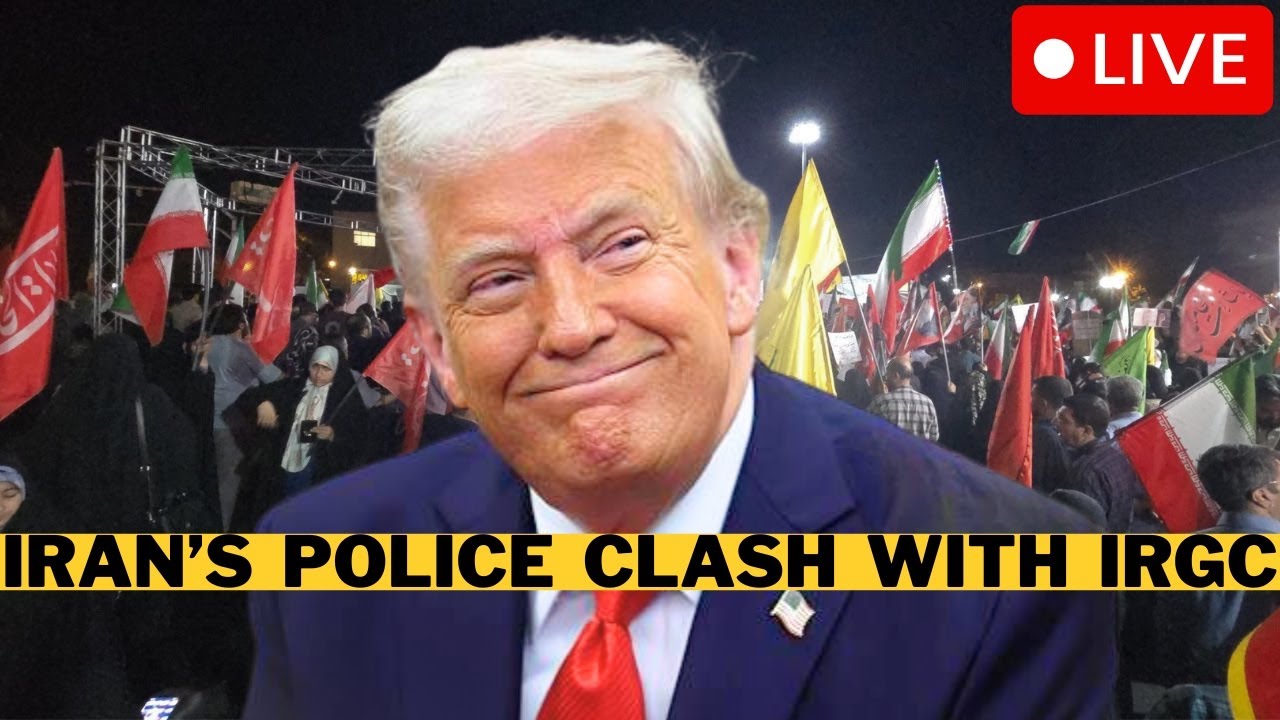
BREAKING: Protests ERUPT In Iran Over IRGC Surrendering To Trump - Infighting Clashes In Tehran
"Iran is experiencing severe internal infighting and protests as hardline IRGC elements clash with government figures over a perceived 'surrender' to the US, while mainstream Western media misrepresents the situation."