BREAKING: Iran REJECTS Trump Claim Of Talks, 5 Day Limited Ceasefire
YouTube · ndwv8F6qA1Q
Quick Read
Summary
Takeaways
- ❖Trump's claim of "very good and productive conversations" with Iran and a 5-day postponement of military strikes was issued via Truth Social.
- ❖Iran's Foreign Ministry immediately denied any negotiations, stating they reject talks before achieving their war goals and remain steadfast in their positions.
- ❖Trump's move was likely driven by severe market reactions, including crashing S&P futures, rising oil prices, and increasing bond yields, following his prior threats against Iran's electrical grid.
- ❖Iran's security establishment, having learned from past "mistakes" like the 12-day war ceasefire, is unlikely to trust US diplomacy or allow rearmament time.
- ❖Israel's continued strikes (e.g., in Tehran causing blackouts) and maximalist demands (e.g., no Iranian missile program for 5 years) are perceived as efforts to prevent a deal and prolong the conflict.
- ❖Trita Parsi argues Iran requires sanctions relief to rebuild its economy and establish long-term deterrence, viewing this as non-negotiable for a lasting peace.
- ❖The window for a de-escalatory off-ramp is narrow, as Trump needs a narrative of victory for his base, and Iran needs significant concessions to prevent future attacks.
Insights
1Trump's Market-Driven De-escalation Attempt
Trump's announcement of a 5-day pause in strikes and "productive conversations" with Iran was likely a direct response to rapidly deteriorating market conditions (crashing S&P futures, rising oil prices, bond yields) and public opposition to war, rather than genuine diplomatic progress. The timing (7 AM Eastern on a Monday) was strategically chosen to influence market open.
The market was crashing. The futures were down... Trump felt the need to come out and say, 'Ah, let's give it a few days.'... 700 a.m. Eastern time on a Monday morning, which means what? The S&P futures are rocketing. Oil was down some 10 percent.
2Iran's Strategic Mistrust and Demand for Sanctions Relief
Iran's leadership, particularly the new Ayatollah and security establishment, believes the previous Ayatollah made a "grave mistake" by agreeing to a ceasefire in the 12-day war, allowing adversaries to rearm. They are now determined not to repeat this, demanding significant sanctions relief to rebuild their economy and establish a credible, long-term deterrence against future US/Israeli attacks, viewing mere non-aggression pacts as insufficient.
What the Iranians believe more than anything is that the Ayatollah made a grave mistake by agreeing to that ceasefire in the 12-day war... The new Ayatollah and the existing security establishment... are all dead. Everybody now is like, 'No, this is a fight to the death. We have to make sure that we survive. Most importantly, we will not give Israel and the United States time to rearm.'... They need that sanctions relief to rebuild themselves... in order to have the deterrence against the US and Israel attacking again.
3Israel's Role in Sabotaging De-escalation
Israel is actively working to prevent any US-Iran deal, pushing for maximalist demands (e.g., no Iranian missile program for 5 years, zero uranium enrichment) that are "non-starters" for Iran. This strategy aims to prolong the war, eliminate Iran's industrial base, and dramatically shift the regional balance of power in Israel's favor, regardless of global economic costs or US presidential stability.
Israel was not mentioned once in the entire Trump taco truth. Right? Israel may continue to do strikes... overnight actually the Israelis struck in Thrron and there were electrical outages... The intent behind these demands, I suspect that they actually originally come from Israel, is to make sure that there is no deal... This is a list of demands... designed to make sure that there will be no ceasefire... and the Israelis get what they're looking for which is as prolonged war as possible in order to completely eliminate and destroy Iran's industrial base.
Lessons
- Recognize that official statements regarding de-escalation in geopolitical conflicts, especially from figures like Trump, may be primarily aimed at market stabilization or domestic political narratives rather than reflecting actual diplomatic breakthroughs.
- Understand that historical grievances and perceived past strategic errors (e.g., Iran's view of the 12-day war ceasefire) heavily influence current negotiating postures and make swift, trust-based resolutions difficult.
- Be aware that third-party actors (like Israel in this context) can significantly complicate and even sabotage de-escalation efforts between primary adversaries by pursuing their own strategic objectives, often through military actions or extreme demands.
Quotes
"Trump is trying to back down from some of his threats against Iran. The Iranians though are disputing some of the claims that he is making."
"What the Iranians believe more than anything is that the Ayatollah made a grave mistake by agreeing to that ceasefire in the 12-day war... Everybody now is like, 'No, this is a fight to the death. We have to make sure that we survive.'"
"He realizes that this is a terrible things for the markets. Yet, he should have known that on Friday when he first issued that uh threat of bombing the Iranian power grids."
"The intent behind these demands, I suspect that they actually originally come from Israel, is to make sure that there is no deal."
"Neither side can pursue the humiliation of the other in this situation. If they do, they're just digging themselves deeper in a hole."
Q&A
Recent Questions
Related Episodes
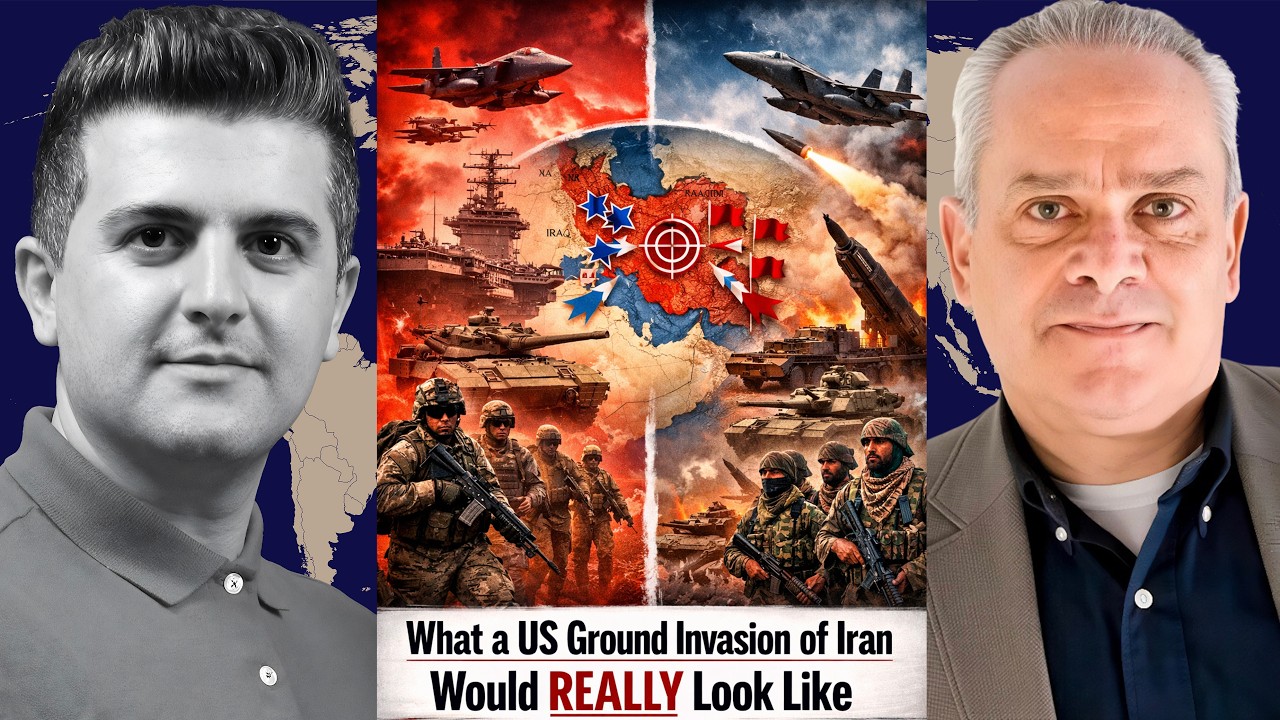
Col. Jacques Baud: What a US Ground Invasion of Iran Would REALLY Look Like
"Colonel Jacques Baud dissects the strategic futility of a US ground invasion of Iran, arguing that current troop levels are insufficient and such an action would backfire, exposing US allies and potentially leading to Iran's nuclearization."

Patrick Henningsen: Hezbollah JUST Fired Back at Israel - Iran Vows to “Crush” All Attacks
"Patrick Henningsen argues that the US and Israel initiated an illegal war against Iran, driven by Trump's incompetence and Israeli influence, leading to an inevitable escalation with severe global economic repercussions."

Alex Krainer: US STRIKES Iran – Iran RETALIATES Against Kuwait, Bahrain & Jordan!
"Amidst escalating US-Iran conflict and Iranian retaliation against regional US allies, this episode argues that US foreign policy is deeply controlled by an 'Anglo-Zionist conspiracy' led by the Rothschild banking dynasty, prioritizing Israeli interests over American ones."

Iran Update: Israel’s Newest Bombing Campaign, the Oncoming War With China and How to Avoid It
"Colonel Wilerson reveals how the US and Israel are actively bombing China's strategic infrastructure in Iran, escalating a covert economic war that Beijing intends to win without direct military conflict by dismantling the dollar's global dominance."