Richard Smallwood Celebration of Life
YouTube · niIFVwnnxGE
Quick Read
Summary
Takeaways
- ❖Richard Smallwood was a 'preacher theologian' who earned a Master of Divinity, infusing his music with profound biblical understanding.
- ❖His compositions, like 'Total Praise' and 'I Love the Lord,' are sung globally in various languages, demonstrating universal appeal and enduring relevance.
- ❖Smallwood's unique style combined classical mastery with gospel, challenging industry norms and setting a new standard for musical excellence in ministry.
- ❖He was celebrated by Presidents Obama, Clinton, and Vice President Harris, among others, for his significant cultural and spiritual contributions.
- ❖Despite international fame, Smallwood maintained a humble, approachable demeanor, valuing his community and personal relationships deeply.
- ❖He was a founding member of the Howard University Gospel Choir, a pivotal institution that challenged eurocentric musical norms in academia.
Insights
1Theological Depth in Musical Composition
Richard Smallwood was not merely a musician but a 'preacher theologian' who earned a Master of Divinity from Howard University. This academic and spiritual background allowed him to translate biblical texts into musical exegesis, creating songs that enabled believers to 'sing theology, memorize scripture, and internalize truth through worship.' His lyrics were 'word-centered,' providing powerful and moving spiritual narratives.
A speaker notes, 'He approached it as interpretation of the biblical text... what one might call musical exegesis. He translated scripture into sound so that believers could sing theology, memorize scripture, and internalize truth through worship.' Another adds, 'His music was word centered.'
2Global Impact and Cross-Cultural Resonance
Smallwood's music transcended cultural and linguistic barriers, becoming 'standard fare in churches across America and around the world.' His songs are frequently performed in Korean, German, Hebrew, and numerous other languages, highlighting their universal appeal and spiritual power. This global reach was recognized by world leaders and fellow artists alike.
Senator Angela Alsobrooks states, 'His music is standard fair in churches across America and around the world where it is frequently performed in Korean, German, Hebrew, and numerous other languages.' Former President Bill Clinton notes, 'countless people who found his songs healing and inspiring.'
3Humility and Dedication to Ministry
Despite his status as a 'maestro of gospel music' and 'king of keys,' Smallwood was consistently described as a 'humble servant of the Lord.' His former pastor, Dr. Maurice Watson, highlighted his humility as the most impressive aspect, noting Smallwood would 'come to church without any fanfare and just get on the piano, join the band.' He viewed music as a ministry and believed 'excellence itself is an act of worship.'
Dr. H. Beecher Hicks Jr. describes him as 'a humble servant of the Lord.' Dr. Maurice Watson states, 'the thing that most impressed me about Richard was his humility. That he would come to church without any fanfare and just get on the piano, join the band.'
4Pioneering the Howard University Gospel Choir
Smallwood was a founding member of the Howard University Gospel Choir, an initiative that significantly impacted the university's eurocentric music curriculum. This choir's first performance was a groundbreaking event, unifying the university and greater Washington D.C. community in praise and demonstrating the artistic and spiritual validity of gospel music within an academic setting.
Felicia Rashad recounts, 'this was the first presentation of the Howard University Gospel Choir... our studies were eurocentric... he had brought us together... in praise.'
Notable Moments
Felicia Rashad recounts the inaugural performance of the Howard University Gospel Choir, directed by Richard Smallwood, as a pivotal moment that challenged eurocentric musical norms and unified the community.
This moment highlights Smallwood's early influence in legitimizing gospel music within academic institutions and his ability to bring diverse communities together through his art, setting the stage for his future impact.
Maryland Governor Wes Moore shares a personal anecdote about Richard Smallwood's song 'He Heard My Cry' being the 'soundtrack' for his election morning three years prior.
This personal testimony from a sitting governor underscores the profound and intimate way Smallwood's music resonated with individuals, even those in high office, providing strength and inspiration during critical life moments.
Smallwood's foster sisters, Joy and Bernice, share how Richard stepped in as their legal guardian while still in college, providing a 'normal family life' and unwavering support.
This reveals a deeply personal and compassionate side of Smallwood, demonstrating his commitment to family and his selfless nature beyond his public persona, illustrating his character through tangible actions.
Quotes
"He approached it as interpretation of the biblical text... what one might call musical exegesis. He translated scripture into sound so that believers could sing theology, memorize scripture, and internalize truth through worship."
"Richard was never unapproachable, even during the busiest touring season of his life. He directed the Young Adult Fellowship Ensemble and engaged several members of Yan to become part of his newly created group, Fisher."
"Reverend Richard Smallwood understood that the song is not born of convenience. It is born of conviction. His music never denied Babylon. It never rushed past pain. It refused to forget Zion."
"It's something about the spirit of gospel music that unifies."
"His music is ministry. His songs became scripture in sound. Hymns for moments of celebration and for seasons of struggle alike. He possessed a rare gift, the ability to unite classical mastery with spiritual depth."
"All I want is for my music to outlast my life."
"The thing that most impressed me about Richard was his humility. That he would come to church without any fanfare and just get on the piano, join the band."
Q&A
Recent Questions
Related Episodes
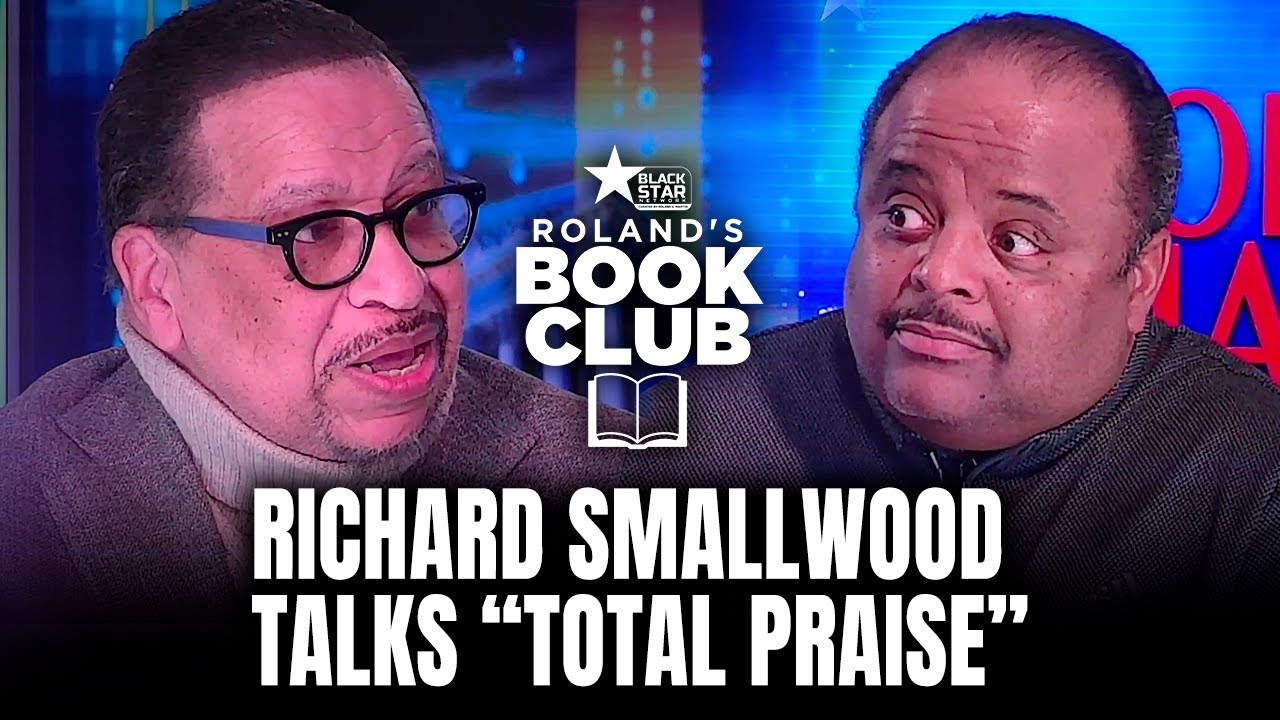
#RolandsBookClub: Richard Smallwood talks “Total Praise” autobiography
"Gospel music icon Richard Smallwood reveals the raw, personal struggles—including abuse, illegitimacy, and mental health battles—that fueled his legendary career and inspired his most beloved songs, including the unexpected origin of 'Total Praise.'"

Jan. 6 Remembrance, LA Mayor Karen Bass, Richard Smallwood Talks
"This episode delivers a scathing remembrance of the January 6th Capitol attack, contrasting political narratives with firsthand accounts and highlighting the ongoing fight for civil rights and the power of gospel music."
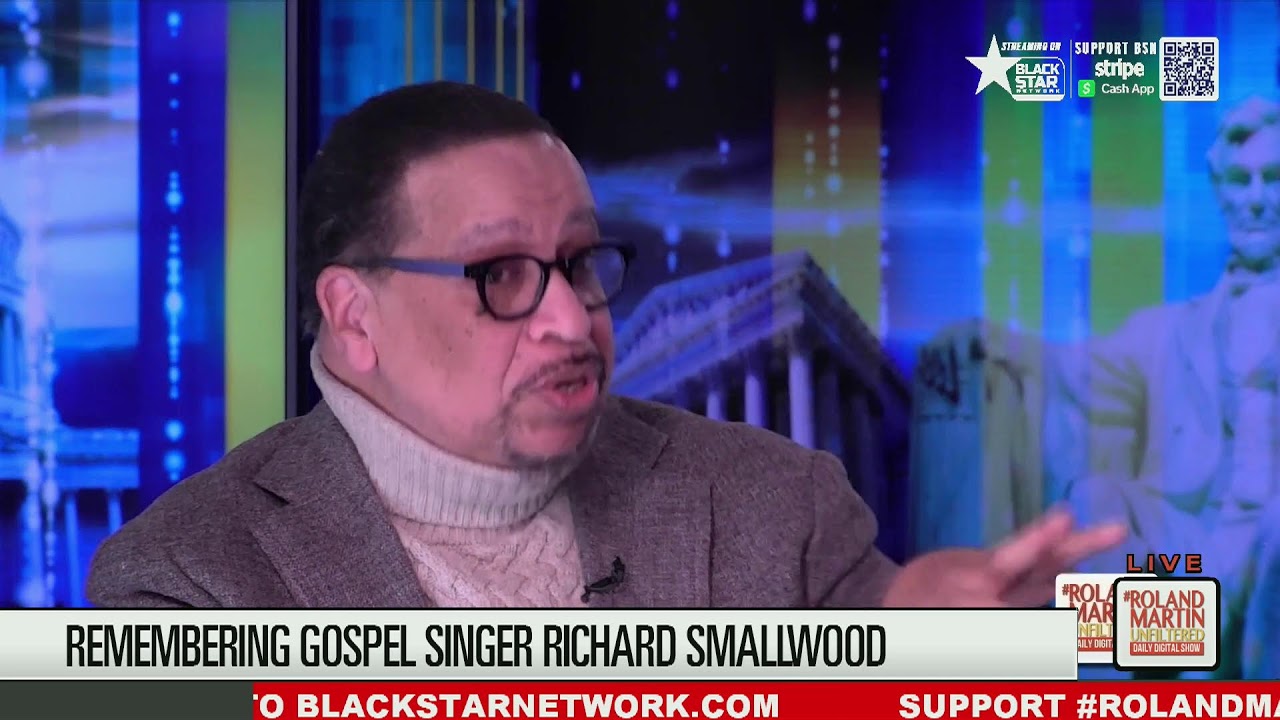
Jan. 6 Remembrance, LA Mayor Karen Bass, Richard Smallwood Talks
"This episode sharply contrasts Democratic and Republican narratives surrounding the January 6th Capitol attack, featuring insights from LA Mayor Karen Bass and a deep dive into the life and music of gospel maestro Richard Smallwood."

Jan. 6 Remembrance, LA Mayor Karen Bass, Richard Smallwood Talks
"This episode delivers a sharp critique of Republican efforts to downplay the January 6th insurrection, featuring insights from political figures and a profound interview with gospel maestro Richard Smallwood on music, mental health, and his personal journey."