
Most Wanted Counterfeiter Reveals His Secrets! | The Art of Making Money
YouTube · nkf_qwkbS20
Quick Read
Summary
Takeaways
- ❖The speaker's father was a 'paper hanger' (check kiter) in the 70s and 80s, exposing him to grifting early in life.
- ❖Growing up in Chicago's Southside projects, he joined a gang for protection and was shot by age 18.
- ❖His mentor, 'Da Vinci,' taught him old-school counterfeiting with presses, inks, and plates when he was 15.
- ❖He discovered that the new currency pens tested pH levels in paper, leading him to find 'directory paper' that would mark correctly.
- ❖His counterfeiting process involved binding two thin pieces of paper, inserting a printed watermark and security strip, and using a special fabric chemical to create the 'crispy' feel of real money.
- ❖He developed a number generator to print unique serial numbers on every bill, a first for counterfeiters.
- ❖His fake hundreds weighed exactly one gram, making them pass drug dealers' scales.
- ❖He learned advanced printing techniques from the U.S. Treasury Department's public website.
- ❖He sold his counterfeit money for 30 cents on the dollar, significantly higher than the average 10 cents due to its quality.
- ❖He was arrested after a bartender overheard him discussing a 'deal' (for money, not drugs) and reported him, leading to Secret Service involvement.
- ❖He successfully had his first federal counterfeiting case dismissed due to an illegal search and seizure by police who fabricated probable cause.
- ❖His son followed in his footsteps, getting caught counterfeiting at 13 and later at 18, leading to them serving time together in federal prison.
- ❖He found redemption and a new path as an artist, eventually selling paintings for hundreds of thousands of dollars and opening multiple galleries.
Insights
1Sophisticated Counterfeiting Techniques
The speaker's counterfeiting involved a multi-step 'hybrid' process. He used 18-pound directory paper, printing watermarks and security strips on thin sketch paper, then binding these between two layers of the directory paper. A specialized fabric chemical was airbrushed onto the bills to create a realistic 'crackle' and texture. He also developed a unique number generator to ensure every serial number was different, a feature previously unheard of in counterfeiting.
He talks about using directory paper (), binding two pieces of paper together for the watermark and strip (), spraying a chemical for texture (), and creating a number generator for serial numbers ().
2Learning from the Treasury Department
Ironically, the speaker significantly improved his counterfeiting quality by studying the U.S. Treasury Department's website. He learned that official currency is printed in multiple passes for different elements (color tint, outline, face, numbers), rather than all at once. Adopting this method, combined with mixing his own custom inks, allowed him to achieve near-perfect color matching and detail.
He states, 'I went and I learned how to uh to really print the money through the uh Treasury Department, their their their website' () and 'they literally showed you exactly how they made the money' (), leading him to print elements separately ().
3The Psychological Edge: People Don't Look for Fraud
A key insight from his criminal career was that most people are not actively looking for fraud. He recounts passing hundreds with upside-down backs and a credit card with a Visa number on a Mastercard. This lack of vigilance, he argues, is a significant factor in the success of fraud, as people often assume legitimacy or simply don't scrutinize details.
He describes spending hundreds with upside-down backs () and a friend passing a credit card with a Visa number on a Mastercard (). He explicitly states, 'people are not looking for fraud' ().
4Redemption and Mentorship through Art
After his second prison release, facing financial hardship and a return to criminal thoughts, he was offered a job by Joe Catch Tori Senior, who owned Lacuna Lofts and Lakeside Bank. This mentorship provided him with a legitimate income, exposed him to successful individuals, and fostered his artistic talent. This new environment and positive influence were crucial in his final break from crime, leading to a successful art career.
He recounts Joe Catch Tori Senior offering him a job for $5,000 a month () and how being around successful people changed his perspective ().
Bottom Line
The speaker's counterfeiting techniques, particularly the paper he used and the color-shifting ink, were so effective that the U.S. Treasury Department later implemented new security features, like the 'visual physics' purple line, specifically to counter his methods.
This demonstrates the direct impact of individual criminal innovation on national security measures, highlighting a constant cat-and-mouse game between criminals and authorities.
Insights into advanced security flaws or counter-measures could be valuable for cybersecurity firms, anti-fraud departments, or even designers of secure documents and currencies.
His ability to sell counterfeit money for 30 cents on the dollar, compared to the average 10 cents, was due to his product's superior quality, including passing pen tests, UV light, and even weight tests on drug scales.
This illustrates that even in illicit markets, product quality and attention to detail command a premium, impacting pricing and market penetration.
This principle of 'premium for quality' applies universally. Businesses, even in legitimate sectors, can learn from this by focusing on exceeding industry standards to capture higher value and market share.
Opportunities
Advanced Document Security Consulting
Leverage the speaker's deep understanding of counterfeiting techniques and security flaws to consult with financial institutions, government agencies, and corporations on enhancing their document and currency security measures. This would involve stress-testing existing systems and advising on new, innovative anti-counterfeiting features.
Niche Art Market for 'Redemption Art'
Establish a curated art gallery or online platform specializing in 'redemption art' – works created by individuals who have transitioned from a criminal past to a legitimate artistic career. This would leverage compelling personal narratives to add unique value and appeal to collectors, similar to how the speaker's own story boosted his art sales.
Specialized Printing & Material Science for Security Features
Develop and supply highly specialized inks, papers, and printing techniques to industries requiring advanced security features, such as luxury brands, pharmaceutical companies, or high-value document issuers. This would focus on creating materials that are difficult to replicate, drawing from the speaker's experience with pH-sensitive paper, color-shifting inks, and embedded elements.
Key Concepts
The Gold Fever Effect
The speaker observed that when people learned he could print money, their eyes would 'light up,' demonstrating a powerful, almost irrational allure to easily acquired wealth, often overshadowing the risks and complexities involved.
Strength in Numbers (Criminal Context)
In the violent environment of the Chicago projects, joining a gang was a survival mechanism, providing protection against rival gangs and preventing individuals from being 'jumped' when alone.
The Power of Example
While in prison with his son, the speaker realized that the most effective way to teach his son positive habits (working out, writing) was to consistently demonstrate those behaviors himself, rather than just instructing.
The Illusion of Scrutiny
People generally are not looking for fraud in everyday transactions, making it easier for counterfeit items (money, documents) to pass. This lack of vigilance stems from a non-criminal mindset.
Lessons
- Seek out positive mentors and environments: The speaker's transformation was significantly aided by Joe Catch Tori Senior, who provided a job and exposed him to successful individuals, demonstrating the power of surrounding oneself with positive influences.
- Embrace continuous learning and adaptation: The counterfeiter constantly refined his methods, even learning from the Treasury Department's website. This relentless pursuit of knowledge and adaptation is crucial for success in any field, legitimate or otherwise.
- Understand human psychology in business: The insight that 'people are not looking for fraud' can be reframed for legitimate business to understand customer assumptions and how to exceed expectations subtly, rather than just meeting baseline requirements.
- Lead by example, especially in mentorship: The speaker learned in prison that to teach his son positive habits, he had to embody them himself. This principle is vital for parents, leaders, and mentors in fostering desired behaviors.
- Recognize and leverage unique skills: The speaker applied his meticulousness, problem-solving, and artistic talent, initially used for crime, to build a successful art career. Identifying and redirecting inherent strengths towards constructive goals is key to personal growth.
The Hybrid Counterfeiting Process (circa 1990s-early 2000s)
Acquire 18-pound directory paper, which correctly reacts to pH-testing counterfeit pens.
Print watermarks and security strips onto extremely thin sketch paper using an inkjet printer.
Tint the directory paper with a custom-mixed, light lime-beige ink using an offset printing press, ensuring precise color matching.
Burn separate printing plates for the outline of the bill and the face, and then print these elements onto the tinted paper in distinct passes.
Carefully place the printed watermarks and security strips between two pieces of the tinted, printed directory paper.
Bind the two paper layers together using metal plates and C-clamps, allowing them to press and dry for two to three days.
Airbrush the dried bills with a special fabric-tightening chemical to achieve a realistic 'crispy' feel and 'crackle' sound.
Utilize a modified bingo-card number generator to produce unique serial numbers for each bill, then print these onto the currency.
Distribute the counterfeit money, initially by spending small amounts in various towns and later by selling in bulk (e.g., to drug dealers or casinos) for approximately 30 cents on the dollar.
Notable Moments
Quitting the Gang in Jail
After being made a 'shot caller' in Cook County Jail and witnessing extreme gang violence (including a death from a 'match violation'), the speaker felt morally conflicted and chose to leave the gang, enduring a severe beating as a consequence but gaining his freedom from that life.
Confrontation with his Father in Alaska
After reconnecting with his estranged father, the speaker became enraged when his father spent nearly $1,000 on dog food, remembering his own childhood poverty. This led to a physical altercation and a raw emotional release, highlighting unresolved trauma and the deep impact of his father's abandonment.
Son Follows into Counterfeiting
While the speaker was in a halfway house after prison, his ex-wife (a police officer) discovered their 13-year-old son printing fake $20 bills. This shocking revelation, and his son's continued involvement into adulthood, served as a profound catalyst for the speaker to fully commit to a legitimate life.
Speaking to Homeland Security Agents
Unbeknownst to him, the speaker was booked to speak at a Homeland Security conference filled with FBI and Secret Service agents while he was actively planning to counterfeit euros. This moment of extreme irony and paranoia forced him to confront his criminal path and the immense opportunities he was risking.
Reconciliation with Son in Prison
After both the speaker and his son were incarcerated in federal prison (for counterfeiting), they were placed in the same dorm. Their emotional reunion, witnessed by hardened criminals, marked a turning point in their relationship, allowing the speaker to become a present father and mentor his son towards a better path.
Selling Art to his Former Loan Shark
Years after giving his initial art pieces to a dangerous gangster as collateral for a debt he couldn't repay, the speaker, now a successful artist, re-encountered the gangster in LA. The gangster, proud of his transformation, visited his gallery and bought a painting, symbolizing a full-circle moment of redemption and respect earned through legitimate achievement.
Quotes
"I don't like lying. I hate stealing. I won't even steal a paper off somebody's porch, man. Know, but I'll print some money, though."
"The feel is the most important part because it's the first sense that's activated, right? So, people touch it, they see it, right? You know, as soon as someone that's been handling money all day, they have a real feel for it."
"People are not looking for fraud. Like when I would go up and I'd hand you documents. Yeah. People just Okay. Okay. You can sit over there. Like I would go get like a the DMV would issue um I would get the DMV to issue me driver's licenses and I'd walk in and I'm giving you a fake birth a birth certificate that I made at my house, you know."
"The best the best way to teach them is to be it yourself. If you're going to tell them not to lie, don't lie. If you're going to tell them to work hard, then work hard. You can't tell them to be work hard and you're laying your ass down not doing nothing, right?"
"That purple line was made because of me, right? Because the paper that I created caused them a problem, right?"
Q&A
Recent Questions
Related Episodes

HaHa Davis on Druski, Katt Williams, Kevin Hart, Jay-Z, Relationships, Fame & Social Media Comedy
"Comedian Haha Davis offers a candid look into the unpredictable world of social media fame, the complexities of modern relationships, and the personal journey of finding success while staying true to his Detroit roots."

TEEN'S DNA REVEALED IN ANNA KEPNER'S R*** KIT
"The investigation into Anna Keaptainner's death on a cruise ship reveals shocking DNA evidence, a previously unknown male minor, and critical questions about evidence handling and family dynamics."
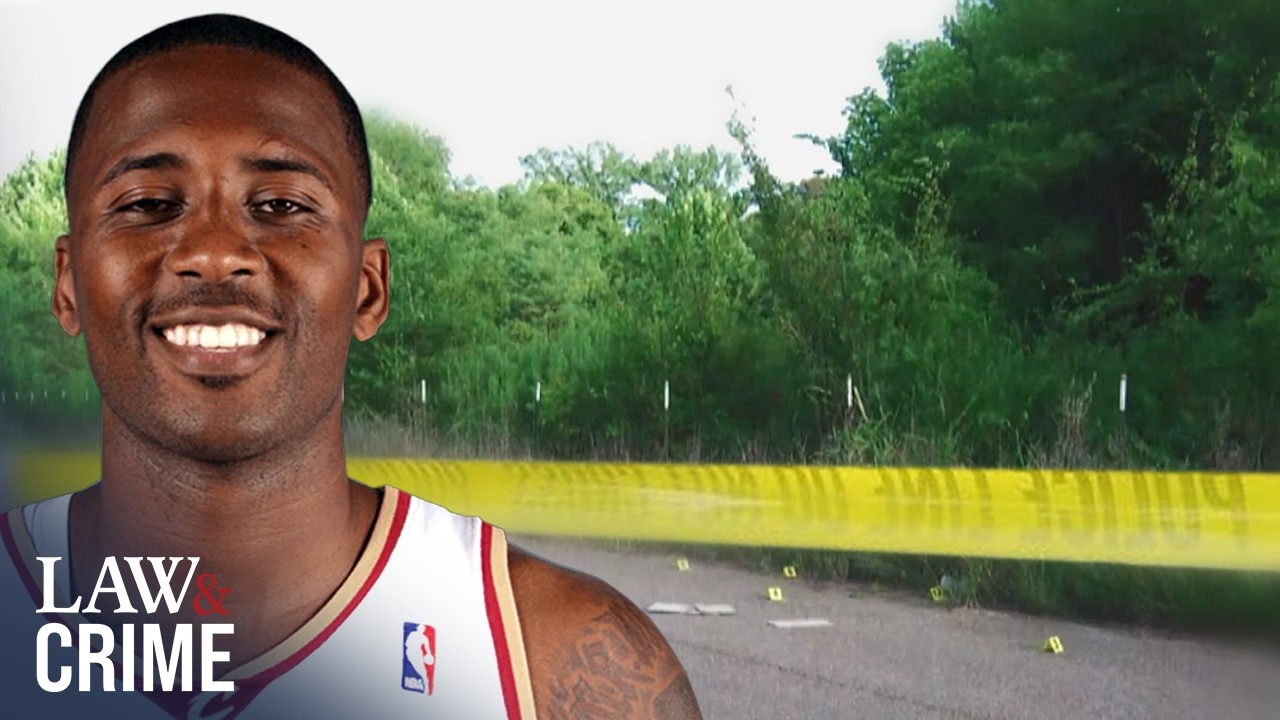
Killer Cases: NBA Star Lured to Execution In Rural Tennessee
"The decade-long cold case of NBA star Lorenzen Wright's murder was cracked through a persistent mother, a jailed informant, and a covert police operation that recovered the murder weapon from a lake and exposed a conspiracy driven by greed."

M&M's Employee Steals $26 MILLION (How He Did It)
"This episode details a series of white-collar crimes, from an M&M's sugar expert embezzling $26 million to a fake immigration attorney scamming undocumented immigrants, highlighting vulnerabilities in various systems and the surprising leniency of some sentences."