"Iran Is Playing the Long Game": What to Expect from Protracted War in Middle East
YouTube · oxUGwRFu5M8
Quick Read
Summary
Takeaways
- ❖Iran's 'long game' strategy, conceived after a 12-day war with Israel, focuses on protracted conflict and asymmetric warfare.
- ❖Iran employs a 'mosaic military strategy' and 'mosaic government management' to ensure resilience, not relying on a single leader.
- ❖US and Israeli calculations for a short war have proven flawed, as Iran is willing to absorb hits and escalate in unexpected ways.
- ❖Iran's counter-escalation targets global energy markets using drones, mines, and low-level ammunition, impacting Gulf economies.
- ❖High-level assassinations of Iranian leaders, including the Supreme Leader and top security officials, have not collapsed the regime but radicalized it, elevating more aggressive leaders.
- ❖The US withdrawal from the Iran nuclear deal has severely damaged international trust in US agreements, potentially incentivizing other nations to pursue nuclear weapons.
- ❖The war has devastated Iran's infrastructure, displaced millions, and led to increased domestic repression.
- ❖A potential outcome is a long, costly war for the US, possibly leading to boots on the ground, or a negotiated settlement on Iran's terms, with China ultimately benefiting from US entanglement.
Insights
1Iran's Resilient 'Long Game' Strategy
Iran adopted a 'long game' strategy after a 12-day war with Israel, designed to absorb attacks and outlast more powerful adversaries like the US and Israel. This strategy relies on a 'mosaic military strategy' that is not dependent on individual leaders, allowing for immediate retaliation and continued operations despite high-level assassinations.
Professor Valinaser states, 'Iran is following a strategy that was conceived after the June war, the 12-day war they had with Israel, and it's being implemented systematically... It's not dependent on one decision maker.' He adds, 'It's willing to absorb the hits... the longer that the war goes on, the less Israel and the United States would be able to defend against Iranian missiles because they're going to run out of interceptors.'
2US/Israel Miscalculation on War Duration and Escalation
The US and Israel miscalculated, expecting a short war and lacking sufficient defensive capabilities for a protracted conflict. Iran's strategy involves escalating by targeting global energy infrastructure in Gulf countries, demonstrating a capability the US cannot easily defend against, forcing the US to reconsider aggressive attacks.
Valinaser notes, 'They had calculated the war would be quick. They have plenty of offensive bombs, but they don't have sufficient defenses.' He further explains, 'Iran decided to wage a longer war on global energy and the global markets using drones, mines... to attack the Gulf economies.' He cites President Trump's surprise at Iran's attacks and subsequent backing away from responsibility for Israeli actions.
3Assassinations Radicalize, Not Collapse, the Iranian Regime
Targeted assassinations of high-level Iranian figures, including the Supreme Leader and top security officials, have not led to the regime's collapse. Instead, they have removed more prudent voices and elevated a 'far more hardline and aggressive second-tier leadership,' particularly strengthening the Revolutionary Guard's influence.
Valinaser states, 'Iran's system is designed not to collapse easily... the point of collapse clearly is far further down the road than US and Israel anticipated.' He adds, 'the initial achievement of the decapitation has not been to force the regime to collapse, but is actually to radicalize the regime and make and and produce a much worse version of the Islamic Republic.'
4US Unreliability Undermines Global Non-Proliferation
The US withdrawal from the Iran nuclear deal and subsequent military actions have severely eroded international trust in US agreements. This perceived unreliability, combined with US attempts at regime change, provides a strong incentive for other nations to pursue nuclear weapons as the 'ultimate deterrence' against external interference.
Valinaser asserts, 'the whole saga around the Iran nuclear deal has sapped the world of trust in dealing with the United States and particularly with President Trump.' He concludes, 'a lot of them will take now going back to having nuclear weapons very very seriously.'
Bottom Line
The 'Iran rules' are becoming 'world rules' regarding international law and state sovereignty.
The precedent set by US actions against Iran (abandoning treaties, military attacks, dictating leadership) is being observed globally. This suggests a shift towards a more anarchic international system where powerful nations unilaterally decide when to go to war or enforce regime change, rather than adhering to established international norms.
For nations seeking to assert greater autonomy or challenge existing global power structures, this new 'rule of the jungle' provides a framework to justify their own unilateral actions or to seek alternative alliances (e.g., with China or Russia) for protection and leverage.
The US entanglement in a protracted Middle East conflict with Iran inadvertently benefits China.
By diverting US attention, resources, and strategic focus away from its stated 'pivot to Asia' and competition with China, the ongoing conflict in the Middle East allows China to advance its own geopolitical and economic interests without significant US challenge.
China can capitalize on US distraction to strengthen its regional influence, expand its Belt and Road Initiative, and pursue its strategic objectives in Asia and beyond, potentially accelerating a shift in global power dynamics.
Key Concepts
Long Game Strategy
Iran's approach to conflict, characterized by patience, willingness to absorb initial losses, and a focus on outlasting more powerful adversaries by exploiting their vulnerabilities (e.g., limited defensive interceptors, unpreparedness for protracted conflict, economic costs).
Mosaic Military Strategy
A decentralized, resilient military and governmental structure designed not to collapse with the loss of individual leaders, ensuring continuity of operations and decision-making even under targeted attacks.
Asymmetric Warfare
A conflict strategy where a weaker party leverages unconventional tactics and exploits the vulnerabilities of a stronger adversary, such as targeting global energy infrastructure with low-cost drones and mines rather than engaging in direct conventional combat.
Lessons
- Policymakers should reassess the long-term strategic costs of targeted assassinations and military interventions, considering their potential to radicalize adversaries rather than weaken them.
- International bodies and diplomatic efforts need to address the erosion of trust in international agreements, as perceived US unreliability could accelerate nuclear proliferation globally.
- Strategic planners must evaluate the opportunity costs of prolonged Middle East entanglement, particularly how it diverts resources and attention from other critical geopolitical priorities like competition with China.
Notable Moments
Israel bombed Iran's South Pars gas field, the world's largest natural gas reserve, followed by Iran's retaliatory attacks on key energy infrastructure in Qatar, Saudi Arabia, Kuwait, and UAE.
This exchange highlights the immediate escalation of the conflict and Iran's willingness and capability to target critical global energy assets, demonstrating its 'long game' strategy of economic disruption.
President Trump reportedly considered deploying thousands more US troops to the Middle East and the Pentagon requested $200 billion from Congress, indicating a potential for significant US escalation.
This shows the US's initial response to the conflict, signaling a readiness for a larger military commitment, yet also revealing the unexpected financial and logistical demands of the war.
President Trump posted on Truth Social, backing away from responsibility for Israel's attack on the Iranian gas field and stating 'Israel will not do it anymore.'
This indicates a significant shift in US posture, suggesting a realization of Iran's counter-escalation capabilities and the high costs of aggressive attacks, leading to a de-escalation of direct US support for Israeli strikes.
The Director of National Intelligence, Tulsi Gabbard, omitted sections from her testimony asserting Iran's nuclear program was 'obliterated' and made 'no efforts to rebuild it,' when questioned by Senator John Osaf.
This moment underscores potential discrepancies between intelligence assessments and political narratives, raising questions about the transparency and accuracy of information presented to the public regarding Iran's nuclear capabilities.
Quotes
"Iran has established a way of governing and fighting which is called mosaic military strategy, mosaic government management which is not dependent on one person."
"The longer this war goes on, the more Iran is building leverage and the more the strategic calculations of Israel and the United States appear to be falling short."
"The initial achievement of the decapitation has not been to force the regime to collapse, but is actually to radicalize the regime and make and and produce a much worse version of the Islamic Republic than the one that was there before the war started."
"The Iran rules are becoming world rules. And that if that's the case, if we're entering a rule of the jungle... then countries are going to try to find ways to defend against that."
Q&A
Recent Questions
Related Episodes
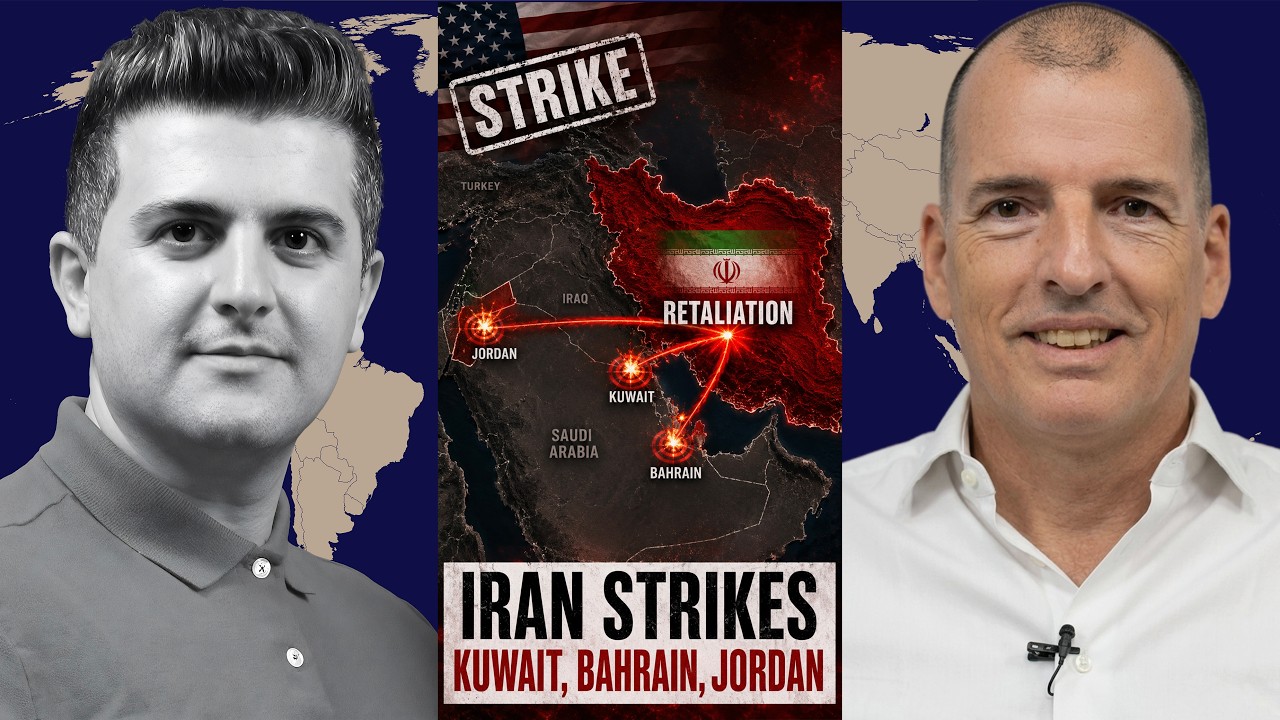
Alex Krainer: US STRIKES Iran – Iran RETALIATES Against Kuwait, Bahrain & Jordan!
"Amidst escalating US-Iran conflict and Iranian retaliation against regional US allies, this episode argues that US foreign policy is deeply controlled by an 'Anglo-Zionist conspiracy' led by the Rothschild banking dynasty, prioritizing Israeli interests over American ones."
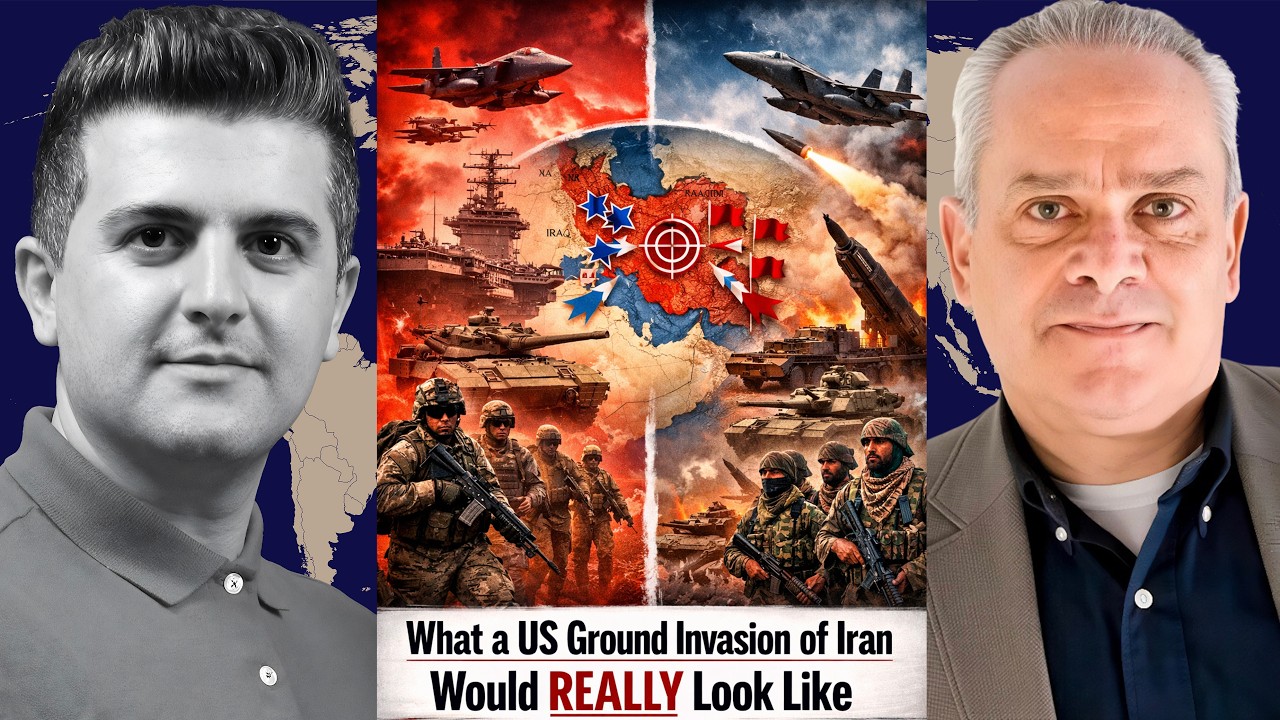
Col. Jacques Baud: What a US Ground Invasion of Iran Would REALLY Look Like
"Colonel Jacques Baud dissects the strategic futility of a US ground invasion of Iran, arguing that current troop levels are insufficient and such an action would backfire, exposing US allies and potentially leading to Iran's nuclearization."

Patrick Henningsen: Hezbollah JUST Fired Back at Israel - Iran Vows to “Crush” All Attacks
"Patrick Henningsen argues that the US and Israel initiated an illegal war against Iran, driven by Trump's incompetence and Israeli influence, leading to an inevitable escalation with severe global economic repercussions."
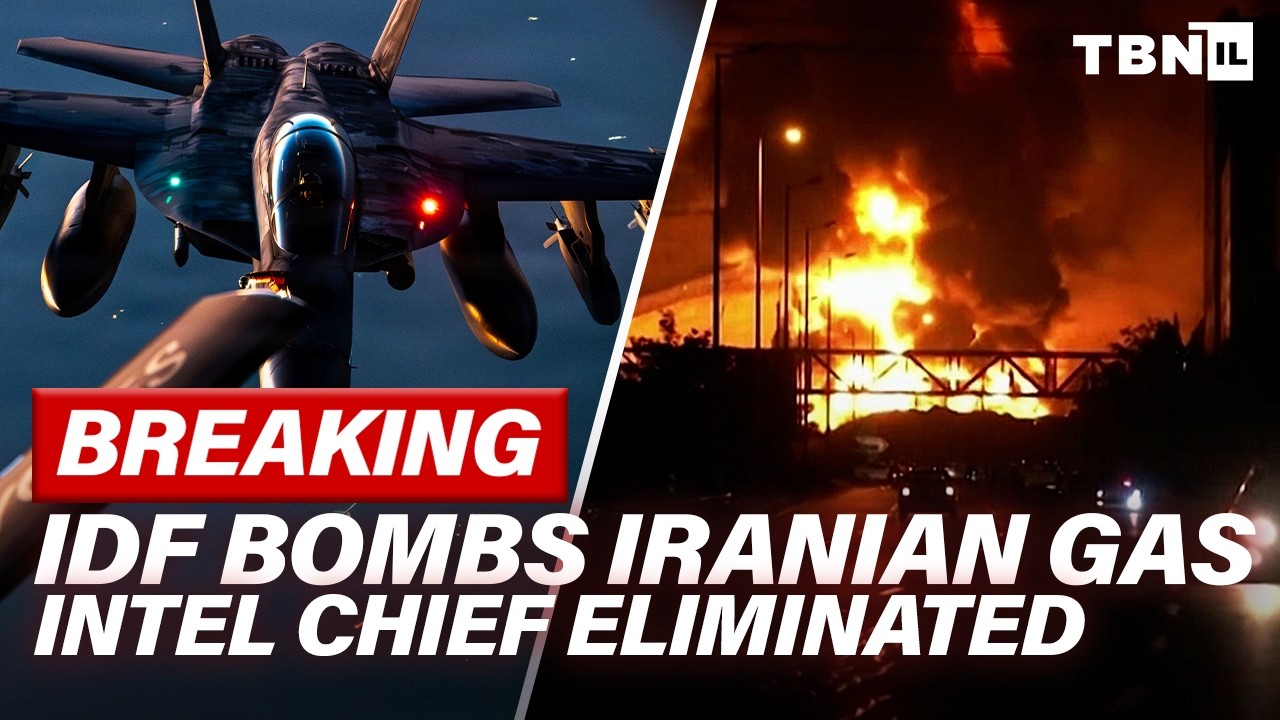
BREAKING: Israel BOMBS Major Iran Gas Site; Top Mullah ELIMINATED; Iran Vows VENGEACE | TBN Israel
"Israel and the United States have escalated their 'Roaring Lion War' against Iran, striking its largest gas facilities, eliminating key intelligence and military figures, and disrupting missile production, while Iran threatens a broader energy war in the Gulf."