
🚨 BREAKING: Iranian Military And Police DEFECT To Revolution - Crown Prince Gives Order To Army
YouTube · oxyVidjRpHM
Quick Read
Summary
Takeaways
- ❖Police, military, and IRGC Basij members have publicly defected to the Iranian revolution.
- ❖Crown Prince Reza Pahlavi issued direct instructions to the Iranian armed and security forces.
- ❖Iranian cities like Shiraz and Mashhad saw civilians take control of streets, chasing out regime forces and destroying their equipment.
- ❖Widespread general strikes are paralyzing the Iranian economy, forcing the regime to beg people to reopen shops.
- ❖Starlink satellites are confirmed active over Iran, offering a potential communication channel for revolutionaries.
- ❖The Australian government advised its citizens to leave Iran due to the revolution and potential regional conflict.
- ❖Iranian football players (U21s) refused to sing the national anthem, mirroring a previous World Cup protest.
- ❖The host compares Supreme Leader Ali Khamenei's leadership to Alex Ferguson's Manchester United, citing a 'cult of personality' that leaves no viable successor.
Insights
1Widespread Defections Signal Regime Weakness
Numerous police officers, military personnel, and even members of the IRGC Basij unit have publicly defected and joined the revolution. This internal fracturing suggests a significant weakening of the regime's ability to enforce its will, as many refuse orders to open fire on civilians.
The host details videos of police officers urging people to stay on the streets and IRGC members refusing orders to fire, aligning with observed footage showing fewer casualties than expected. (, , )
2Crown Prince Reza Pahlavi's Direct Orders to Armed Forces
Crown Prince Reza Pahlavi has issued direct messages and instructions to the Iranian armed and security forces. This move positions him as a clear alternative authority figure, directly appealing to the military to align with the people rather than the current regime.
The host plays an audio message from the Crown Prince with English subtitles, detailing his instructions to the armed forces. (, )
3Civilian Uprisings Take Control of Major Cities
Citizens in key cities like Shiraz and Mashhad have actively confronted and pushed out regime security forces, taking control of city centers and destroying regime property. This demonstrates a high level of organization and determination among the populace, moving beyond mere protest to direct confrontation and territorial control.
Videos show people in Shiraz taking control after clashes, and in Mashhad, chasing IRGC forces and seizing their motorcycles. (, , )
4Economic Paralysis Through General Strikes
Widespread general strikes, with shops, factories, and government offices shut down, are a primary factor paralyzing the regime. The host argues this economic halt is more impactful than street protests alone, forcing the Islamic Republic into desperate measures.
The host shows footage of regime officials begging shopkeepers to reopen and film those who refuse, indicating severe economic pressure. (, )
5Starlink Activation Provides Communication Lifeline
Starlink satellites are now active over Iran, offering a potential means for revolutionaries to communicate and share footage, bypassing the regime's internet censorship. While equipment access remains a challenge, it represents a significant technological advantage for the uprising.
The host confirms Starlink activation and shows 'proof' of its presence, acknowledging the need for equipment. (, )
6Regime's Desperation and Incompetence
The host characterizes the IRGC as 'fat' and 'low energy,' unable to effectively suppress the uprising. The regime's attempts to beg for an end to strikes and recruit informants are seen as signs of extreme desperation and a failing crackdown strategy.
The host sarcastically describes IRGC as 'fat' and 'low energy' (). The regime is shown begging people to reopen shops and film 'friends, relatives, colleagues' who are striking. (, )
Bottom Line
The host frames the Iranian revolution as a precursor to Iran becoming a 'beacon of free market capitalism and freedom in the Middle East,' suggesting a massive investment opportunity post-regime change.
This implies that the current political upheaval is not just about regime change but also a fundamental economic and ideological transformation, potentially attracting significant Western capital and talent.
Entrepreneurs and investors should prepare for substantial market entry opportunities in Iran across various sectors, from real estate to hospitality, anticipating a rapid shift towards a free-market economy.
The host suggests that the threat of US military intervention, specifically from President Trump, has significantly limited the regime's violence against protestors, preventing mass casualties.
This highlights the perceived deterrent effect of external military threats on authoritarian regimes during internal unrest, suggesting that such threats can shape the dynamics of a revolution by limiting state-sponsored violence.
For policymakers, this insight suggests that clear, credible threats of intervention can be a tool to protect civilian populations during uprisings, potentially altering the cost-benefit analysis for regimes considering brutal crackdowns.
Opportunities
Establish a British pub in Tehran
The host plans to open the 'Lion and Crown' pub on Pahlavi Street in Tehran, symbolizing the return of Western culture and free enterprise post-revolution.
Real estate and infrastructure investment in post-revolution Iran
The host anticipates massive investment opportunities in land, buildings, and stadiums, viewing Iran as a future hub for free market capitalism. He intends to personally buy significant assets.
Key Concepts
Cult of Personality Collapse
The host argues that Supreme Leader Ali Khamenei's regime, like Alex Ferguson's Manchester United, relied heavily on a 'cult of personality.' This model suggests that without a clear, strong successor or institutionalized power beyond the individual leader, the entire structure is prone to collapse once that central figure's authority or presence wanes, leading to disarray and internal fracturing.
Lessons
- Monitor official statements and actions from Crown Prince Reza Pahlavi for strategic direction regarding the Iranian armed forces.
- Observe the economic impact of general strikes in Iran as a key indicator of the regime's weakening control.
- Track the effectiveness and spread of Starlink usage within Iran as a measure of the revolution's ability to bypass state censorship and maintain communication.
Notable Moments
People in Shiraz take control of the city after clashes, pushing out security forces.
This demonstrates the growing capability of the civilian population to directly challenge and overcome regime forces in major urban centers.
A police officer releases a video urging people to stay on the streets and promising that security forces will join them.
This is a direct sign of internal defection and a call for solidarity from within the regime's ranks, potentially inspiring more defections.
IRGC Basij members refuse orders from the Supreme Leader to open fire on protestors.
This indicates a breakdown in the chain of command and a moral refusal to commit atrocities, significantly weakening the regime's enforcement capabilities.
The Australian government issues an official call for its citizens to immediately leave Iran.
This signals a heightened level of international concern regarding the instability and potential for broader conflict in Iran, beyond just internal revolution.
Starlink satellites are confirmed active over Iran.
This provides a critical, uncensored communication channel for the Iranian people, bypassing state control and enabling the sharing of information and coordination of efforts.
The Islamic Republic is shown begging people to end strikes and reopen their shops, and to film those who refuse.
This highlights the severe economic pressure on the regime due to widespread strikes and its desperate, authoritarian tactics to counter civilian resistance.
Iranian U21 football players refuse to sing the national anthem.
This is a powerful symbolic act of defiance on an international stage, demonstrating widespread opposition to the regime even among national representatives, despite potential repercussions.
Regime forces are observed placing snipers on top of mosques and Islamic centers.
This reveals that these religious buildings are being used as strategic military bases and weapon caches, not just symbolic sites, indicating the regime's militarization of religious spaces and its defensive posture.
Quotes
"Do not leave the streets under any circumstances. Very soon we will join you the people and we will cleanse the country of the dirty ayatollahs."
"There are no protests in Iran. There is an active revolution against the Islamic occupation."
"This is the year of blood. Pahlavi is returning. The Ayatollah will be overthrown."
"Ali Khamenei made the same mistake as Alex Ferguson... they created a cult of personality... there was no plan as a successor."
Q&A
Recent Questions
Related Episodes
Robby Soave GOES OFF On ANNOYING Liberal Black Woman Making Emotional Trump Deranged Arguments!
"The host dissects a heated foreign policy debate, arguing that 'left-wing' emotionalism and 'Trump derangement' prevent a rational understanding of US sanction strategies against Cuba and Iran."

Will Venezuela Be Trump's Vietnam?
"An expert breaks down three perilous pathways for Venezuela under potential US intervention, from a 'Panamanian model' to a 'Libyan-style civil war,' and the broader geopolitical fallout for Latin America."
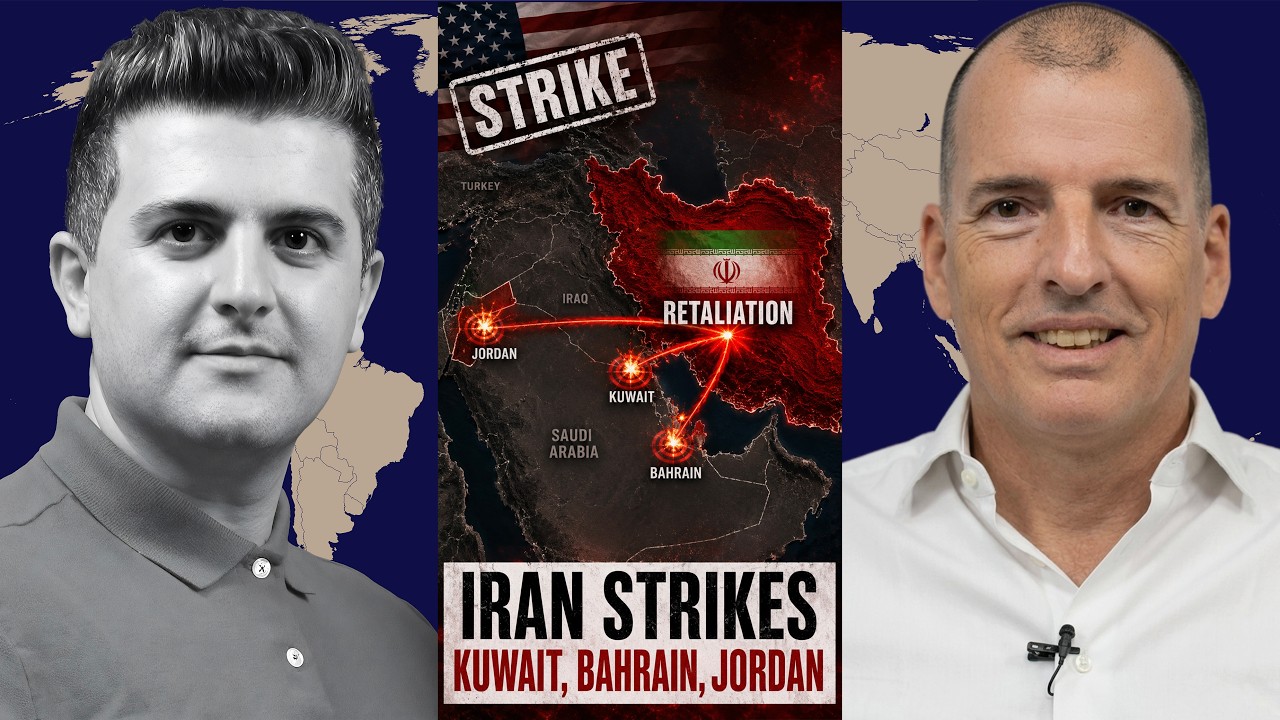
Alex Krainer: US STRIKES Iran – Iran RETALIATES Against Kuwait, Bahrain & Jordan!
"Amidst escalating US-Iran conflict and Iranian retaliation against regional US allies, this episode argues that US foreign policy is deeply controlled by an 'Anglo-Zionist conspiracy' led by the Rothschild banking dynasty, prioritizing Israeli interests over American ones."

Iran Update: Israel’s Newest Bombing Campaign, the Oncoming War With China and How to Avoid It
"Colonel Wilerson reveals how the US and Israel are actively bombing China's strategic infrastructure in Iran, escalating a covert economic war that Beijing intends to win without direct military conflict by dismantling the dollar's global dominance."