Trump DOJ ADMITS Maduro Cartel Is FAKE
YouTube · pUsHElXwf8k
Quick Read
Summary
Takeaways
- ❖The US Department of Justice abandoned the claim that Venezuela's 'Cartel de los Soles' was an actual organized drug trafficking organization, redefining it as a 'patronage system and a culture of corruption fueled by drug money.'
- ❖Maduro pleaded not guilty to drug trafficking charges in a New York City courtroom, with his wife reportedly sustaining significant injuries during their capture.
- ❖The hosts suggest the US intervention is motivated by countering Chinese, Russian, and Iranian influence in the Western Hemisphere, as well as financial opportunities for US oligarchs and Wall Street investors like Paul Singer.
- ❖There is speculation that Trump's administration may be pressuring Maduro to provide evidence related to the 2020 US election, a theory amplified by DOJ officials.
- ❖Public opinion in the US shows low support for deep involvement in Venezuela, with 75% of Americans, including a majority of Republicans, worried about excessive intervention.
- ❖A protester was arrested in Grand Rapids, Michigan, immediately after an interview about US war crimes in Venezuela, raising concerns about free speech suppression.
Bottom Line
The US government's formal retraction of the 'Cartel de los Soles' as an actual cartel, reducing it to a 'patronage system,' signals a significant weakening of their primary public justification for aggressive actions against Maduro.
This undermines the credibility of US intelligence and legal pretexts for foreign interventions, suggesting that narratives are malleable and can be adjusted when facing legal scrutiny, rather than reflecting objective truth.
Journalists and analysts can scrutinize other US foreign policy justifications for similar narrative shifts, potentially uncovering deeper, unstated motivations or weaknesses in official claims.
The hosts propose that Trump's administration might be attempting to 'flip' Maduro to provide evidence linking Venezuela to the 2020 US election, a theory amplified by a DOJ official.
This suggests a highly politicized use of foreign policy and legal proceedings to serve domestic political agendas, potentially leveraging international crises for partisan gain.
Investigative reporting could focus on communications between US prosecutors and Maduro's defense team, looking for any evidence of such political leverage or quid pro quo offers.
Opportunities
Financialization of distressed assets in post-regime change countries.
Wall Street entities and specific billionaires (e.g., Paul Singer) are 'licking their chops' to buy up distressed assets and financialize the Venezuelan economy following a regime change, indicating a model for profiting from geopolitical instability.
Lessons
- Critically evaluate official government narratives, especially during foreign interventions, as justifications can shift under scrutiny (e.g., 'Cartel de los Soles' redefinition).
- Monitor for potential domestic political motivations behind foreign policy actions, such as leveraging international figures for partisan gain (e.g., Maduro and the 2020 election claims).
- Be aware of the potential for suppression of free speech and protest during escalated military actions, as demonstrated by the arrest of a protester in Michigan.
Notable Moments
A protester against US intervention in Venezuela was arrested by police in Grand Rapids, Michigan, immediately after giving an interview to local news, on charges of obstructing a roadway.
This incident highlights concerns about the suppression of free speech and dissent within the US regarding foreign policy, particularly during times of heightened military action and political tension.
Quotes
"You cannot continue to have the largest energy reserves in the world under the control of adversaries of the United States, under the control of illegitimate leaders, and not benefiting the people of Venezuela and stolen by a handful of oligarchs inside of Venezuela."
Q&A
Recent Questions
Related Episodes

Will Venezuela Be Trump's Vietnam?
"An expert breaks down three perilous pathways for Venezuela under potential US intervention, from a 'Panamanian model' to a 'Libyan-style civil war,' and the broader geopolitical fallout for Latin America."

🚨 TOTAL F*CKING CHECKMATE 😂😂😂
"The host argues that Trump's 'ceasefire' with Iran was a calculated '5D chess' move to orchestrate a global energy market reshuffle, while simultaneously lambasting 'woke' domestic policies and the 'freefall' of anti-Trump conservative figures."
Robby Soave GOES OFF On ANNOYING Liberal Black Woman Making Emotional Trump Deranged Arguments!
"The host dissects a heated foreign policy debate, arguing that 'left-wing' emotionalism and 'Trump derangement' prevent a rational understanding of US sanction strategies against Cuba and Iran."
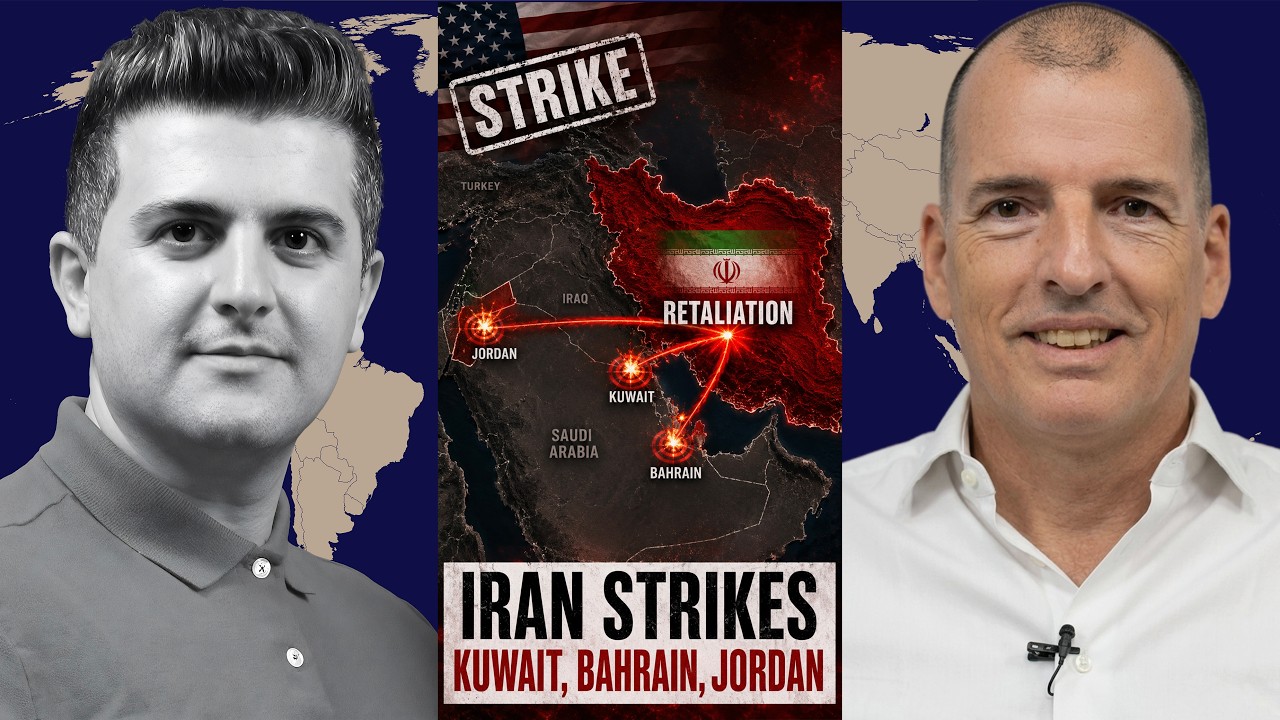
Alex Krainer: US STRIKES Iran – Iran RETALIATES Against Kuwait, Bahrain & Jordan!
"Amidst escalating US-Iran conflict and Iranian retaliation against regional US allies, this episode argues that US foreign policy is deeply controlled by an 'Anglo-Zionist conspiracy' led by the Rothschild banking dynasty, prioritizing Israeli interests over American ones."