‘Love Tap’: Trump BOMBS IRAN, Says Ceasefire STILL ON
YouTube · pf6j95C74dg
Quick Read
Summary
Takeaways
- ❖Trump authorized a 'heavy but short-term' bombing of Iranian territory, including Car Island and the city of Manab, but insisted a ceasefire with Iran was still on.
- ❖Iranian officials claim their ballistic missile and drone capacity is 120% of pre-war levels, contradicting US intelligence estimates of 70-75% retention.
- ❖Iran views the US military blockade in the Strait of Hormuz as an act of war and considers counter-actions as defensive.
- ❖Saudi Arabia and Kuwait initially refused to grant the US over-flight rights for expanded operations in the Strait of Hormuz, limiting US military options.
- ❖Iran paused submission of a 'memorandum of understanding' proposal after the US strikes, despite being on the verge of sending it.
- ❖There is a ferocious internal debate within Iran's ruling circles about whether it was a mistake not to have pursued a nuclear weapon, intensified by US threats.
- ❖Iran's control over the Strait of Hormuz is seen as a highly effective, usable deterrent, potentially more so than nuclear weapons due to the lack of taboo.
Insights
1Trump's Contradictory Stance on Ceasefire Amidst Strikes
Despite authorizing targeted bombings on Iranian territory, including Car Island and Manab, President Trump publicly maintained that a ceasefire with Iran remained in effect. He characterized the strikes as a 'trifle' or 'love tap,' while simultaneously issuing nuclear threats if a deal was not signed quickly. This approach created significant ambiguity and confusion regarding the status of US-Iran relations.
Trump stated, 'Yeah, it is. It said they trifled with us today. We blew them away. They trifled. I call that a trifle. I'll let you know when there's no cease... You're just going to have to look at one big blow coming out of Iran and they better sign their agreement fast.' The host notes Trump also made 'another genocidal nuclear, uh, seemingly threat against Iran.'
2Iran's Unexpected Military Resilience and Rebuilding Capacity
Contrary to US propaganda suggesting Iran's military was decimated, Jeremy Scill reports that Iranian officials claim their ballistic missile and drone capabilities have been rebuilt to 120% of pre-war levels. This significantly exceeds US intelligence estimates (70-75% retention) and indicates a sophisticated manufacturing operation, bolstered by dual-use technology imported from China. This resilience provides Iran with continued leverage in negotiations.
Scill states, 'the Iranian foreign minister... said that the CIA assessments as published in the Washington Post are actually incorrect. Our capacity is more like 120% of of our ballistic missiles because they're saying they've been rebuilding them.' He adds, 'They also recently got dual use technology imported from uh China.'
3Internal Iranian Debate on Nuclear Weapons Intensifies
Following US military actions and explicit nuclear threats from Trump, a 'ferocious debate' has intensified within Iran's ruling circles about whether it was a mistake not to have pursued nuclear weapons. The North Korean example, where nuclear deterrence has ensured government intactness, is cited. This debate makes it highly unlikely Iran will make significant front-end concessions on its nuclear program in any 'memorandum of understanding.'
Scill explains, 'there is a ferocious debate that's been intensified within Iran's ruling circles right now about whether it was a mistake not to have pursued a nuclear weapon um because the North Korean government remains intact and isn't being, you know, bombed by the United States for the sole reason that it has a nuclear weapon.'
4Strait of Hormuz as a Potent, Usable Deterrent
Iran recognizes its control over the Strait of Hormuz as an incredibly powerful and 'usable' deterrent, distinguishing it from nuclear weapons which carry a significant taboo. This capability, achieved with low-risk asymmetric tactics like fast boats and political will, allows Iran to disrupt global energy flows and exert leverage without resorting to nuclear escalation. This strategic asset influences Iran's negotiating position.
Emily asks if Iran views the Strait of Hormuz as a deterrent, 'more effective because you can actually use it. There isn't the same taboo around it.' Scill confirms, 'the Iranians recognize um that they have an incredibly potent weapon that they can deploy using very lowrisk asymmetric tactics.'
Bottom Line
The US has consistently misled its public and policymakers about the extent of damage inflicted on Iran's military and economic infrastructure, relying on biased think tank analyses over internal intelligence. This misrepresentation creates a false sense of US leverage and risks further miscalculation.
Policymakers and the public are operating on an inaccurate understanding of Iran's resilience, which could lead to flawed strategies and prolonged conflict. It suggests a need for greater transparency and reliance on unbiased intelligence assessments.
Independent media and analytical groups have an opportunity to provide more accurate, ground-level reporting on Iran's actual capabilities and economic situation, challenging official narratives and informing a more realistic foreign policy debate.
The internal debate within Iran about pursuing nuclear weapons is not merely a negotiating tactic but a serious, existential discussion, fueled by perceived US aggression and the success of North Korea's nuclear deterrence.
US threats and military actions, particularly those involving nuclear rhetoric, may inadvertently push Iran closer to developing a nuclear arsenal, rather than deterring it. This could fundamentally alter the geopolitical landscape of the Middle East.
Diplomatic approaches that acknowledge Iran's security concerns and offer credible, long-term security guarantees, rather than maximalist demands and threats, might be more effective in preventing nuclear proliferation in the region.
Lessons
- Re-evaluate US intelligence assessments on Iran's military and economic resilience, recognizing potential biases and propaganda from certain sources.
- Consider the implications of US military actions and rhetoric on Iran's internal debate regarding nuclear weapons, understanding that threats may accelerate proliferation rather than prevent it.
- Monitor the Strait of Hormuz and Red Sea for potential escalations, as Iran's use of these chokepoints is a key, 'usable' deterrent that could significantly impact global energy markets.
Quotes
"If there's no ceasefire, you're not going to have to know. You're just going to have to look at one big glow coming out of Iran. And they better sign their agreement fast."
"Our capacity is more like 120% of of our ballistic missiles because they're saying they've been rebuilding them."
"There is a ferocious debate that's been intensified within Iran's ruling circles right now about whether it was a mistake not to have pursued a nuclear weapon um because the North Korean government remains intact."
"If there's any country in the world that knows how to survive under sort of the threat of American or Israeli attack under really punishing sanctions and has to deal with how do you feed the people and maintain power... It's Iran. It's the Islamic Republic of Iran."
Q&A
Recent Questions
Related Episodes

Col. Jacques Baud: What a US Ground Invasion of Iran Would REALLY Look Like
"Colonel Jacques Baud dissects the strategic futility of a US ground invasion of Iran, arguing that current troop levels are insufficient and such an action would backfire, exposing US allies and potentially leading to Iran's nuclearization."

Patrick Henningsen: Hezbollah JUST Fired Back at Israel - Iran Vows to “Crush” All Attacks
"Patrick Henningsen argues that the US and Israel initiated an illegal war against Iran, driven by Trump's incompetence and Israeli influence, leading to an inevitable escalation with severe global economic repercussions."

Pepe Escobar: “Total Failure”: Trump’s Blockade Just Backfired Disastrously
"Pepe Escobar argues that the US blockade against Iran, spearheaded by Donald Trump, has utterly failed and backfired, accelerating global economic chaos and challenging US geopolitical dominance."
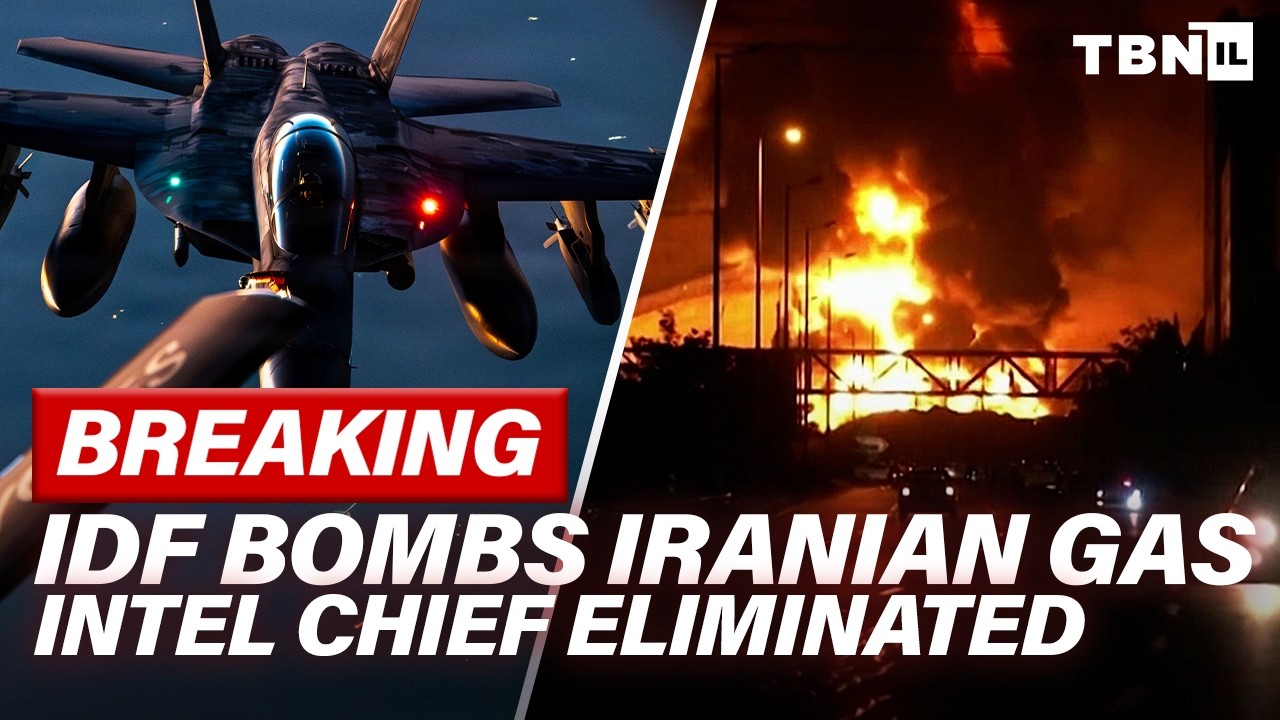
BREAKING: Israel BOMBS Major Iran Gas Site; Top Mullah ELIMINATED; Iran Vows VENGEACE | TBN Israel
"Israel and the United States have escalated their 'Roaring Lion War' against Iran, striking its largest gas facilities, eliminating key intelligence and military figures, and disrupting missile production, while Iran threatens a broader energy war in the Gulf."