
LIVE: IDF Strikes Hezbollah HQ In Beirut - IRGC To Launch On Israel - Iran War Escalates
YouTube · pfH4m6k9LnM
Quick Read
Summary
Takeaways
- ❖The IDF targeted and destroyed Hezbollah's headquarters in southern Beirut, killing seven command center members.
- ❖The strike was a retaliation for Hezbollah's earlier attacks on northern Israel and aimed to paralyze a planned large-scale assault.
- ❖Iran's IRGC vowed to launch 'Operation True Promise 5' on Tel Aviv, escalating regional tensions.
- ❖Qatar and other Arab states cleared their airspace for a week, anticipating Iranian missile launches.
- ❖The US military maintains a blockade of the Strait of Hormuz, financially suffocating the Iranian regime.
- ❖Iranian officials, including the deputy speaker of parliament, indicated that control of the Strait of Hormuz is more critical than possessing an atomic bomb, revealing a strategic weakness.
- ❖Fars News confirmed Iran has been charging a fee of $1.5-$2 million per passage through the Strait of Hormuz.
- ❖The IDF exposed a major IRGC-financed Hezbollah tunnel network in the Shaqif mountains, built under a civilian zone, designed for hundreds of fighters.
- ❖Lebanese government is unable to disarm Hezbollah or address its military infrastructure, despite agreements with Israel.
- ❖Protests continue in Iran, with young people and students leading demonstrations that included destroying copies of the Quran in Firuzabad.
Insights
1IDF Pre-emptive Strike on Hezbollah HQ
The Israeli Defense Forces targeted and destroyed Hezbollah's headquarters in the southern suburbs of Beirut, eliminating seven command center members. This action was a direct retaliation for earlier Hezbollah launches into northern Israel and was based on intelligence indicating Hezbollah was mobilizing for a large-scale attack.
The Israeli Defense Forces have now targeted and destroyed the Hezbollah's headquarters in the suburban areas of Beirut in Lebanon... The Israelis hit the southern suburban areas of Beirut because they realized that the IRGC's Hezbollah have mobilized their troops to go to the headquarters and to prepare a large-scale attack on Israel.
2IRGC Vows Retaliation and Regional Airspace Clearances
Following the Beirut strike, the Islamic Revolutionary Guard Corps (IRGC) vowed to launch a major attack on Tel Aviv, referring to it as 'Operation True Promise 5.' This threat led Qatar and other Arab states to issue a NOTAM (Notice to Airmen), rerouting all flights and clearing airspace for at least a week, anticipating broader regional attacks.
The Islamic Revolutionary Guard Corps have now vowed to launch an attack on Tel Aviv and the rest of Israel later on... Qatar and other Arab states are now preparing to clear the airspace in the region for at least a week as of tonight.
3US Stance: Continued Hormuz Blockade and Support for Israeli Self-Defense
President Trump confirmed that the US military operation, specifically the blockade of the Strait of Hormuz, will continue to weaken Iran's finances and infrastructure. The US also publicly backed Israel's right to self-defense, effectively giving Israel a 'green light' to respond to attacks from Hezbollah, contrary to Iran's expectations.
President Trump has now confirmed that despite internal pressure, he is not going to end the military operation in Iran. The US military will continue what they are doing in the region, especially when it comes to the blockade of Hormuz... The US officials have said that the Americans are backing Israel in this and their right to self-defense urging Hezbollah to stop firing.
4Iran's Strategic Shift: Hormuz Over Nuclear
A deputy speaker of Iran's parliament stated that control of the Strait of Hormuz is 'more important than the atomic bomb.' The host interprets this as a significant revelation of Iran's weakness, indicating that the US blockade of Hormuz is effectively suffocating the regime, rendering their long-standing nuclear deterrent rhetoric less potent.
The deputy speaker of the fake parliament of the Islamic Republic who has now said that for Iran, the control of the Strait of Hormuz is more important than the atomic bomb.
5Hezbollah's IRGC-Financed Tunnel Network Exposed
The IDF released footage exposing a major IRGC-financed Hezbollah tunnel network in the Shaqif mountains, located under a civilian zone and designed for hundreds of fighters with extensive military infrastructure. This network was identified after drones and missiles were launched from the site towards Israel.
The IDF have now exposed a major IRGC-financed Hezbollah tunnel network in the Shaqif mountains, which is built inside the civilian zone under 6 km from Metula... Drones and missiles were launched from the site towards Israel, and that's how Mossad and the IDF intelligence were able to identify the location.
6Lebanese Government's Inability to Disarm Hezbollah
Despite an agreement between Lebanon and Israel to disarm Hezbollah and the Lebanese President's recent condemnation of the IRGC, the Lebanese military remains 'weak and feeble,' unable to confront Hezbollah or dismantle its infrastructure, including the newly exposed tunnel network.
There is an agreement between Lebanon and Israel to disarm Hezbollah... The Lebanese government, you need to help to push out Hezbollah because they are occupying parts of your country... the Lebanese military are still a bunch of weak, feeble flowers. When Hezbollah barks at them, they run away.
7Iranian Protests Include Quran Destruction
Ongoing protests in Iran, led by young people and students, have escalated to include symbolic acts of defiance against Islam. In Firuzabad, protestors were filmed destroying and tossing copies of the Quran into water, an act considered a major crime in Iran, demonstrating a deep rejection of the ruling religious ideology.
In this video in Firuzabad we're seeing a lot of Iranian people who have basically destroyed the copies of Quran. They're being tossing them into the water. And this is a this is a big crime in Iran, by the way.
Key Concepts
The Rule of the Game (Self-Defense)
The host frames international conflict as adhering to a 'rule of the game' where if one party is attacked, they have an inherent right and expectation to retaliate in self-defense. This principle justifies Israel's strikes against Hezbollah after initial attacks from Lebanon.
The Coldplay Model (Repetitive Naming)
The host sarcastically applies the 'Coldplay model' to Iran's military operations, suggesting that like Coldplay's albums, Iran's 'Operation True Promise' series (now on its fifth iteration) is repetitive and lacks originality, despite each iteration supposedly aiming to 'wipe out Israel.'
Notable Moments
The host humorously compares Iran's 'Operation True Promise' naming convention to Coldplay's repetitive album titles.
This lightens the tone while underscoring the host's perception of Iran's military rhetoric as unoriginal and predictable, diminishing its perceived threat.
The host recounts missing the start of a previous war because he was asleep, despite running a global news channel.
This personal anecdote adds a touch of self-deprecating humor and humanizes the host, while also subtly highlighting the unpredictable nature of regional conflicts.
Quotes
"If you get hit by anybody, you hit back. Self-defense."
"For immediate attention, the ceasefire between Iran and the US is unequivocally a ceasefire on all fronts, including in Lebanon. Its violation on one front is a violation of the ceasefire on all fronts. The US and Israel are responsible for the consequences of any violation."
"We will deliver a decisive and painful response to the Zionist regime's attack on Dahiya. These rabid dogs must be disciplined and put back in their place. Look at the sky over the occupied lands tonight."
"For Iran, the control of the Strait of Hormuz is more important than the atomic bomb."
"They are neither committed to a ceasefire nor believe in dialogue. By demonstrating through the naval blockade and violation of agreements regarding Lebanon, they only understand the language of power."
Q&A
Recent Questions
Related Episodes
Patrick Henningsen: Hezbollah JUST Fired Back at Israel - Iran Vows to “Crush” All Attacks
"Patrick Henningsen argues that the US and Israel initiated an illegal war against Iran, driven by Trump's incompetence and Israeli influence, leading to an inevitable escalation with severe global economic repercussions."
BREAKING: Israel BOMBS Major Iran Gas Site; Top Mullah ELIMINATED; Iran Vows VENGEACE | TBN Israel
"Israel and the United States have escalated their 'Roaring Lion War' against Iran, striking its largest gas facilities, eliminating key intelligence and military figures, and disrupting missile production, while Iran threatens a broader energy war in the Gulf."
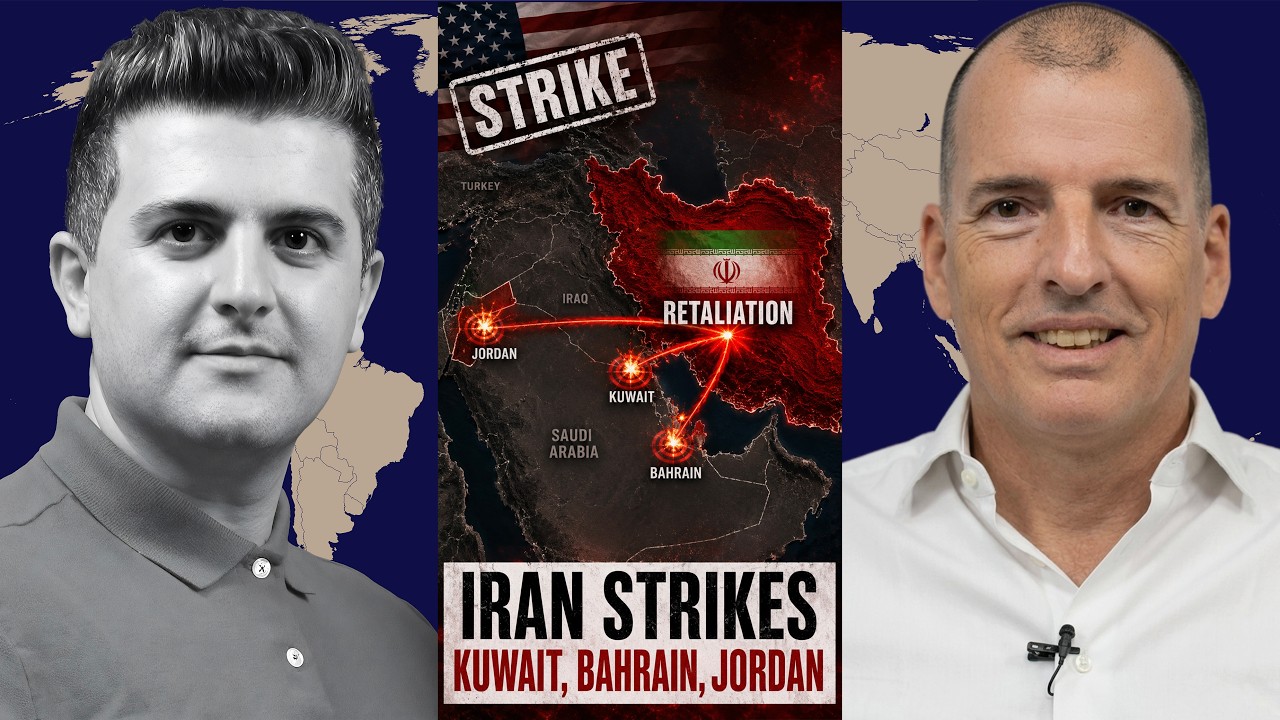
Alex Krainer: US STRIKES Iran – Iran RETALIATES Against Kuwait, Bahrain & Jordan!
"Amidst escalating US-Iran conflict and Iranian retaliation against regional US allies, this episode argues that US foreign policy is deeply controlled by an 'Anglo-Zionist conspiracy' led by the Rothschild banking dynasty, prioritizing Israeli interests over American ones."
Col. Jacques Baud: What a US Ground Invasion of Iran Would REALLY Look Like
"Colonel Jacques Baud dissects the strategic futility of a US ground invasion of Iran, arguing that current troop levels are insufficient and such an action would backfire, exposing US allies and potentially leading to Iran's nuclearization."