US Allies REJECT Trump BEGGING For Help In Iran
YouTube · piEX2Y9qPyo
Quick Read
Summary
Takeaways
- ❖Trump's administration is 'scrambling' to address the closure of the Strait of Hormuz, a situation created by its own war.
- ❖Key US allies, including Germany, France, Canada, Japan, the UK, and Australia, have publicly refused to join a US-led coalition to secure the Strait.
- ❖The inability of the US Navy to unilaterally secure the Strait is framed as a 'massive humiliation' for the United States on the global stage.
- ❖The conflict has driven oil prices to nearly $100 a barrel, with significant economic fallout expected globally, particularly in Europe.
- ❖US officials are downplaying the economic impact, but rising gas prices and demand destruction are anticipated to hit American consumers hard.
- ❖China and Russia are leveraging the conflict, with China monitoring US military operations and Russia benefiting from high oil prices and intelligence sharing with Iran.
- ❖Iran's foreign minister stated the Strait of Hormuz is 'open' for all except US and Israeli ships, though global traffic is still greatly diminished due to insecurity and soaring insurance rates.
- ❖The hosts argue this conflict is a 'world war' in the sense that it is fundamentally reshaping the global order and power dynamics.
Insights
1Allies Reject US Call for Strait of Hormuz Coalition
Despite Trump's direct appeals and threats, major US allies like Germany, France, Canada, Japan, the UK, and Australia have publicly declined to participate in a US-led coalition to reopen the Strait of Hormuz. This rejection underscores a significant erosion of US influence and a 'massive humiliation' for its global strategic standing.
Trump 'begging other countries to help secure the Straight of Hormuz' (). Germany, France, Canada, Japan, UK, Australia all 'taking a pass' or saying 'no' to joining (-).
2Economic Warfare and Global Fallout
The conflict has propelled oil prices to nearly $100 a barrel, with jet fuel prices in Asia reaching $200 per barrel, signaling widespread economic disruption. The hosts highlight Iran's strategy of economic warfare, aiming to inflict pain on the US economy to force concessions. This also impacts European energy security, as they were already weaning off Russian gas and now face Middle East disruptions.
Oil prices 'hovering right now around $100 a barrel' (). 'Entire global economy is scrambling' (). 'Jet fuel prices in Asia I think in Singapore jet fuel is going for $200 per barrel' (). 'This is as much about the Iranians waging economic warfare as it is about the military conflict' ().
3US Unpreparedness and Lack of Plan
The hosts argue that Trump's administration launched the war without a credible plan, particularly regarding the closure of the Strait of Hormuz. They point to the failure to release strategic petroleum reserves early and the current 'begging' for allied help as clear evidence of this unpreparedness.
'Clearest evidence that we have that not only was there no plan, but they really just didn't believe that the streets of Hormuz would be closed' (). 'Nothing says I had a plan than having to beg other countries to have to come in and to bolster the US Navy' ().
4China and Russia Benefit from US Entanglement
The conflict serves the strategic interests of China and Russia. China is actively monitoring US military actions and equipment performance, using the data to refine its own military capabilities. Russia benefits from soaring global oil prices, which enrich the Kremlin and its war machine, while also providing intelligence to Iran.
China 'monitoring the situation, uh, with these giant monitors and maps' (), 'calculating trajectories, looking at what's working, what's not working' (). 'We are pumping money into the Russian war machine' (). Russia 'giving all this intelligence to the Iranians' ().
Bottom Line
The US is issuing sanction waivers to India and other countries to purchase Russian oil, effectively enriching the Kremlin, while simultaneously demanding European allies join a costly war against Iran.
This highlights a significant hypocrisy and strategic contradiction in US foreign policy, alienating European allies who prioritize containing Russia while the US indirectly funds Russia's war machine. It undermines the credibility of US demands for allied support.
For non-aligned nations, this creates opportunities to negotiate favorable energy deals and leverage geopolitical tensions for economic gain, as seen with India's continued purchase of Russian oil.
The current global conflicts, including the Iran war, are redefining what constitutes a 'world war' – not necessarily by direct military engagement of many nations, but by their collective impact on the global order and the restructuring of international power dynamics.
This perspective shifts focus from traditional metrics of warfare to the broader geopolitical and economic consequences, suggesting that the world is already in a state of fundamental reordering. It implies that the 'victors' will be those who best navigate this systemic shift.
Analysts and policymakers should adopt a broader definition of global conflict, recognizing that economic and diplomatic maneuvers are as critical as military actions in shaping the new world order. This requires a more integrated and holistic approach to international relations.
Key Concepts
Escalation Trap
The concept that once a conflict begins, there's a natural tendency towards further escalation rather than de-escalation or negotiation, often leading to unintended and more severe outcomes. This is applied to Trump's actions in Iran, where initial military strikes led to a crisis requiring further military commitment or a humiliating retreat.
Paper Tiger
A term used to describe something that appears threatening but is ineffectual in reality. The hosts apply this to the US global empire, suggesting that its perceived strength is a facade that is being punctured by its inability to manage the Strait of Hormuz crisis without allied support.
Lessons
- Assess your supply chain for vulnerabilities related to Middle Eastern energy and trade routes, as disruptions in the Strait of Hormuz can lead to significant cost increases and delays.
- Monitor global oil and gas prices closely, understanding that geopolitical conflicts can rapidly escalate energy costs and impact consumer demand, potentially leading to 'demand destruction'.
- Evaluate the stability of international alliances and the credibility of global powers, as the US's inability to secure allied support indicates a shifting geopolitical landscape that could affect trade and security agreements.
Notable Moments
Trump's economic advisor, Kevin Hassett, downplays the economic impact of the war, claiming it won't last long and won't harm the US economy due to domestic oil production and AI-driven productivity.
This moment reveals a disconnect between official administration rhetoric and the potential economic realities. The hosts challenge Hassett's claims, arguing that rising gas prices will severely impact American pocketbooks and lead to demand destruction, despite GDP figures.
A major fire breaks out near Dubai's airport, causing significant flight cancellations and disruptions to one of the world's busiest air traffic hubs.
This incident demonstrates the direct, immediate, and far-reaching impact of the conflict on global infrastructure and travel. It highlights the vulnerability of key economic centers in the region and the potential for widespread disruption beyond direct military targets.
Quotes
"You could make the case that maybe we shouldn't even be there at all because we don't need it. We have a lot of oil."
"Nothing says I had a plan than having to beg other countries to have to come in and to bolster the US Navy."
"This is the United States Navy, bluewater navy. Entire purpose of a navy is to ensure commerce and trade on the high seas. And this is effectively a declaration we are not able to accomplish this mission without multiple other countries."
"Everything is about maintaining the facade. Everything is about saving face. And once that image is punctured and once you're proven to be a paper tiger and once the rest of the world says, you know, we've got our own ideas about things, that is the beginning of the end."
"The straight of Hormuz is open. It is only closed to the tankers and ships belong to the to our enemies to those who are attacking us and their allies. Others are free to pass."
Q&A
Recent Questions
Related Episodes

Patrick Henningsen: Hezbollah JUST Fired Back at Israel - Iran Vows to “Crush” All Attacks
"Patrick Henningsen argues that the US and Israel initiated an illegal war against Iran, driven by Trump's incompetence and Israeli influence, leading to an inevitable escalation with severe global economic repercussions."
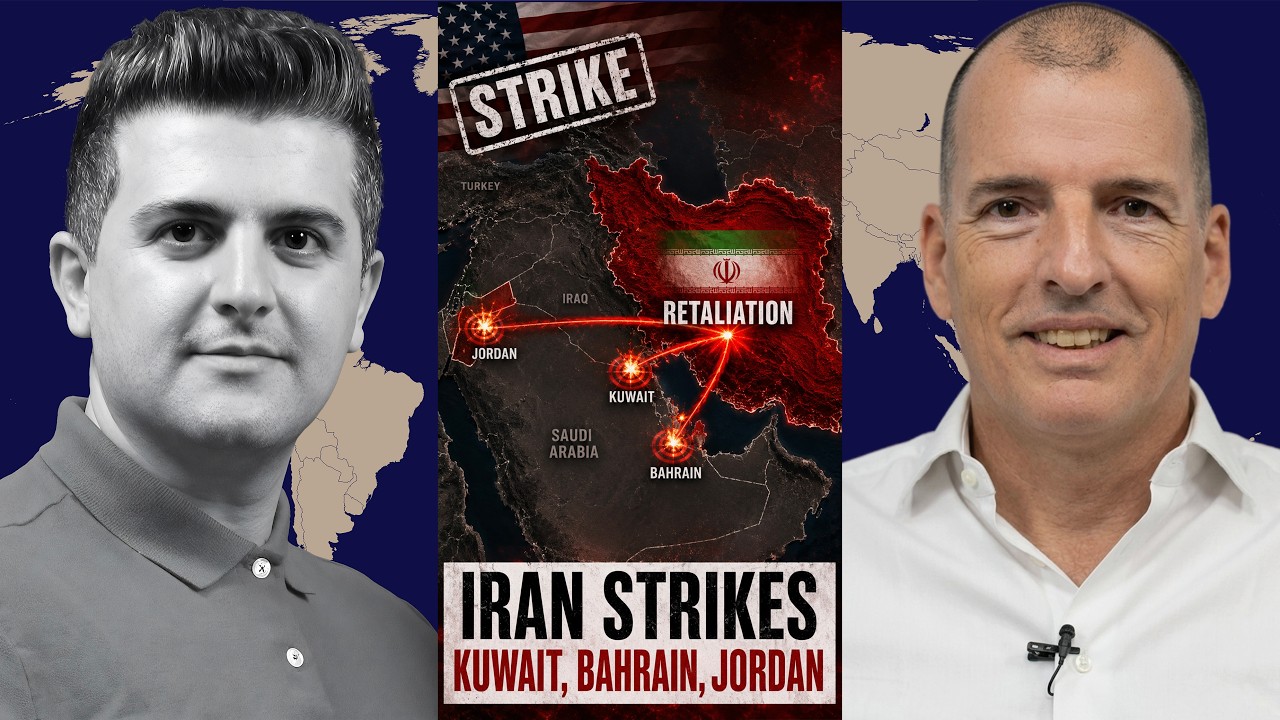
Alex Krainer: US STRIKES Iran – Iran RETALIATES Against Kuwait, Bahrain & Jordan!
"Amidst escalating US-Iran conflict and Iranian retaliation against regional US allies, this episode argues that US foreign policy is deeply controlled by an 'Anglo-Zionist conspiracy' led by the Rothschild banking dynasty, prioritizing Israeli interests over American ones."

🚨 TOTAL F*CKING CHECKMATE 😂😂😂
"The host argues that Trump's 'ceasefire' with Iran was a calculated '5D chess' move to orchestrate a global energy market reshuffle, while simultaneously lambasting 'woke' domestic policies and the 'freefall' of anti-Trump conservative figures."
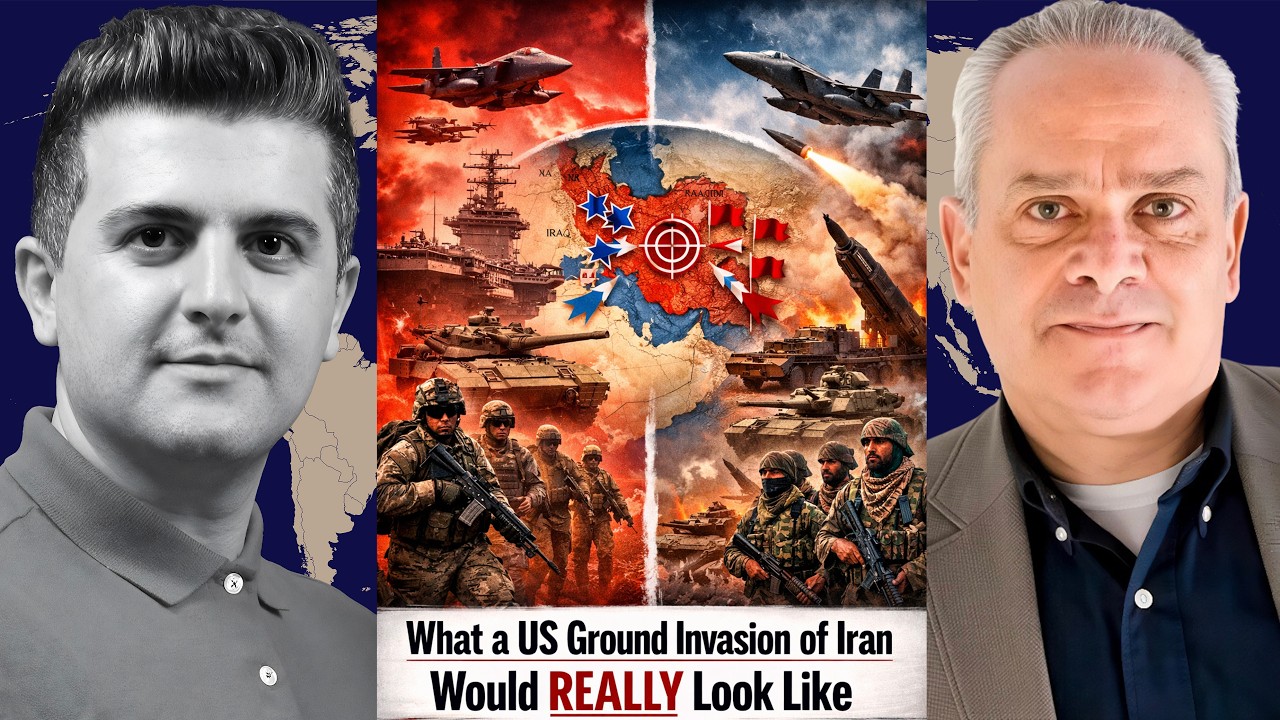
Col. Jacques Baud: What a US Ground Invasion of Iran Would REALLY Look Like
"Colonel Jacques Baud dissects the strategic futility of a US ground invasion of Iran, arguing that current troop levels are insufficient and such an action would backfire, exposing US allies and potentially leading to Iran's nuclearization."