
Trump: WE WILL RUN Venezuelan Oil FOREVER
YouTube · pkUo3GeAfZs
Quick Read
Summary
Takeaways
- ❖The US Secretary of Energy confirmed the US government will 'control indefinitely' the flow of revenues and market Venezuelan oil, depositing funds into US-controlled accounts.
- ❖The hosts characterize this as an effective 'nationalization of the entire Venezuelan oil industry' by the US, a 'nationalization by proxy.'
- ❖They argue this strategy is a return to 'retrograde technology' of direct colonization, which historically failed due to local resistance and high costs.
- ❖Oil companies are demanding multi-year guarantees and taxpayer financing for the required billions in infrastructure investment, highlighting the high risk.
- ❖Trump's proposed $1.5 trillion military budget is presented as evidence of a broader strategy focused on global intervention and resource extraction, rather than domestic priorities.
- ❖The hosts warn that such interventions lead to the entrenchment of a permanent, unelected bureaucracy ('deep state') that works against the public interest, echoing historical critiques of empire.
Insights
1US Government's Plan for Venezuelan Oil Control
The US Secretary of Energy stated that the US will 'control indefinitely' the flow of revenues from Venezuelan oil. The plan involves selling currently accumulated crude and future production, with revenues deposited into US government-controlled accounts, intended to 'benefit the Venezuelan people.' This effectively bypasses the Venezuelan government's direct control over its primary resource.
Secretary of Energy's comments on Capitol Hill: 'We're just controlling the flow of revenues from their oil.' (), 'deposited into accounts controlled by the Venezuelan or by the US government, which will then flow back into Venezuela to benefit the Venezuelan people.' ()
2Critique of 'Nationalization by Proxy' and Colonialism
The hosts argue that the US plan constitutes an effective 'nationalization of the entire Venezuelan oil industry' by proxy. They frame it as a return to 'retrograde technology' of direct colonization, which went out of fashion because great powers couldn't afford the local resistance and costs. They believe it's an unsustainable fantasy to think the US can easily control Venezuela's oil indefinitely.
Host: 'arguably that is the most important and direct effectively nationalization of the entire Venezuelan oil industry.' (), 'we're going back to this like very retrograde technology, which is completely outdated.' ()
3Oil Industry Demands and Risks
Oil companies interested in operating in Venezuela are demanding multi-year guarantees from the US government and taxpayer financing for the billions of dollars required to rebuild the degraded infrastructure. They also require assurances that foreign policy won't change, which is impossible for any administration to guarantee, highlighting the significant financial and political risks involved.
Host: 'any oil company that...is being offered the chance to go into Venezuela. They're asking the government for guarantees and for financing, taxpayer financing for the the buildout that would be required' (), 'oil companies who are expected to meet at the White House tomorrow are like, 'We need a multi-year guarantee. Multi-year guarantee.' And that foreign policy won't change' ()
4Military Budget and Empire-Building
Trump's proposal for a $1.5 trillion military budget, a 50% increase from the first-ever trillion-dollar budget, is linked to this interventionist foreign policy. The hosts argue that such massive spending fuels a permanent bureaucracy (State Department, CIA, Defense Department) that seeks to run far-away lands and meddle, ultimately entrenching the 'deep state' that Trump originally campaigned against.
Host: 'Trump is now saying he wants a $1.5 trillion military budget.' (), 'You need a permanent bureaucracy by definition. It's called the State Department, the CIA, uh the Defense Department.' (), 'entrenching the very thing that Trump originally was running against the idea of the swamp and of the deep state' ()
Bottom Line
The US approach to Venezuelan oil is a return to 'retrograde technology' of direct colonization, which was abandoned not out of goodwill but because it became economically and politically unsustainable due to local resistance.
This suggests the US is repeating historical mistakes, underestimating the costs and resistance associated with direct control, potentially leading to prolonged conflict and resource drain.
For analysts, this highlights a critical case study in the evolution and potential regression of geopolitical influence strategies, moving from 'modern financial levers' back to direct control.
Oil companies seeking to invest in Venezuela demand multi-year foreign policy guarantees and taxpayer financing for infrastructure, indicating a lack of confidence in the stability and profitability of the US-led intervention.
This reveals that even the intended corporate beneficiaries are wary of the venture's viability, suggesting the US government is taking on significant, unmitigated financial and political risk.
Investors should view any 'opportunities' in such politically unstable, government-backed ventures with extreme caution, recognizing the inherent demands for public guarantees signal high private sector risk aversion.
Key Concepts
Imperial Overstretch
The idea that empires collapse when they expand beyond their ability to maintain economic and military commitments, leading to unsustainable costs and eventual decline. The hosts apply this to the US attempting to manage Venezuelan oil, predicting it will be too costly and unstable.
Blowback
Unintended negative consequences of a covert operation or foreign policy, often leading to prolonged conflict or resentment. The hosts suggest that 'nationalization by proxy' will inevitably lead to local resistance and instability, rather than the intended benefits.
Lessons
- Scrutinize government claims of 'benefiting local populations' in foreign resource interventions, as they often mask underlying geopolitical and economic control motives.
- Recognize that large military budget increases can signal a shift towards more interventionist foreign policies and the entrenchment of bureaucratic power, potentially at the expense of domestic priorities.
- Understand that 'empire' strategies, whether direct or by proxy, historically face significant local resistance and often prove unsustainable, leading to long-term instability and financial drain.
Notable Moments
Secretary of Energy denies 'stealing oil' narrative, claiming Venezuelans are 'thrilled' and US is 'just controlling the flow of revenues.'
This highlights a significant disconnect between the official US narrative and the hosts' interpretation of on-the-ground reality and historical context, framing the US action as a benevolent intervention rather than resource control.
Discussion on how direct colonization went out of fashion because 'great powers couldn't afford it' due to local resistance, not out of benevolence.
This provides a crucial historical lens through which to view the current US strategy, suggesting that the 'retrograde' approach is likely to encounter similar, costly challenges.
Quotes
"We're just controlling the flow of revenues from their oil."
"I mean arguably that is the most important and direct effectively nationalization of the entire Venezuelan oil industry."
"There's a reason why this kind of direct colonization went out of fashion. And it's not because the, you know, great powers decided out of the goodness of their hearts that this wasn't something that they wanted to do anymore. They couldn't afford it. There was too much local resistance."
"We can have a republic or we can have an empire, but you can't have both."
Q&A
Recent Questions
Related Episodes

Will Venezuela Be Trump's Vietnam?
"An expert breaks down three perilous pathways for Venezuela under potential US intervention, from a 'Panamanian model' to a 'Libyan-style civil war,' and the broader geopolitical fallout for Latin America."
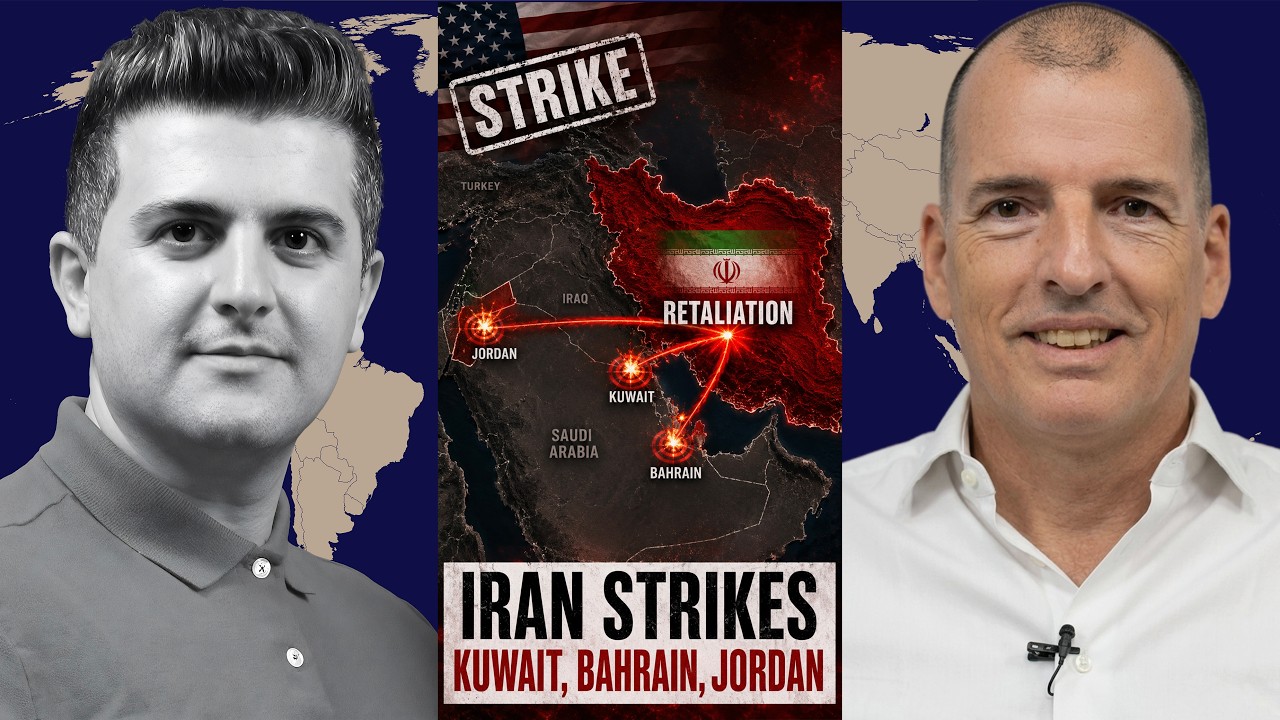
Alex Krainer: US STRIKES Iran – Iran RETALIATES Against Kuwait, Bahrain & Jordan!
"Amidst escalating US-Iran conflict and Iranian retaliation against regional US allies, this episode argues that US foreign policy is deeply controlled by an 'Anglo-Zionist conspiracy' led by the Rothschild banking dynasty, prioritizing Israeli interests over American ones."

Iran Update: Israel’s Newest Bombing Campaign, the Oncoming War With China and How to Avoid It
"Colonel Wilerson reveals how the US and Israel are actively bombing China's strategic infrastructure in Iran, escalating a covert economic war that Beijing intends to win without direct military conflict by dismantling the dollar's global dominance."

Patrick Henningsen: Hezbollah JUST Fired Back at Israel - Iran Vows to “Crush” All Attacks
"Patrick Henningsen argues that the US and Israel initiated an illegal war against Iran, driven by Trump's incompetence and Israeli influence, leading to an inevitable escalation with severe global economic repercussions."