
“You Bombed SIX Countries!” Israel Continues Strikes in Lebanon | Mehdi Hasan vs Doron Spielman
YouTube · pkk1AZhuKro
Quick Read
Summary
Takeaways
- ❖Mehdi Hasan asserts Israel, not Iran, is the Middle East's rogue nuclear state, citing its undeclared arsenal and non-compliance with the NPT and UN resolutions.
- ❖Doron Spielman defends Israel's actions as preemptive strikes against Iran, labeling it the world's largest terror regime seeking nuclear weapons.
- ❖Hasan claims Israel attacked six countries in the Middle East last year, a charge Spielman vehemently denies.
- ❖The JCPOA (Iran nuclear deal) is debated, with Hasan arguing its abandonment by Trump and Netanyahu incentivized Iran's uranium enrichment.
- ❖Military experts suggest the war has 'crushed Iran's command and control' and 'decimated' its defense industrial base, but acknowledge Iran's long-term resilience.
- ❖The 'Holy Grail' of the war is identified as securing Iran's enriched uranium, with an economic blockade of the Strait of Hormuz proposed as a means to force capitulation.
- ❖Concerns are raised about the credibility of claims regarding Iran's nuclear program setbacks, given past assertions that proved temporary.
Insights
1Israel's Nuclear Status and UN Violations
Mehdi Hasan repeatedly challenges Doron Spielman on Israel's undeclared nuclear weapons program, its refusal to sign the Non-Proliferation Treaty (NPT), and its alleged violation of UN Security Council Resolution 487 (1981), which called for Israel to open its nuclear facilities to IAEA inspectors. Hasan argues this makes Israel the 'rogue nuclear state' in the region.
Hasan states, 'Which country in the Middle East has nuclear weapons? It's not Iran, it's Israel. Which country in the Middle East has not signed the NPT... It's not Iran, it's Israel.' () He also cites UN Resolution 487, which 'calls on Israel to urgently open up its facilities to IAEA controls.' ()
2Iran as a Global Terror Regime
Doron Spielman characterizes Iran as the world's number one global terrorism organization, responsible for widespread destabilization and violence. He lists various alleged acts of terror and support for proxy groups, arguing that stopping Iran's nuclear program is a necessary preemptive measure.
Spielman asserts, 'Iran... developed a global terror regime that stretches from the Middle East through Latin America into Europe. They have the Houthis... They created Hezbollah, the world's largest terror organization.' () He later adds, 'They engineered the idea of terrorism, they represent terror that has killed 241 American Marines, they have killed 85 Jews in Buenos Aires, they have killed thousands of US soldiers with roadside bombs.' ()
3The JCPOA and Iran's Enrichment Levels
Hasan blames the US and Israel for the current state of Iran's uranium enrichment. He argues that the JCPOA (Joint Comprehensive Plan of Action) effectively constrained Iran's nuclear program, but its abandonment by the Trump administration and Israeli opposition led to Iran increasing its enrichment levels, thereby incentivizing it to pursue nuclear weapons for self-defense.
Hasan states, 'We had the JCPOA, which Israel opposed, Donald Trump opposed. Iran was enriching at 3.67% had no pathway to a bomb under the JCPOA... it was Israel Netanyahu Trump that opposed this and now we have them at 60% enrich uranium because of the actions of Israel and Donald Trump.' ()
4Defining Victory: The 'Holy Grail' of Uranium
Piers Morgan and later military experts question whether the war can be considered successful if Iran retains its enriched uranium. Jim Hansen refers to obtaining the uranium as the 'holy grail' of the conflict, suggesting that without it, the primary objective of preventing a nuclear Iran remains unfulfilled.
Piers asks, 'Can this war be perceived to be successful if the enriched uranium which Iran possesses remains in Iran in their possession?' () Jim Hansen responds, 'Well, to extend the metaphor, I'd say that's the holy grail. You have to get that.' ()
Bottom Line
The perception of 'projection' is a key rhetorical tool, with Hasan accusing Spielman of projecting Iran's alleged terror onto Israel, while Spielman dismisses Hasan's arguments as 'liberal fantasy land' and 'absolute denial.'
This highlights how both sides use psychological warfare and dismiss opposing viewpoints as irrational or biased, making genuine dialogue difficult and entrenching existing positions.
Understanding this dynamic is crucial for analysts to identify underlying biases and rhetorical strategies in international relations, rather than taking claims at face value.
The military experts suggest that Iran's ability to withstand pain and prolong conflict (the 'Monty Python' analogy) is greater than that of the US/Israel due to differing political dynamics and electoral cycles.
This implies that Western democracies face inherent disadvantages in long-term, asymmetrical conflicts against authoritarian regimes, as domestic political pressures can force premature exits or shifting objectives.
Policymakers could explore strategies that account for these temporal disparities, perhaps by building broader international consensus or developing more sustainable, less politically costly engagement models.
The proposed economic blockade of the Strait of Hormuz is presented as a potentially decisive, non-kinetic method to force Iran's capitulation within weeks by crippling its oil revenue and storage capacity.
This suggests a shift towards economic warfare as a primary tool to achieve strategic objectives, potentially minimizing direct military engagement but risking broader economic disruption.
Businesses and governments reliant on global shipping and energy markets should model the potential impacts of such blockades, developing contingency plans for supply chain disruptions and energy price volatility.
Notable Moments
Mehdi Hasan's claim that Israel attacked six countries in the Middle East last year, directly challenging Doron Spielman's narrative of Iran as the sole aggressor.
This specific accusation, if substantiated, significantly alters the perception of Israel's role in regional instability and directly contradicts the IDF spokesman's framing of the conflict.
Doron Spielman's assertion that 'there are no binding United Nations resolutions against Israel,' immediately contradicted by Hasan citing UN Security Council Resolution 487.
This exchange highlights a fundamental disagreement on international law and Israel's accountability, undermining the credibility of one speaker while reinforcing the other's point about Israeli exceptionalism.
The military experts' discussion on President Trump's 'hyperbolic rhetoric' and 'information warfare' regarding the war's successes, despite previous claims proving temporary.
This provides insight into the strategic use of public statements in modern warfare and political leadership, suggesting that official declarations may not always reflect the full reality or long-term outcomes.
Quotes
"Which country in the Middle East attacked six countries in the Middle East last year? Six. It wasn't Iran, it was Israel."
"You cannot have an Iranian terror regime that instead of blocking the straits of Hormuz with ballistic missiles, they can block the straits of Hormuz with a nuclear weapon."
"The only country in the Middle East right now that can put its finger on a button and fire a nuke is Israel."
"You murdered 300 terrorists last week, and I think those are your people."
"We're winning immensely on the battlefield. We have crushed Iran's ability to exercise command and control. We've decimated their ability to exercise, I would think, the domestic requirements of a legitimate government."
"The goal all along has been to stop Iran from getting a nuclear weapon. Being able to develop one, having the initiative to do it, having the ability, having the ballistic missile programs and other conventional arms that protect them and stop other people from going in and removing that capability. So from that perspective, all of those things have at least been put on hold or set back decades."
"He plays information warfare as well as any leader on the planet. And in as long as I can remember, back to probably Reagan was the last guy who did that style. And Reagan's was polished movie star. Trump's bombastic New York real estate tycoon."
Q&A
Recent Questions
Related Episodes
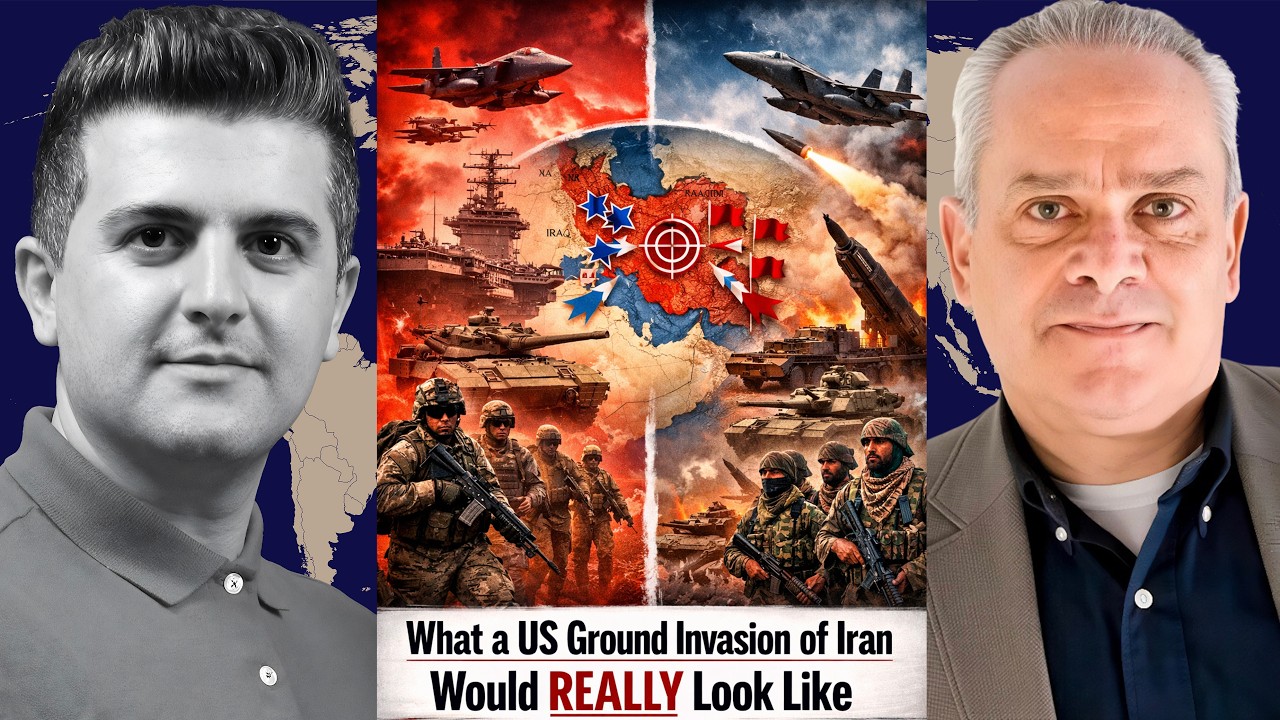
Col. Jacques Baud: What a US Ground Invasion of Iran Would REALLY Look Like
"Colonel Jacques Baud dissects the strategic futility of a US ground invasion of Iran, arguing that current troop levels are insufficient and such an action would backfire, exposing US allies and potentially leading to Iran's nuclearization."
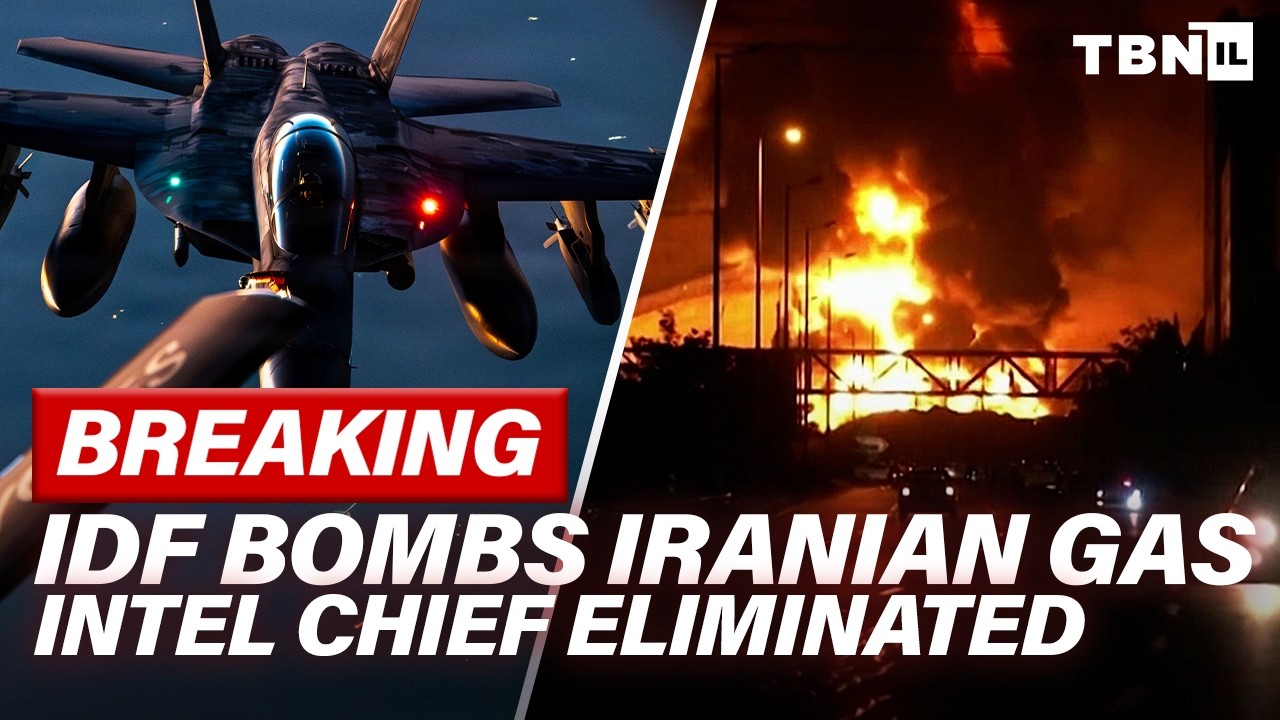
BREAKING: Israel BOMBS Major Iran Gas Site; Top Mullah ELIMINATED; Iran Vows VENGEACE | TBN Israel
"Israel and the United States have escalated their 'Roaring Lion War' against Iran, striking its largest gas facilities, eliminating key intelligence and military figures, and disrupting missile production, while Iran threatens a broader energy war in the Gulf."
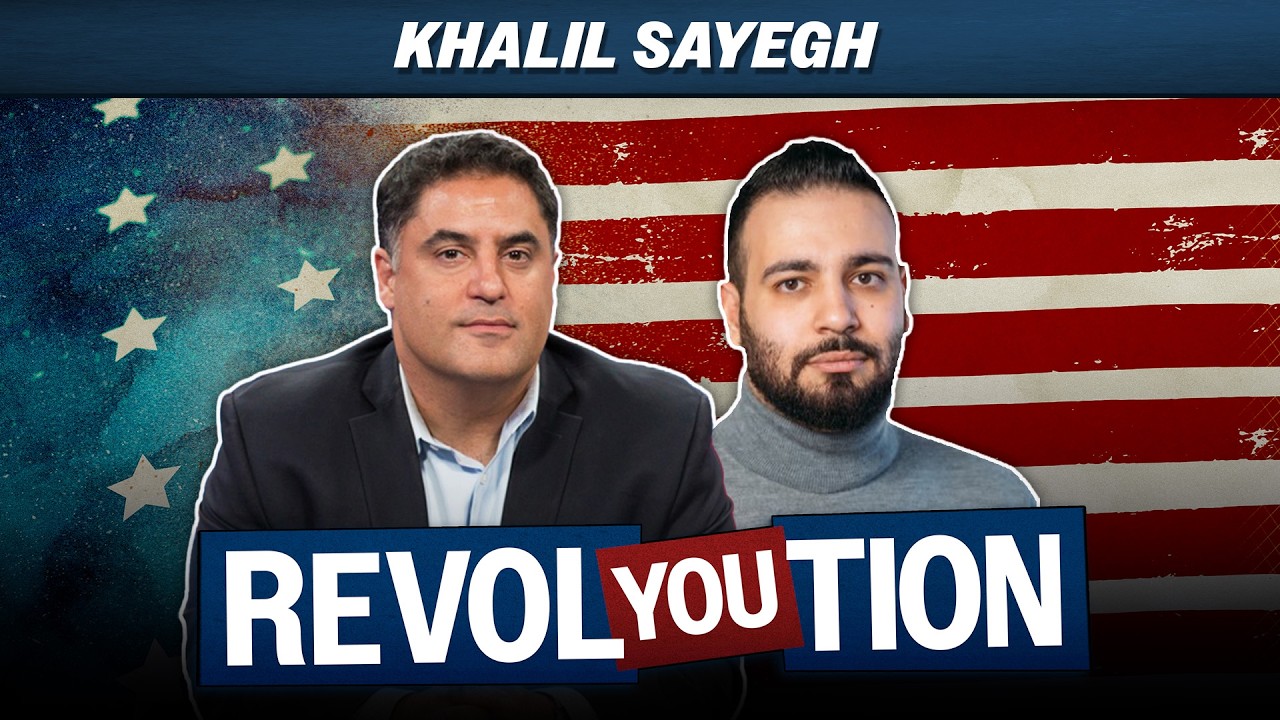
Palestinian Evangelical Analyst REACTS To U.S-Israeli War In Iran!
"The Young Turks dissect the US-Israeli war in Iran, alleging it's driven by Israeli expansionist goals, fueled by US political and media subservience, and resulting in devastating civilian casualties and economic fallout, while a Palestinian Christian analyst details the brutal realities of Israeli occupation and humiliation."

Mohammad Marandi & Larry C. Johnson: U.S. & Iran on the Brink as Critical Negotiations Unfold LIVE
"Two geopolitical analysts argue that the US and Israel are on the brink of a catastrophic war with Iran, driven by irrationality and miscalculation, which would lead to global economic collapse and US instability."