"This Is Our Hemisphere": Report from Colombia on Trump's Escalating Threats to the Region
YouTube · q9oRlHkv9Sg
Quick Read
Summary
Takeaways
- ❖Donald Trump declared Venezuelan oil as his property and announced plans to sell it, claiming the funds would benefit both the US and Venezuelan people.
- ❖Trump publicly accused Colombian President Gustavo Petro of cocaine trafficking without evidence, threatening his tenure.
- ❖Colombian President Petro denounced Trump's slander and called for Latin American unity against US imperialistic treatment.
- ❖Dr. Manuel Rosenthal asserts Trump's national security policy aims for a 'takeover of the entire continent,' viewing Latin America as 'his region'.
- ❖Rosenthal defended Petro's history as a staunch opponent of drug mafias, highlighting his efforts to expose global money laundering centers in New York, Paris, and Dubai.
- ❖The timing of Trump's attacks on Petro is linked to upcoming Colombian elections, aiming to prevent a left-leaning successor, Ivan Cepeda, from winning.
- ❖Tens of thousands of Colombian troops are deployed at the Venezuela border due to potential aggression, a refugee crisis, and an ongoing conflict with the ELN guerrilla group.
Insights
1Trump's Asserted Claim Over Venezuelan Oil and Regional Dominance
Donald Trump publicly stated that 30-50 million barrels of Venezuelan oil would be turned over to the United States, to be sold at market price with funds controlled by him for the benefit of both nations. This follows earlier remarks about 'taking back Venezuela's oil' and is framed by Dr. Rosenthal as part of a broader national security policy aiming for a 'takeover of the entire continent,' asserting it as 'his region.'
Trump's Truth Social post (), Trump's earlier remarks (), Dr. Rosenthal's analysis ()
2False Accusations Against Colombian President Gustavo Petro
Trump publicly accused Colombian President Gustavo Petro of being a 'sick man who likes making cocaine and selling it to the United States,' threatening his political future. This accusation is strongly refuted by Dr. Rosenthal, who details Petro's 30-year history as a former M19 insurgent who disarmed for peace, a congressman who exposed links between Colombian governments, paramilitaries, and drug trade, and a mayor who was unjustly removed. Petro has seized more cocaine than previous governments and exposed global money laundering hubs.
Trump's statements (), Petro's X posts (), Dr. Rosenthal's defense of Petro's history (, , )
3Strategic Timing of Attacks to Influence Colombian Elections
The attacks on President Petro, who is term-limited and about to leave office, are strategically timed to undermine the electoral process. Dr. Rosenthal explains that Petro remains popular, and a left-leaning candidate, Ivan Cepeda, is favored to win the upcoming elections and continue Petro's legacy. The accusations are seen as a 'dirty' tactic to condemn Petro, destroy his image, and prevent the left from winning again, aligning with the interests of Colombian elites and US power brokers.
Discussion of Petro's term limit (), Dr. Rosenthal's explanation of Ivan Cepeda's candidacy and the motive behind the attacks ()
4Colombia-Venezuela Border Tensions and Military Deployment
Tens of thousands of Colombian troops are deployed along the border with Venezuela. This deployment is attributed to multiple factors: potential aggression from Venezuela, the risk of a massive refugee crisis, and an ongoing war between the Colombian government and the ELN guerrilla group, which is involved in drug trade and has vowed an 'anti-imperialist war' against the US.
Discussion of border situation (), reasons for troop deployment ()
Bottom Line
The US's 'war on drugs' narrative is selectively applied, with Trump releasing a convicted drug trafficker while simultaneously accusing Latin American leaders like Maduro and Petro.
This highlights a perceived hypocrisy in US foreign policy, suggesting that drug trafficking accusations are political tools rather than consistent legal enforcement, used to justify interventions or regime change.
International bodies or independent media could investigate the specific cases of US-sanctioned drug traffickers versus those accused by the US, exposing potential political motivations.
The true centers of global drug trade control and money laundering are identified as major financial hubs like New York City, Paris, and Dubai, rather than just the producing nations.
This shifts the focus of anti-drug efforts from source countries and local producers to the financial infrastructure in developed nations that facilitates the global drug economy, challenging conventional 'war on drugs' strategies.
Advocacy for international cooperation on financial transparency and stricter regulations in global banking centers could be more effective in disrupting drug mafias than military interventions in Latin America.
Lessons
- Scrutinize official narratives regarding international drug trafficking, especially when accusations are made against political leaders, considering potential geopolitical motivations.
- Support independent journalism and analysis from local perspectives in regions targeted by aggressive foreign policy, to gain a more nuanced understanding of complex situations.
- Advocate for diplomatic solutions and respect for national sovereignty over unilateral interventions, particularly in Latin America, to prevent further destabilization and human rights abuses.
Quotes
"This oil will be sold at its market price, and that money will be controlled by me as president of the United States of America to ensure it's used to benefit the people of Venezuela and the United States."
"Colombia is very sick, too. Run by a sick man who likes making cocaine and selling it to the United States. And he's not going to be doing it very long, let me tell you."
"The entire world should be very worried, scared about what is already happening. Not what might develop but what is happening. And what is happening is first of all uh Trump with his national security policy that he launched in December. He has announced the takeover of the entire continent. This is his region. He's appropriating this region."
"To stop drug trade. You don't attack boats in the Caribbean, peasants in Colombia and the presidents of Colombia or Venezuela. You find them the center of command up there in the US in uh Paris in Dubai and also in the CubanAmerican Florida allied representatives and Republicans allied with the Colombian elites that are attacking pro."
"If that aggression were to come, the army must defend the national territory and the sovereignty of the country."
Q&A
Recent Questions
Related Episodes

Will Venezuela Be Trump's Vietnam?
"An expert breaks down three perilous pathways for Venezuela under potential US intervention, from a 'Panamanian model' to a 'Libyan-style civil war,' and the broader geopolitical fallout for Latin America."
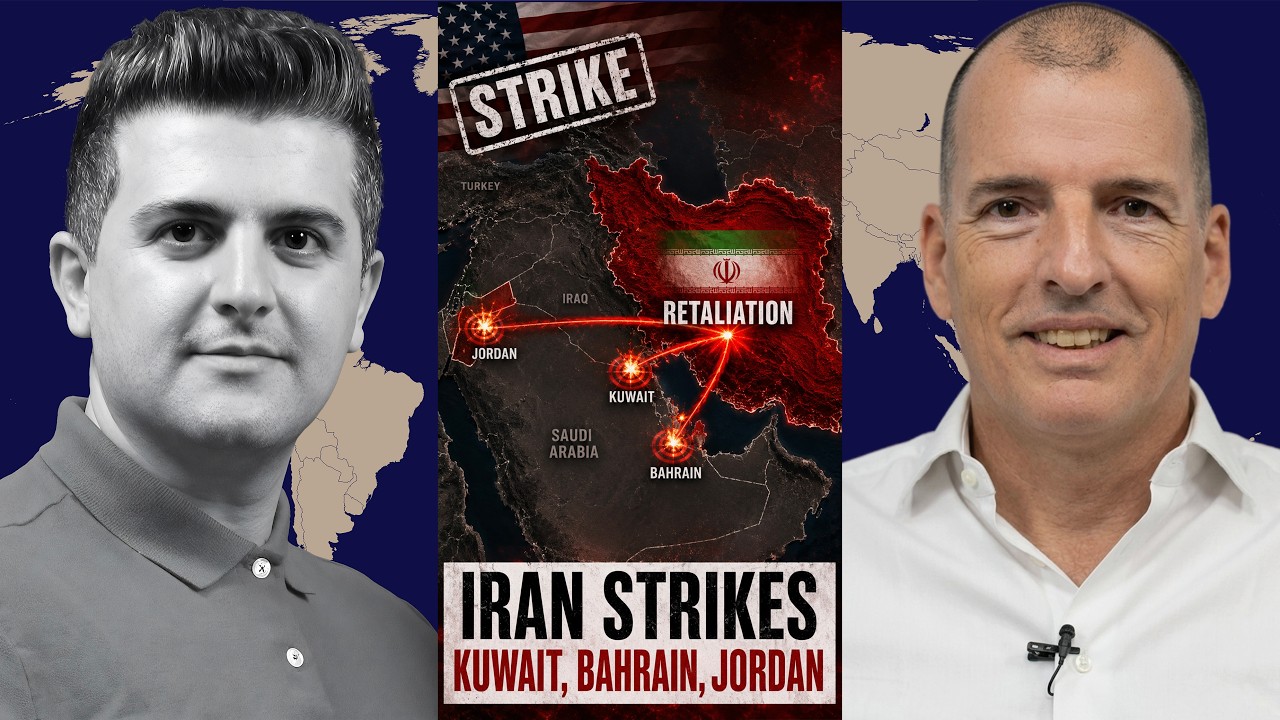
Alex Krainer: US STRIKES Iran – Iran RETALIATES Against Kuwait, Bahrain & Jordan!
"Amidst escalating US-Iran conflict and Iranian retaliation against regional US allies, this episode argues that US foreign policy is deeply controlled by an 'Anglo-Zionist conspiracy' led by the Rothschild banking dynasty, prioritizing Israeli interests over American ones."

🚨 LEFTISTS ARE F*CKING SEETHING 😂😂😂
"The host aggressively celebrates perceived 'wins' for the right-wing, from global conflicts and domestic politics to cultural shifts, framing them as a 'humiliation' for the 'leftist world order' and a testament to Donald Trump's influence."

Iran Update: Israel’s Newest Bombing Campaign, the Oncoming War With China and How to Avoid It
"Colonel Wilerson reveals how the US and Israel are actively bombing China's strategic infrastructure in Iran, escalating a covert economic war that Beijing intends to win without direct military conflict by dismantling the dollar's global dominance."