BREAKING: Trump Escalates Iran Threat; IDF Hits Missile Sites; Hormuz Crisis Grows | TBN Israel
YouTube · qJiaFZSH7YY
Quick Read
Summary
Takeaways
- ❖The US and Israel have entered an 'infrastructure war' phase against Iran, targeting its ability to function, move, transfer, fund, and connect centers of power.
- ❖President Trump issued an ultimatum: Iran's energy facilities will be destroyed if the Strait of Hormuz is not reopened by April 6th.
- ❖The Israeli Air Force completed approximately 20 strike sorties in central and western Iran, attacking over 50 ballistic missile launch and storage sites with more than 140 munitions.
- ❖The IDF eliminated Jamshid Ishaki, commander of Iran's oil headquarters, who financed military build-up, missile production, and terror proxies.
- ❖Iran is implementing a 'hybrid blockade' in the Strait of Hormuz, requiring vessels to pay fees in Chinese yuan or cryptocurrency, undergo background checks, and accept Iranian escort.
- ❖The UAE, once an economic paradise, is experiencing a mass exodus of foreign workers and declining real estate due to Iranian attacks and regional instability.
- ❖France, alongside Russia and China, is blocking a UN resolution to open the Strait of Hormuz by force and is expanding its nuclear weapons arsenal, signaling a more independent European defense posture.
- ❖Iranian Revolutionary Guards commanders have resorted to operating from mobile trailers and tents after hundreds of permanent headquarters were destroyed.
Insights
1Escalating 'Infrastructure War' Against Iran
The US and Israel have shifted to an 'infrastructure war' strategy, moving beyond targeting individual launchers to dismantling Iran's fundamental ability to operate. This includes striking strategic transportation arteries, military industries, and financial systems.
American strike on the B1 Bridge connecting Tehran to Karaj, described as an 'engineering masterpiece' and a strategic transportation artery. IDF strikes on Iranian steel factories and financial systems, including currency exchange sites funding Hezbollah.
2Targeting Iran's Financial Lifelines and Leadership
A key component of the 'infrastructure war' is disrupting Iran's financial mechanisms and eliminating commanders responsible for funding its military and proxy network. This aims to cripple its ability to sustain conflict.
Elimination of Jamshid Ishaki, commander of the oil headquarters, who financed military build-up, missile production, and support for proxies like Hezbollah and Houthis. IDF targeting currency exchange sites in Beirut used by Hezbollah.
3Iran's Hybrid Blockade of the Strait of Hormuz
Iran maintains control over the Strait of Hormuz not through a conventional naval blockade, but a sophisticated 'hybrid blockade' combining military threats, bureaucratic control, and economic pressure.
Vessels must contact a Revolutionary Guards-linked media company, provide extensive details, undergo screening, negotiate fees (paid in Chinese yuan or crypto), and receive Iranian escort. This has caused insurance costs to soar and led to attacks on tankers.
4European Diplomatic Rift and Nuclear Posturing
The escalating conflict is exposing deep divisions within international alliances, particularly between the US and European nations. France's actions signal a move towards a more independent and assertive European defense strategy.
France, along with Russia and China, is blocking a UN resolution to authorize military action to reopen Hormuz. French President Macron announced an expansion of France's nuclear arsenal, an end to publishing official data, and the possibility of deploying nuclear bombers in allied countries.
5Iran's Resilience and Shifting Tactics
Despite significant blows, Iran retains substantial military capabilities, particularly in ballistic missiles, and is adapting its operational tactics, including using minors and mobile command centers, while projecting false narratives.
US intelligence reports indicate about 50% of Iran's missile launchers are still intact, with thousands of drones and cruise missiles remaining. Revolutionary Guards commanders are operating from mobile trailers and tents. Iran is recruiting children aged 13-15 for infrastructure work and presence near missile sites, potentially as human shields.
Lessons
- Monitor global oil and gas markets closely for volatility and price increases, as the Strait of Hormuz crisis and 'infrastructure war' directly impact supply routes.
- Assess geopolitical risk in the Middle East, particularly for businesses with operations or supply chains reliant on stability in the UAE and Gulf states, given the economic destabilization.
- Observe shifts in international alliances and defense policies, especially within NATO and the EU, as France's nuclear posturing and UN actions indicate a potential restructuring of global power dynamics.
- Evaluate the long-term implications of Iran's 'hybrid blockade' tactics on maritime shipping and trade, considering increased costs, insurance premiums, and alternative payment methods (e.g., Chinese yuan, cryptocurrency).
- Track the 'infrastructure war's' progression, focusing on the effectiveness of strikes against Iran's financial systems and strategic assets, as this will dictate the regime's ability to fund proxies and prolong the conflict.
Notable Moments
US strikes B1 Bridge connecting Tehran and Karaj, a major strategic transportation artery.
This strike symbolizes the shift to an 'infrastructure war,' aiming to disrupt Iran's operational movement and ability to connect its centers of power, rather than just targeting individual military assets.
IDF eliminates Jamshid Ishaki, commander of Iran's oil headquarters.
Ishaki was critical to financing Iran's military build-up, missile production, and terror proxies, making his elimination a direct blow to the regime's war machine's funding.
Israeli Air Force shoots down an Iranian Yak-130 fighter jet over Tehran.
This demonstrates Israel's air superiority deep inside Iranian territory, indicating a full operation into the heart of the country, not just peripheral engagements.
Iranian Revolutionary Guards commanders move to mobile rail cars and tents.
This signifies a state of distress and loss of fixed command structures, hindering planning and coordination under constant pressure, and indicating the effectiveness of Israeli strikes.
France blocks UN resolution on Hormuz and announces expansion of nuclear arsenal.
This highlights a significant diplomatic rift with the US and a move by France to assert a more independent and potentially confrontational European defense policy in a changing global landscape.
Quotes
"The American military has not even begun to destroy what is left of Iran."
"We are close to achieving the goals of this war. We will strike Iran hard in the next 2 to 3 weeks."
"The biggest bridge in Iran is collapsing. It will never be used again. Much more is coming up."
"These governments of very large, very affluent, very strong countries in Europe are afraid of the Iranian regime, and they're choosing to side with the aggressor, to side with the arch-terrorist, to side with the country that was trying to develop nuclear uh missiles uh and bombs to blow up their countries."
"We are not just hunting the finger on the trigger. We are beginning to break the hand holding the gun altogether."
Q&A
Recent Questions
Related Episodes

BREAKING: Iran Threatens To END Talks; U.S. Vows Retaliation; Hezbollah Collapsing? | TBN Israel
"Iran is leveraging Hezbollah and the Strait of Hormuz to manipulate US negotiations, while Israel asserts its right to dismantle Hezbollah's eroding but still dangerous infrastructure in Lebanon, independent of international talks."

🚨 TOTAL F*CKING CHECKMATE 😂😂😂
"The host argues that Trump's 'ceasefire' with Iran was a calculated '5D chess' move to orchestrate a global energy market reshuffle, while simultaneously lambasting 'woke' domestic policies and the 'freefall' of anti-Trump conservative figures."
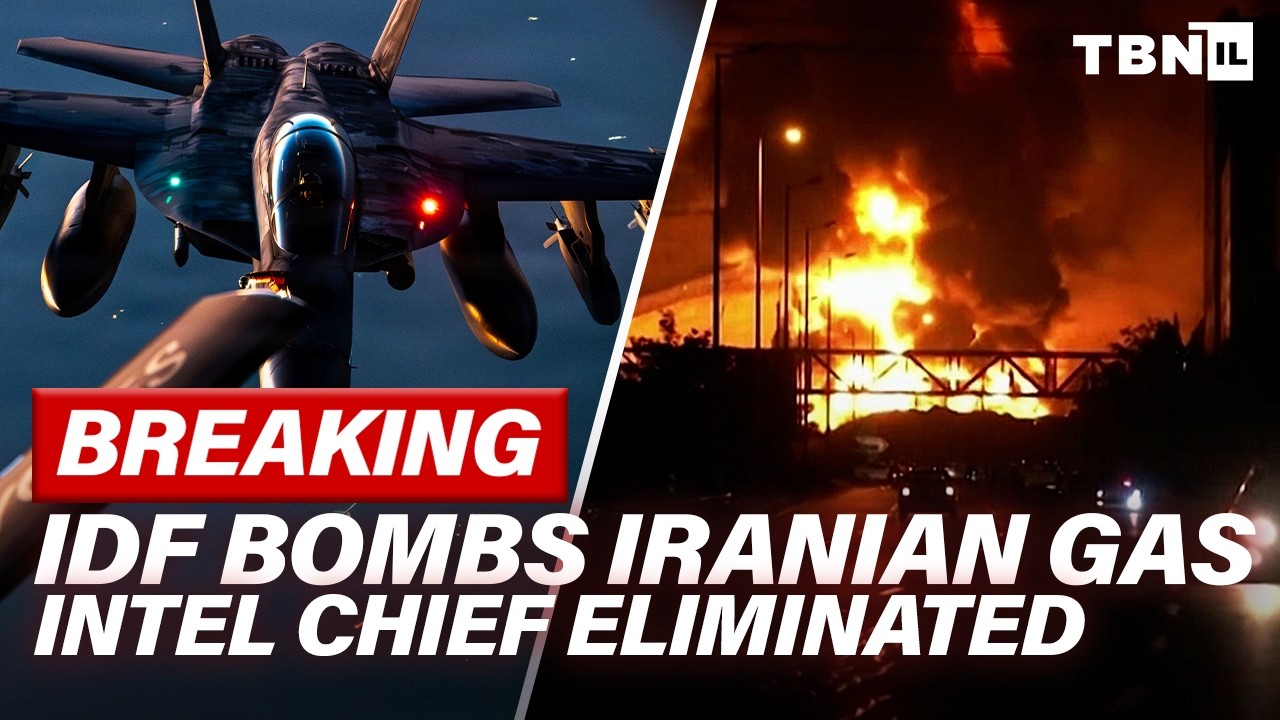
BREAKING: Israel BOMBS Major Iran Gas Site; Top Mullah ELIMINATED; Iran Vows VENGEACE | TBN Israel
"Israel and the United States have escalated their 'Roaring Lion War' against Iran, striking its largest gas facilities, eliminating key intelligence and military figures, and disrupting missile production, while Iran threatens a broader energy war in the Gulf."
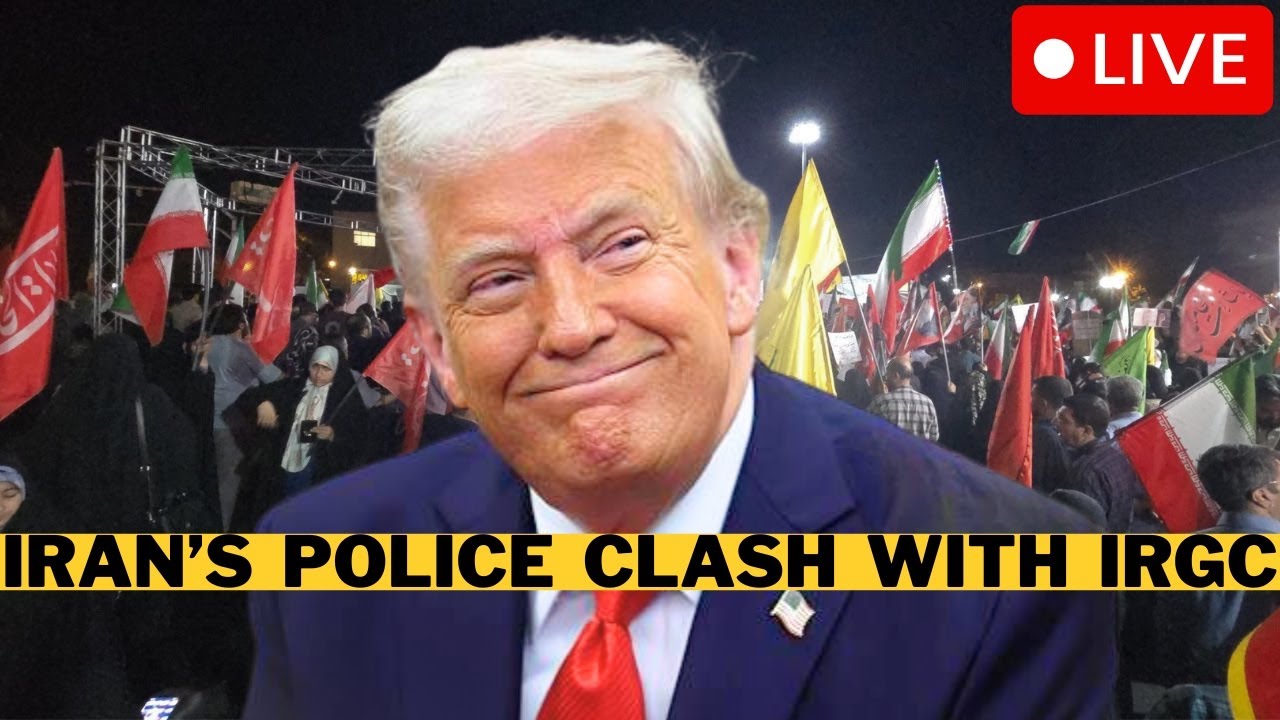
BREAKING: Protests ERUPT In Iran Over IRGC Surrendering To Trump - Infighting Clashes In Tehran
"Iran is experiencing severe internal infighting and protests as hardline IRGC elements clash with government figures over a perceived 'surrender' to the US, while mainstream Western media misrepresents the situation."